
Short Description
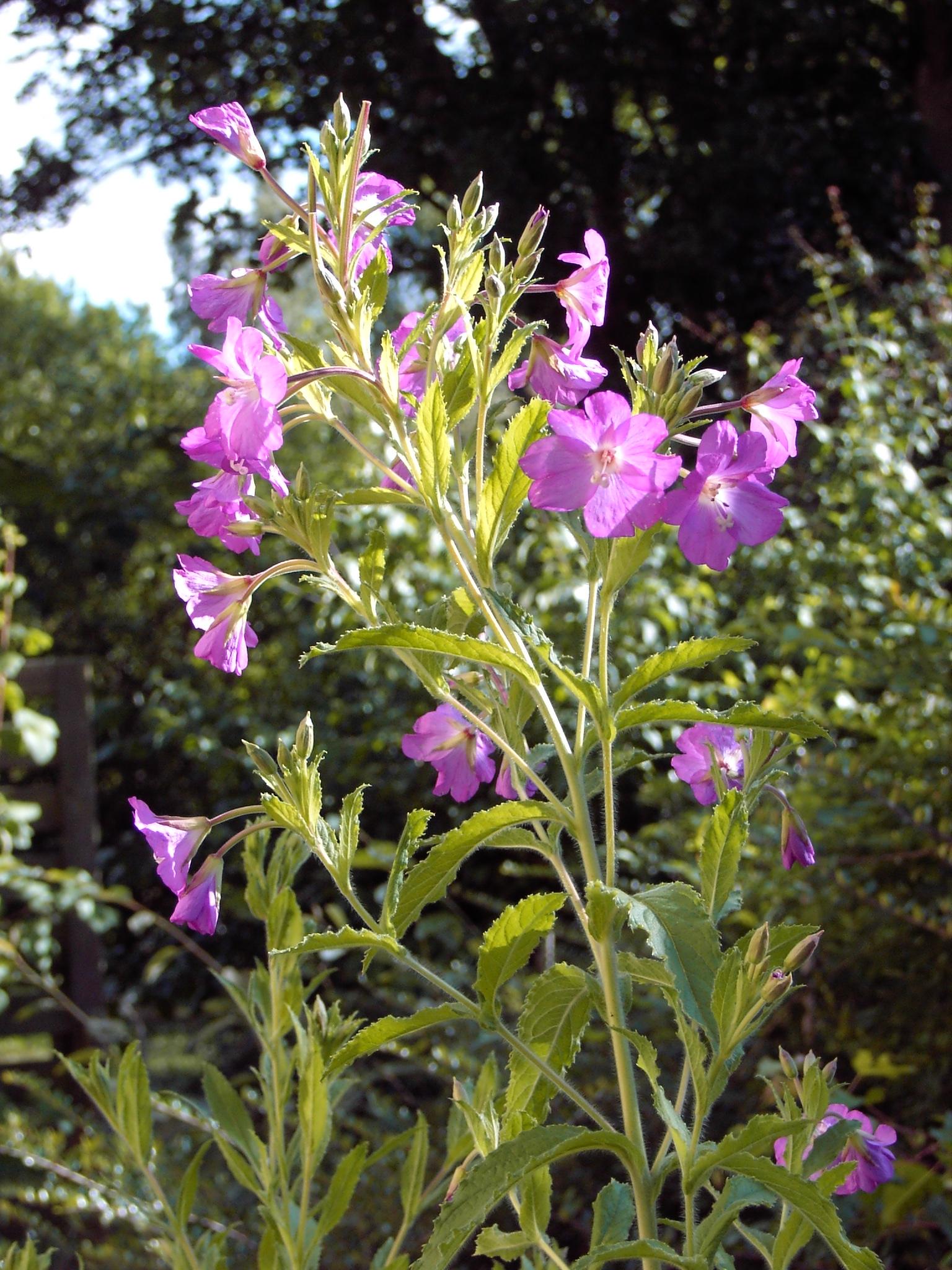
The great willowher can grow up to 2.5 m high in some rare cases.
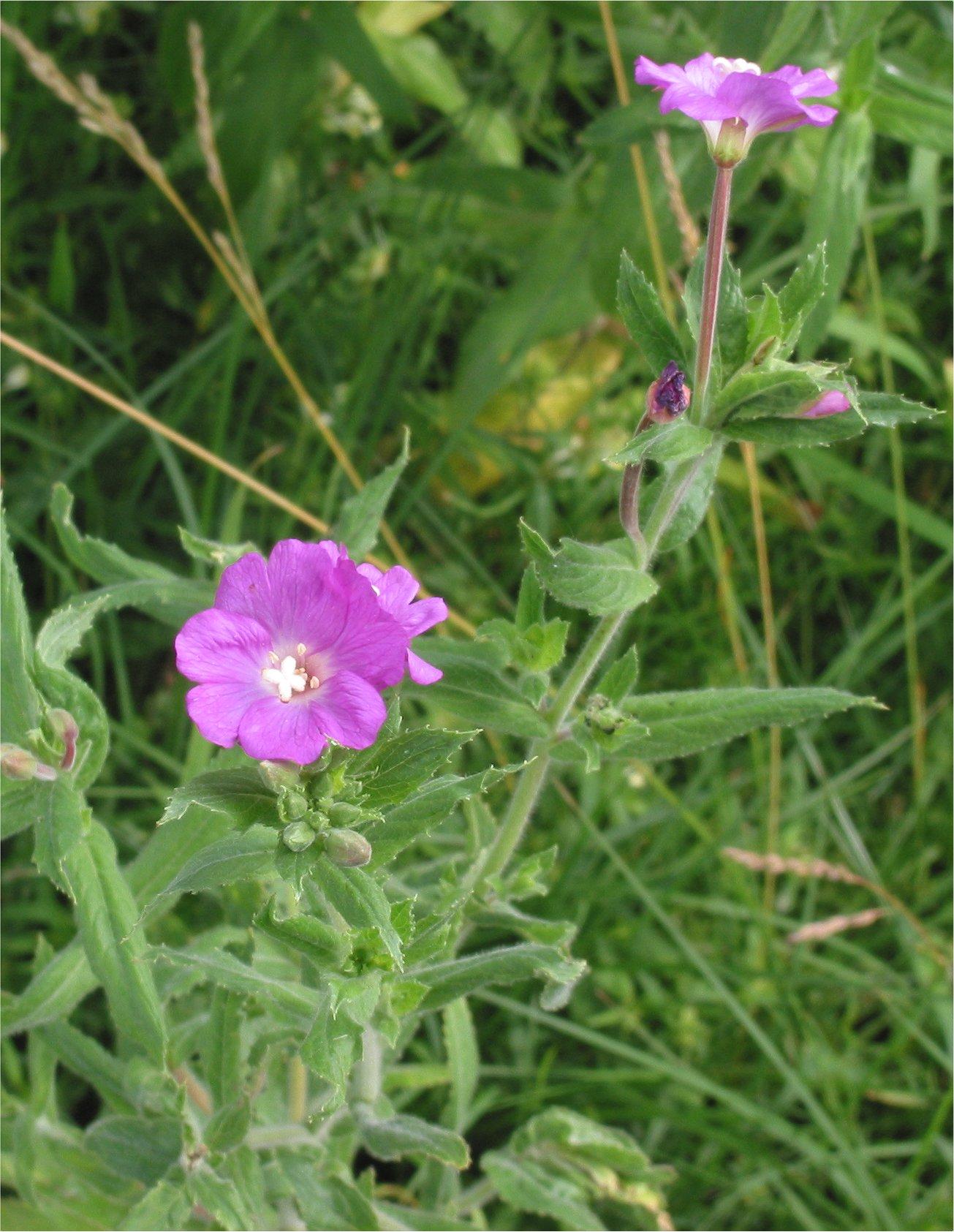
The leaves are narrow and elongated. They enclose half of the stem. They are almost glabrous to felt-like hairy. The leaf margin has pronounced teeth.
The stem is fleshy, upright growing and richly branched. It is densely covered with long, protruding and short, felt-like glandular hairs on top. It feels cool. Fleshy stolons develop from the axillary buds of the lower parts of the stem.
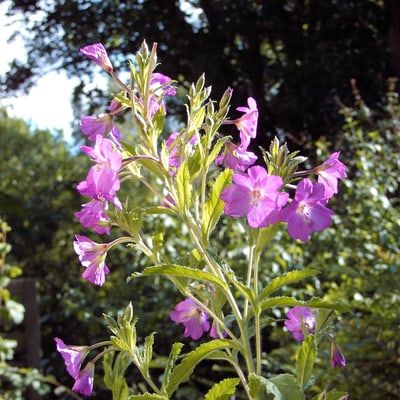
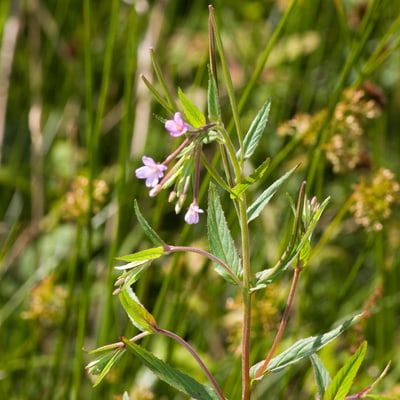
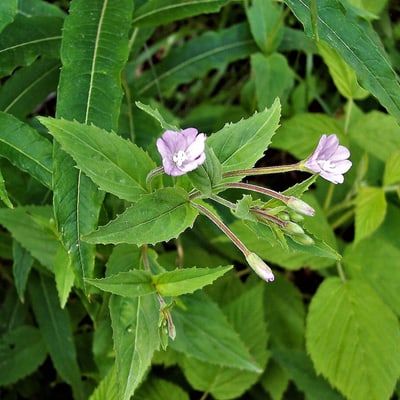
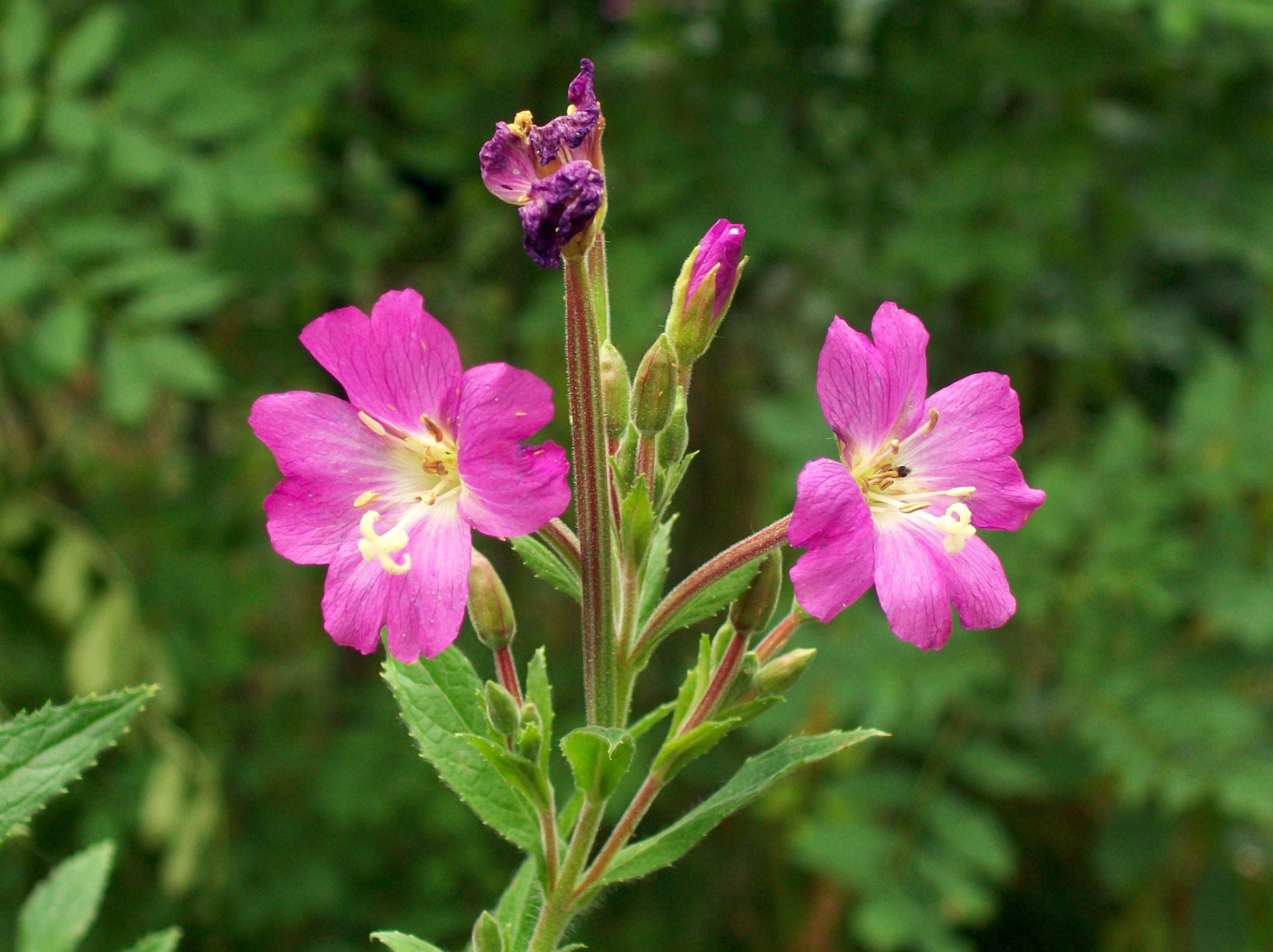
The flowers are purple.
The fruits are tubular, long capsules. They contain many seeds that bear a head of hair.
Features
Great willowherb
Epilobium hirsutum
serrated leaf edge
highly branched stem
In the city
It grows along streams, ditches, springs and in the fringe of willow scrub. It prefers loamy, nitrogenous, slightly calcareous soils and partial shade.
Fun Facts
The seeds can float for several weeks.
Unlike many other plants, its flowers are upright and open even when it rains.
It is food for the caterpillars of various butterfly species.
The flowering period is from July to September.
It lives for several years and generally flowers and fruits annually (perennial plant).
- Endangerment level Germany: not endangered
Sources
Habitus, Jan Tietje, CC BY-SA 3.0, https://commons.wikimedia.org/wiki/File:Epilobium-hirsutum-2008.JPG

Blüten, Rasbak, CC BY-SA 3.0, https://commons.wikimedia.org/wiki/File:Harig_wilgenroosje_bloemen_(Epilobium_hirsutum).jpg
.jpg)
Blüten und Frucht, AnemoneProjectors, CC BY-SA 2.0, https://commons.wikimedia.org/wiki/File:Epilobium_hirsutum_(1).jpg
.jpg)
Page „Zottiges Weidenröschen“. : Wikipedia, The Free Encyclopedia. Date of last revision: 18.02.2018, 19:29 UTC. URL: https://de.wikipedia.org/w/index.php?title=Zottiges_Weidenr%C3%B6schen&oldid=174161909 (Accessed: 23.07.2018).
Bundesamt für Naturschutz (n.d.) Artensteckbriefe, URL: http://floraweb.de/pflanzenarten/artenhome.xsql?suchnr=2118& (Accessed: 23.07.2018).
NatureGate (n.d.) Zottiges Weidenröschen. Epilobium hirsutum, URL: http://www.luontoportti.com/suomi/de/kukkakasvit/zottiges-weidenroschen (Accessed: 23.07.2018).
Seitz, B., Ristow, M., Meißner, J., Machatzi, B. & Sukopp, H. (2018) Rote Liste und Gesamtartenliste der etablierten Farn- und Blütenpflanzen von Berlin. : Der Landesbeauftragte für Naturschutz und Landschaftspflege / Senatsverwaltung für Umwelt, Klima und Verkehr (eds.) Rote Listen der gefährdeten Pflanzen, Pilze und Tiere von Berlin, URL: https://www.berlin.de/sen/uvk/natur-und-gruen/naturschutz/artenschutz/artenlisten-rote-listen/farn-und-bluetenpflanzen/ (Accessed: 26.03.2021).