
Short Description
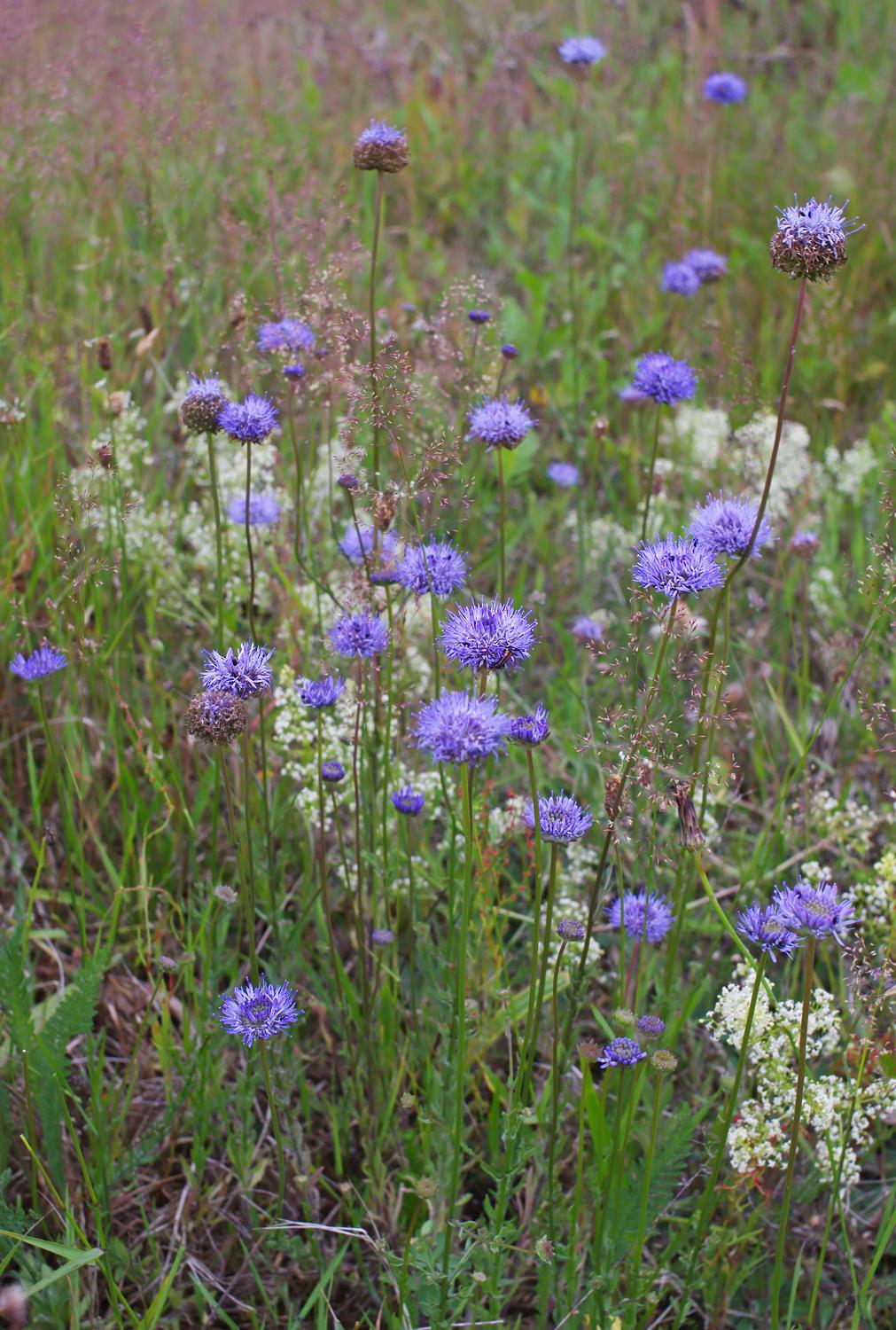
The sheep’s-bit can grow over half a metre high.
The leaves are elongated with a wavy, curly margin. They grow only in the lower part of the stem.
The stem is richly branched. It grows prostrate or erect.
The flowers have five light blue petals that are combined in a flower head. They can sometimes also be white.
The fruits are small, roundish, five-edged capsules.
Features
Sheep's-bit
Jasione montana
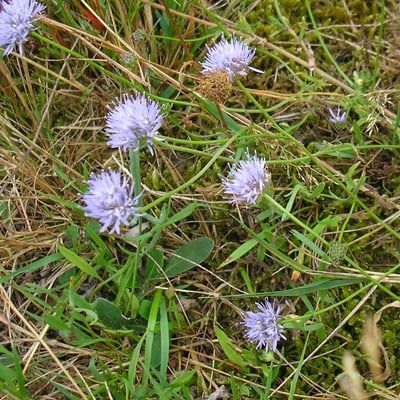
leaves only on lower parts of the stem
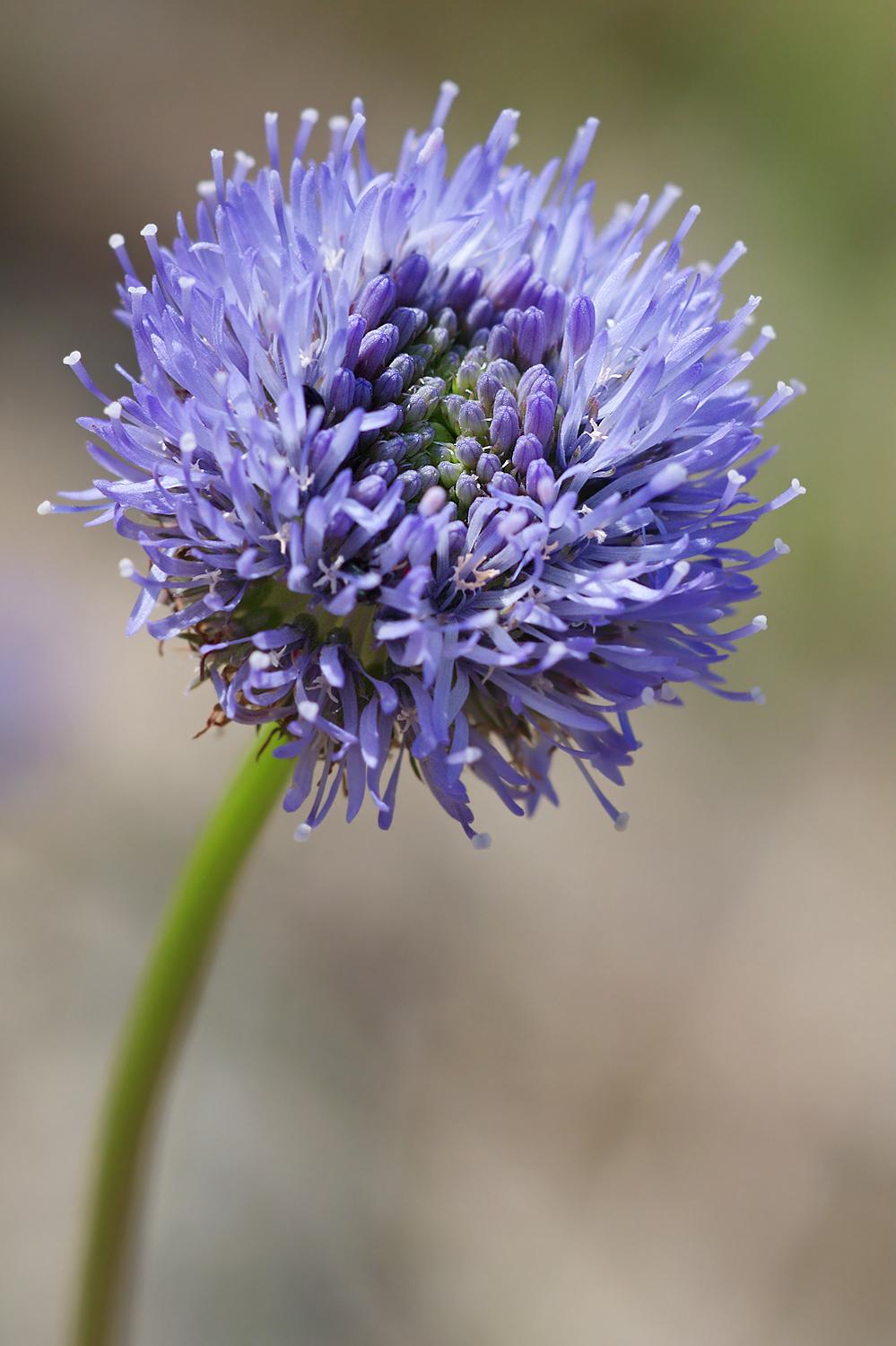
light blue, spherical inflorescence
In the city
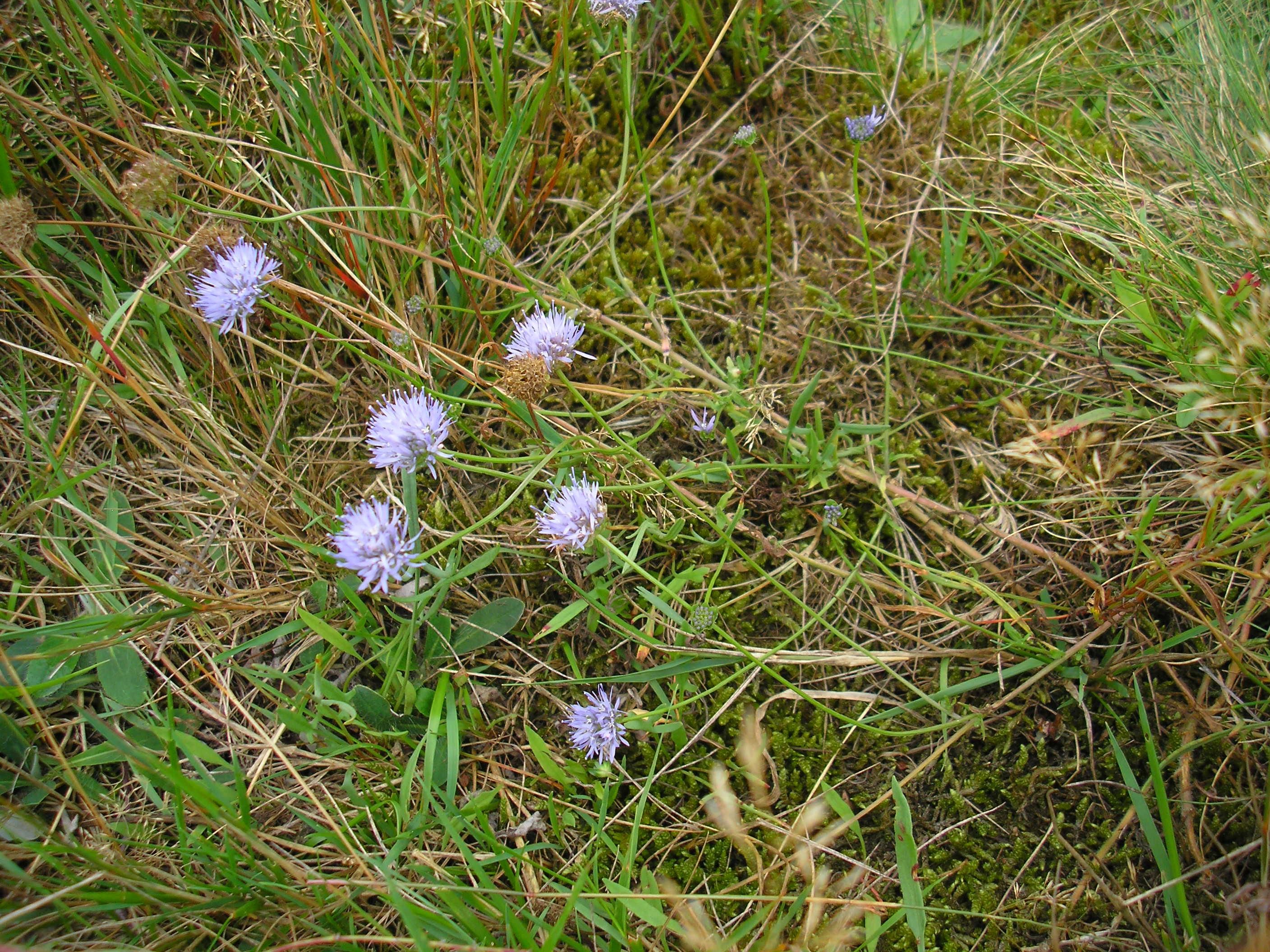
The sheep’s-bit grows both on dunes and in the mountains, on fallow land and on dry lawns. It avoids calcareous soils.
Fun Facts
The flowering period is from June to August.
It is endangered by heavy nutrient input. In 1990, it was chosen as Flower of the Year in Germany to draw attention to its endangerment due to habitat loss.
The sheep’s-bit takes root up to one metre deep.
The flowers are pollinated by bees and other insects.
- Endangerment level Germany: not endangered
Sources
Habitus, Christian Fischer, CC BY-SA 3.0, https://commons.wikimedia.org/wiki/File:JasioneMontana2.jpg

Habitus, Julia Kruse, CC BY-SA 3.0, https://species-id.net/openmedia/File:Jasione_montana_JuliaKruse.JPG

Blütenstand, Christian Fischer, CC BY-SA 3.0, https://commons.wikimedia.org/wiki/File:JasioneMontana.jpg

Page „Berg-Sandglöckchen“. : Wikipedia, The Free Encyclopedia. Date of last revision: 18.02.2017, 15:41 UTC. URL: https://de.wikipedia.org/w/index.php?title=Berg-Sandgl%C3%B6ckchen&oldid=162766950 (Accessed: 07.08.2018).
Bundesamt für Naturschutz (n.d.) Artensteckbriefe, URL: http://floraweb.de/pflanzenarten/artenhome.xsql?suchnr=3118& (Accessed: 07.08.2018).
Seitz, B., Ristow, M., Meißner, J., Machatzi, B. & Sukopp, H. (2018) Rote Liste und Gesamtartenliste der etablierten Farn- und Blütenpflanzen von Berlin. : Der Landesbeauftragte für Naturschutz und Landschaftspflege / Senatsverwaltung für Umwelt, Klima und Verkehr (eds.) Rote Listen der gefährdeten Pflanzen, Pilze und Tiere von Berlin, URL: https://www.berlin.de/sen/uvk/natur-und-gruen/naturschutz/artenschutz/artenlisten-rote-listen/farn-und-bluetenpflanzen/ (Accessed: 26.03.2021).
Schauer, T., Caspari, C. & Caspari, S. (2015) Der illustrierte BLV-Pflanzenführer für unterwegs. 1150 Blumen, Gräser, Bäume und Sträucher, München: BLV.
Spohn, M., Golte-Bechtle, M. & Spohn, R. (2015) Was blüht denn da? Stuttgart: Franckh Kosmos Verlag.