
Short Description
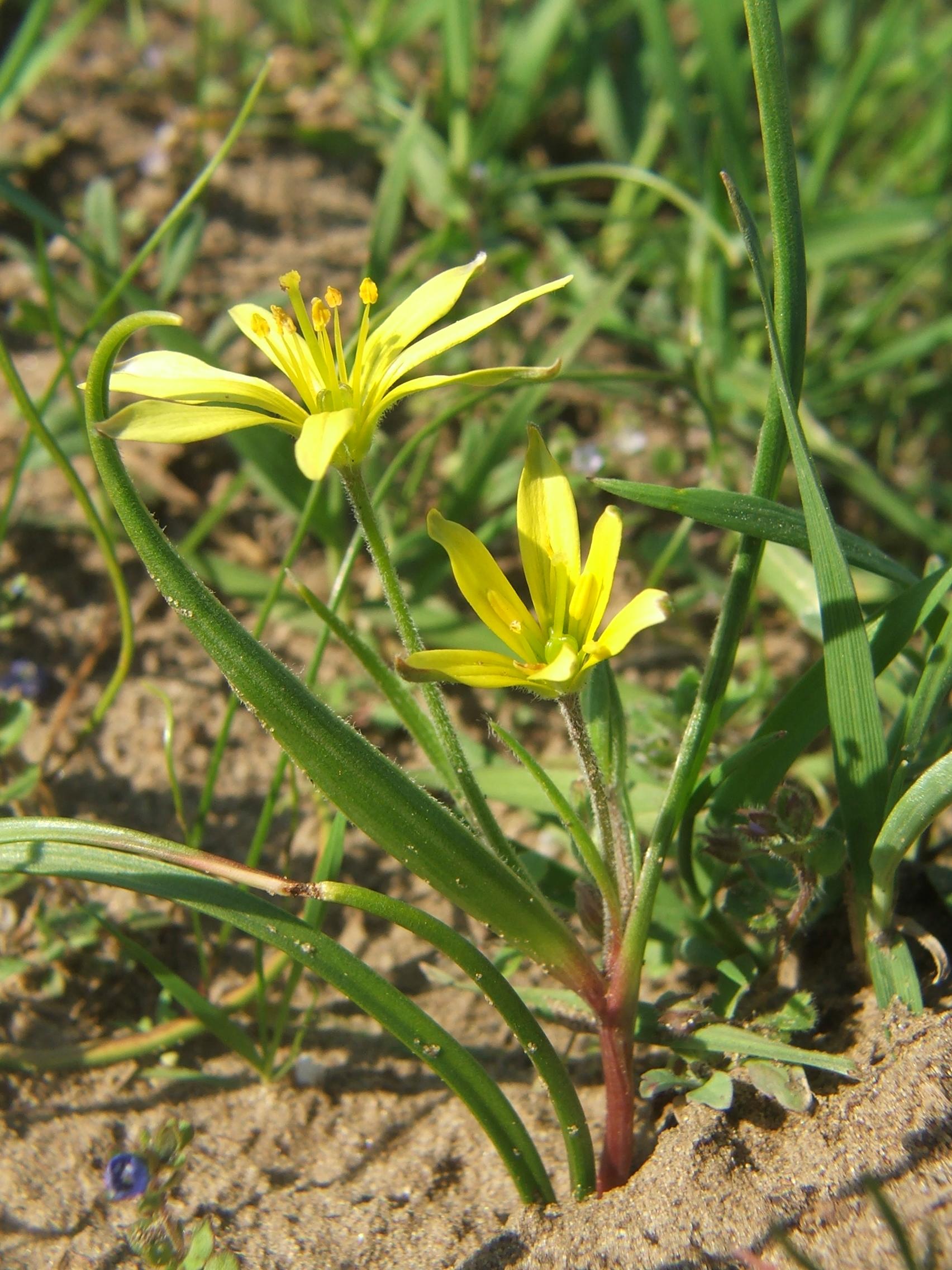
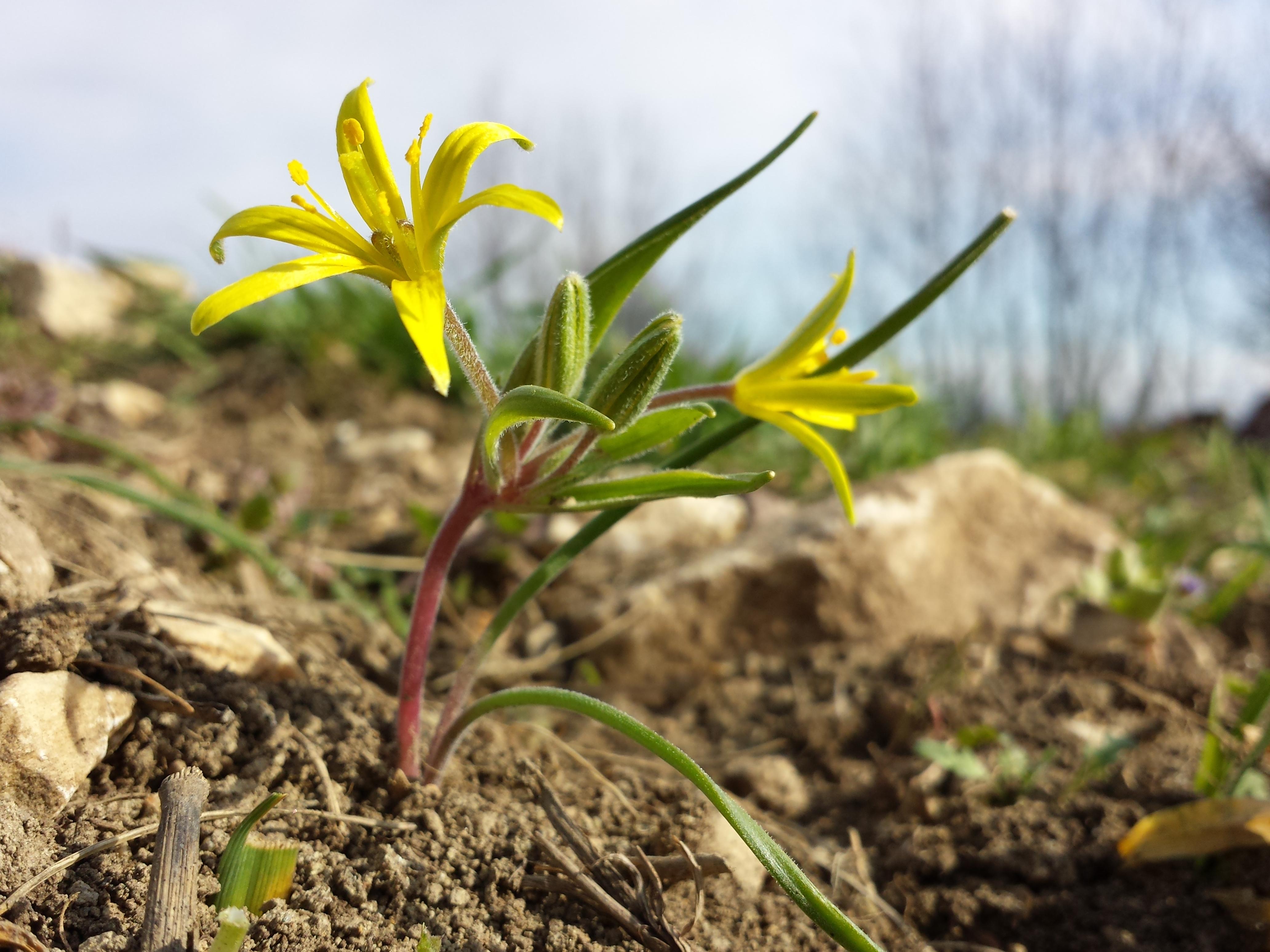
The hairy star of Bethlehem can grow up to 15 centimetres high.
The two long, narrow basal leaves look almost thread-like. They appear to come directly out of the ground (basal) and arise from the underground bulb. Under the inflorescence grow bracts that are often broader and much shorter than the two basal leaves.
The stem grows erect and is glabrous except for the bracts. The lower part is often purplish.
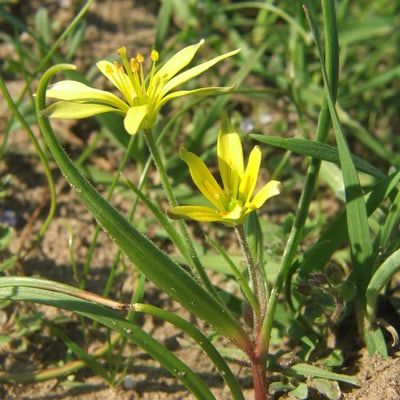
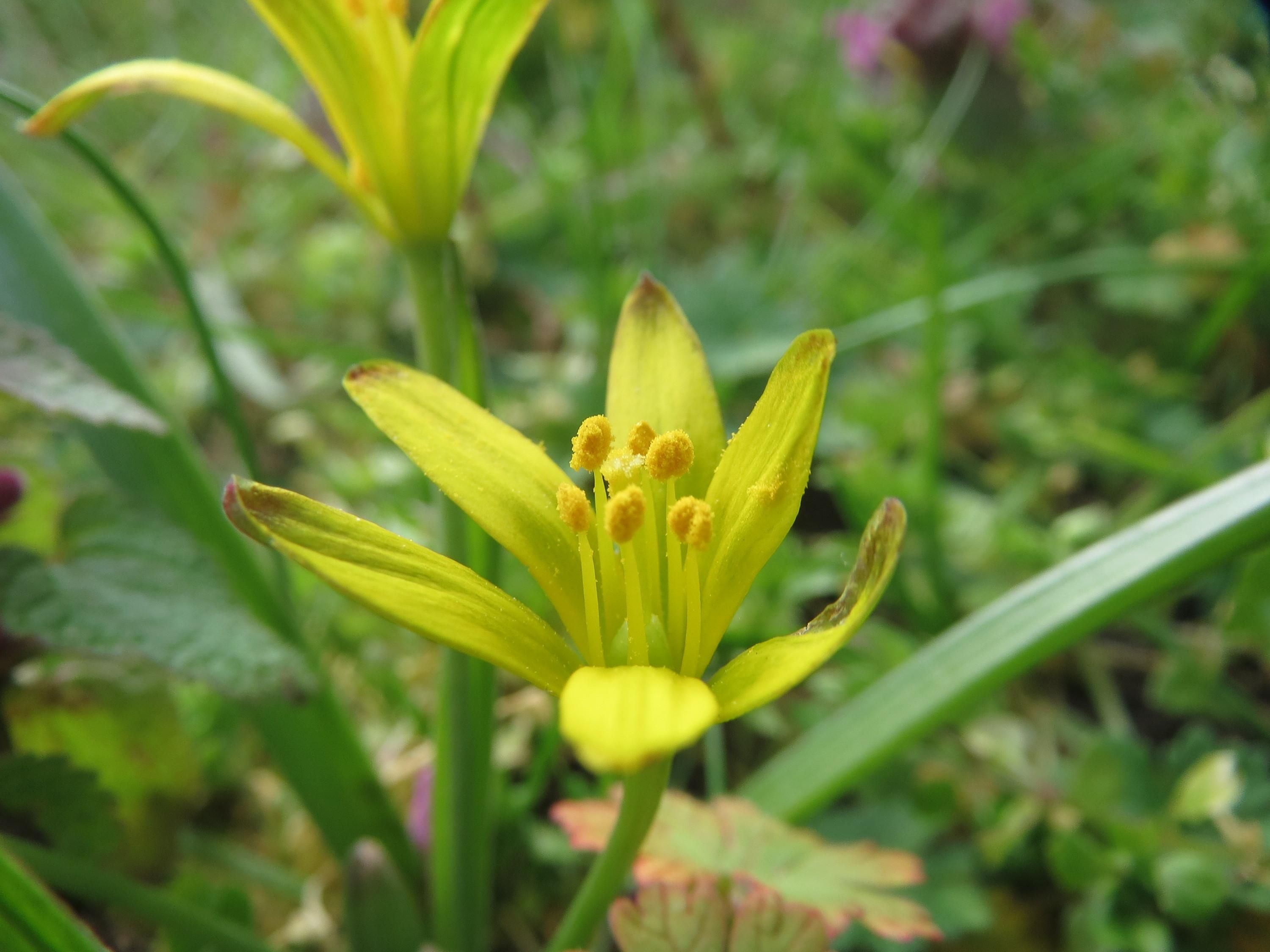
The flowers have up to ten petals arranged in a star shape. They are golden yellow or greenish yellow. There are often more than ten flowers in one inflorescence.
The fruits are three-parted capsules.
Features
Hairy star of Bethlehem
Gagea villosa
hairy flowers
two basal leaves
In the city
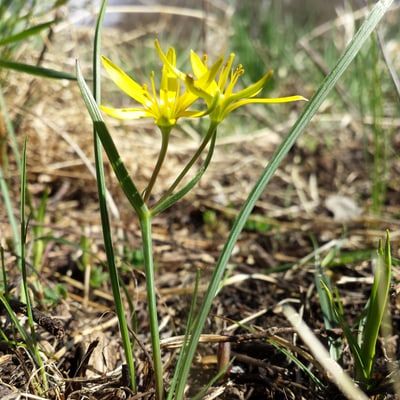
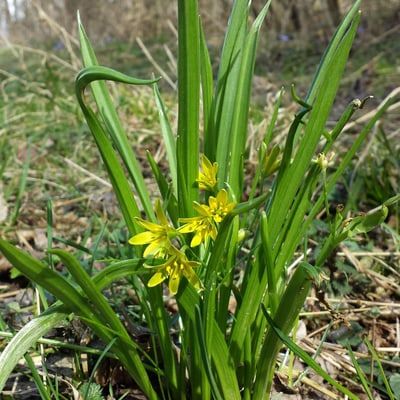
The hairy star of Bethlehem prefers to grow on the nutrient-rich and loose soils of fields. With the use of weedkillers, however, it has largely disappeared from cultivated areas. In the city, the field golden star can be found in cemeteries and parks.
Fun Facts
It is rare throughout Germany.
The flowering period is from March to May.
It lives for several years and generally flowers and fruits annually (perennial plant).
- Endangerment level Germany: Warning list
The scientific species name villosa means shaggy or hairy and refers to the hairy flowers.
Sources
Habitus, Pipi69e, PD, https://commons.wikimedia.org/wiki/File:Gagea_villosa_1.JPG

Blüten, AnRo0002, CC0, https://commons.wikimedia.org/wiki/File:20160312Gagea_villosa.jpg

Habitus, Stefan.lefnaer, CC BY-SA 4.0, https://commons.wikimedia.org/wiki/File:Gagea_villosa_sl3.jpg

Page „Acker-Gelbstern“. : Wikipedia, The Free Encyclopedia. Date of last revision: 05.01.2017, 17:53 UTC. URL: https://de.wikipedia.org/w/index.php?title=Acker-Gelbstern&oldid=161325635 (Accessed: 08.02.2018).