
Short Description
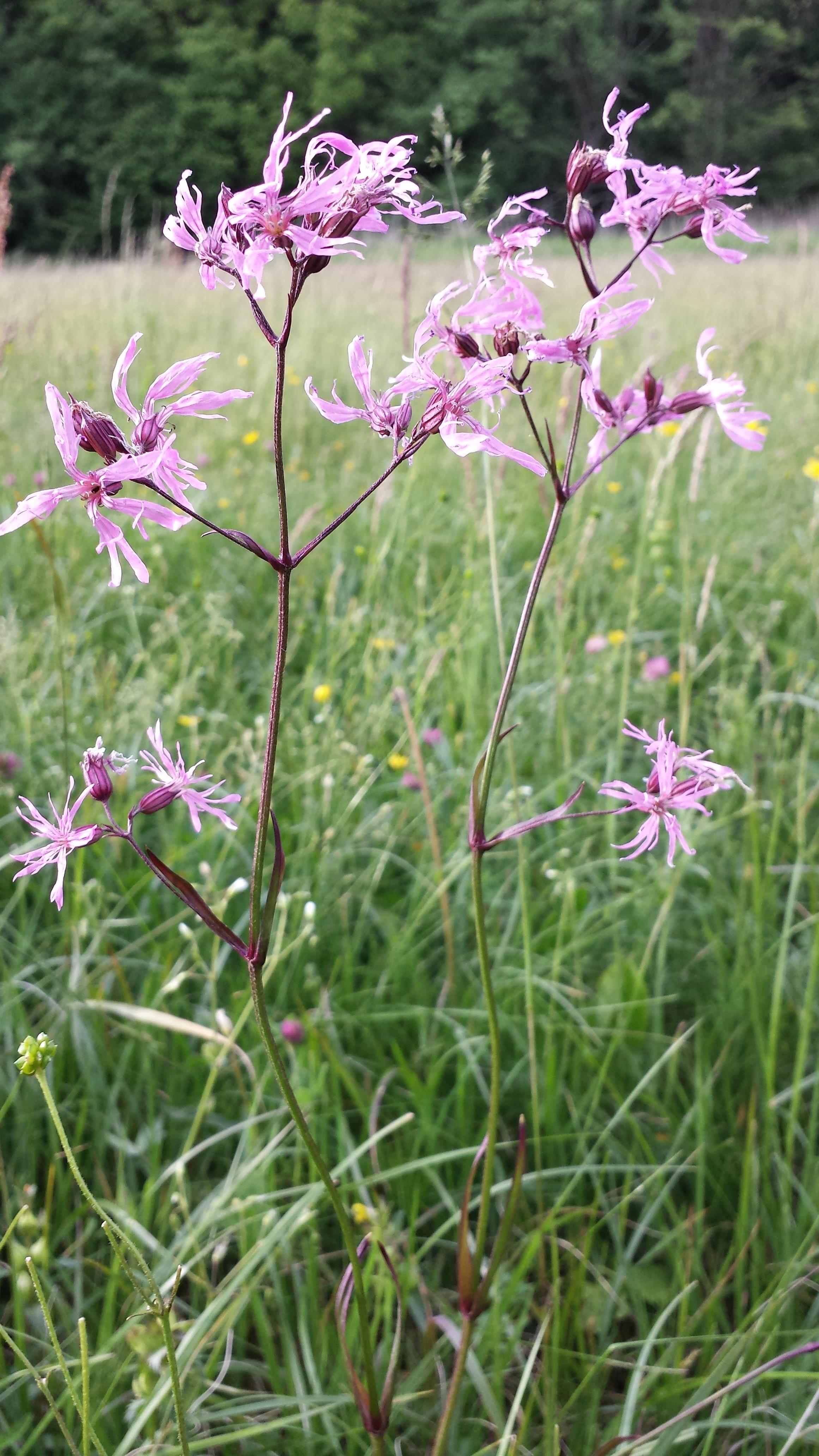
Ragged robin can grow to up to 90 cm in height.
The leaves are arranged in opposite pairs on the stem. They are spoon- to lance-shaped with ciliated margins.
The stem is branched from the base. Only two new branch stems grow at a time.
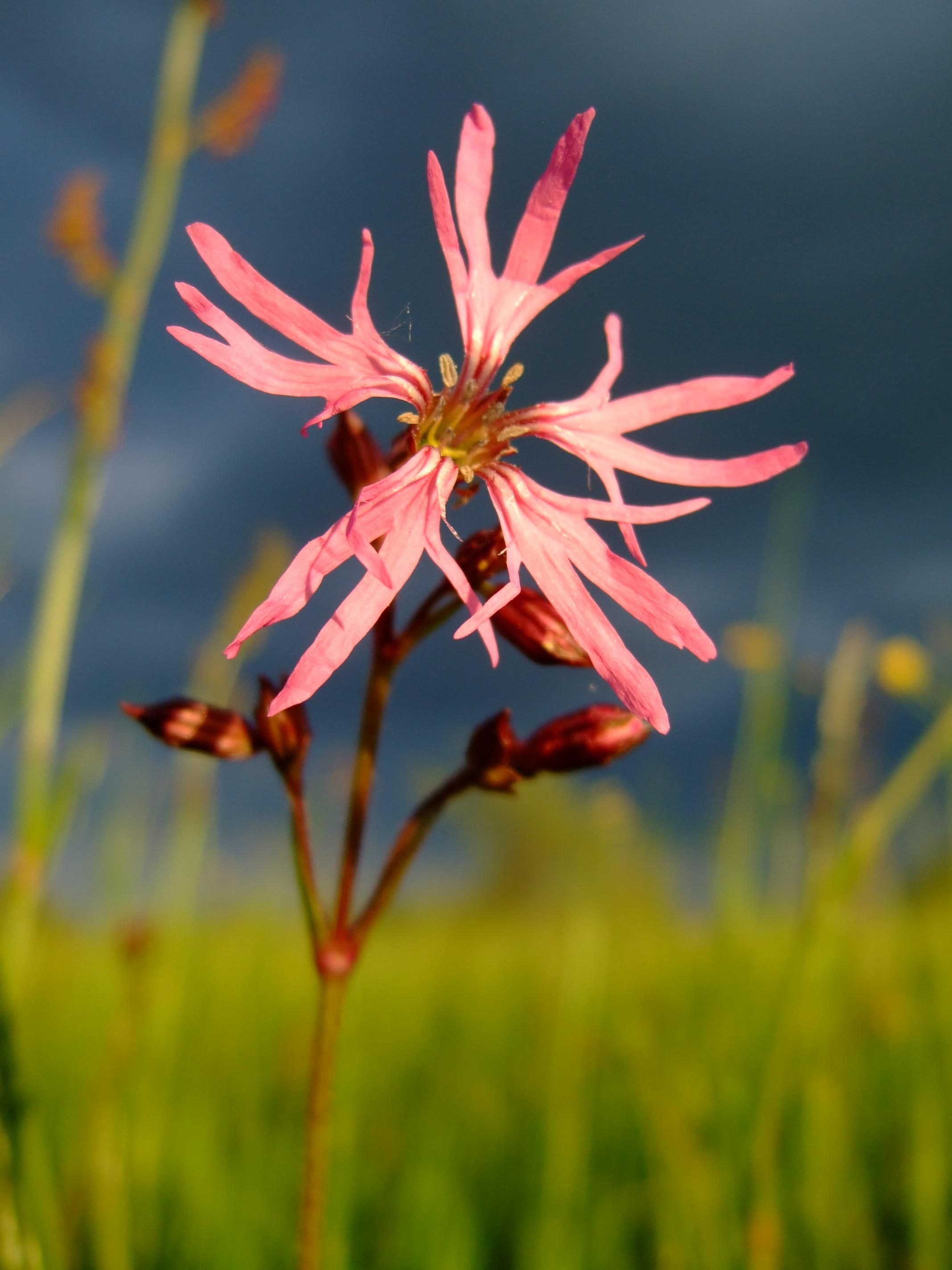
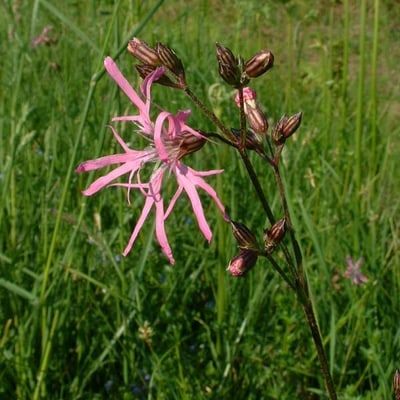
The flowers consist of five pink petals that are usually deeply incised four times. The sepals are fused and have raised longitudinal ribs.
The fruit is an oval capsule with small “teeth” along the edge (denticidal capsule).
Features
Ragged robin
Silene flos-cuculi
large pink flowers
deeply incised petals
In the city
Ragged robins are plants rarely seen in an urban environment. They can be found in wet areas such as moorlands or marshes. It prefers damp to wet nutrient-poor sites with loamy soil.
Many of its natural habitats are enriched with nutrients as the result of human activity. This plant reacts sensitively to such changes.
Fun Facts
Ragged robins with white flowers also exist.
It flowers from May to July.
It lives for several years and generally flowers and fruits annually (perennial plant).
- Endangerment level Germany: not endangered
The flowers can be eaten raw and make very nice edible decorations for salads and sweet dishes.
Sources
Blütenstand, Aiwok, CC BY-SA 3.0, https://commons.wikimedia.org/wiki/File:Lychnis_flos-cuculi_1.jpg

Habitus, KENPEI, CC BY-SA 3.0, https://commons.wikimedia.org/wiki/File:Lychnis_flos-cuculi_%27Jenny%271.jpg

Habitus, Stefan.lefnaer, CC BY-SA 3.0, https://commons.wikimedia.org/wiki/File:Lychnis_flos-cuculi_sl2.jpg

Fleischhauer, S. G., Guthmann, J. & Spiegelberger, R. (2007) Essbare Wildpflanzen. 200 Arten bestimmen und verwenden, Baden und München: AT Verlag.
Page „Kuckucks-Lichtnelke“. : Wikipedia, The Free Encyclopedia. Date of last revision: 15.09.2016, 13:55 UTC. URL: https://de.wikipedia.org/w/index.php?title=Kuckucks-Lichtnelke&oldid=157949606 (Accessed: 12.10.2016).
Bundesamt für Naturschutz (n.d.) Artensteckbriefe, URL: http://floraweb.de/pflanzenarten/artenhome.xsql?suchnr=24031& (Accessed: 12.10.2016).