
Short Description
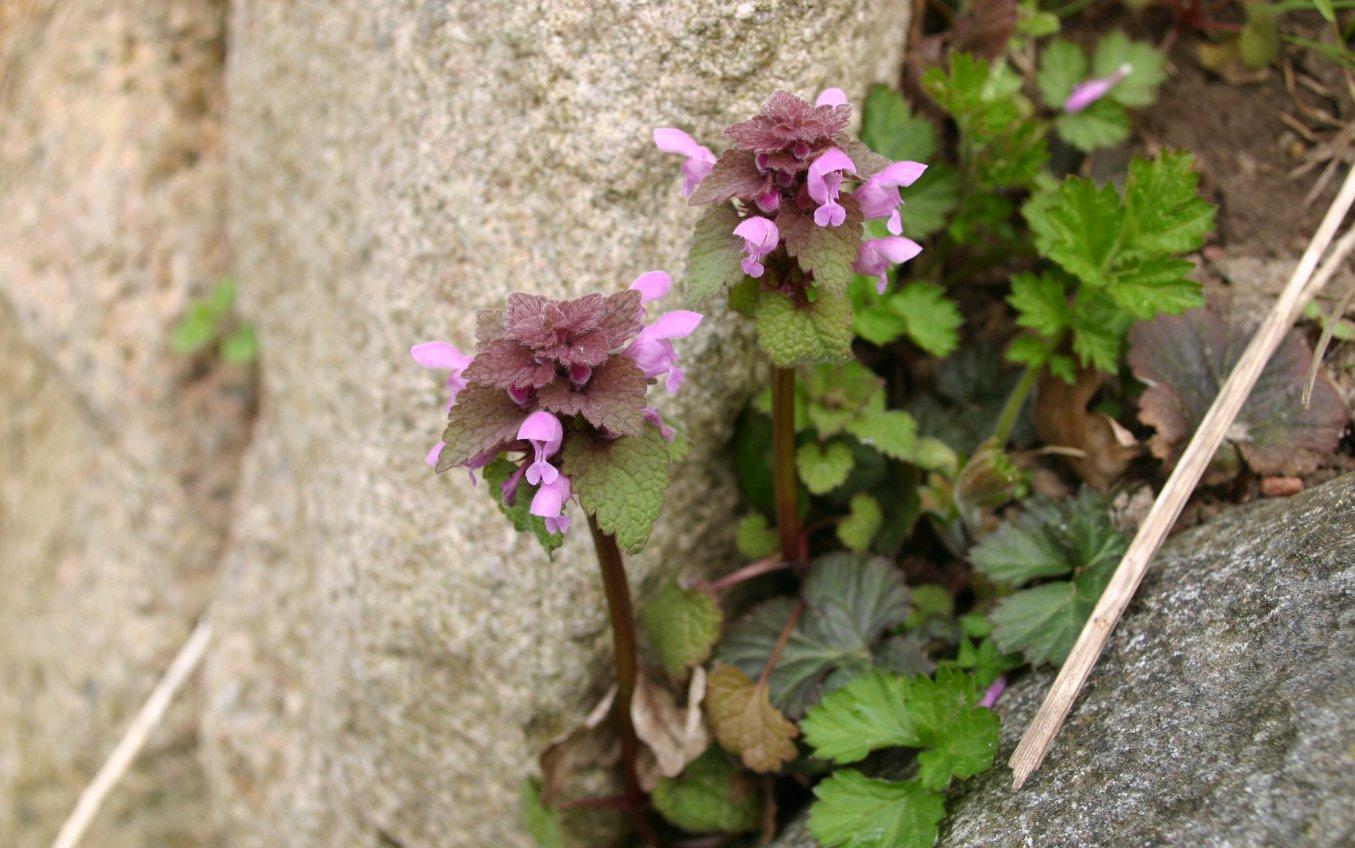
The red deadnettle can grow up to 45 cm high.
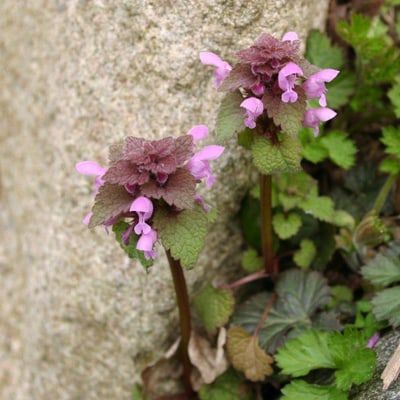
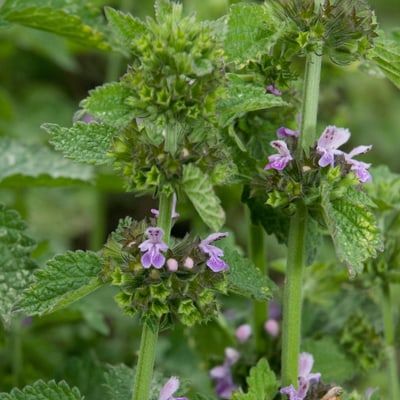
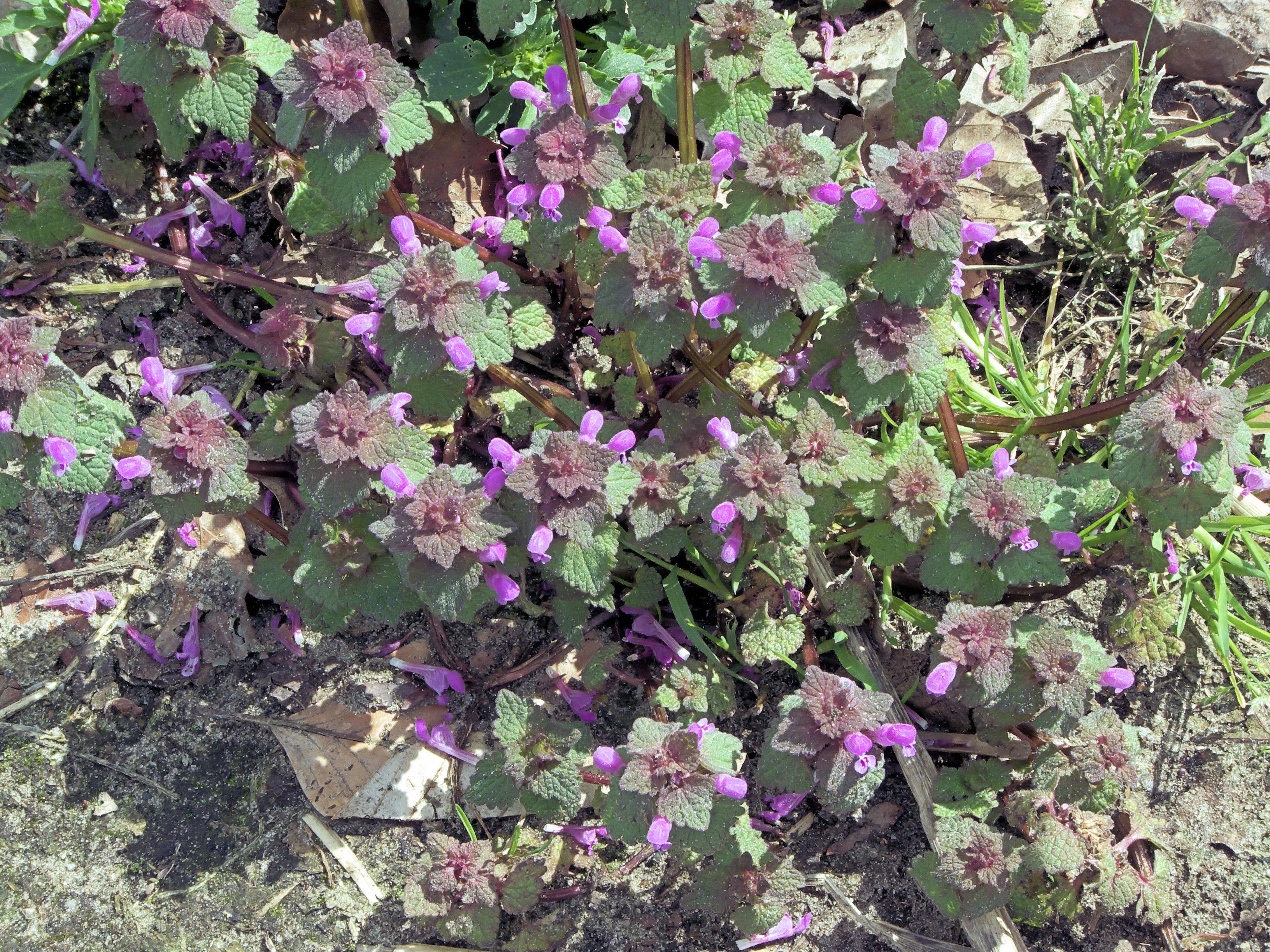
The soft-haired leaves are ovate to cordate and notched at the edges. Young leaves are tinged with purple and turn dark green as they mature. They sit opposite each other on the stem.
The stem grows upright. It is strong and square.
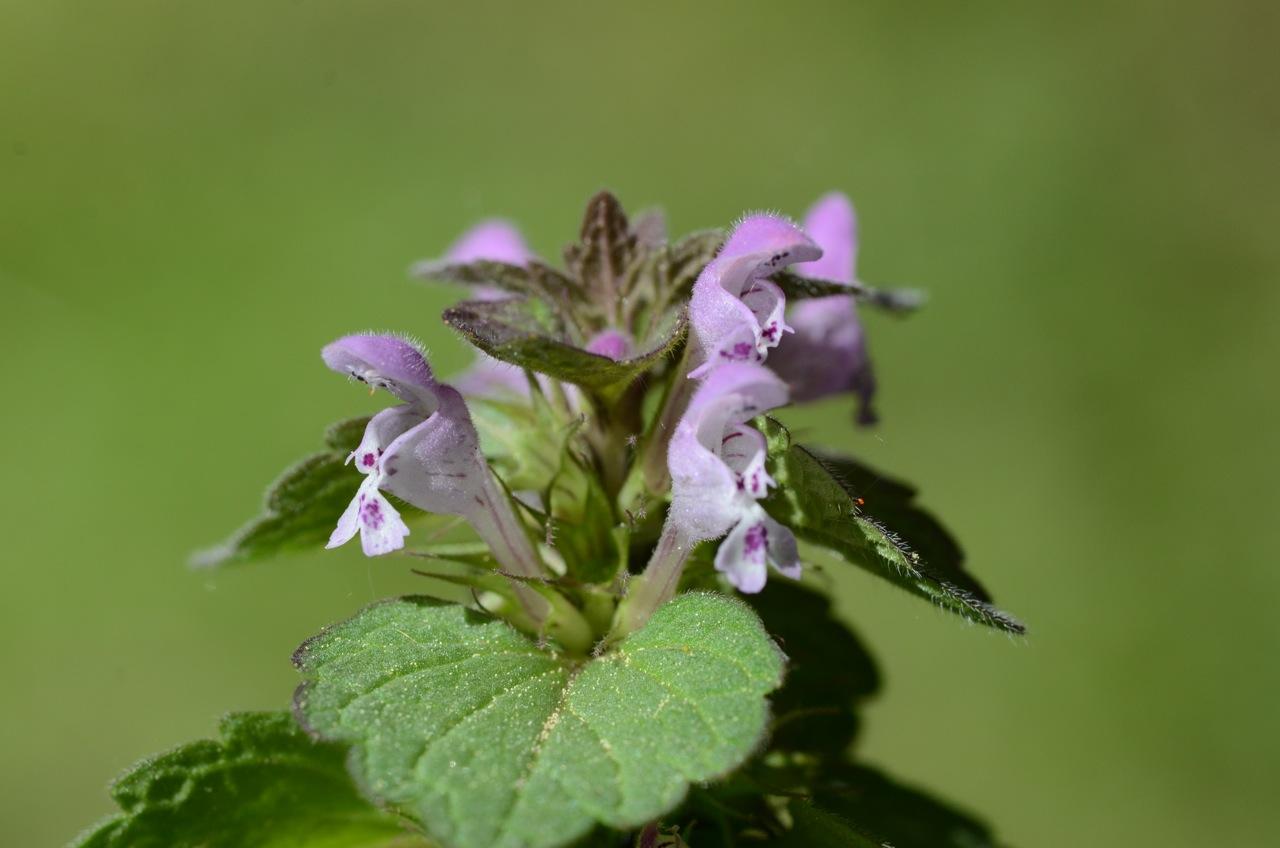
The flowers are arranged in a circle above the leaves. They are purple or pink. The corolla consists of two lips. The upper lip is helmet-shaped. The lower lip is tripartite and faintly patterned.
The fruits are small, single-seeded nutlets. There are always four of them in the calyx of the flower.
Features
Red deadnettle
Lamium purpureum
purple tinged plant
nettle-like leaves without stinging hairs
In the city
Red deadnettle prefers moist, nutrient-rich and loose soils. Since nutrient-rich soils are common in the city, it finds many suitable sites. It grows in fields, gardens, roadsides and fallow land. It is a nitrogen indicator.
Fun Facts
The plant grows very rapidly and can produce up to four generations per year.
In favourable conditions, it also flowers in winter.
The flowering period is from March to October.
It is an annual plant. This means the plant dies in the first year after the seeds have ripened.
The flowers are pollinated by bees and wasps.
The fruits carry an fleshy and oily appendage (elaiosome), so spreading by ants is also possible.
- Endangerment level Germany: not endangered
- Usage:
The leaves and flowers can be eaten raw and cooked like vegetables.
The tea made from dried flowers is used against women's disorders, bladder problems, stomach complaints and coughs.
Sources
Habitus, Sten Porse, CC BY-SA 3.0, https://commons.wikimedia.org/wiki/File:Lamium-purpureum-flowers.JPG

Blüten, Radio Tonreg, CC BY-SA 2.0, https://commons.wikimedia.org/wiki/File:Lamium_purpureum_(7007665026).jpg
.jpg)
Habitus, Rasbak, CC BY-SA 3.0, https://commons.wikimedia.org/wiki/File:Lamium_purpureum_plant,_paarse_dovenetel.jpg

Kammer, P. M. (2016) Pflanzen einfach bestimmen. Schritt für Schritt einheimische Arten kennenlernen, Bern: Haupt Verlag.
Spohn, M., Golte-Bechtle, M. & Spohn, R. (2015) Was blüht denn da? Stuttgart: Franckh Kosmos Verlag.
Page „Purpurrote Taubnessel“. : Wikipedia, The Free Encyclopedia. Date of last revision: 02.01.2018, 21:16 UTC. URL: https://de.wikipedia.org/w/index.php?title=Purpurrote_Taubnessel&oldid=172520560 (Accessed: 08.03.2018).