
Short Description
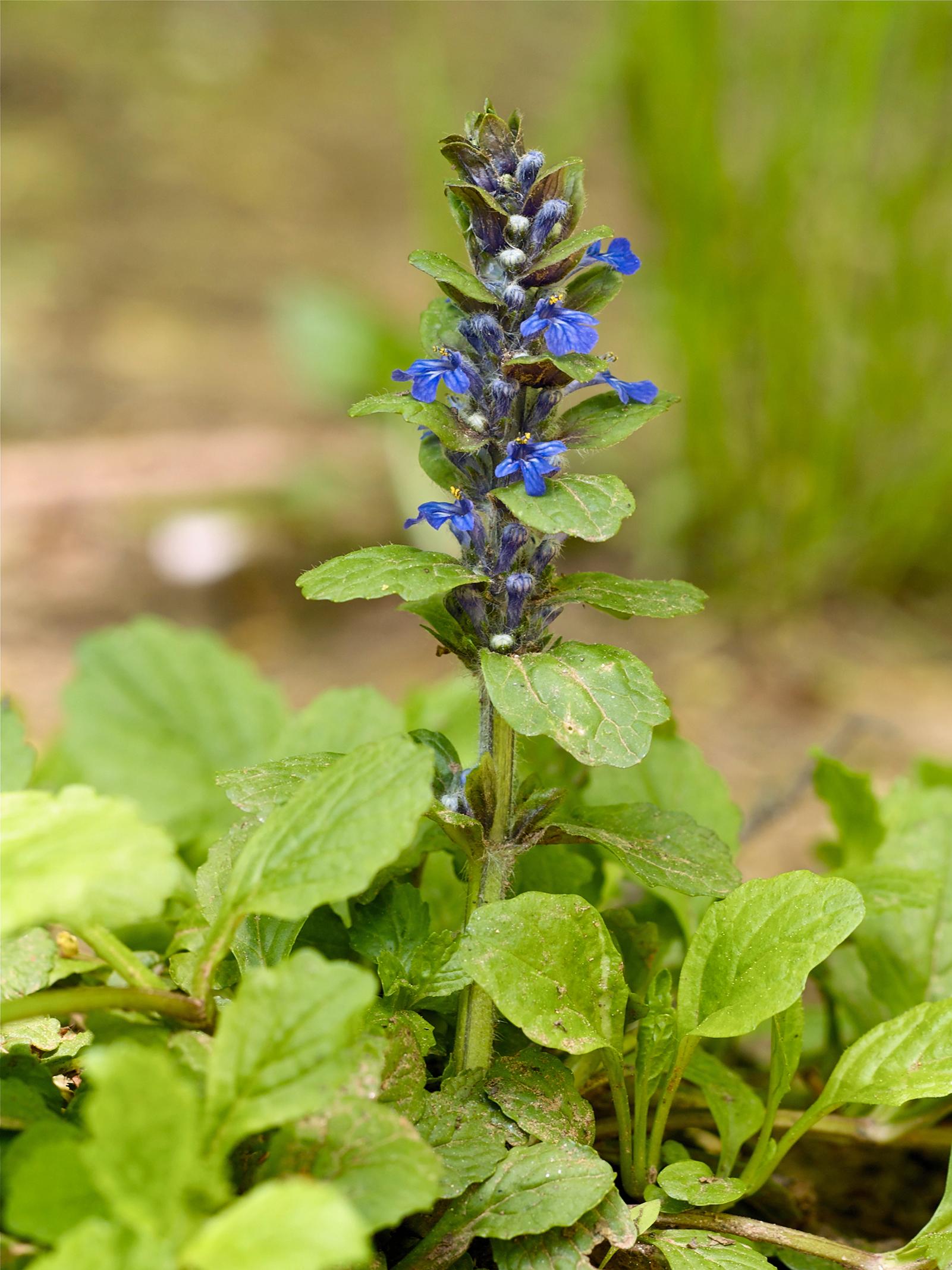
The carpet bugle can grow up to 30 cm high.
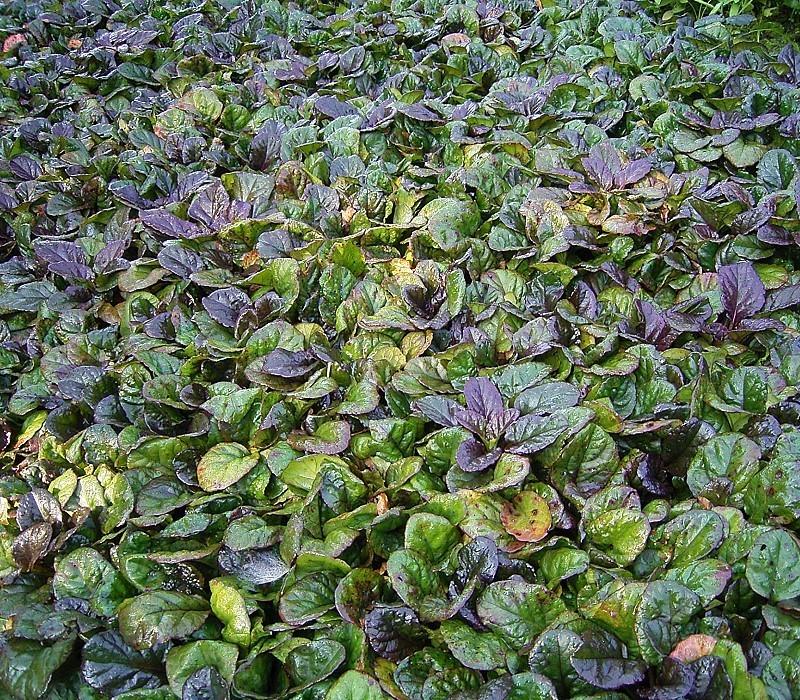
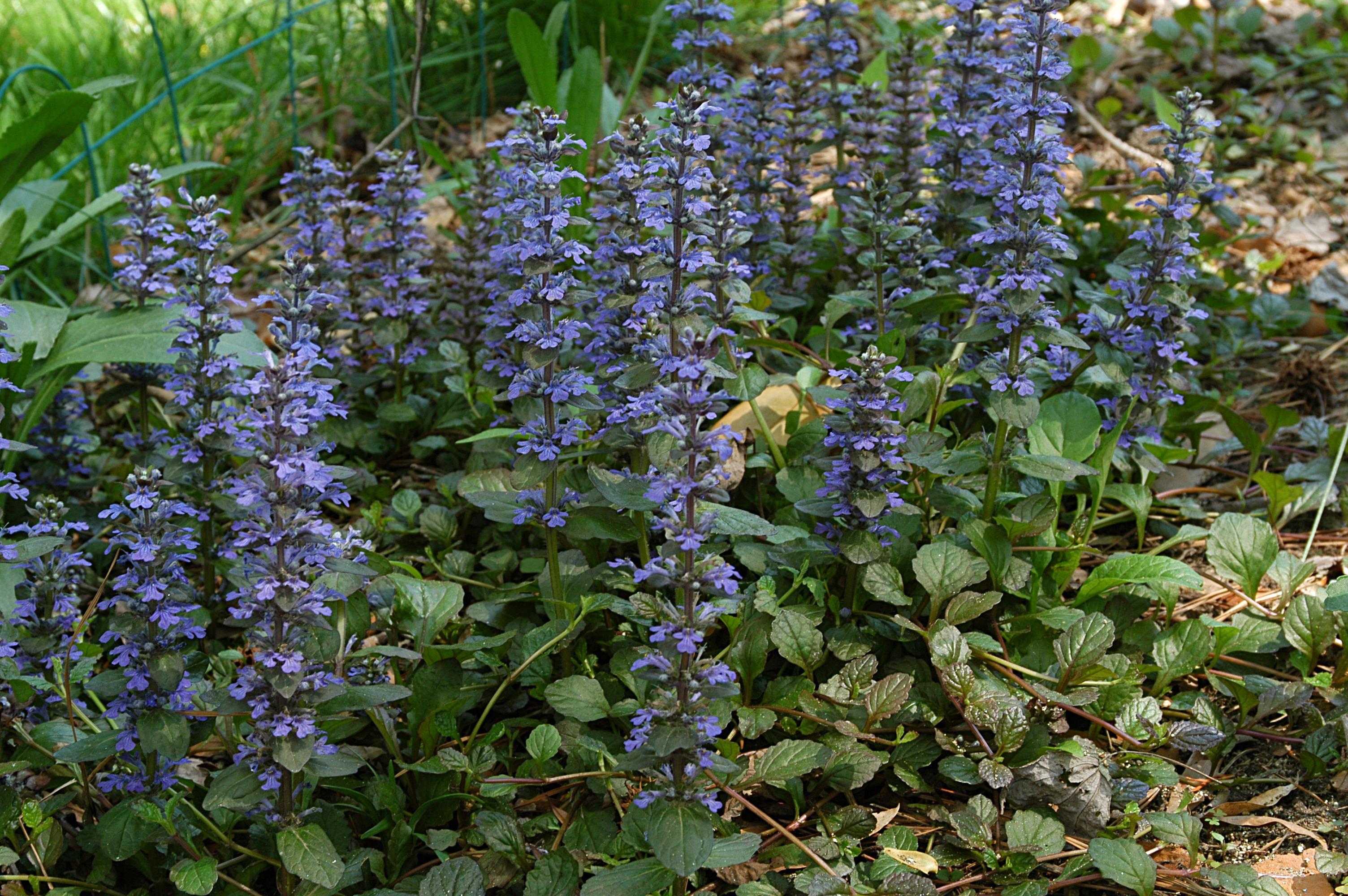
The leaves are ovate and scattered with hairs. They stand in a rosette directly above the ground or sit opposite each other on the stem. The upper leaves are often reddish-purple tinged. The leaf margin is slightly toothed or smooth.
The stem grows upright. It is square and also hairy.
The flowers sit in circles on superimposed layers above the leaves. They are blue and often brightly patterned. The corolla consists of two lips. The upper lip is tiny and therefore seems to be missing. The lower lip is three-lobed.
The fruits are small, single-seeded nutlets. There are always four of them in the calyx of the flower.
Features
Carpet bugle
Ajuga reptans
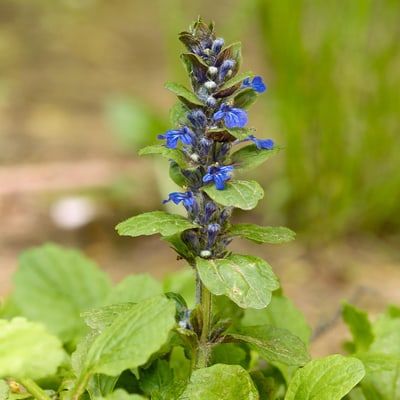
patterned, blue flowers
smooth leaf edge
In the city
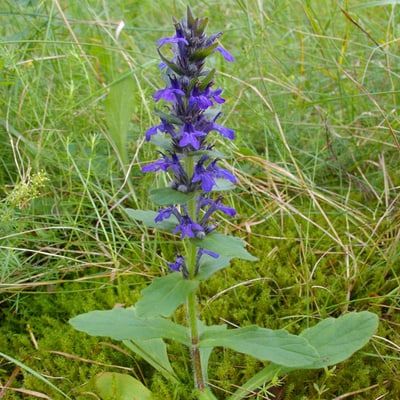
In the city, the carpet bugle grows on meadows and lawns, under bushes and in forests. It is also planted as an ornamental plant under trees and sparse shrubs. It prefers moist, nutrient-rich and neutral to acidic soils.
Fun Facts
The plant contains substances that disrupt the hormone-controlled moulting of various insect larvae. These substances can be used for pest control.
The flowering period is from May to August.
It lives for several years and generally flowers and fruits annually (perennial plant).
The flowers are pollinated by insects.
The seeds are spread by ants.
- Endangerment level Germany: not endangered
- Usage:
Today it is used in homeopathy for metabolic diseases. However, the effect is not proven.
It is native to Europe.
In the Middle Ages, the plant was used to heal wounds.
Sources
Habitus, Jörg Hempel, CC BY-SA 2.0, https://commons.wikimedia.org/wiki/File:Ajuga_reptans_LC0138.jpg

Blätter, Frank Vincentz, CC BY-SA 3.0, https://commons.wikimedia.org/wiki/File:Ajuga_reptans_atropurpurea_03_ies.jpg

Habitus, EnLorax, CC BY-SA 3.0, https://commons.wikimedia.org/wiki/File:Ajuga_reptans_20070429_132711_1.jpg

Kammer, P. M. (2016) Pflanzen einfach bestimmen. Schritt für Schritt einheimische Arten kennenlernen, Bern: Haupt Verlag.
Schönfelder, I. & Schönfelder, P. (2010) Der Kosmos-Heilpflanzenführer. Über 600 Heil- und Giftpflanzen Europas, Stuttgart: Franckh Kosmos Verlag.
Spohn, M., Golte-Bechtle, M. & Spohn, R. (2015) Was blüht denn da? Stuttgart: Franckh Kosmos Verlag.
Page „Kriechender Günsel“. : Wikipedia, The Free Encyclopedia. Date of last revision: 22.01.2018, 22:02 UTC. URL: https://de.wikipedia.org/w/index.php?title=Kriechender_G%C3%BCnsel&oldid=173223220 (Accessed: 17.04.2018).
Bundesamt für Naturschutz (n.d.) Artensteckbriefe, URL: http://floraweb.de/pflanzenarten/artenhome.xsql?suchnr=141& (Accessed: 17.04.2018).