
Short Description
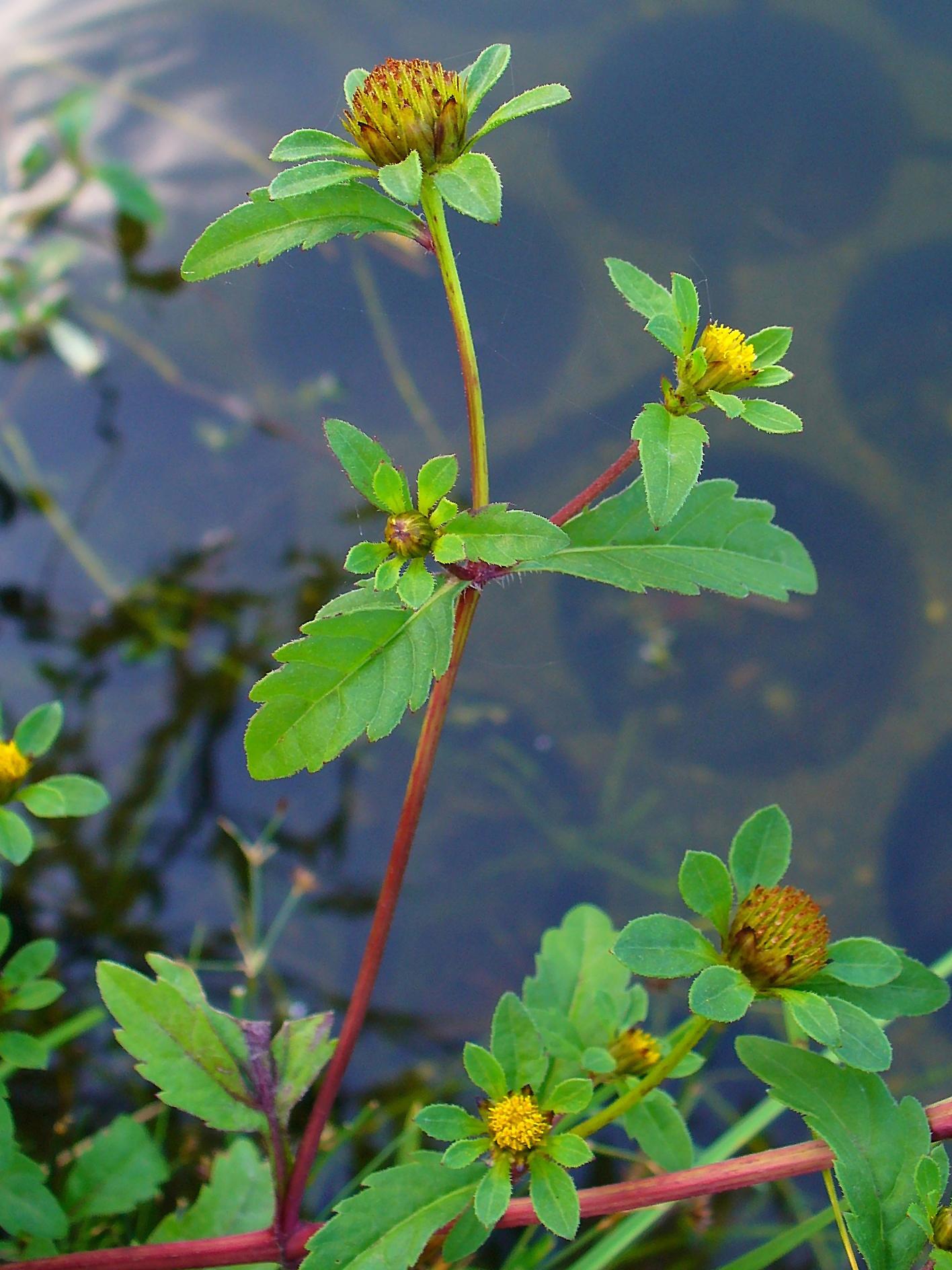
The three-parted beggarticks can grow up to one metre high.
The dark green leaves are three to five times lobed or divided into sections. The segments are ovate and roughly toothed at the edge. The leaves sit opposite each other on the stem.
The upright stem has numerous, protruding branches and is often brown-red in colour.
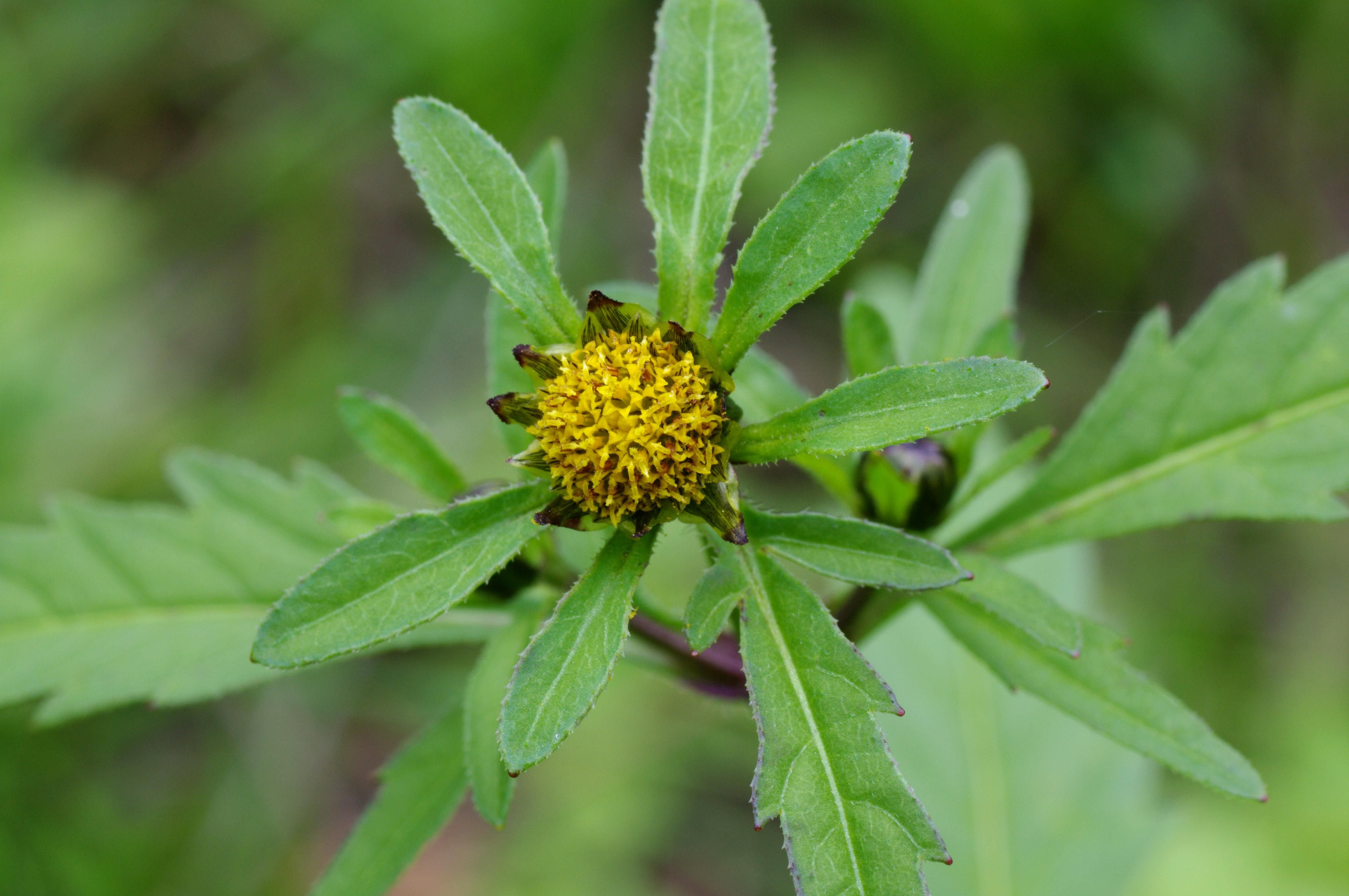
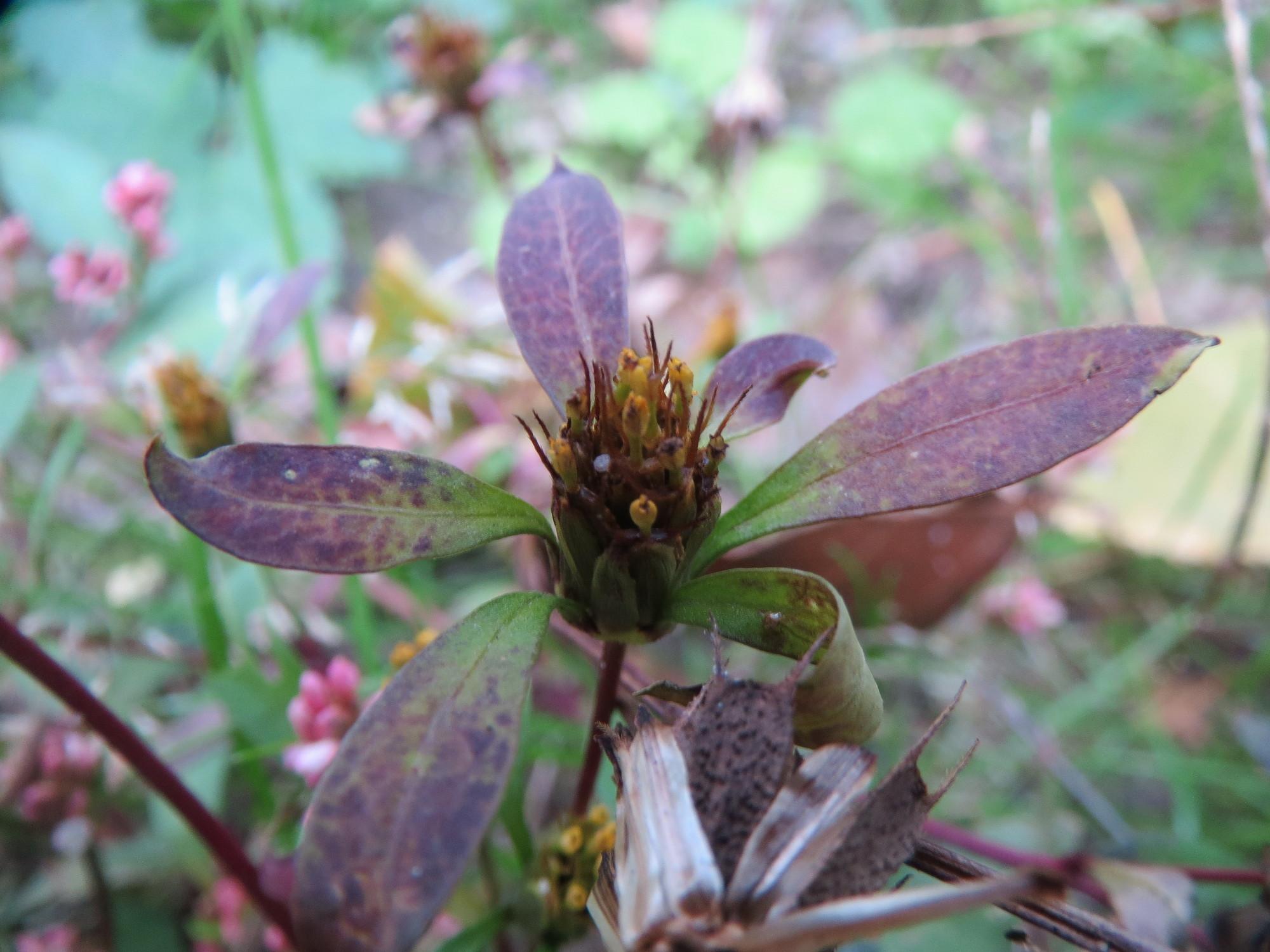
Numerous small, brown-yellow tubular flowers stand together in a flower head that at first glance could be mistaken for the flower. The flower head is surrounded by five to eight green bracts that look like petals.
The three-parted beggarticks forms black to brown, nut-like fruits (achenes). They have three bristles on top with backward hooks and their surface is smooth.
Features
Three-parted beggarticks
Bidens tripartita
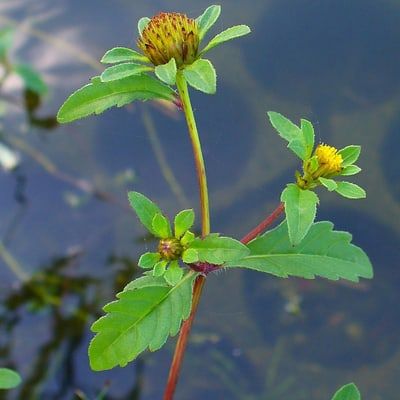
lobed leaves
flower heads with yellow tubular flowers only
green, petal-like, involucral bracts
In the city
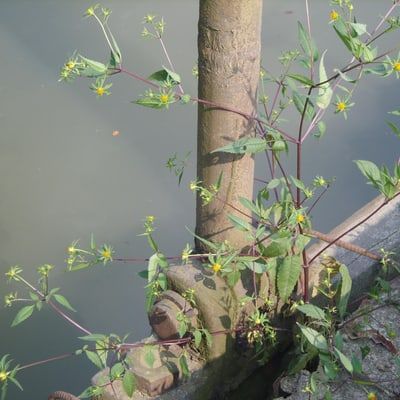
In the city, the three-parted beggarticks often grows on pond banks, ditches, rubble sites and on wet fields. It colonises new, still plant-free habitats on wet, nutrient-rich mud or sandy soils (pioneer plant).
Fun Facts
With the help of the backward bristles the fruits hook into the fur of animals and are thus spread.
The flowers are pollinated by bees, bumblebees and hoverflies.
The flowering period is from July to October.
It is an annual plant, i.e. it flowers for only one summer and dies after the seeds have ripened.
- Endangerment level Germany: not endangered
It is native to Europe.
Sources
Habitus, H. Zell, CC BY-SA 3.0, https://commons.wikimedia.org/wiki/File:Bidens_tripartita_003.jpg

Blütenstand, Christian Fischer, CC BY-SA 3.0 , https://commons.wikimedia.org/wiki/File:BidensTripartita.jpg

Blütenstand, AnRo0002, CC0, https://commons.wikimedia.org/wiki/File:20131008Bidens_tripartita1.jpg

Kammer, P. M. (2016) Pflanzen einfach bestimmen. Schritt für Schritt einheimische Arten kennenlernen, Bern: Haupt Verlag.
Schauer, T., Caspari, C. & Caspari, S. (2015) Der illustrierte BLV-Pflanzenführer für unterwegs. 1150 Blumen, Gräser, Bäume und Sträucher, München: BLV.
Spohn, M., Golte-Bechtle, M. & Spohn, R. (2015) Was blüht denn da? Stuttgart: Franckh Kosmos Verlag.
Page „Dreiteiliger Zweizahn“. : Wikipedia, The Free Encyclopedia. Date of last revision: 13.03.2018, 21:30 UTC. URL: https://de.wikipedia.org/w/index.php?title=Dreiteiliger_Zweizahn&oldid=174987996 (Accessed: 29.05.2018).