
Short Description
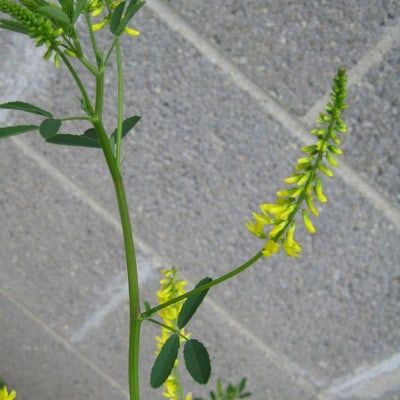
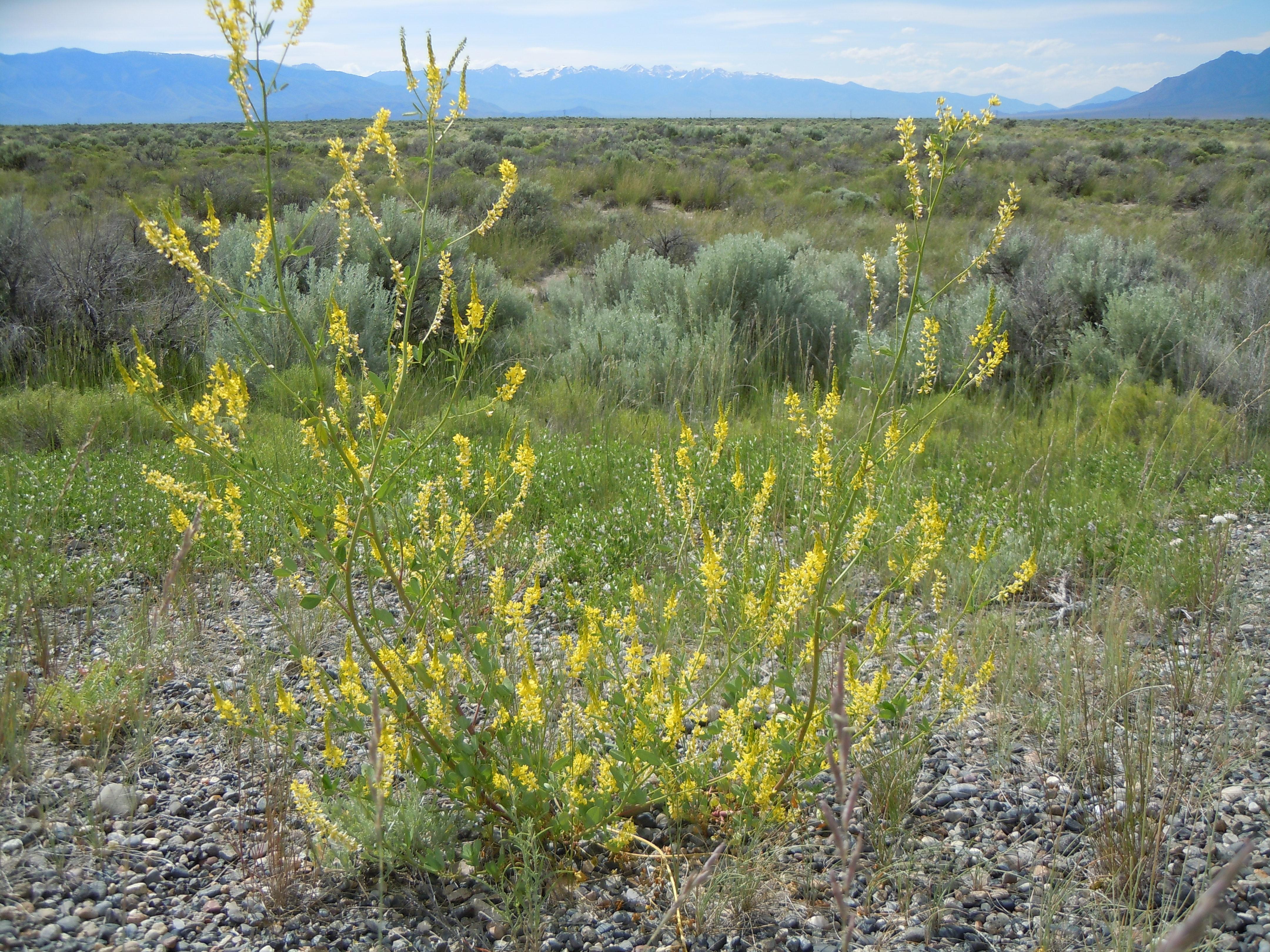
The yellow sweetclover can grow 30 to 100 centimetres tall.
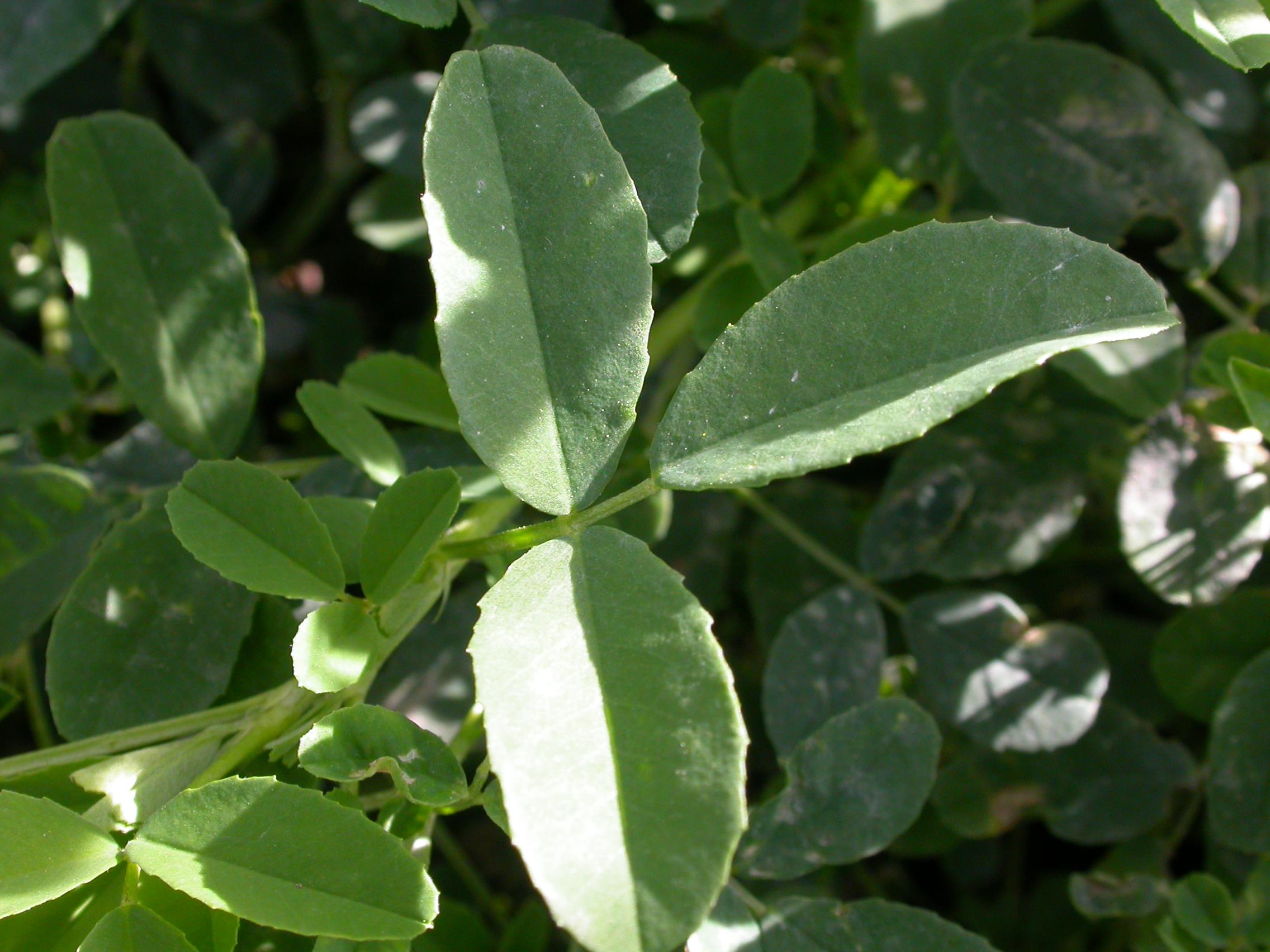
The leaves are divided into petiole and blade. They grow singly and alternately on the stem (alternate). The leaf blade has three stalked leaflets (trifoliate). The individual leaflets are elongated oval and have toothed margins.
The stem is erect and often branched numerous times.
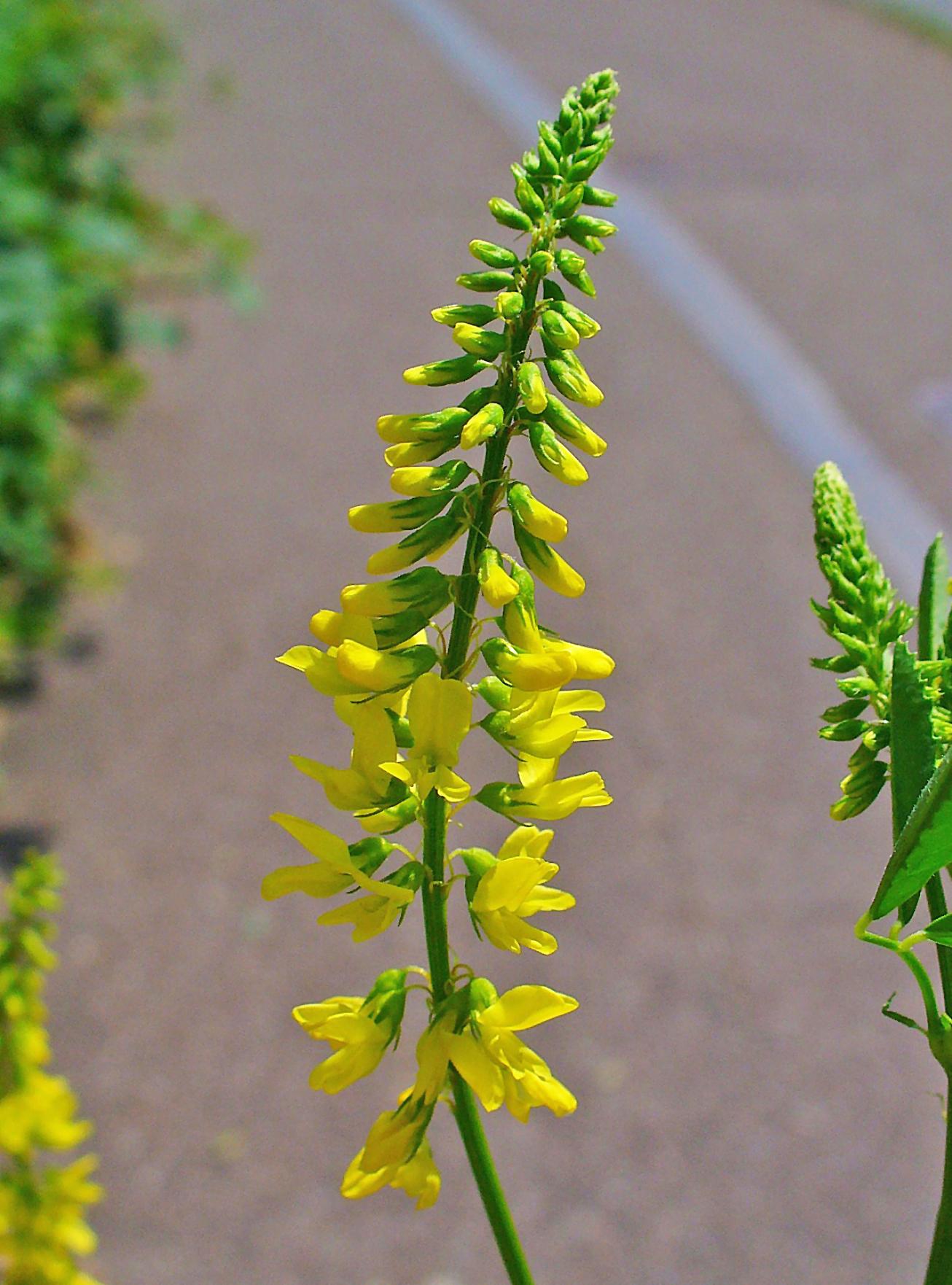
The flowers are yellow and stand in very long and narrow inflorescences. They consist of five petals that form the typical, zygomorphic pea-flower-type (papilionaceous) within this family. The large, upper petal is the standard and projects upwards. The two smaller lateral petals are the wings. The two lower leaves form a hollow keel that surrounds the anthers and the pistil.
The glabrous pods are roundish to ovoid. They are transversely wrinkled and brown when ripe.
Features
Yellow sweetclover
Melilotus officinalis
slightly poisonous
yellow flowers
trifoliate leaves
In the city
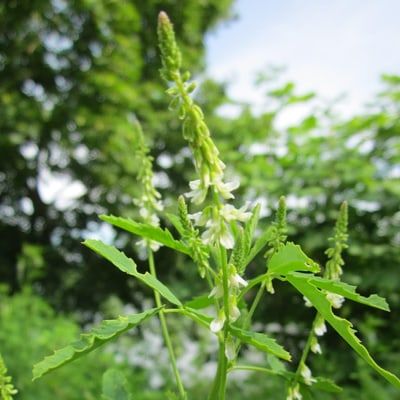
Yellow sweetclover prefers dry and warm sites with calcareous soils. In the city it is often found along paths, on embankments, on rubble and railway sites and on fallow land.
Fun Facts
When the plant withers and dries, coumarin is released, which smells like hay and woodruff.
The flowering period is from June to September.
The pollinators of the flowers are bees and hoverflies.
The fruits are spread by the wind and possibly also by humans.
- Endangerment level Germany: not endangered
- Usage:
In the past, the plant was used as a remedy against moths.
The genus name Melilotus is composed of the Greek words meli= honey and lotus= clover. It refers to the honey-scented, very nectar-rich flowers.
The plant is slightly poisonous. A tea made from dried flowers has a vasodilating effect and helps with venous disorders and haematomas. An overdose leads to headaches.
Sources
Blütenstand, H. Zell, CC BY-SA 3.0, https://commons.wikimedia.org/wiki/File:Melilotus_officinalis_002.JPG

Blätter, Matt Lavin, CC BY-SA 2.0, https://commons.wikimedia.org/wiki/File:Melilotus_officinalis_(5182318621).jpg
.jpg)
Habitus, Matt Lavin, CC BY-SA 2.0, https://commons.wikimedia.org/wiki/File:Melilotus_officinalis_(5144344156).jpg
.jpg)
Kammer, P. M. (2016) Pflanzen einfach bestimmen. Schritt für Schritt einheimische Arten kennenlernen, Bern: Haupt Verlag.
Spohn, M., Golte-Bechtle, M. & Spohn, R. (2015) Was blüht denn da? Stuttgart: Franckh Kosmos Verlag.
Page „Gelber Steinklee“. : Wikipedia, The Free Encyclopedia. Date of last revision: 01.03.2018, 22:09 UTC. URL: https://de.wikipedia.org/w/index.php?title=Gelber_Steinklee&oldid=174526487 (Accessed: 22.03.2018).
Bundesamt für Naturschutz (n.d.) Artensteckbriefe, URL: http://floraweb.de/pflanzenarten/artenhome.xsql?suchnr=3660& (Accessed: 22.03.2018).