
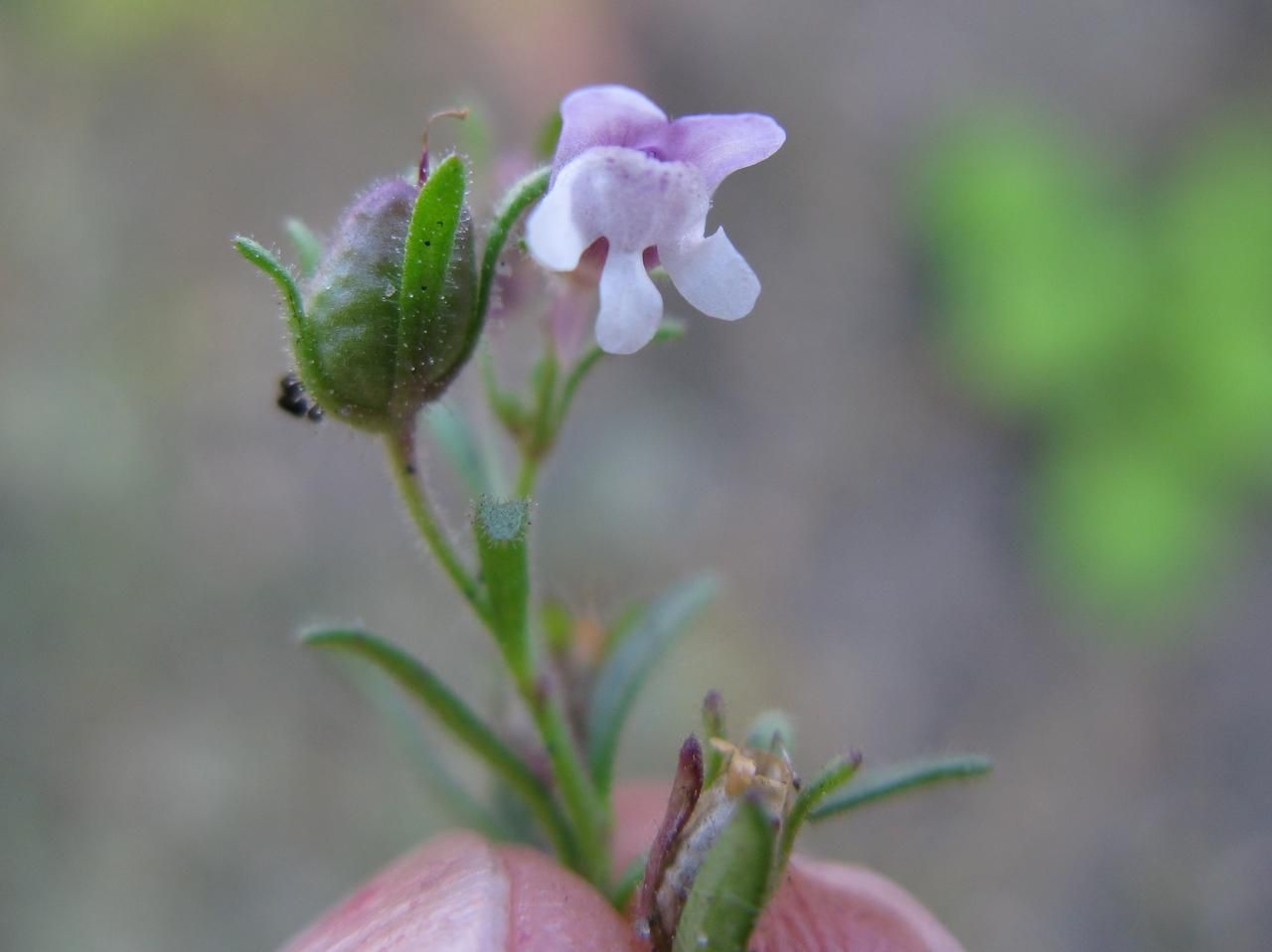
Short Description
The dwarf snapdragon can grow up to 25 cm tall.
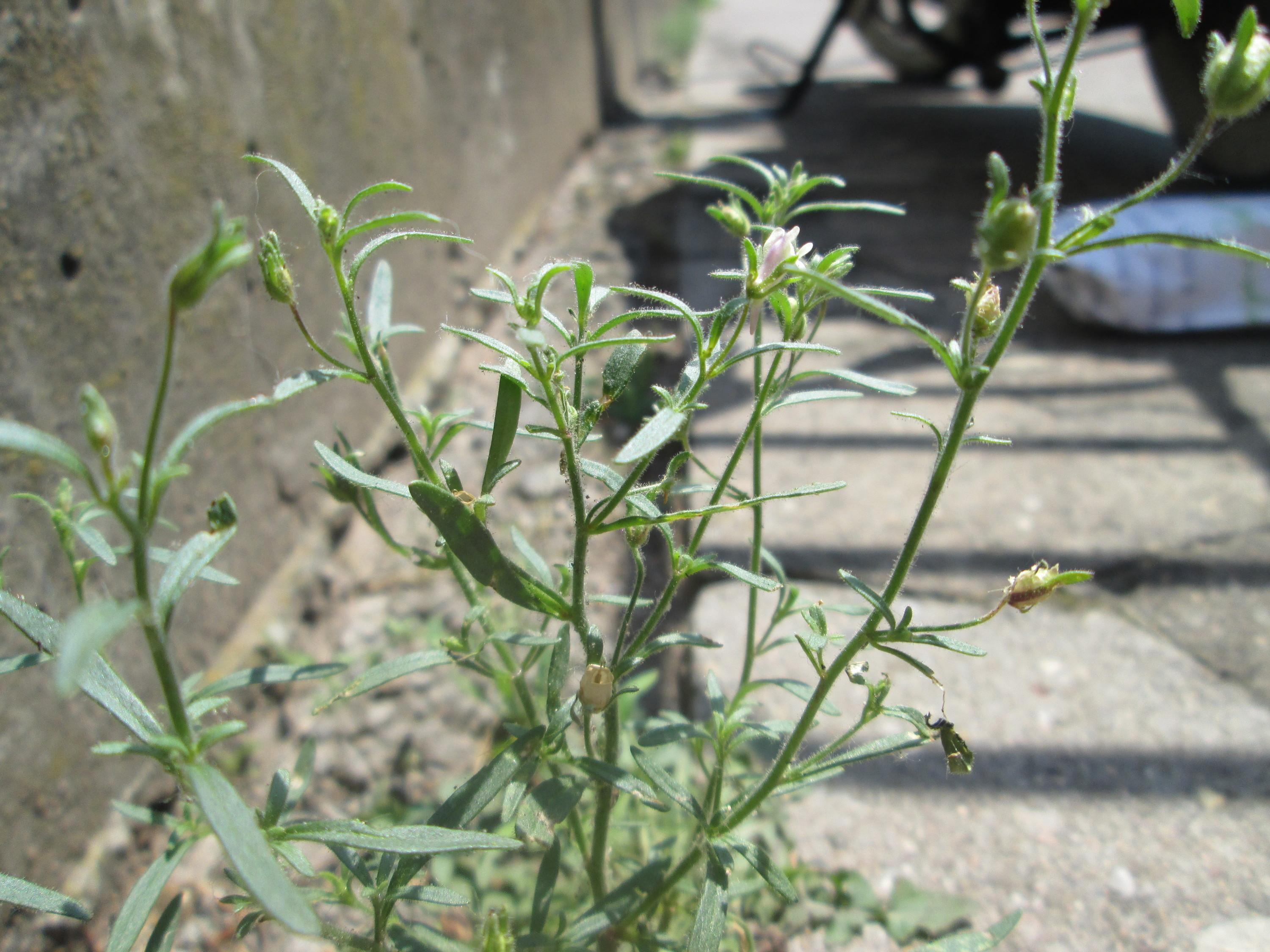
The leaves have glandular hairs and are short-stalked. They are slightly fleshy and elongated. In the lower part of the stem the leaves are opposite each other. In the remaining part of the stem they are arranged singly and alternately.
The hairy stem is erect. It is round and usually branched laterally.
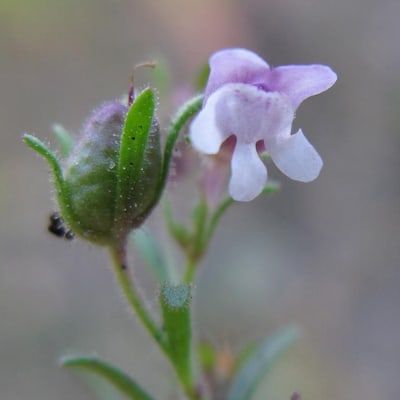
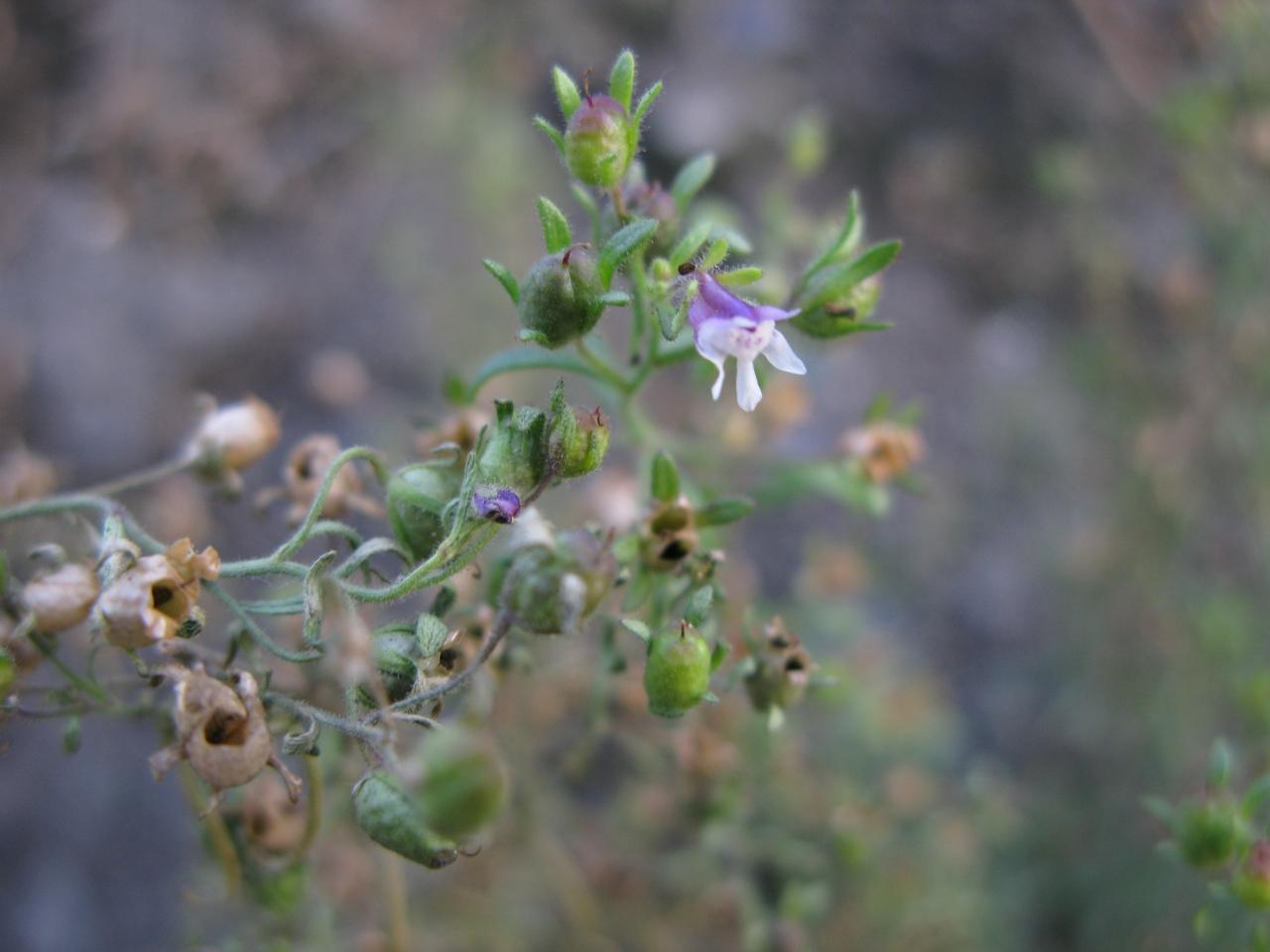
The light purple flowers stand seperately in the axils of the bracts. The petals form a "dragon's mouth-like" corolla, i.e. the flower entrance is blocked by a bulge.
The fruit is an ovoid capsule.
Features
Dwarf snapdragon
Chaenorhinum minus
light purple flowers with a "dragon's mouth-like" corolla
hairy leaves
hairy stem
In the city
The dwarf snapdragon prefers to grow on alkaline and calcareous, sandy or stony soils. It is often found along roadsides, along railway lines and in quarries and as an arable weed.
Fun Facts
The flowers pollinate themselves.
The flowering period is from June to September.
It is an annual plant. This means that the plant lives for one year, flowers and dies after the seeds have ripened.
- Endangerment level Germany: not endangered
Its main distribution is in Central and Southern Europe. In German-speaking countries, it is common in the south and scattered in the north. In the UK it is seen as an archaeophyte, which means it must have been introduced to the island many centuries ago.
Sources
Blüte und unreife Frucht, Molekuel, CC BY-SA 3.0, https://commons.wikimedia.org/wiki/File:Chaenorhinum-minus-4270.jpg

Habitus, AnRo0002, CC0, https://commons.wikimedia.org/wiki/File:20180605Chaenorhinum_minus1.jpg

Blüte und Früchte, Molekuel, CC BY-SA 3.0, https://commons.wikimedia.org/wiki/File:Chaenorhinum-minus-4273.jpg

Spohn, M., Golte-Bechtle, M. & Spohn, R. (2015) Was blüht denn da? Stuttgart: Franckh Kosmos Verlag.
Page „Kleines Leinkraut“. : Wikipedia, The Free Encyclopedia. Date of last revision: 09.06.2018, 15:47 UTC. URL: https://de.wikipedia.org/w/index.php?title=Kleines_Leinkraut&oldid=178166567 (Accessed: 13.07.2018).
Bundesamt für Naturschutz (n.d.) Artensteckbriefe, URL: http://floraweb.de/pflanzenarten/artenhome.xsql?suchnr=1485& (Accessed: 13.07.2018).
Seitz, B., Ristow, M., Meißner, J., Machatzi, B. & Sukopp, H. (2018) Rote Liste und Gesamtartenliste der etablierten Farn- und Blütenpflanzen von Berlin. : Der Landesbeauftragte für Naturschutz und Landschaftspflege / Senatsverwaltung für Umwelt, Klima und Verkehr (eds.) Rote Listen der gefährdeten Pflanzen, Pilze und Tiere von Berlin, URL: https://www.berlin.de/sen/uvk/natur-und-gruen/naturschutz/artenschutz/artenlisten-rote-listen/farn-und-bluetenpflanzen/ (Accessed: 26.03.2021).