
Short Description
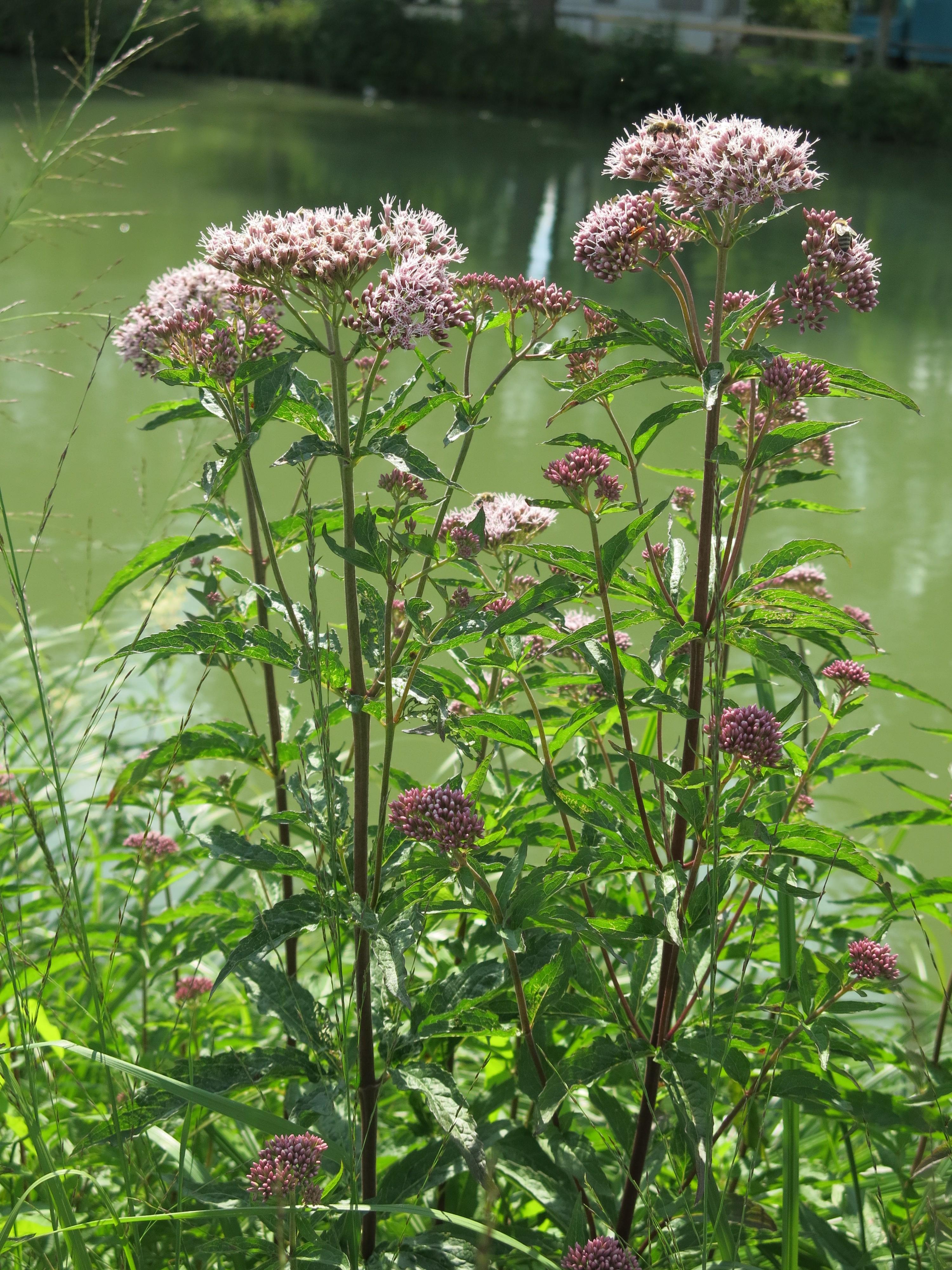
Hemp agrimony can grow up to 1.5 metres high.
The leaves are palmately divided into three to five leaflets (pinnate). They have a toothed margin. Two leaves sit opposite each other on the stem.
The stem grows erect and is densely leafy. It is green and usually has a reddish tinge.
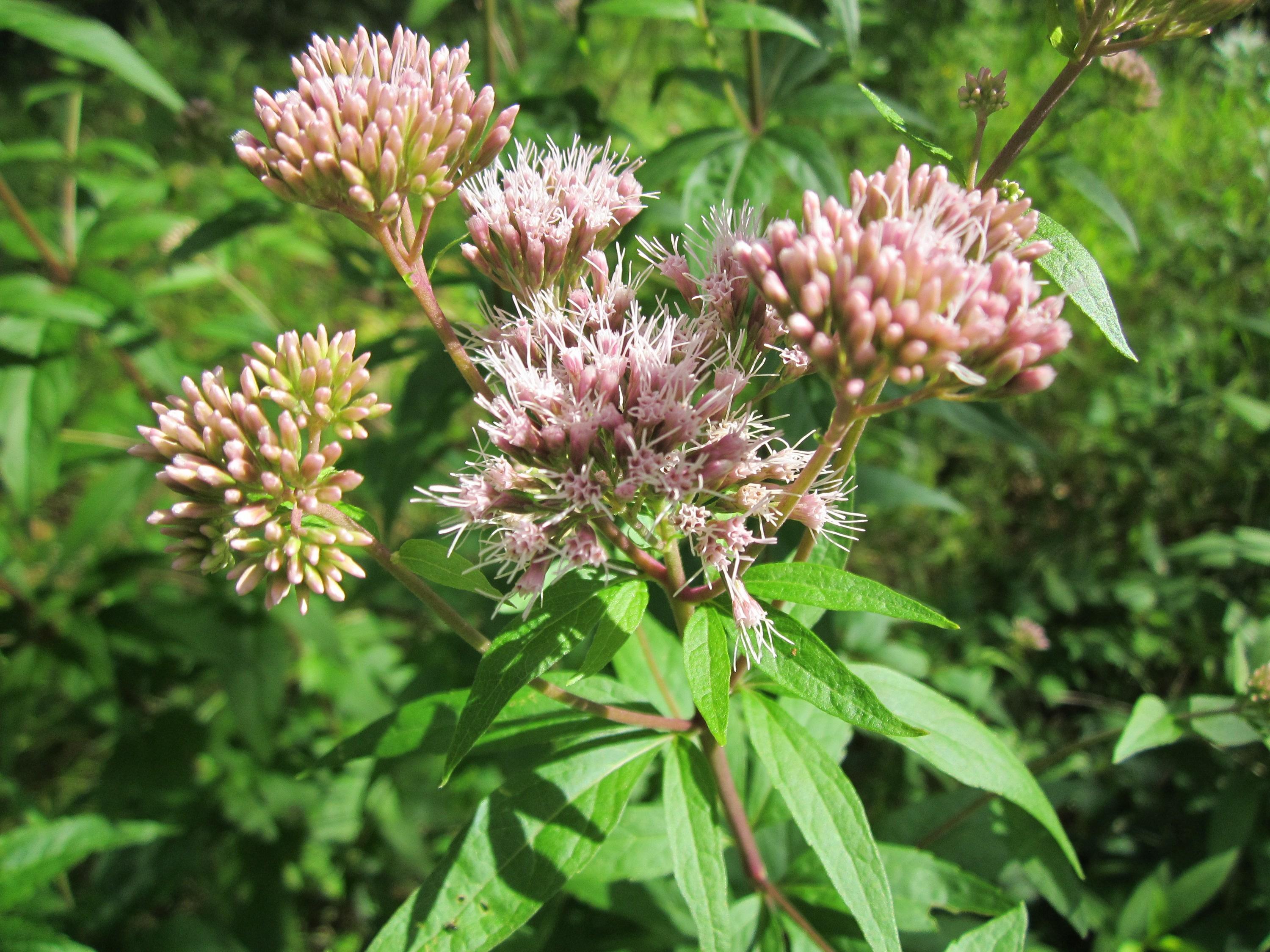
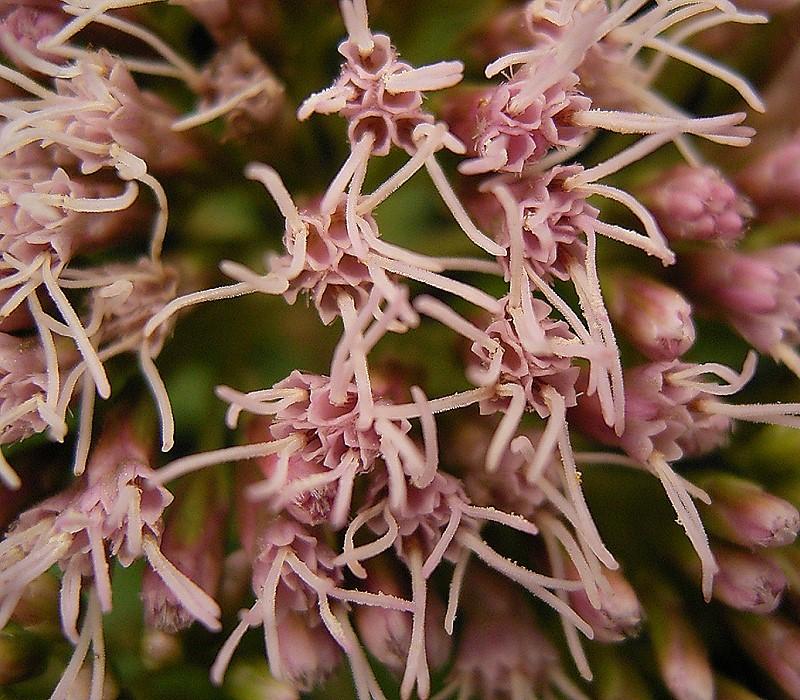
At first glance, the flower head can be mistaken for the flower. This false flower consists of four to six individual pink tubular flowers. The stigmas protrude far out of the flower tubes. The numerous flower heads together form a large, umbrella-like inflorescence.
The plant forms small, nut-like fruits (achenes). They have a dense crown of white hairs.
Features
Hemp agrimony
Eupatorium cannabinum
poisonous
palmate leaves
numerous pink false flowers
In the city
Hemp agrimony prefers damp places and calcareous soils. It often grows in large groups near banks, in ditches, in forest clearings or in damp meadows. It is a nitrogen and moisture indicator.
Fun Facts
The flowering period is from July to September.
It lives for several years and generally flowers and fruits annually (perennial plant).
The flowers are pollinated by insects. Especially butterflies and hoverflies respond to the inflorescences.
The fruits are spread by the wind (anemochory).
The species name cannabinum comes from the Greek and refers to the hemp-like leaves. Botanically, however, the two plants are not related.
- Endangerment level Germany: not endangered
- Usage:
In folk medicine it was used for urinary flow, liver and gall bladder and for wound healing. Because of its liver-damaging and carcinogenic components, it is now only used in homeopathy in highly diluted form.
Hemp agrimony is native and common in almost all of Europe.
The whole plant is poisonous. Symptoms of poisoning can include skin irritation and allergic reactions. Certain substances in the plant can even be carcinogenic.
Sources
Habitus, Pimpinellus, CC BY-SA 4.0, https://commons.wikimedia.org/wiki/File:Eupatorium_cannabinum.jpg

Blütenstand, AnRo0002, CC0, https://commons.wikimedia.org/wiki/File:Eupatorium_cannabinum_in_Schwetzinger_Hardt.jpg

Blüten, Frank Vincentz, CC BY-SA 3.0, https://commons.wikimedia.org/wiki/File:Eupatorium_cannabinum_06_ies.jpg

Kammer, P. M. (2016) Pflanzen einfach bestimmen. Schritt für Schritt einheimische Arten kennenlernen, Bern: Haupt Verlag.
Schauer, T., Caspari, C. & Caspari, S. (2015) Der illustrierte BLV-Pflanzenführer für unterwegs. 1150 Blumen, Gräser, Bäume und Sträucher, München: BLV.
Schönfelder, I. & Schönfelder, P. (2010) Der Kosmos-Heilpflanzenführer. Über 600 Heil- und Giftpflanzen Europas, Stuttgart: Franckh Kosmos Verlag.
Spohn, M., Golte-Bechtle, M. & Spohn, R. (2015) Was blüht denn da? Stuttgart: Franckh Kosmos Verlag.
Page „Gewöhnlicher Wasserdost“. : Wikipedia, The Free Encyclopedia. Date of last revision: 12.03.2017, 18:20 UTC. URL: https://de.wikipedia.org/w/index.php?title=Gew%C3%B6hnlicher_Wasserdost&oldid=163521582 (Accessed: 06.02.2018).
Bundesamt für Naturschutz (n.d.) Artensteckbriefe, URL: http://floraweb.de/pflanzenarten/artenhome.xsql?suchnr=2248& (Accessed: 06.02.2018).