
Short Description
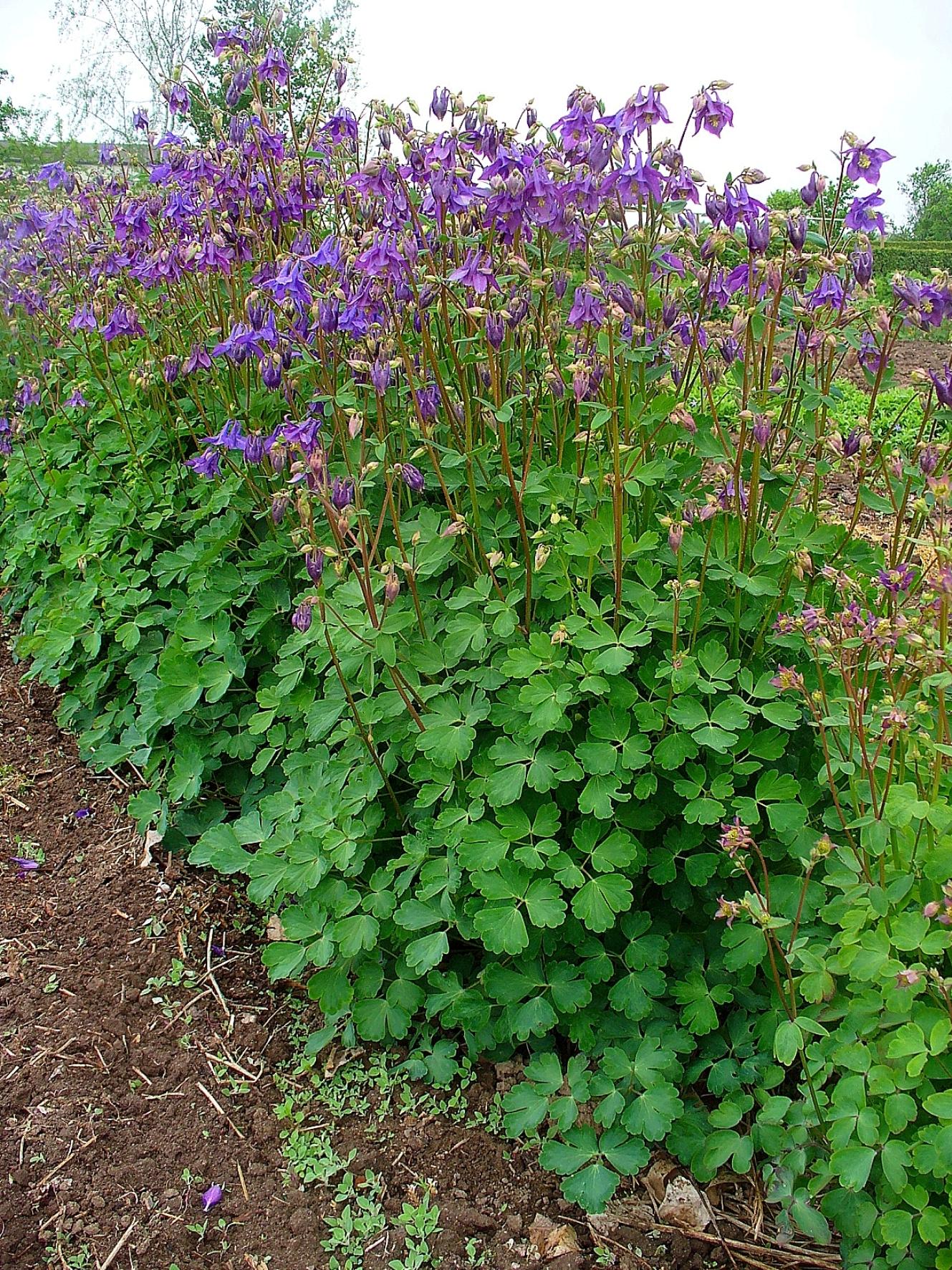
The common columbine can grow up to 60 cm high.
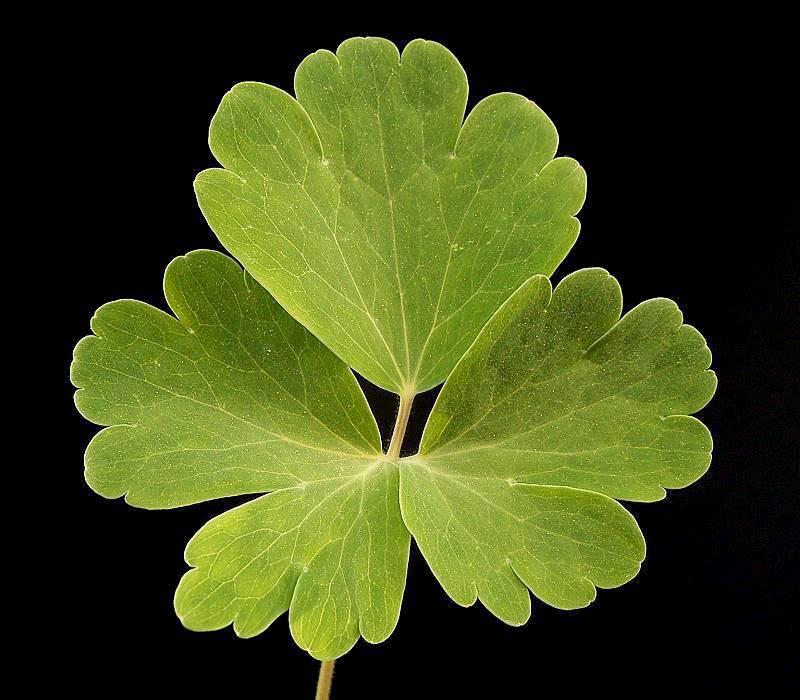
The leaves are solitary and alternate on the stem. They are divided into two trifoliate segments. The leaflets are rounded. The upper side of the leaf is blue-green and the underside somewhat greyish.
The stem is erect and richly branched.
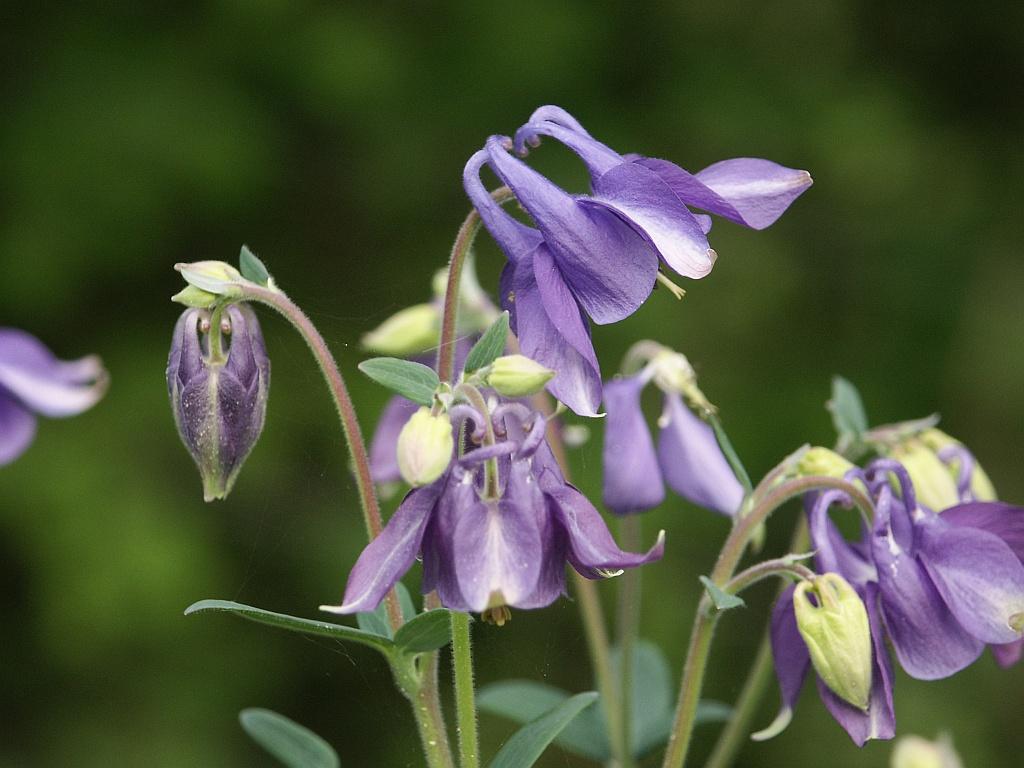
The mostly blue-violet flowers (rarely pink or white) consist of five funnel-shaped petals, each ending in a spur. Between them are five protruding petals. In the centre of the flower are numerous yellow stamens.
The fruits are typical follicles.
Features
Common columbine
Aquilegia vulgaris
poisonous
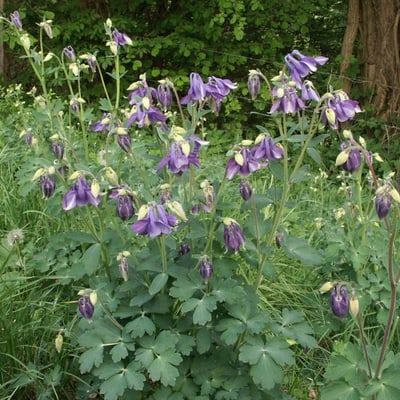
funnel-shaped, spurred petals
double three-part leaves
In the city
In the city, the common columbine is usually only found in gardens or in their surroundings. It prefers warm, moderately dry to fresh sites on nutrient-rich, stony or sandy loam soils.
Fun Facts
There are numerous cultivated varieties that are sold as ornamental plants.
The flowering period is from May to June.
The nectar is hidden by the flower at the end of the spur, so that only long-trunked bumblebees can reach it. However, bumblebees with short proboscises have been observed biting the outside of the flower spur to reach the nectar.
In the past, the columbine was considered a symbol of humility and impermanence.
- Endangerment level Germany: Warning list
The whole plant is poisonous.
Sources
Habitus, H. Zell, CC BY-SA 3.0, https://commons.wikimedia.org/wiki/File:Aquilegia_vulgaris_001.JPG

Blüten, BerndH, CC BY-SA 3.0, https://commons.wikimedia.org/wiki/File:Aquilegia_vulgaris_100503c.jpg

Blatt, Frank Vincentz, CC BY-SA 3.0, https://commons.wikimedia.org/wiki/File:Aquilegia_vulgaris2_ies.jpg

Eggenberg, S. & Möhl, A. (2007) Flora Vegetativa: Ein Bestimmungsbuch für Pflanzen der Schweiz im blütenlosen Zustand, Bern, Stuttgart, Wien: Haupt Verlag.
Spohn, M., Golte-Bechtle, M. & Spohn, R. (2015) Was blüht denn da? Stuttgart: Franckh Kosmos Verlag.
Jäger, E. J. (2011) Rothmaler - Exkursionsflora von Deutschland. Gefäßpflanzen: Grundband, Heidelberg: Spektrum Akademischer Verlag.
Lippert, W. & Podlech, D. (1993) GU Naturführer. Blumen: die wichtigen Blütenpflanzen Mitteleuropas erkennen und bestimmen, München: Gräfe und Unzer Verlag.
Schauer, T., Caspari, C. & Caspari, S. (2015) Der illustrierte BLV-Pflanzenführer für unterwegs. 1150 Blumen, Gräser, Bäume und Sträucher, München: BLV.
Page „Gemeine Akelei“. : Wikipedia, The Free Encyclopedia. Date of last revision: 09.02.2017, 16:36 UTC. URL: https://de.wikipedia.org/w/index.php?title=Gemeine_Akelei&oldid=162477649 (Accessed: 05.04.2017).
Bundesamt für Naturschutz (n.d.) Artensteckbriefe, URL: http://floraweb.de/pflanzenarten/artenhome.xsql?suchnr=510& (Accessed: 05.04.2017).