
Short Description
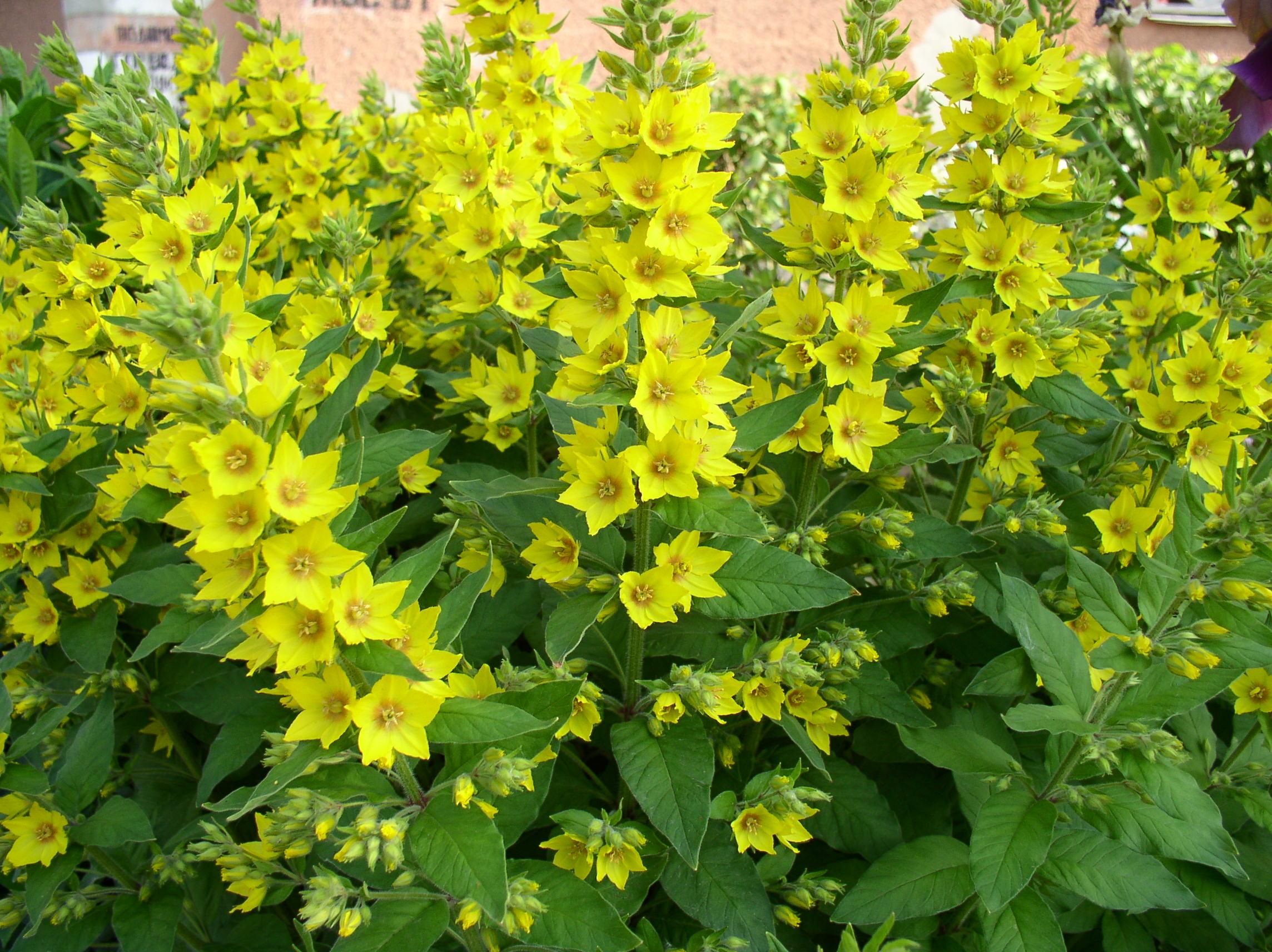
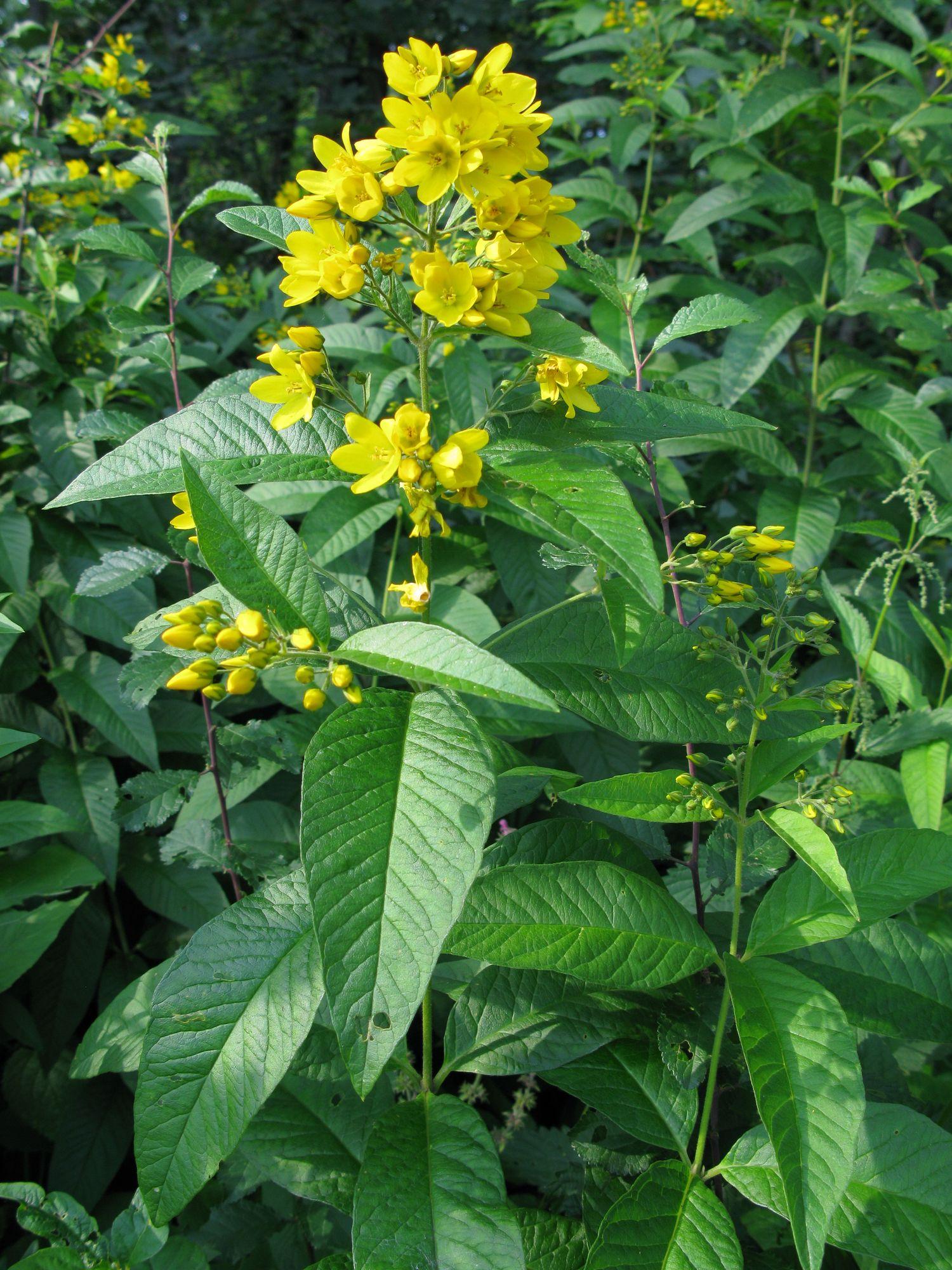
The yellow loosestrife can grow 1.5 metres high.
The leaves are ovate-oblong. They stand in pairs opposite each other on the stem or in threes or fours in whorls.
The stem is roundish and short haired. It grows erect and branched.
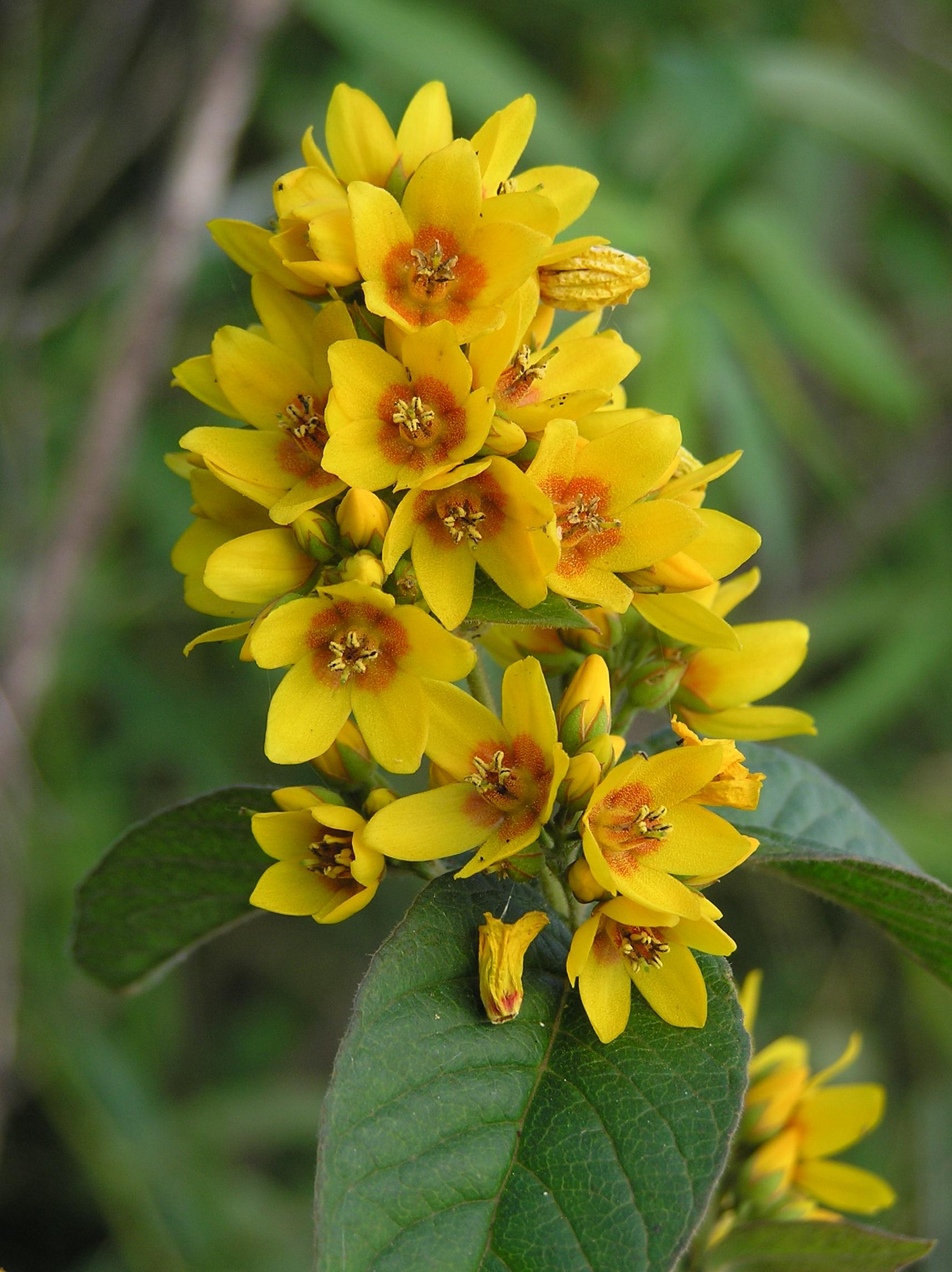
The yellow flowers have a reddish margin. They are in threes or fours in pyramidal racemes or panicles.
Small capsule fruits are formed.
Features
Yellow loosestrife
Lysimachia vulgaris
pyramidal inflorescence
dotted leaves
In the city
The yellow loosestrife grows at springs and banks, in ditches and riparian forests as well as on moorland and litter meadows. It prefers humus-rich soils. With its stolons and deep roots it contributes to the consolidation of the soil.
Fun Facts
The flowering period is from June to August.
As it was used as a medicinal plant in former times, the feral plants are often found near former medieval farm gardens.
It lives for several years and generally flowers and fruits annually (perennial plant).
- Endangerment level Germany: not endangered
In the past, yellow loosestrife was administered for scurvy, diarrhoea, fever and ulcers. In the meantime, it is hardly ever used as a medicinal plant.
Sources
Habitus, Hanna Zelenko, CC BY-SA 3.0, https://commons.wikimedia.org/wiki/File:Lysimachia_vulgaris-1.jpg

Blütenstand, Le.Loup.Gris, CC BY-SA 3.0, https://commons.wikimedia.org/wiki/File:Lysimachia_vulgaris_(flowers)_2.jpg
_2.jpg)
Habitus, Malte, CC BY-SA 3.0 , https://commons.wikimedia.org/wiki/File:4814-lysimachia_vulgaris-20110711.JPG

Bundesamt für Naturschutz (n.d.) Artensteckbriefe, URL: http://floraweb.de/pflanzenarten/artenhome.xsql?suchnr=3570& (Accessed: 14.08.2018).
Seitz, B., Ristow, M., Meißner, J., Machatzi, B. & Sukopp, H. (2018) Rote Liste und Gesamtartenliste der etablierten Farn- und Blütenpflanzen von Berlin. : Der Landesbeauftragte für Naturschutz und Landschaftspflege / Senatsverwaltung für Umwelt, Klima und Verkehr (eds.) Rote Listen der gefährdeten Pflanzen, Pilze und Tiere von Berlin, URL: https://www.berlin.de/sen/uvk/natur-und-gruen/naturschutz/artenschutz/artenlisten-rote-listen/farn-und-bluetenpflanzen/ (Accessed: 26.03.2021).
Spohn, M., Golte-Bechtle, M. & Spohn, R. (2015) Was blüht denn da? Stuttgart: Franckh Kosmos Verlag.
Schauer, T., Caspari, C. & Caspari, S. (2015) Der illustrierte BLV-Pflanzenführer für unterwegs. 1150 Blumen, Gräser, Bäume und Sträucher, München: BLV.
Page „Gewöhnlicher Gilbweiderich“. : Wikipedia, The Free Encyclopedia. Date of last revision: 21.06.2018, 07:47 UTC. URL: https://de.wikipedia.org/w/index.php?title=Gew%C3%B6hnlicher_Gilbweiderich&oldid=178494187 (Accessed: 14.08.2018).