
Short Description
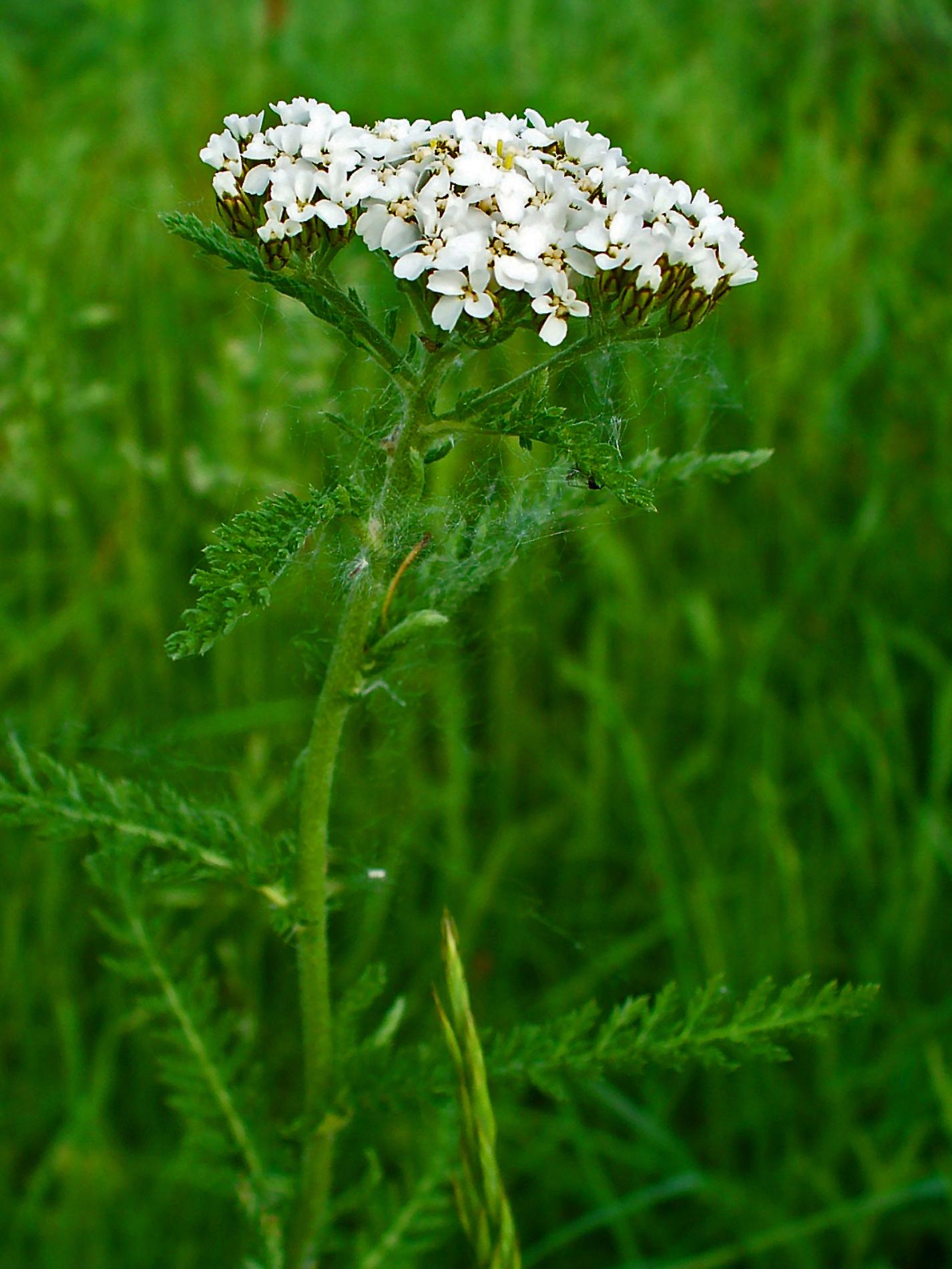
Yarrow is perennial and can grow to a height of up to 60 cm.
The leaves can be 20 cm long and are deeply incised (pinnate) which gives them a feathery appearance.
The stems are covered in felt-like hairs, are often red in colour and have underground shoots.
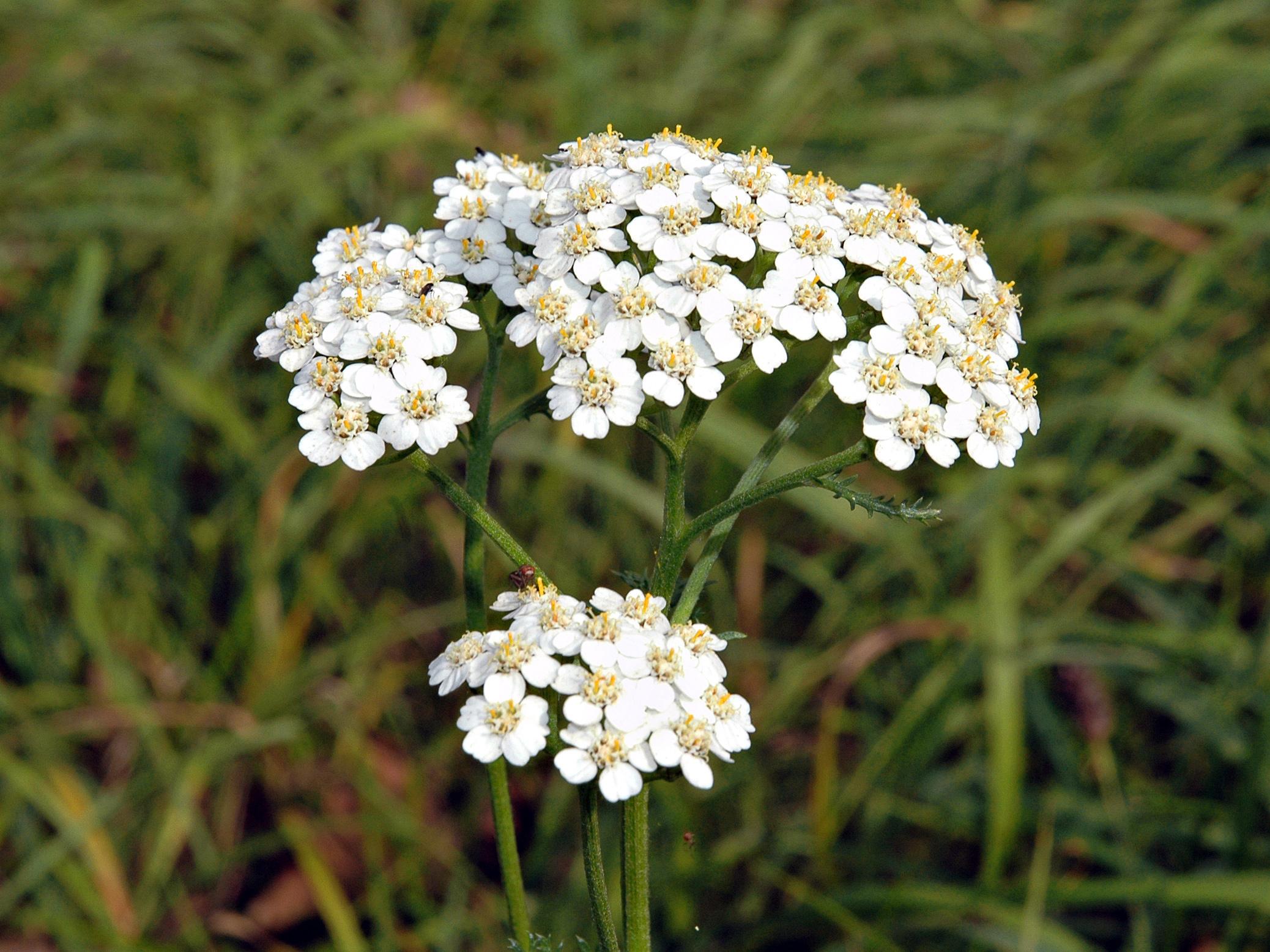
The compound flower head is an umble-like panicle. It consists of individual flower heads, each of which looks like a flower, but consists of several individual florets. The flower heads consist of yellow tubular florets in the centre and ray florets with a white crown along the margins. Cultivated forms can have yellow or pink flower heads.
The fruits are small angular nutlets. They have short lateral wings.
Features
Yarrow
Achillea millefolium
feathery divided leaves
In the city
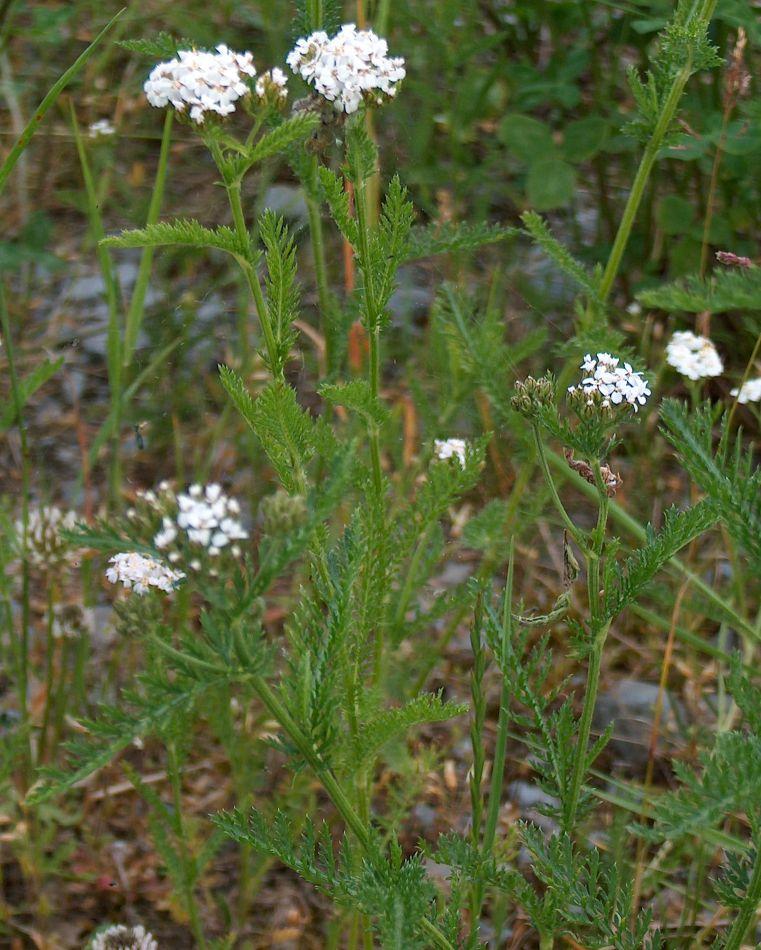
Yarrow is perennial and can grow everywhere at the verges of forests and paths. It prefers dry sites rich in nutrients.
It can spread strongly in grass that is not mown very often. As soon as it is mown weekly, however, it is pushed back.
Fun Facts
The plant has got a very distinctive small probably case by a range of volatile components.
The flowers can be used to flavour sugar.
Yarrow is a very widely spread perennial plant and thus is known under many different names, some only restricted to a particular region.
It flowers from May to September.
It lives for several years and generally flowers and fruits annually (perennial plant).
It is pollinated by insects. The fruits are spread by the wind and by ants.
- Endangerment level Germany: not endangered
- Usage:
The young leaves of the plant can be used for flavouring.
arrow is cultivated as a medicinal plant and was formerly used in the treatment of arthritis, common cold and high blood pressure. These days, it is mainly used for digestive disorders.
Sources
Habitus, H. Zell, CC BY-SA 3.0, https://commons.wikimedia.org/wiki/File:Achillea_millefolium_002.JPG

Blütenstand, André Karwath, CC BY-SA 2.5, https://commons.wikimedia.org/wiki/File:Gemeine_Schafgarbe,_weiss_-_gross.jpg

Habitus, MarkusHagenlocher, CC BY-SA 3.0, https://commons.wikimedia.org/wiki/File:Gemeine_Schafgarbe.jpg

Wohlers, W. (2015) Achillea millefolium – Gewöhnliche Schafgarbe (JKI-Pflanzenportraits), URL: https://offene-naturfuehrer.de/web/Achillea_millefolium_%E2%80%93_Schafgarbe_(JKI-Pflanzenportraits) (Accessed: 13.07.2016).
Page „Gemeine Schafgarbe“. : Wikipedia, The Free Encyclopedia. Date of last revision: 12.05.2016, 10:05 UTC. URL: https://de.wikipedia.org/w/index.php?title=Gemeine_Schafgarbe&oldid=154304374 (Accessed: 13.07.2016).
Fleischhauer, S. G., Guthmann, J. & Spiegelberger, R. (2007) Essbare Wildpflanzen. 200 Arten bestimmen und verwenden, Baden und München: AT Verlag.
Lippert, W. & Podlech, D. (1993) GU Naturführer. Blumen: die wichtigen Blütenpflanzen Mitteleuropas erkennen und bestimmen, München: Gräfe und Unzer Verlag.
Needon, C. & Petermann, J. (1991) Urania-Naturführer Pflanzen, Leipzig, Jena, Berlin: Urania-Verlag.
Scherf, G. (2006) Wildpflanzen neu entdecken, München: BLV.
Bundesamt für Naturschutz (n.d.) Artensteckbriefe, URL: http://floraweb.de/pflanzenarten/artenhome.xsql?suchnr=31& (Accessed: 13.07.2016).