
Short Description
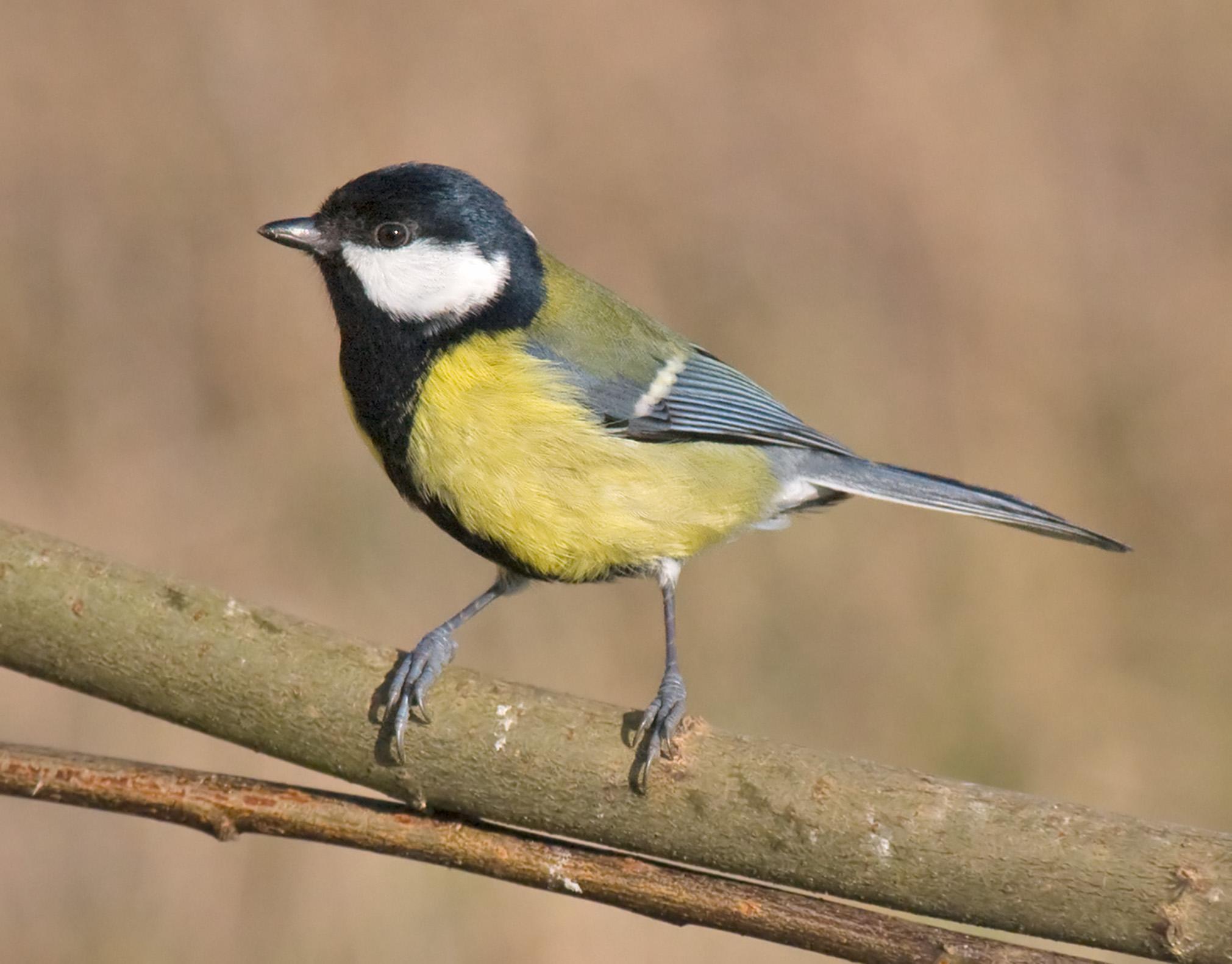
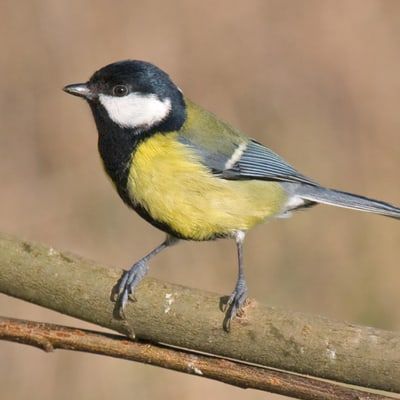
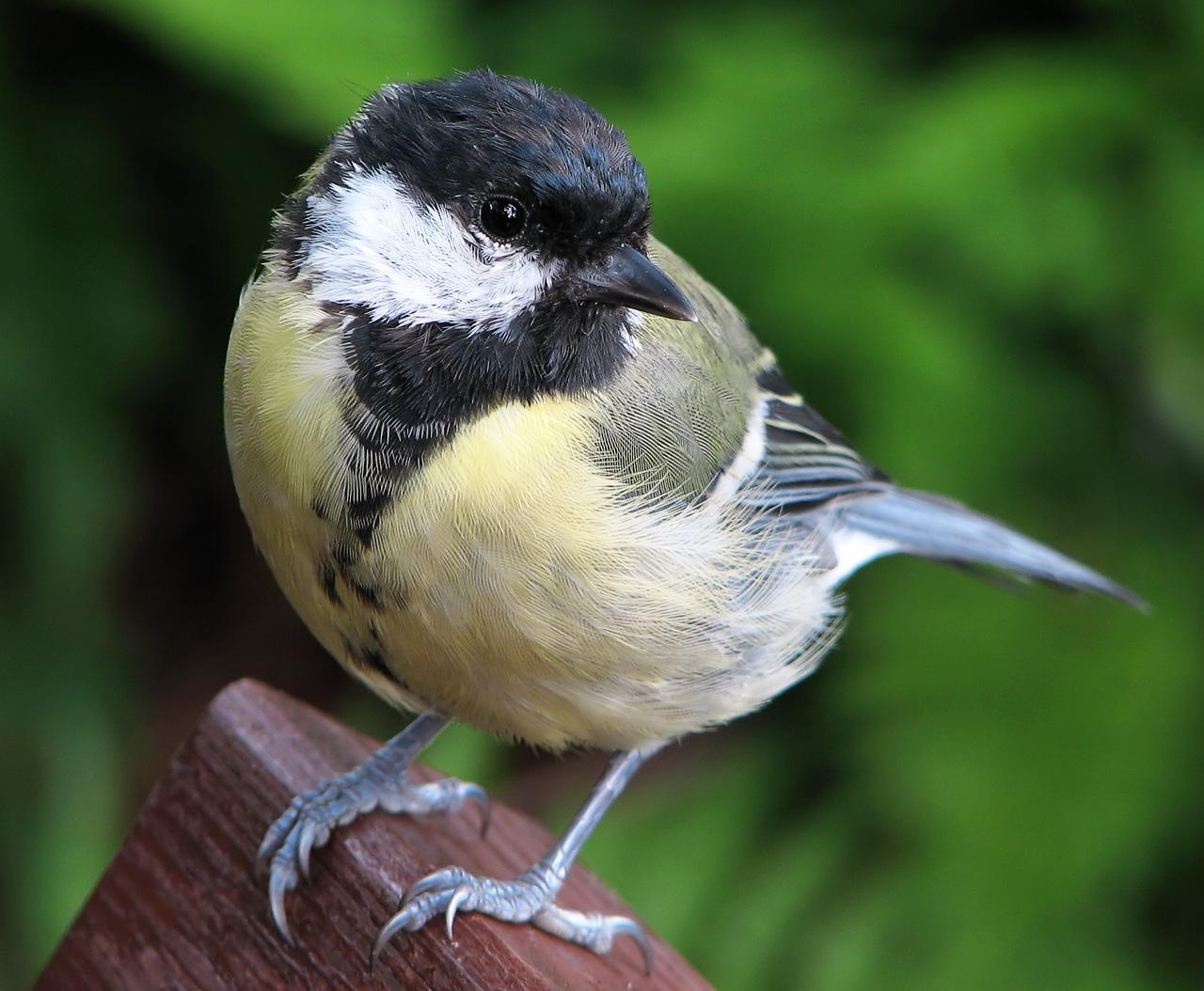
Chest and belly of the great tit are yellow with a central back chest crescent. Other striking features are its black-and-white head and the grey-blue wings.
At a closer look, males can be quite easily distinguished from females by their wider black chest crescent.
Features
Great tit
Parus major
plumage yellow, black, blue and white
Gesang
Frommolt, CC BY-SA 3.0

In the city
Because of their great adaptability, great tits can be found in numerous habitats with old trees or man-made nesting boxes. However, the breeding success of great tits in gardens is lower than in the woods, because the caterpillars that its young mainly feed on are combatted by gardeners as pests. In addition, modern or modernised buildings offer few nesting places, and older trees are often cut down for safety reasons.
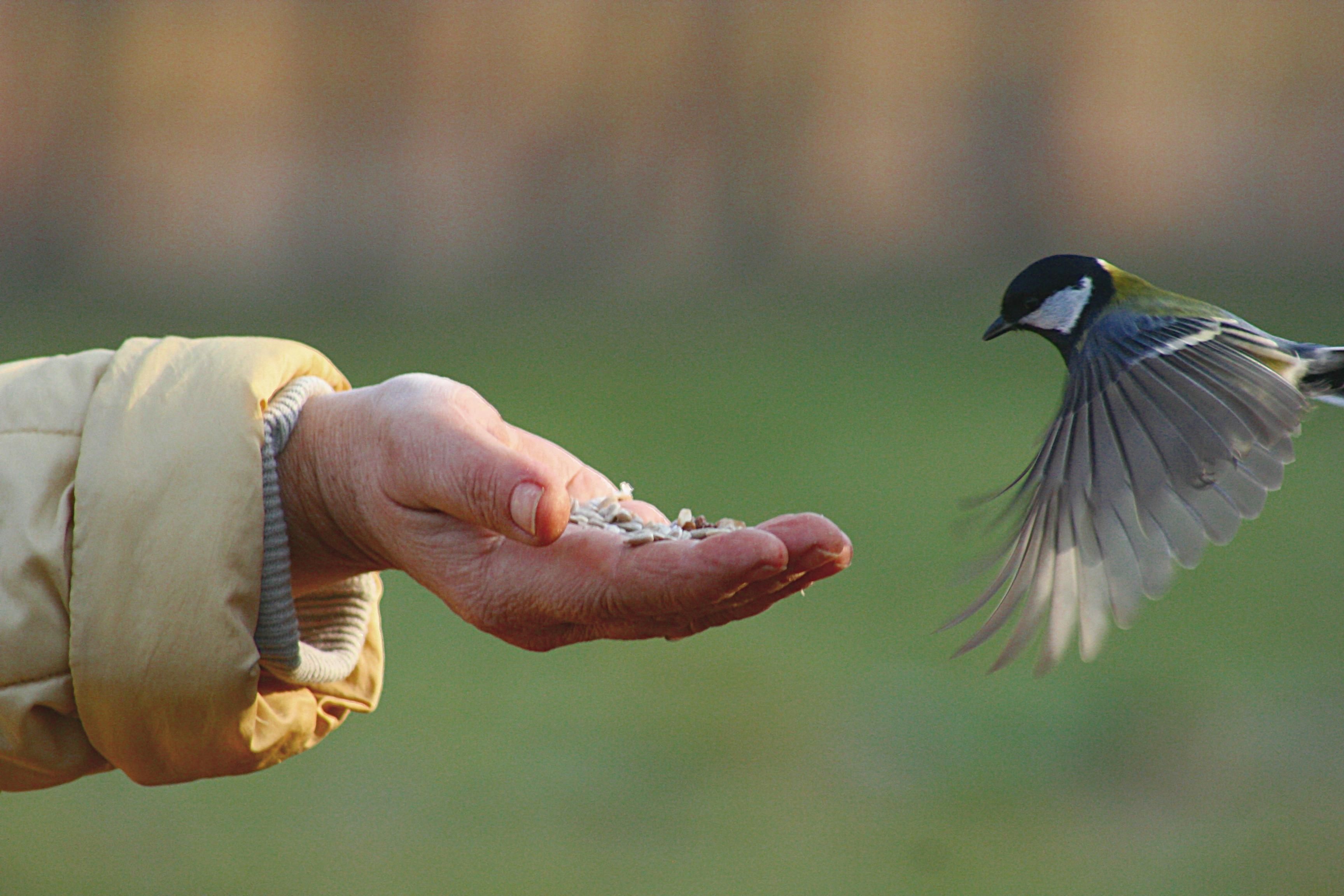
In winter, great tits are frequent visitors to bird feeders and particular enjoy fat balls.
Fun Facts
The great tit is the largest and most common native tit.
They can imitate the sounds of other birds and even mobile phone ringtones.
From January to June, they start to sing approx. 30 minutes before sunrise.
In winter, great tits sleep in individual sleeping cavities. Males escort their females to the sleeping cavity and collect them again to prevent them from straying.
Great tits can be seen in Germany all year round.
- Endangerment level Germany: not endangered
Sources
Habitus , Andreas Trepte, CC BY-SA 2.5, https://commons.wikimedia.org/wiki/File:Great-Tit.jpg

im Flug, Paweł Kuźniar, CC BY-SA 3.0, https://commons.wikimedia.org/wiki/File:Parus_major_in_flight_01.jpg

Habitus , Darkone, CC BY-SA 2.5, https://commons.wikimedia.org/wiki/File:Great_Tit_(Parus_major)_1.jpg
_1.jpg)
Page „Kohlmeise“. : Wikipedia, The Free Encyclopedia. Date of last revision: 04.02.2021, 13:19 UTC. URL: https://de.wikipedia.org/w/index.php?title=Kohlmeise&oldid=208429258 (Accessed: 11.02.2021).
Artenfinder (2016) Parus major (Kohlmeise), URL: https://arteninfo.net/elearning/voegel/speciesportrait/3132 (Accessed: 18.04.2016).
NABU – Naturschutzbund Deutschland e.V. (2016) Vogeluhr, URL: https://www.nabu.de/nabu_vogeluhr2/index.php?iframed=1 (Accessed: 10.02.2021).
Witt, K. & Steiof, K. (2013) Rote Liste und Liste der Brutvögel von Berlin, 3. version, 15.11.2013. : Berliner Ornithologische Arbeitsgemeinschaft e.V. (eds.) Berliner Ornithologischer Bericht, volume 23, Berlin: Berliner Ornithologische Arbeitsgemeinschaft e.V., 1-23.
NABU – Naturschutzbund Deutschland e.V. (2016) Rote Liste der Brutvögel Deutschlands. 5. version, published August 2016, URL: https://www.nabu.de/tiere-und-pflanzen/voegel/artenschutz/rote-listen/10221.html (Accessed: 07.04.2017).