
Short Description
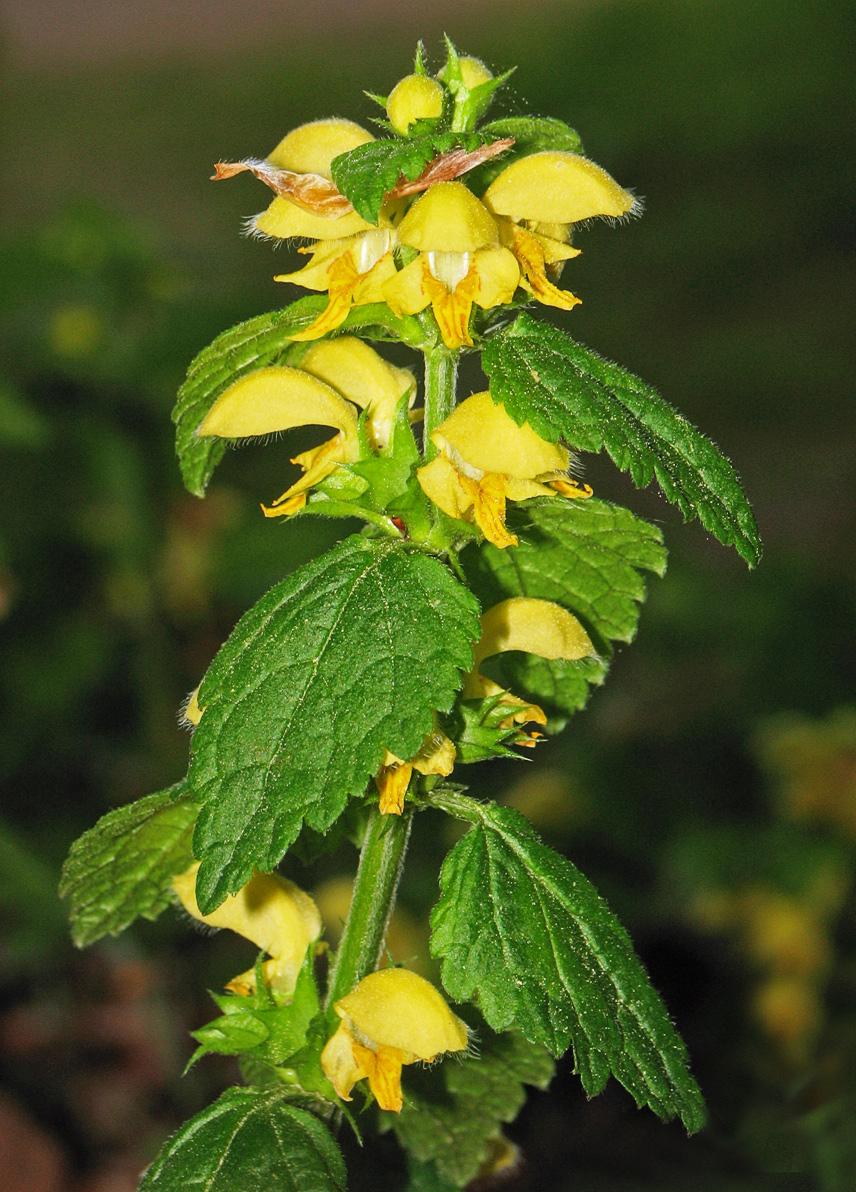
The yellow archangel can grow up to 80 centimetres high.
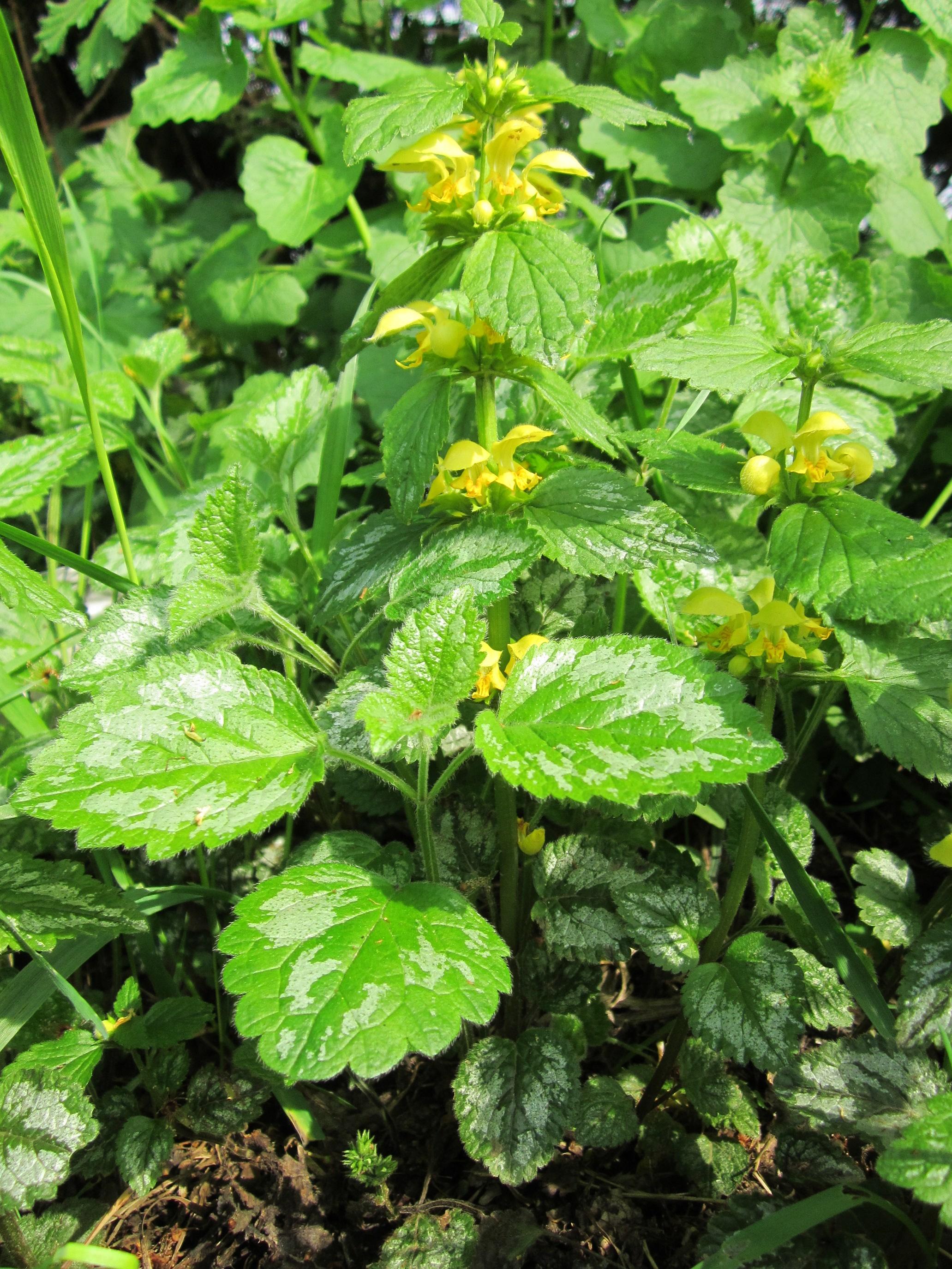
The dark green leaves are heart-shaped to elongated and dentate at the leaf margin. They often have white spots on the upper surface. The leaves look like nettle leaves but have no stinging hairs.
The stem grows prostrate to ascending. It is square in diameter and forms numerous runners.
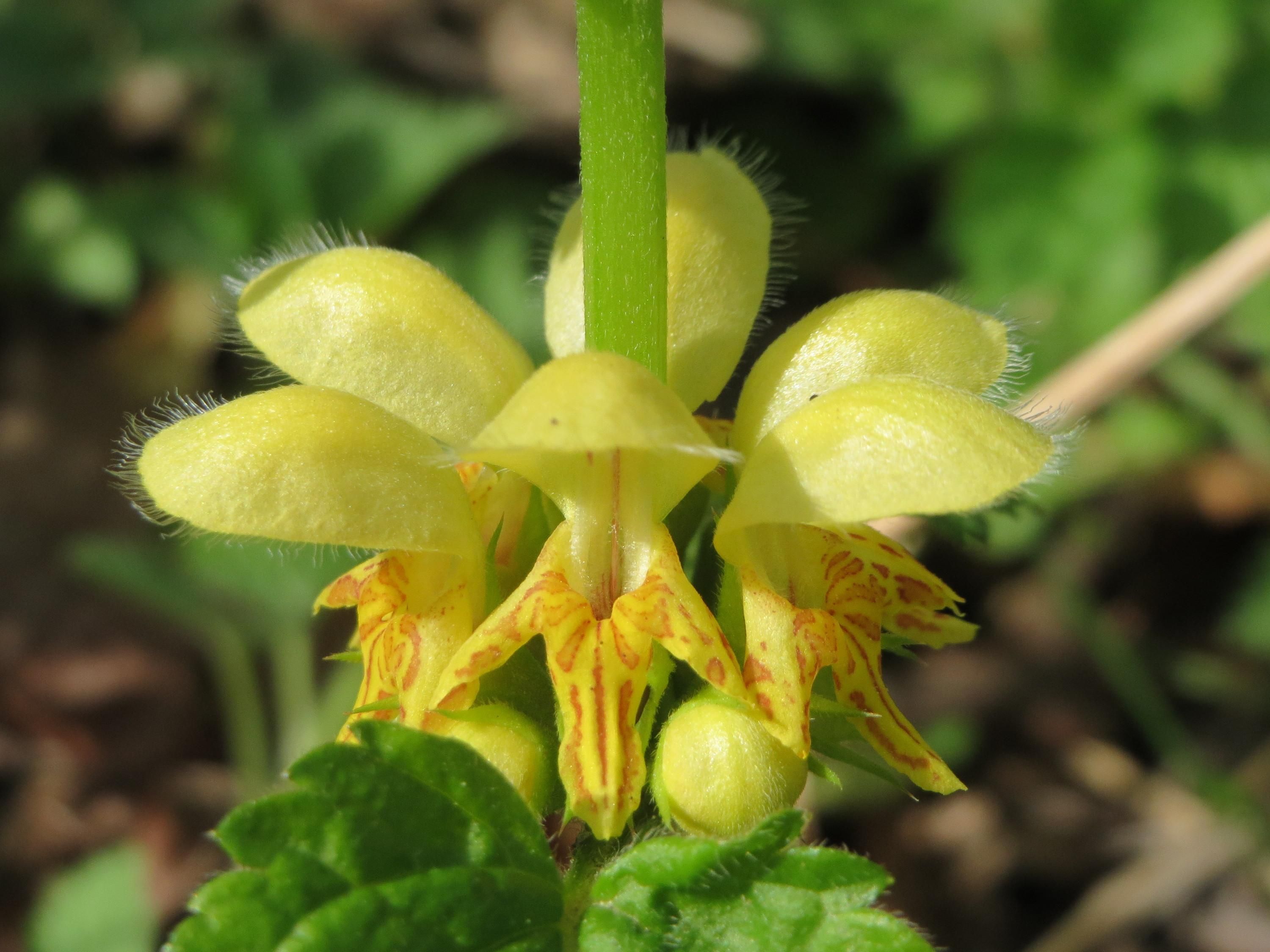
The flowers building false whorls (verticillaster) in the axil of the leaves. They are yellow. The corolla consists of two lips. The upper lip is helmet-shaped. The lower lip is divided into three parts and has brown-red spots.
The fruits are small, single-seeded nutlets. There are always four of them in the calyx of the flower.
Features
Yellow archangel
Lamium galeobdolon
light yellow flowers
no stinging hairs
square stem
In the city
The yellow archangel often grows on fresh, nutrient-rich and loose soils such as in woods and under hedges and bushes. Originally, many varieties of golden nettle grew only as an ornamental plant in gardens. For several decades, the form or subspecies with large white spots on the leaves, which appeared as a hybrid of cultivated plants from gardens, has also spreading wild and is more common in the city than the original form.
Fun Facts
On the light parts of the leaves, there is a layer of air between the epidermis and the leaf tissue that reflects the light and thus appears silvery-white.
It reproduces strongly by runners obove the ground and thus often forms extensive stands.
The flowering period is from May to July.
The plant lives for several years and generally flowers and fruits annually (perennial plant).
- Endangerment level Germany: not endangered
The golden nettle occurs in a variety of shapes. The golden nettle is native to Germany.
The leaves and flowers can be eaten raw and cooked like vegetables.
Sources
Habitus, Darkone, CC BY-SA 2.5, https://commons.wikimedia.org/wiki/File:20150426Lamiastrum_galeobdolon2.jpg

Blütenstand, AnRo0002, CC0 1.0, https://commons.wikimedia.org/wiki/File:20150426Lamiastrum_galeobdolon2.jpg
Blätter, AnRo0002, CC0 1.0, https://commons.wikimedia.org/wiki/File:20130429Taubnessel_Hockenheim6.jpg

Kammer, P. M. (2016) Pflanzen einfach bestimmen. Schritt für Schritt einheimische Arten kennenlernen, Bern: Haupt Verlag.
Spohn, M., Golte-Bechtle, M. & Spohn, R. (2015) Was blüht denn da? Stuttgart: Franckh Kosmos Verlag.
Page „Gewöhnliche Goldnessel“. : Wikipedia, The Free Encyclopedia. Date of last revision: 28.05.2018, 09:53 UTC. URL: https://de.wikipedia.org/w/index.php?title=Gew%C3%B6hnliche_Goldnessel&oldid=177817282 (Accessed: 07.08.2018).