
Short Description
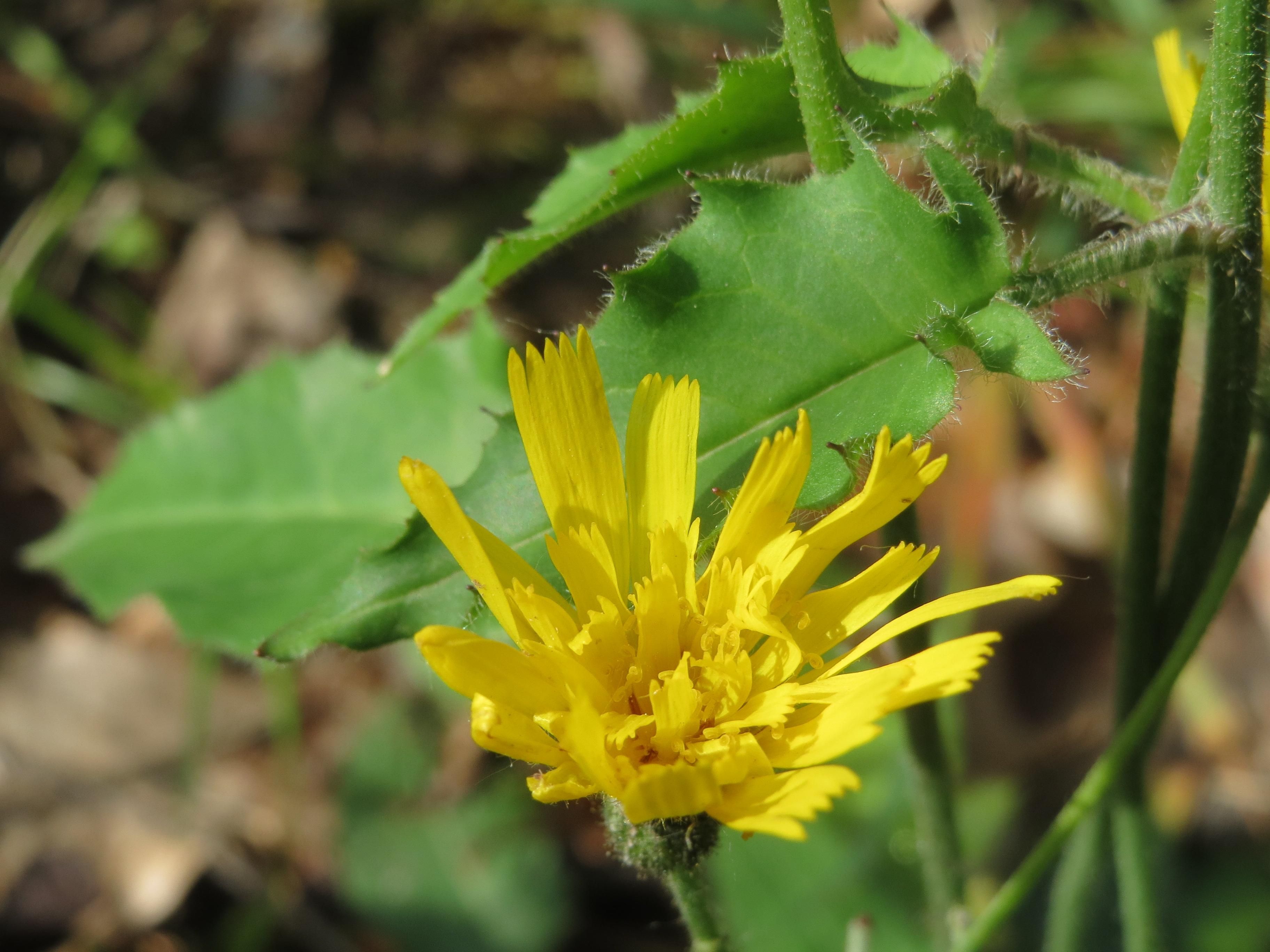
The wall hawkweed can grow over half a metre high.
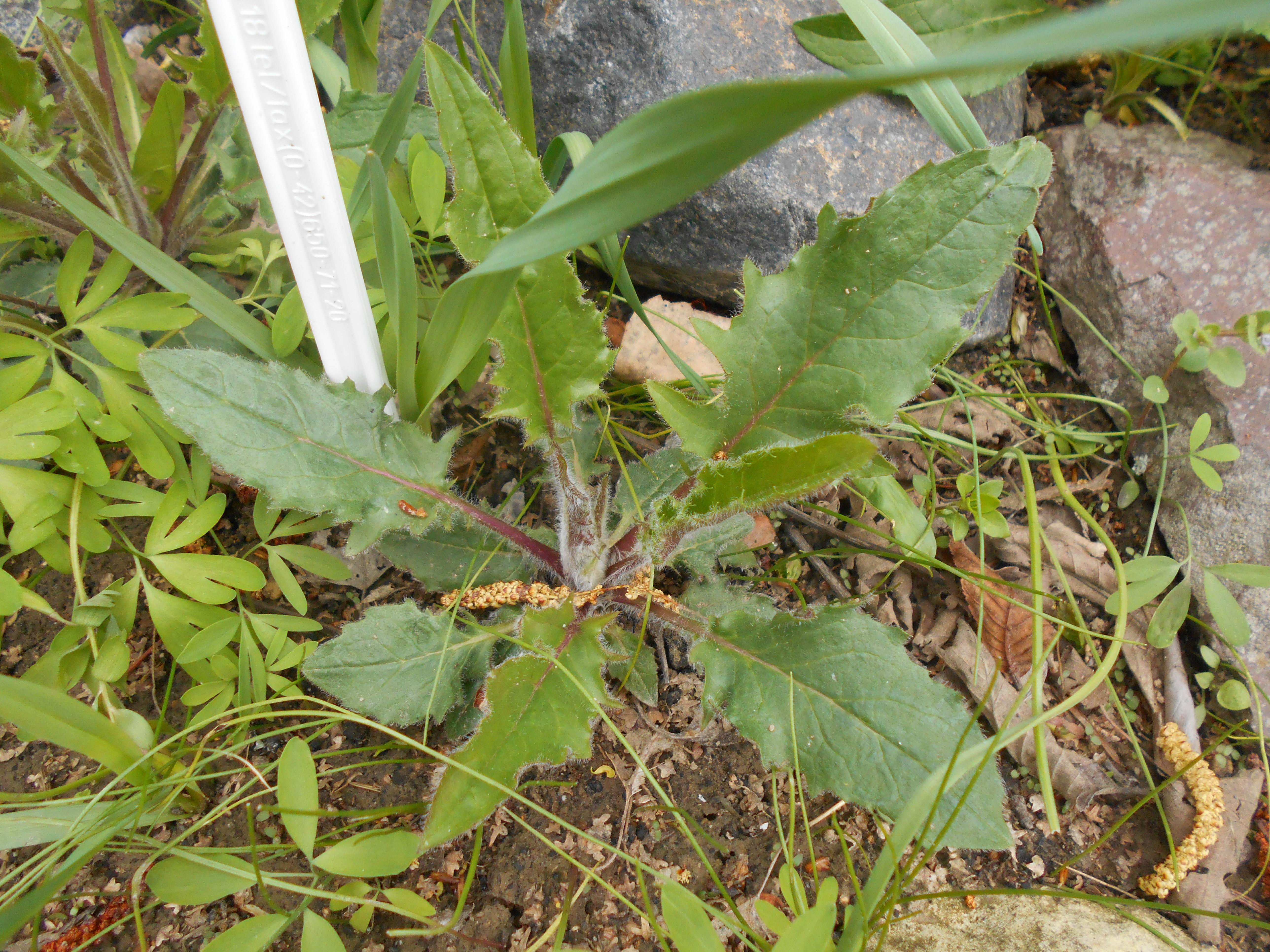
Except for one or two small leaves, all the stem leaves grow at the base of the plant. They are elongated, partly serrated and sparsely but long haired. Some leaves are reddish dotted.
The stem is covered with both long and dense short hairs.
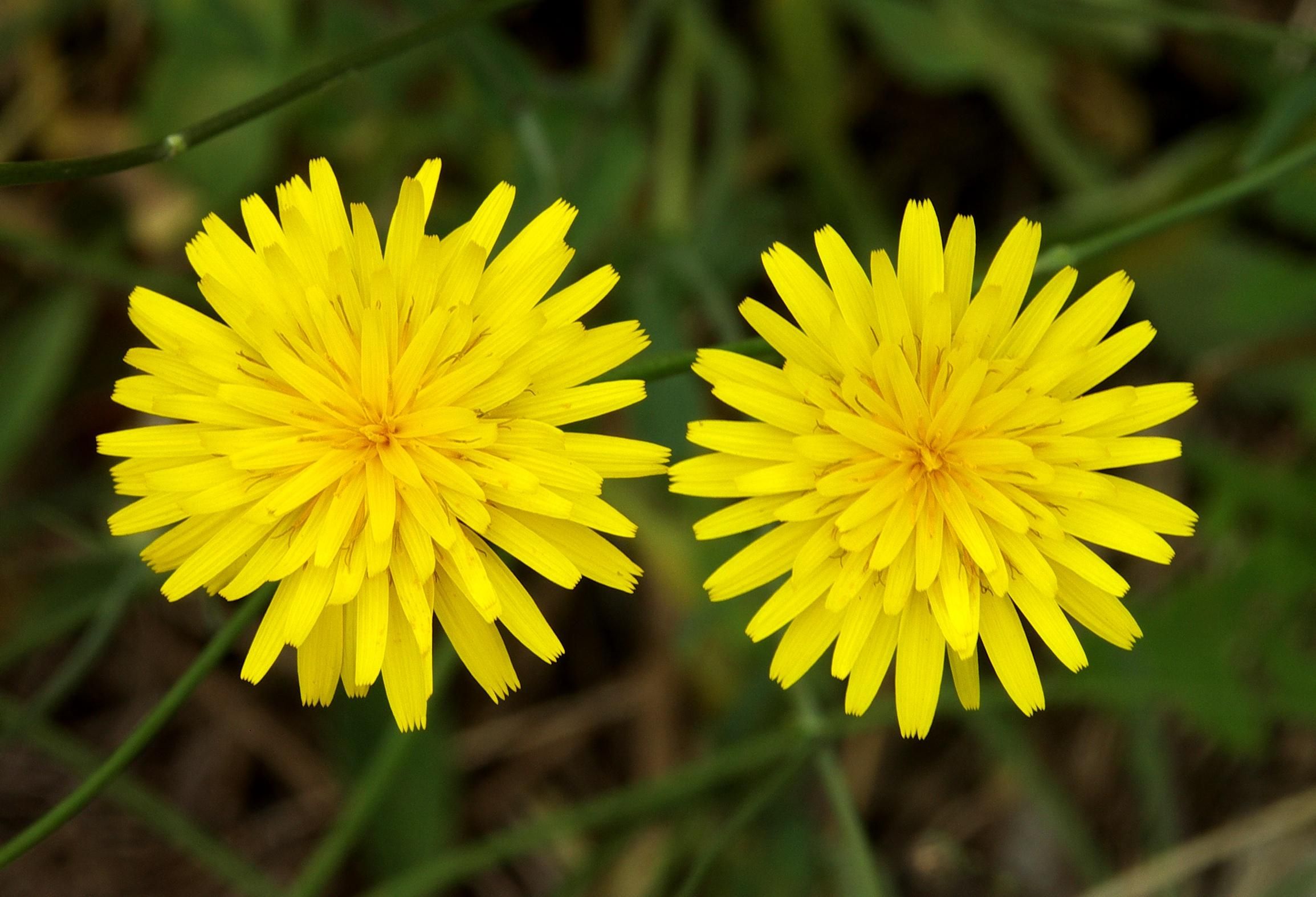
The yellow flower heads grow in twos to eights in panicles. The bracts, below the flower heads, are abundantly glandular-hairy.
The plant forms small, nut-like fruits with rough, brittle flying hairs on the upper tip.
Features
Wall hawkweed
Hieracium murorum
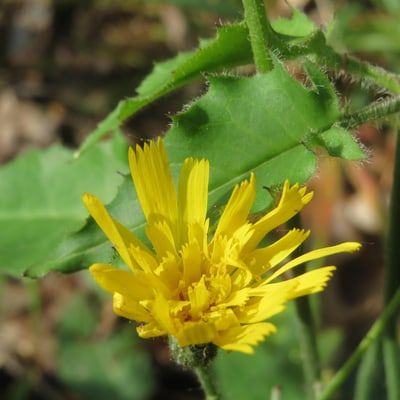
yellow flowers
almost all leaves at the base
Similar species
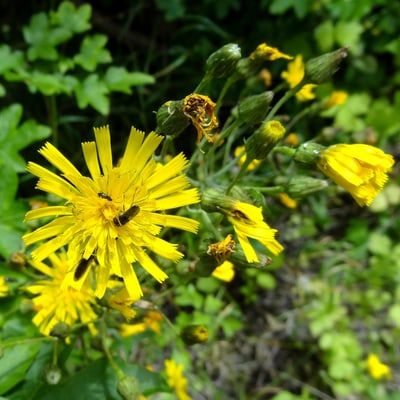
Smooth hawkweed
Hieracium laevigatum
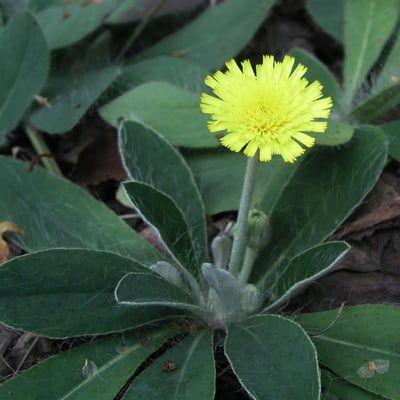
Mouse-ear hawkweed
Pilosella officinarum
In the city
It grows in forests and forest edges, on gravel, mountain meadows and at the bottom of walls, mostly in drier places.
Fun Facts
The flowering period is from May to August.
It is pollinated by bees.
It is a very diverse species. In Germany alone, over 100 subspecies have already been described. It also easily forms hybrids with other species.
It is a perennial plant. This means that a plant lives for several years, but flowers only once and dies after the seeds have ripened.
- Endangerment level Germany: not endangered
Sources
Blütenstand, AnRo0002, CC0, https://commons.wikimedia.org/wiki/File:20140513Hieracium_murorum8.jpg

Blüten, Alvesgaspar, CC BY-SA 3.0, https://commons.wikimedia.org/wiki/File:Hieracium_murorum_duet.jpg

Blätter, Salicyna, CC BY-SA 4.0, https://commons.wikimedia.org/wiki/File:Hieracium_murorum_2017-04-17_7649.jpg

Page „Wald-Habichtskraut“. : Wikipedia, The Free Encyclopedia. Date of last revision: 26.07.2018, 19:45 UTC. URL: https://de.wikipedia.org/w/index.php?title=Wald-Habichtskraut&oldid=179475541 (Accessed: 06.08.2018).
Bundesamt für Naturschutz (n.d.) Artensteckbriefe, URL: http://floraweb.de/pflanzenarten/artenhome.xsql?suchnr=25659& (Accessed: 06.08.2018).
Seitz, B., Ristow, M., Meißner, J., Machatzi, B. & Sukopp, H. (2018) Rote Liste und Gesamtartenliste der etablierten Farn- und Blütenpflanzen von Berlin. : Der Landesbeauftragte für Naturschutz und Landschaftspflege / Senatsverwaltung für Umwelt, Klima und Verkehr (eds.) Rote Listen der gefährdeten Pflanzen, Pilze und Tiere von Berlin, URL: https://www.berlin.de/sen/uvk/natur-und-gruen/naturschutz/artenschutz/artenlisten-rote-listen/farn-und-bluetenpflanzen/ (Accessed: 26.03.2021).