
Short Description
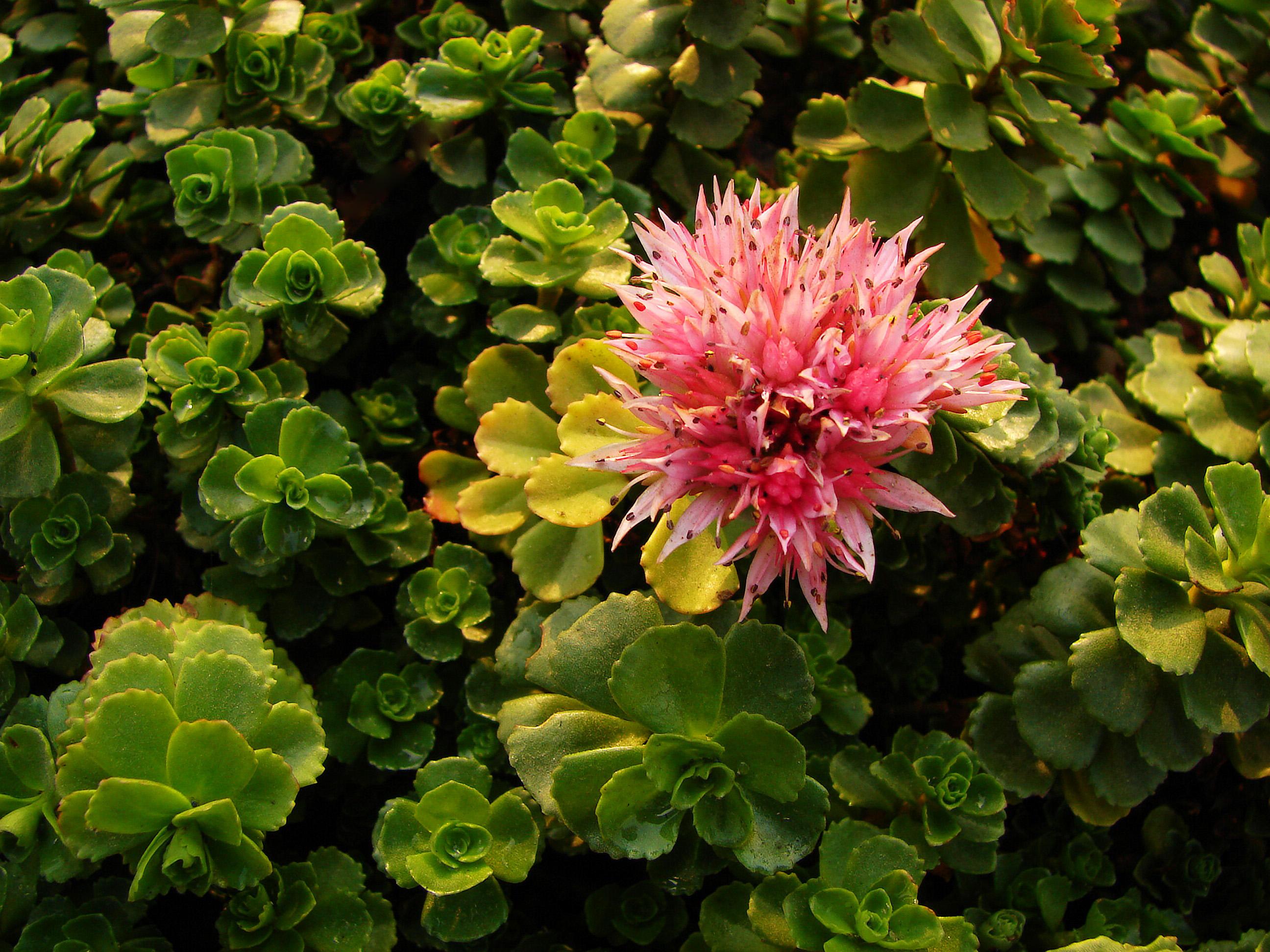
The Caucasian stonecrop can grow up to 15 cm high.
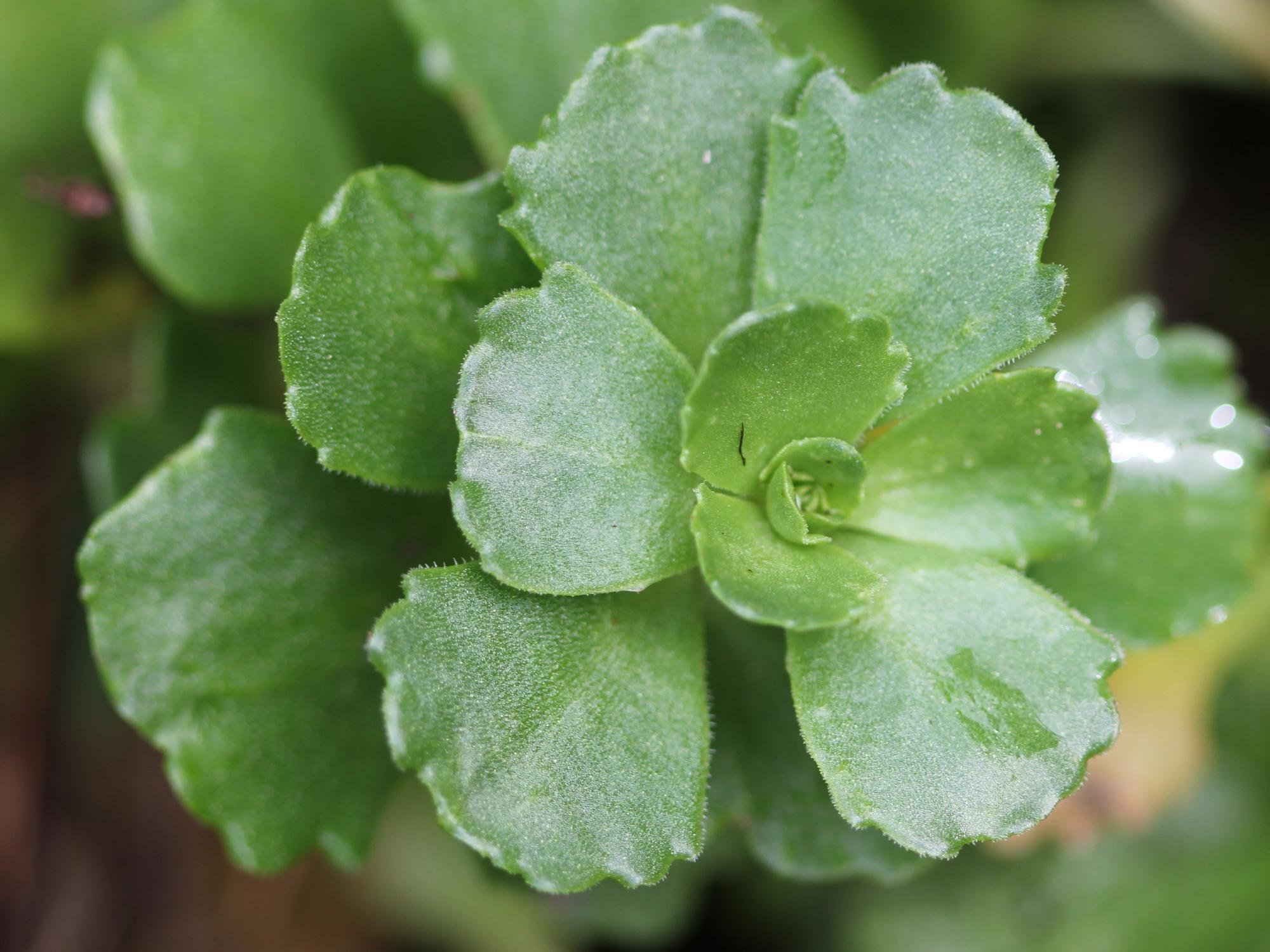
The leaves are thick and fleshy (succulent). They are obovate or round and slightly notched at the upper edge.
The stem grows prostrate. If it bears an inflorescence, it can also be ascending. It is glabrous or has small elevations (papillose).
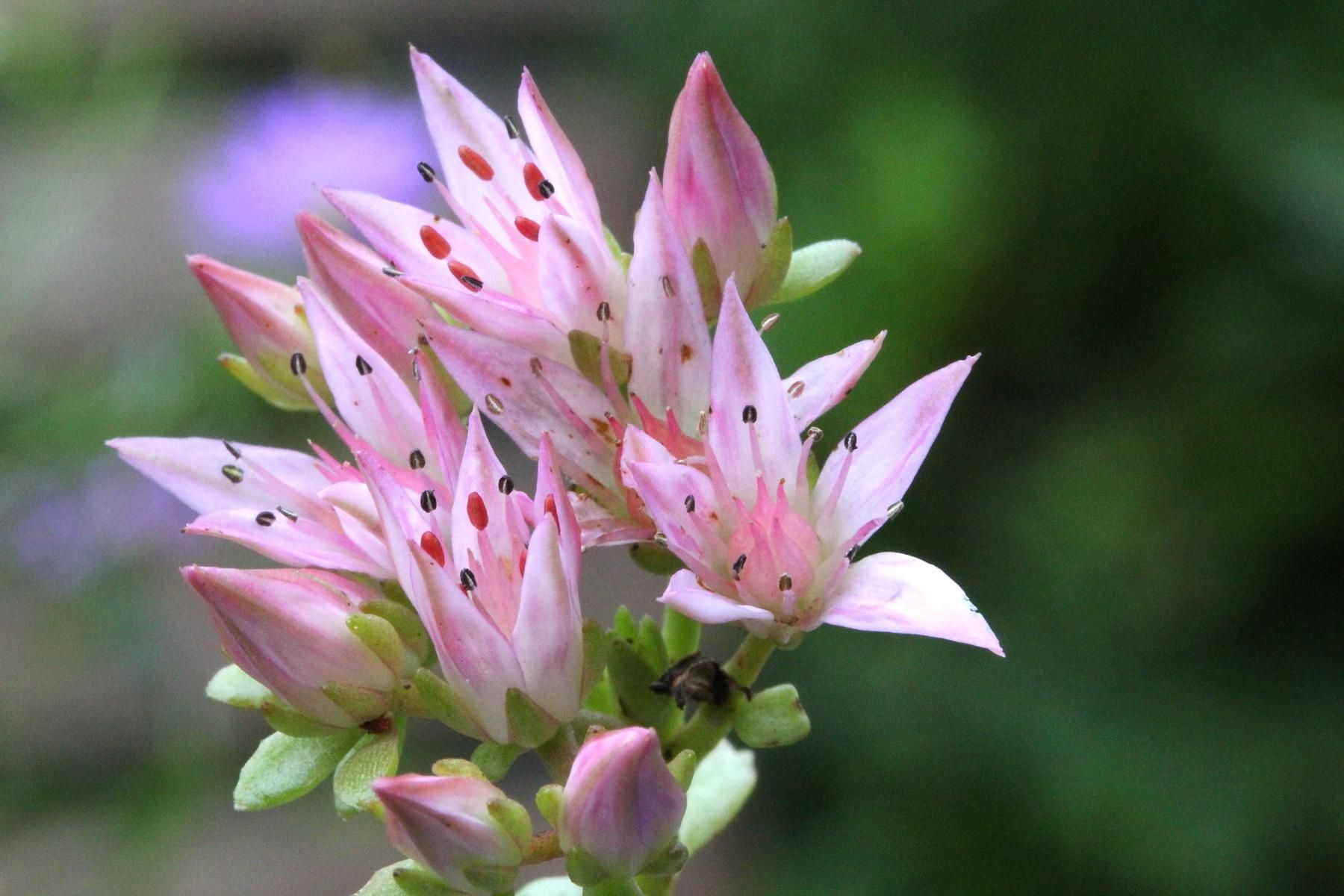
Many flowers stand together in inflorescences at the end of the stem. The single flower has five or rarely six, white to blood-red petals.
The plant forms multi-seeded follicles. They are glabrous and stand upright in flower.
Features
Caucasian stonecrop
Phedimus spurius
fleshy leaves
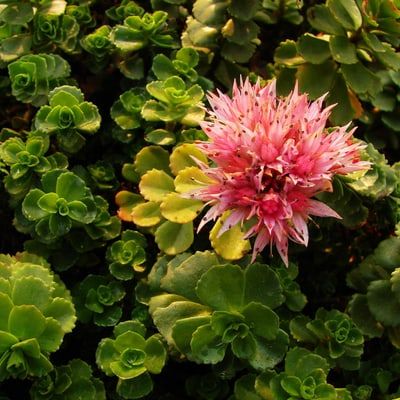
star-shaped pink flowers
In the city
The Caucasian stonecrop is often used as a garden plant, but also thrives wild on dry grasslands, walls and rocks. As it runs wild very easily and has great potential to displace native species, its use should be avoided. It prefers dry, rocky sites.
Fun Facts
The species suffix spurius means "illegitimate, conceived by an unknown father with a prostitute" and refers to species whose taxonomic classification caused difficulties.
The flowering period is from June to August.
It lives for several years and generally flowers and fruits annually (perennial plant).
- Endangerment level Germany: not evaluated
The Caucasian stonecrop is native to Georgia (in the Caucasus), northern Iran and Asia Minor (Turkey). However, it has often grown wild in Central Europe and belongs here to the non-native plants (neophytes).
In 2013, the Federal Agency for Nature Conservation in Germany placed the plant on the black list of species as an invasive plant that should be pushed back with management measures.
Sources
Habitus, Nevit Dilmen, CC BY-SA 3.0, https://commons.wikimedia.org/wiki/File:Flower_05644.JPG

Blüten, Holger Casselmann, CC BY-SA 3.0, https://commons.wikimedia.org/wiki/File:Phedimus_spurius_HC1.jpg

Blätter, Holger Casselmann, CC BY-SA 3.0, https://commons.wikimedia.org/wiki/File:Phedimus_spurius_leaves_HC1.jpg

Page „Kaukasus-Asienfetthenne“. : Wikipedia, The Free Encyclopedia. Date of last revision: 22.02.2017, 09:41 UTC. URL: https://de.wikipedia.org/w/index.php?title=Kaukasus-Asienfetthenne&oldid=162895341 (Accessed: 21.08.2018).