
Short Description
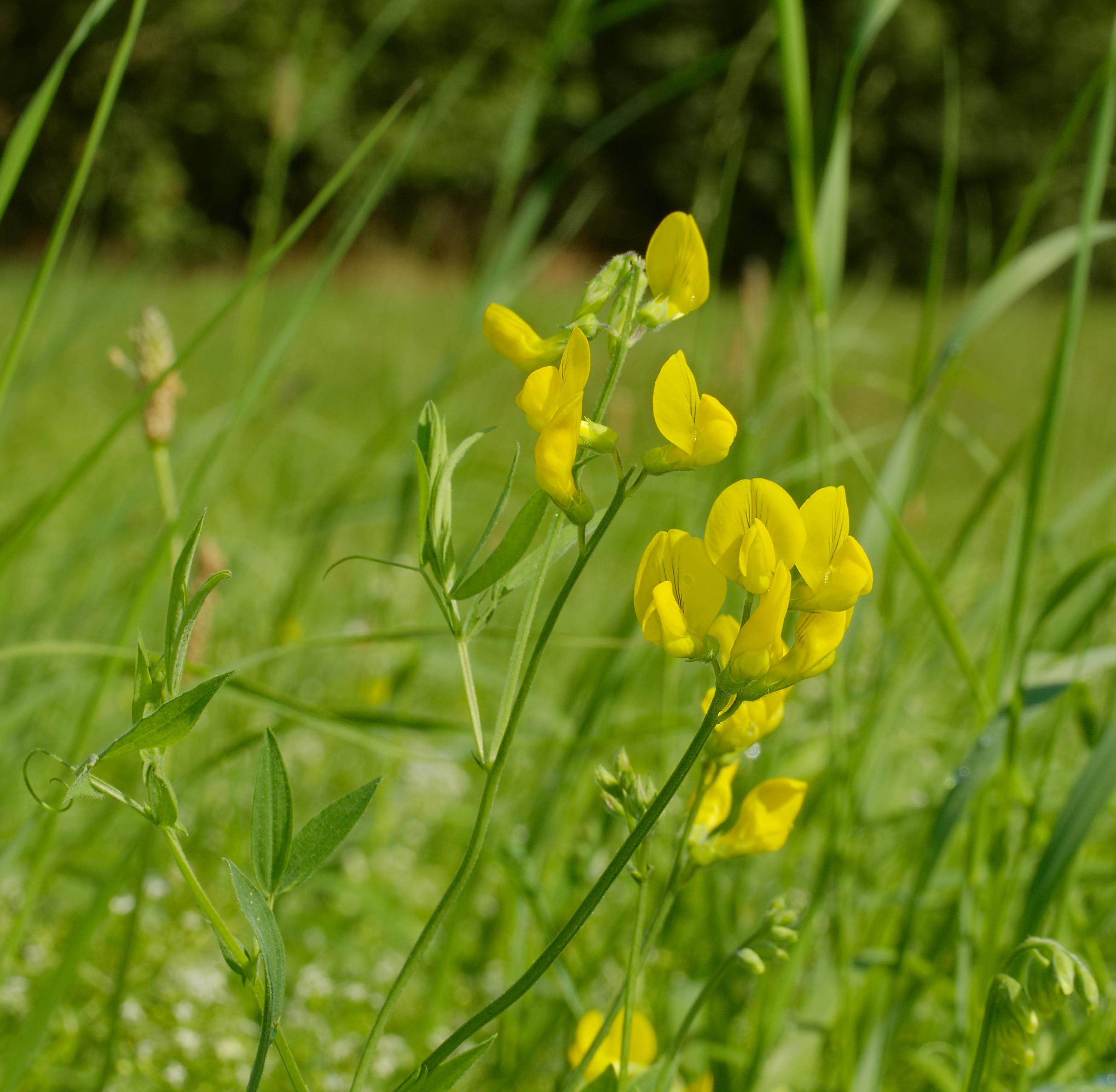
Meadow vetchling can grow up to one metre high.
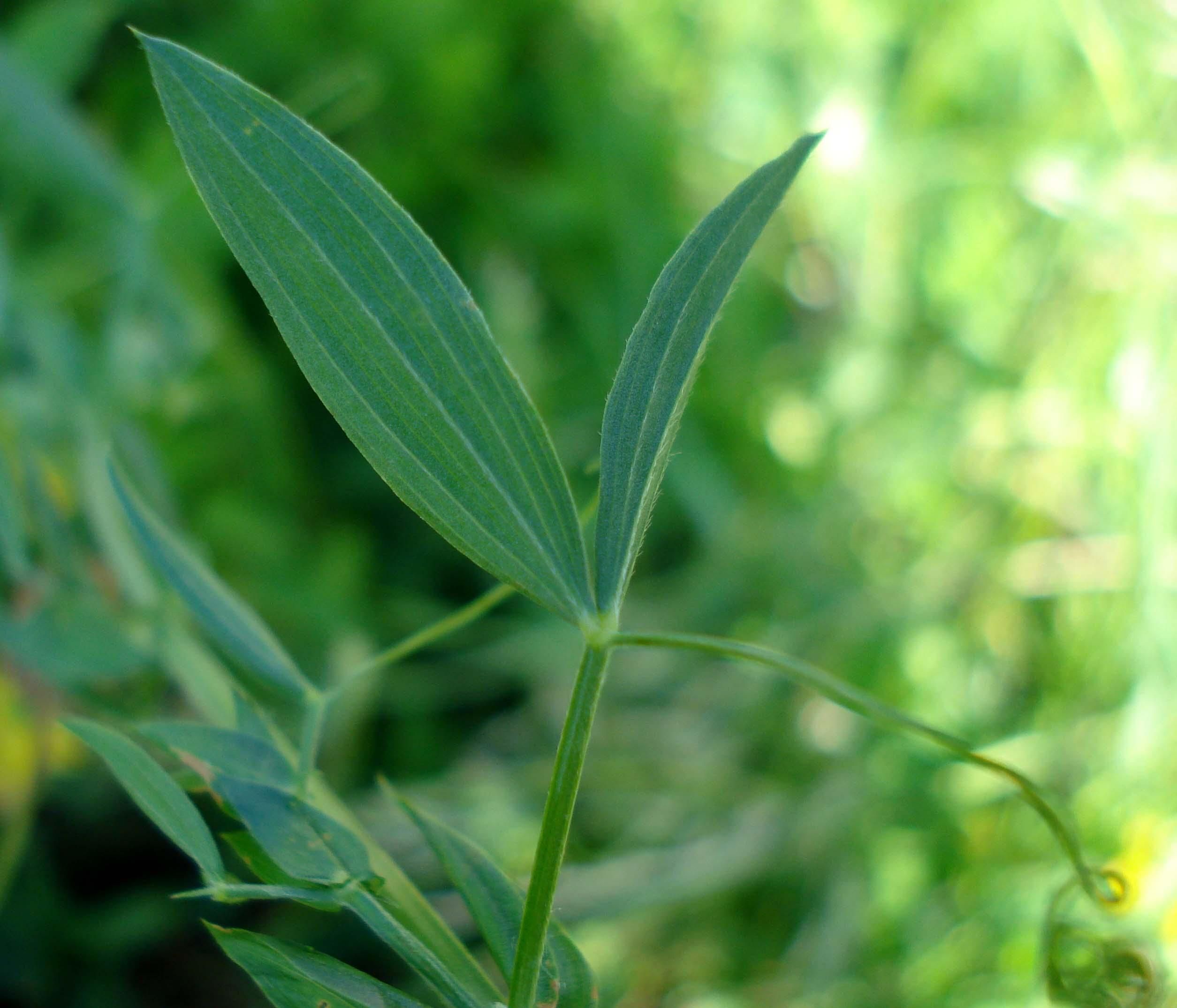
Each leaf consists of several leaflets and terminates in a tendril (equally pinnate). The individual leaflets are narrow lance-shaped with elongated tips.
The stem is upward or climbing, square and often covered in soft hairs. It is highly branched underground.
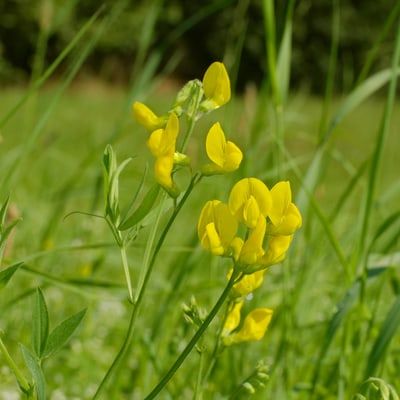
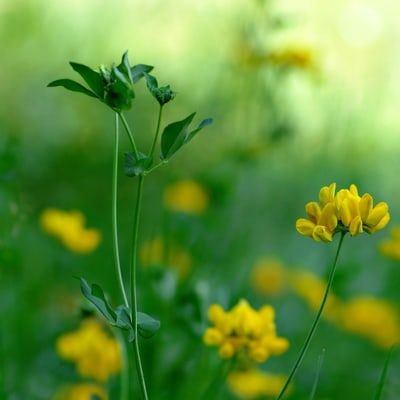
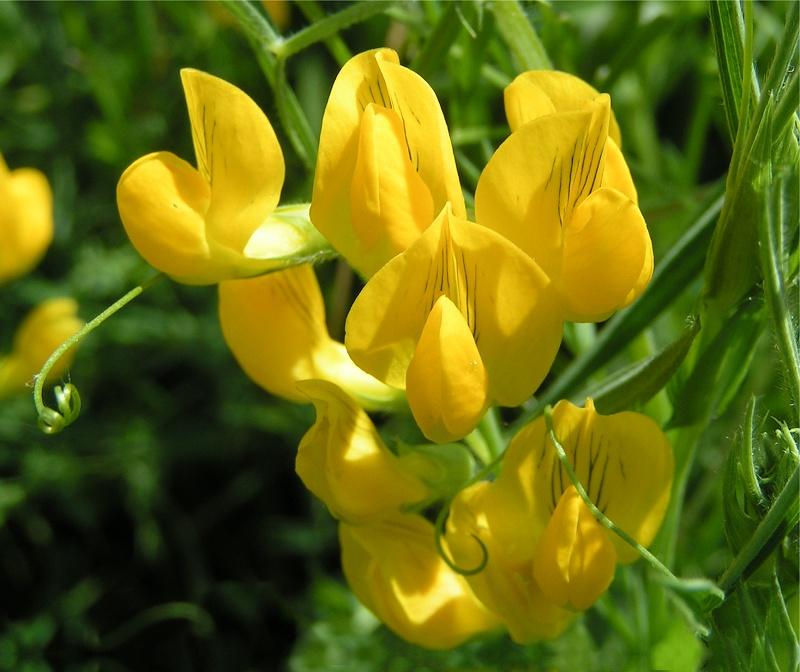
The flowers are yellow and clustered in racemes (flower heads). The individual florets are bright yellow. Each flower has only a single mirror axis (mirror-symmetric). It consists of five petals. The large upper petal protrudes upwards. The two lower petals form a hollow boat that surrounds the anthers and pistil.
The fruit is a hairy pod that turns black with ripening.
Features
Meadow vetchling
Lathyrus pratensis
yellow flowers
leaves with tendrils
Similar species
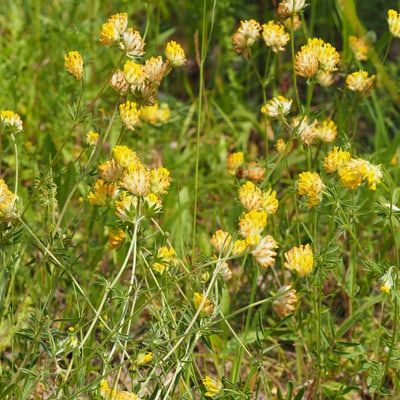
Common kidney vetch
Anthyllis vulneraria
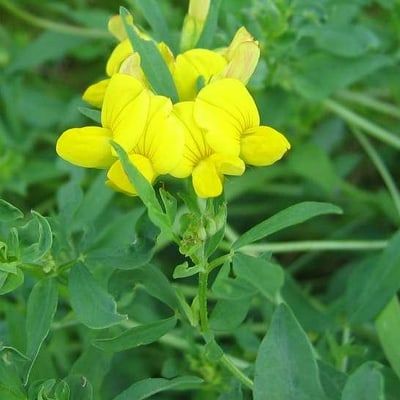
Bird's-foot trefoil
Lotus corniculatus
Greater bird's-foot-trefoil
Lotus pedunculatus
In the city
In an urban environment, meadow vetchling often grows in meadows, forest verges and close to bodies of water. It prefers fresh to wet-dry sites rich in nutrients with loamy soil.
Fun Facts
Meadow vetchling is related to the garden pea.
Symbiosis with root-nodulation bacteria is typical for members of the papilionaceae family. The bacteria supply the plant with nitrogen. As the bacteria require a plant to fix nitrogen, this biological interaction is beneficial to both species (symbiosis).
It flowers from May to July.
- Endangerment level Germany: not endangered
Its unripe pods can be prepared similar to green beans; once ripe, the seeds in the pods can be prepared like peas. The seeds can be processed into a protein-rich flour.
Sources
Habitus, Andreas Eichler, CC BY-SA 4.0, https://commons.wikimedia.org/wiki/File:2014.08.24.-02-See_Pfingstberg_Mannheim-Rheinau--Wiesen-Platterbse.jpg

Laubblatt, Fornax, CC BY-SA 3.0, https://commons.wikimedia.org/wiki/File:Lathyrus_pratensis_W.jpg

Blüten, Sannse, CC BY-SA 3.0, https://commons.wikimedia.org/wiki/File:Meadow_vetchling_close_800.jpg

Spohn, M., Golte-Bechtle, M. & Spohn, R. (2015) Was blüht denn da? Stuttgart: Franckh Kosmos Verlag.
Fleischhauer, S. G., Guthmann, J. & Spiegelberger, R. (2007) Essbare Wildpflanzen. 200 Arten bestimmen und verwenden, Baden und München: AT Verlag.
Lippert, W. & Podlech, D. (1993) GU Naturführer. Blumen: die wichtigen Blütenpflanzen Mitteleuropas erkennen und bestimmen, München: Gräfe und Unzer Verlag.
Needon, C. & Petermann, J. (1991) Urania-Naturführer Pflanzen, Leipzig, Jena, Berlin: Urania-Verlag.
Schauer, T., Caspari, C. & Caspari, S. (2015) Der illustrierte BLV-Pflanzenführer für unterwegs. 1150 Blumen, Gräser, Bäume und Sträucher, München: BLV.
Page „Wiesen-Platterbse“. : Wikipedia, The Free Encyclopedia. Date of last revision: 25.11.2015, 22:54 UTC. URL: https://de.wikipedia.org/w/index.php?title=Wiesen-Platterbse&oldid=148397274 (Accessed: 10.11.2016).