
Short Description
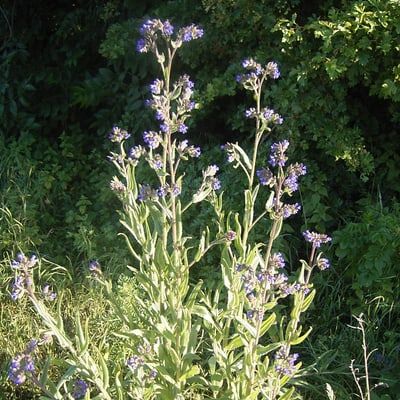
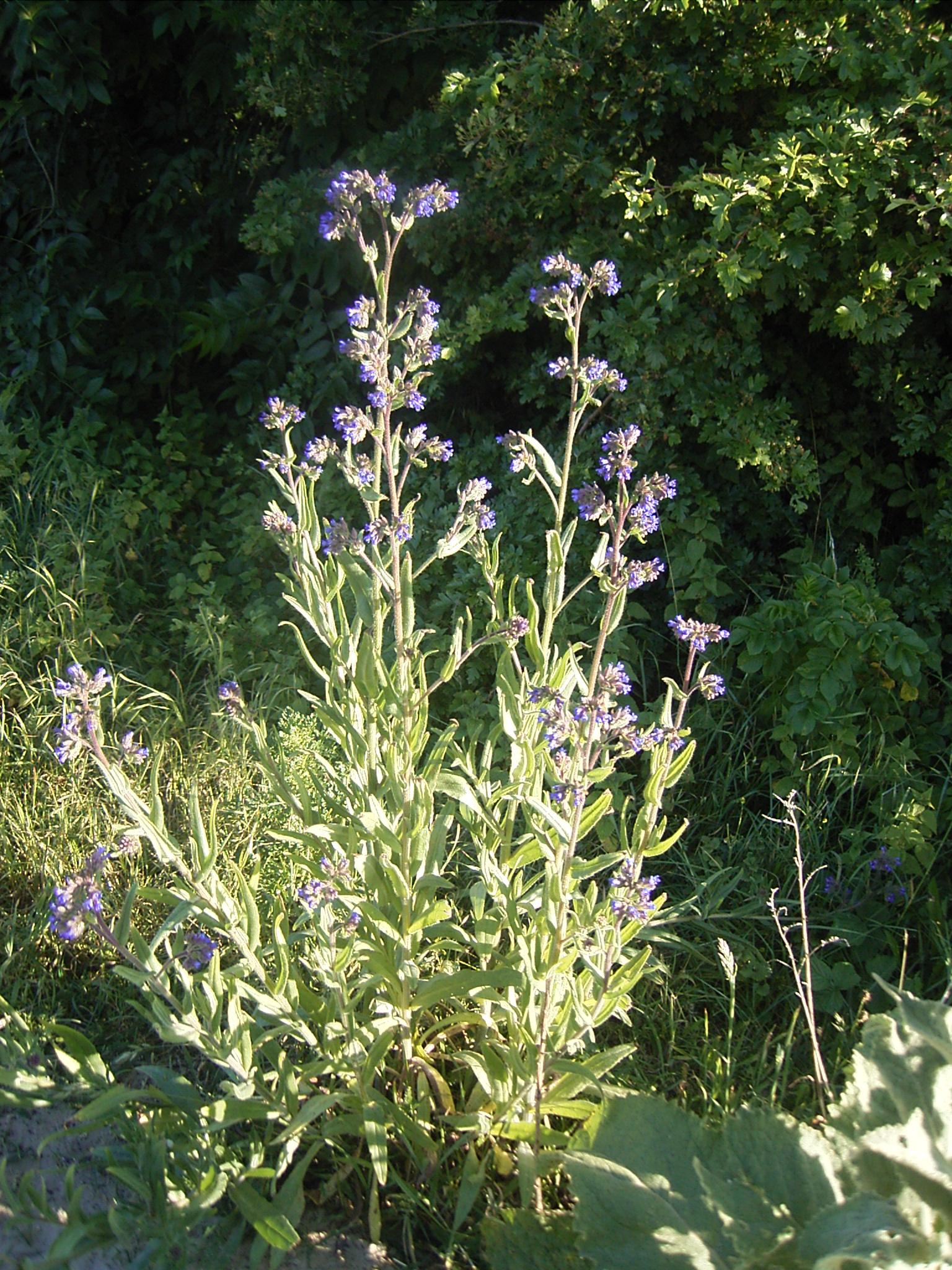
Common bugloss is a biannual to perennial plant that can grow to a height of one metre.
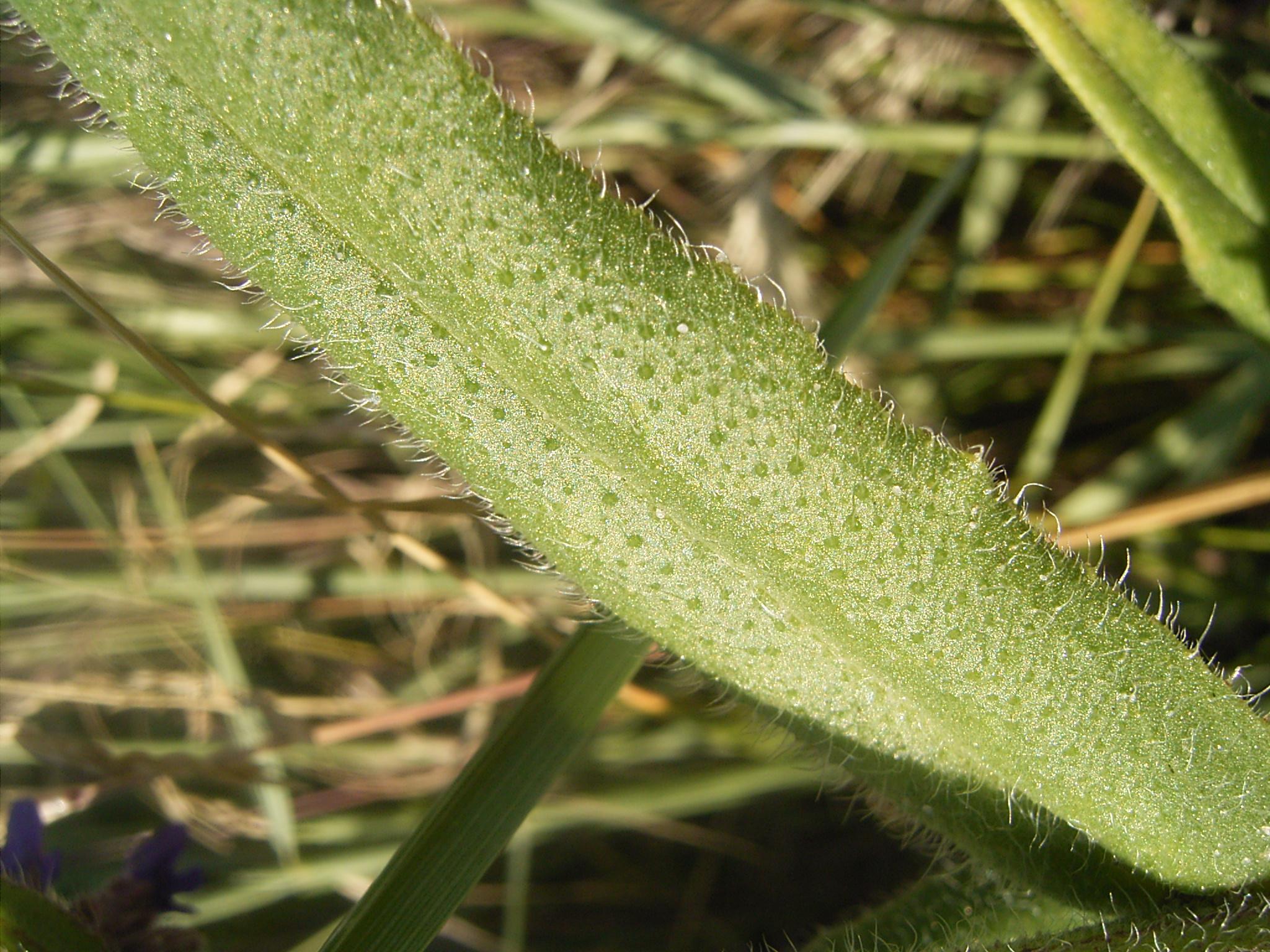
The leaves seem to grow directly out of the ground (basal) or are alternately arranged on the stem. They are elongated-lanceolate to linear, rough and covered in bristly hairs.
The stem is generally upright and densely covered in stiff hairs. This gives it a blueish-green appearance.
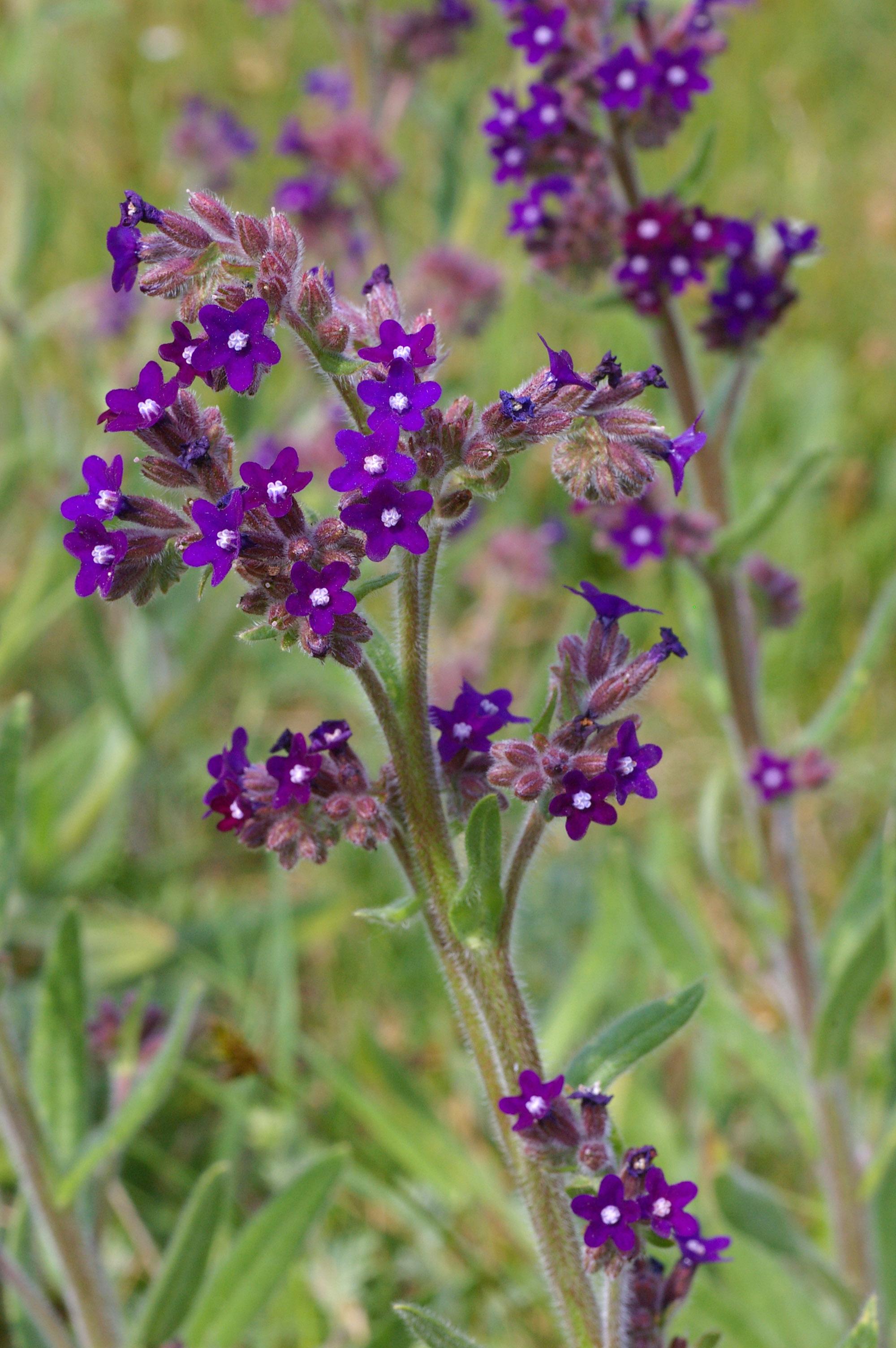
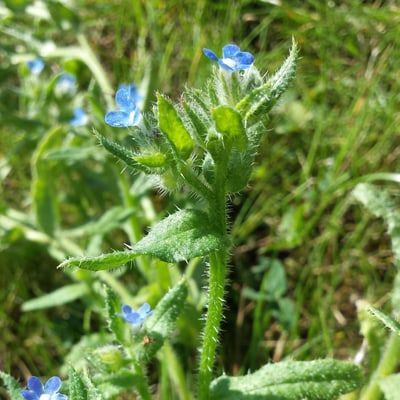
The numerous flowers are arranged in pyramidal and generally highly branched compound flower heads. Individual florets have five petals that are partially fused. Their colour changes over time from crimson red at first opening to monochrome dark purple. At the centre of the flower are five whitish coronal scales.
The fruit is a schizocarp which consists of four mericarps (mericarpic nutlets). Scizocarps are fruits that split into several sections after ripening.
Features
Common bugloss
Anchusa officinalis
poisonous
flowers change in colour from dark red to dark purple
whitish centre of the flower
Similar species
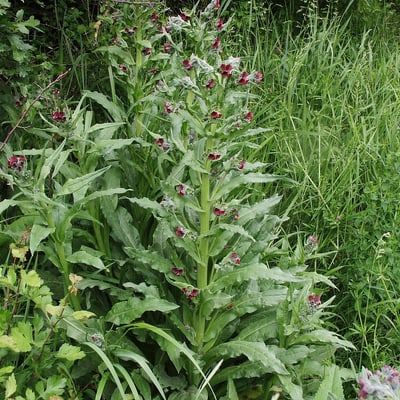
Hound's-tongue
Cynoglossum officinale
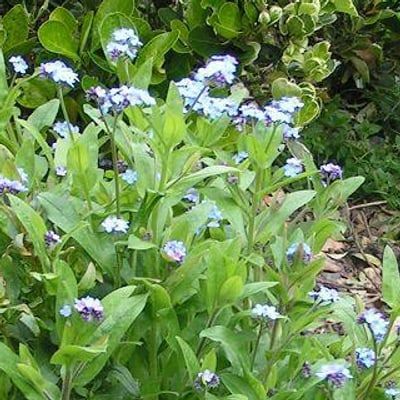
Wood forget-me-not
Myosotis sylvatica
Small bugloss
Lycopsis arvensis
In the city
Common bugloss can frequently be found along dry roadsides, in hedges, uncultivated land and wasteland in towns. It prefers warm, sunny and moderately dry sites with sand or gravel rich in nutrients.
The poisonous bugloss used to be cultivated close to human habitation as a medicinal plant and for the production and was thus able to spread successfully.
Fun Facts
The plant contains carcinogenic and liver-damaging substances and should thus nut be used as a medicinal plant.
Over the course of their development, flowers change in colour from dark red to dark purple. This is caused by a change in the flower’s pH value. The pH value increases with time and the environment within the flower cells becomes increasingly alkaline.
The whitish coronal scales are an anther-mimicking floral guide that serve to attract and direct pollinators.
It flowers from May to October.
The plant is named after its foliage leaves that resemble an ox tongue in form and texture (from the Greek: bou = ox, glossa = tongue).
- Endangerment level Germany: Warning list
Bugloss was formerly used to produce a yellow dye.
Sources
Blüten, Christian Fischer, CC BY-SA 3.0, https://commons.wikimedia.org/wiki/File:AnchusaOfficinalis.jpg

Blätter, Me, Gemeinfrei, https://commons.wikimedia.org/wiki/File:Anchusa_officinalis_16-06-2006_19.45.34.JPG

Habitus, Me, Gemeinfrei, https://commons.wikimedia.org/wiki/File:Anchusa_officinalis_16-06-2006_20.07.14.JPG

Spohn, M., Golte-Bechtle, M. & Spohn, R. (2015) Was blüht denn da? Stuttgart: Franckh Kosmos Verlag.
Needon, C. & Petermann, J. (1991) Urania-Naturführer Pflanzen, Leipzig, Jena, Berlin: Urania-Verlag.
Schauer, T., Caspari, C. & Caspari, S. (2015) Der illustrierte BLV-Pflanzenführer für unterwegs. 1150 Blumen, Gräser, Bäume und Sträucher, München: BLV.
Page „Gemeine Ochsenzunge“. : Wikipedia, The Free Encyclopedia. Date of last revision: 05.11.2016, 14:36 UTC. URL: https://de.wikipedia.org/w/index.php?title=Gemeine_Ochsenzunge&oldid=159399655 (Accessed: 19.12.2016).
Offene Naturführer (2011) Grundständig, URL: https://offene-naturfuehrer.de/web/Grundst%C3%A4ndig (Accessed: 19.12.2016).
Bundesamt für Naturschutz (n.d.) Artensteckbriefe, URL: http://floraweb.de/pflanzenarten/artenhome.xsql?suchnr=407& (Accessed: 19.12.2016).