
Short Description
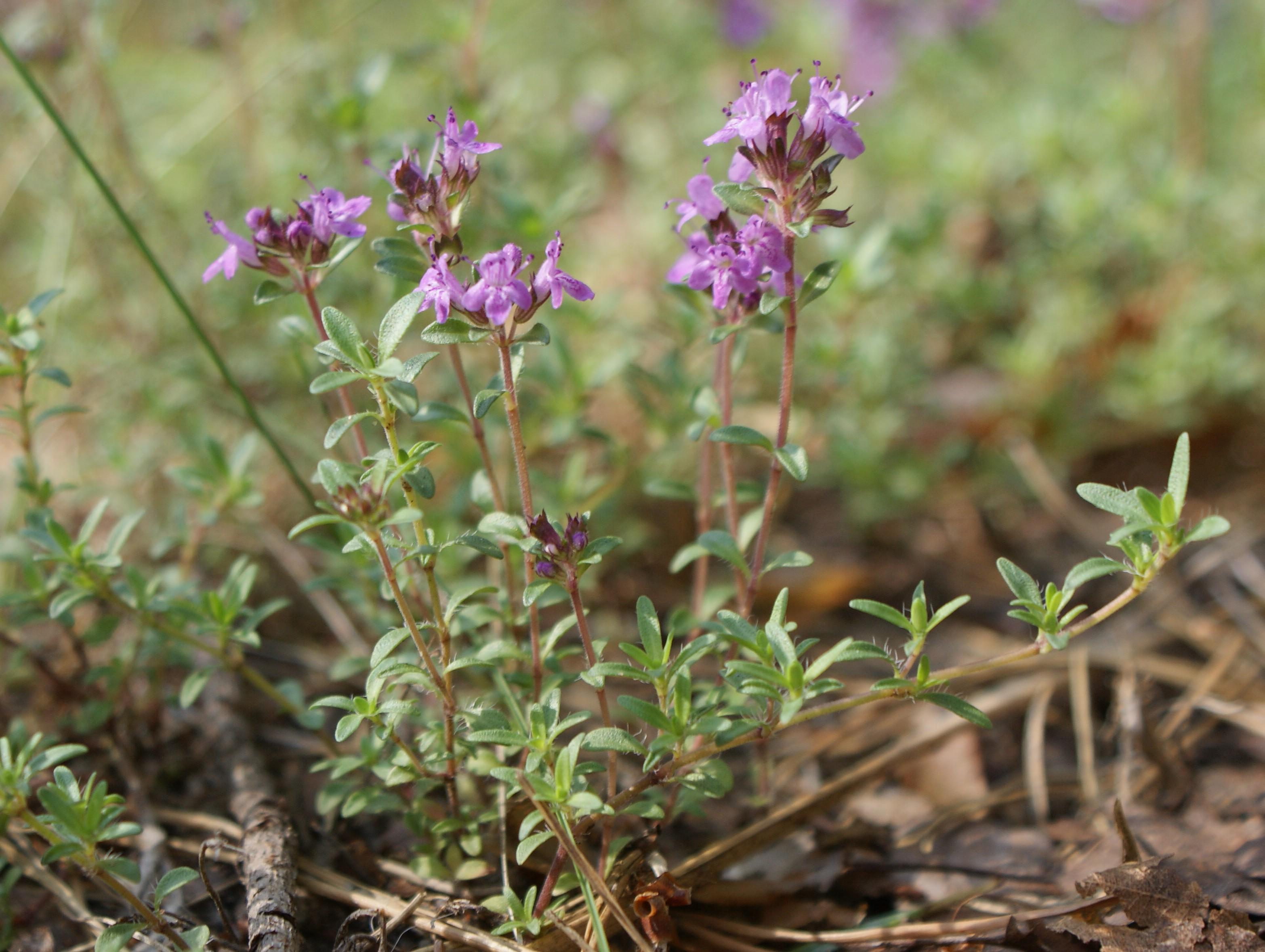
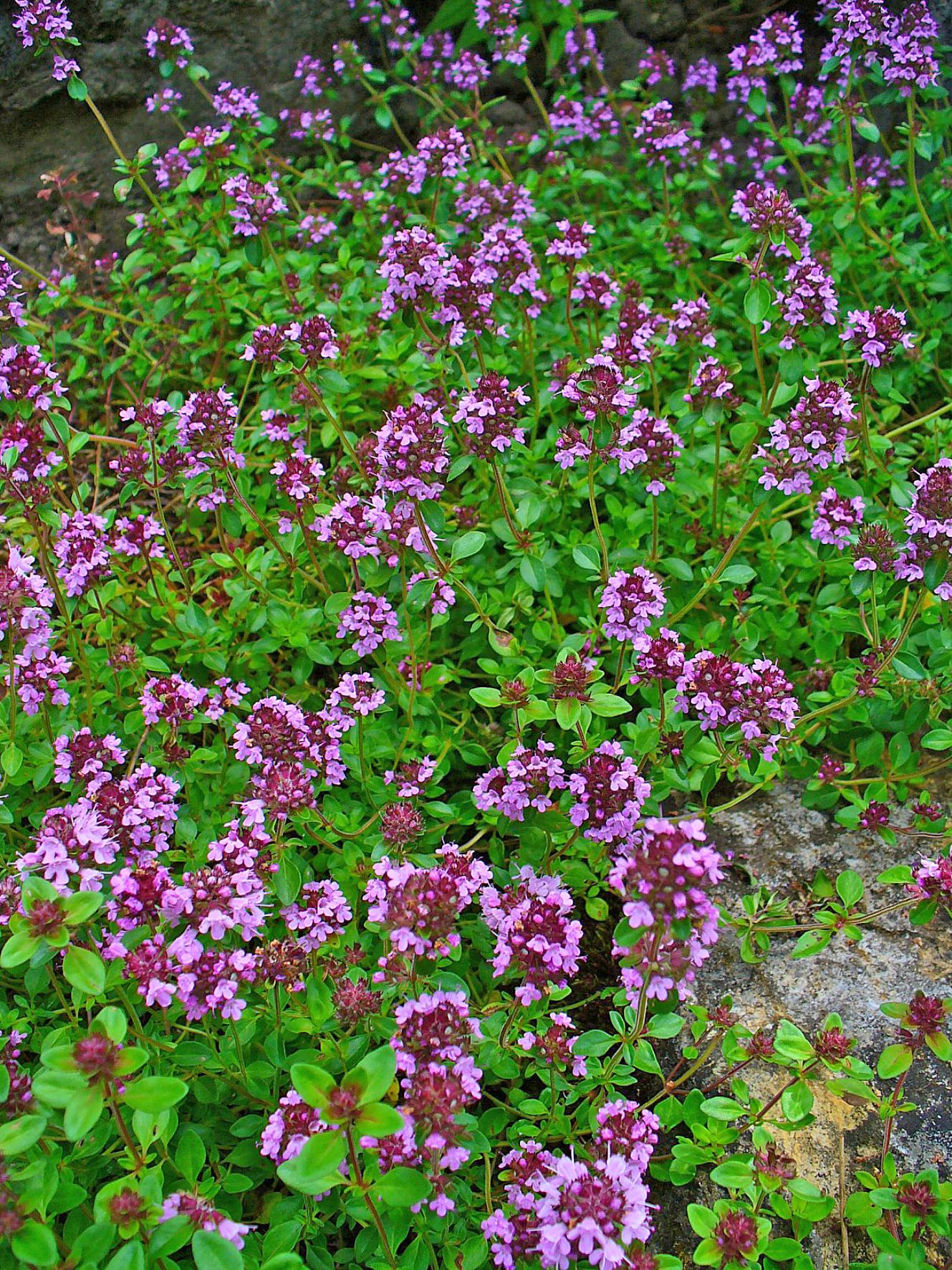
The wild thyme can grow up to 10 cm high.
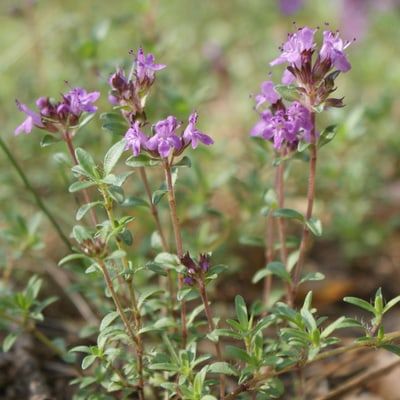
The leaves are coarse, elongated-ovate and usually all the same size. They have an aromatic scent. The leaves are opposite each other on the stem.
The stem grows creeping with regular, short and upright standing side shoots. The side shoots are slightly square and hairy all around. The stem is slightly woody at the bottom.
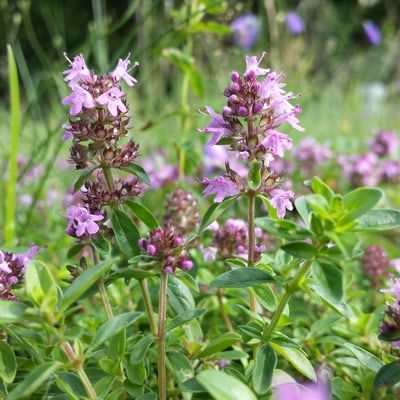
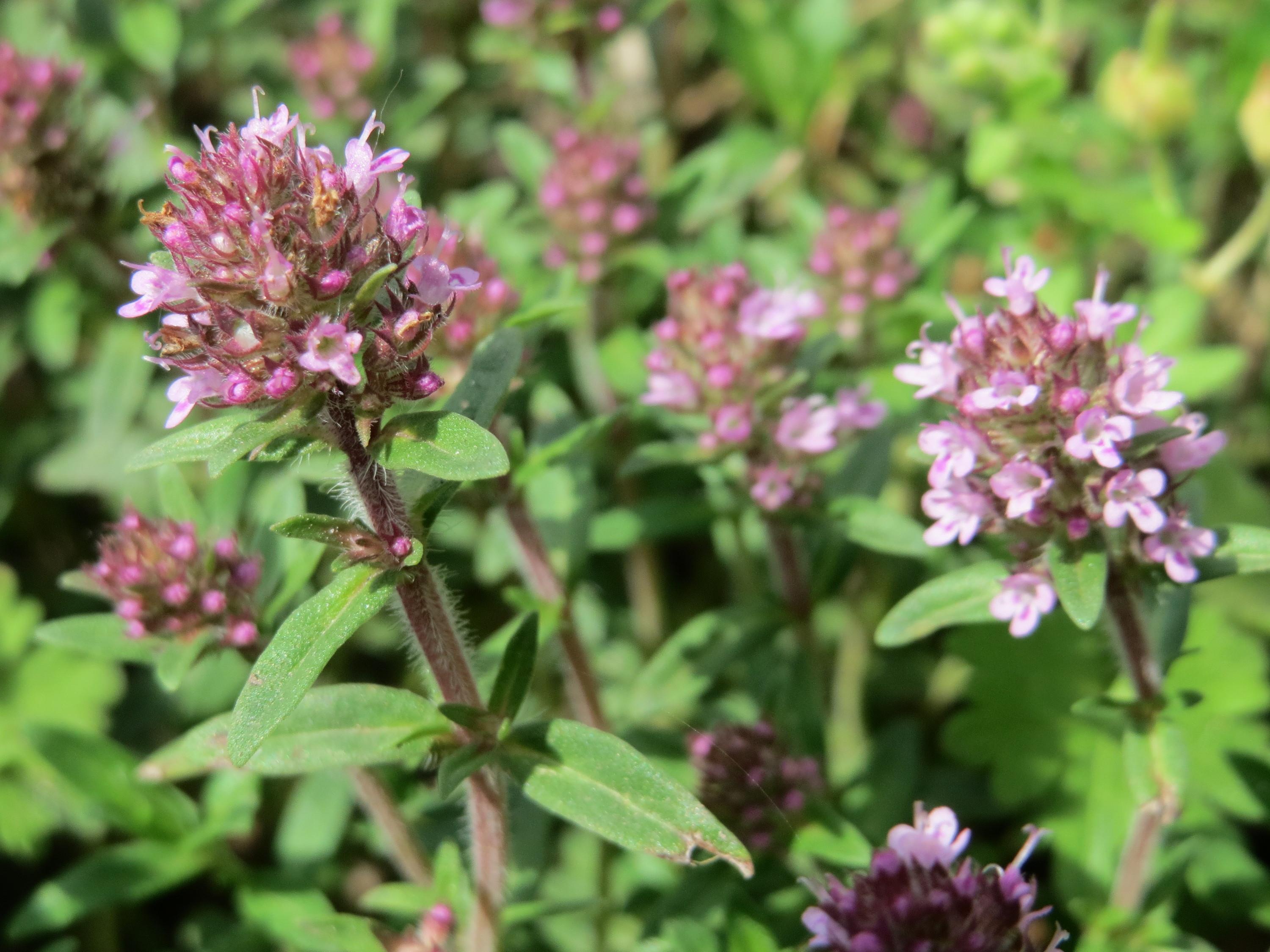
The petals are pink and fused together so that they form an upper and lower lip. They sit terminal, dense inflorescences.
The fruits are small, single-seeded nutlets. There are always four of them in the calyx of the flower.
Features
Wild thyme
Thymus serpyllum
regularly branched stem
aromatic scent
In the city
The wild thyme grows on nutrient-poor lawns, dunes and in sparse pine forests. It prefers dry, base-rich and mostly calcareous sandy soils.
Fun Facts
The volatile essential oil evaporates from the leaves and forms a "scent cloud" around the plant. This ensures that less water evaporates.
The flowering period is from June to August.
It lives for several years and generally flowers and fruits annually (perennial plant).
The flower is pollinated by insects.
- Endangerment level Germany: Warning list
The wild thyme is native to Europe.
Thyme comes from the Greek word thyein= to smoke, to sacrifice. In antiquity, thyme, like incense, was an addition to sacrificial fires.
An infusion of the plant is used for flu-like infections.
Sources
Habitus, Kenraiz, CC BY-SA 4.0, https://commons.wikimedia.org/wiki/File:Thymus_serpyllum_kz1.jpg

Blütenstand und Blätter, AnRo0002, CC0, https://commons.wikimedia.org/wiki/File:20150520Thymus_serpyllum3.jpg

Habitus, H. Zell, CC BY-SA 3.0, https://commons.wikimedia.org/wiki/File:Thymus_serpyllum_001.JPG

Spohn, M., Golte-Bechtle, M. & Spohn, R. (2015) Was blüht denn da? Stuttgart: Franckh Kosmos Verlag.
Page „Sand-Thymian“. : Wikipedia, The Free Encyclopedia. Date of last revision: 24.10.2017, 09:30 UTC. URL: https://de.wikipedia.org/w/index.php?title=Sand-Thymian&oldid=170279303 (Accessed: 12.04.2018).