
Short Description
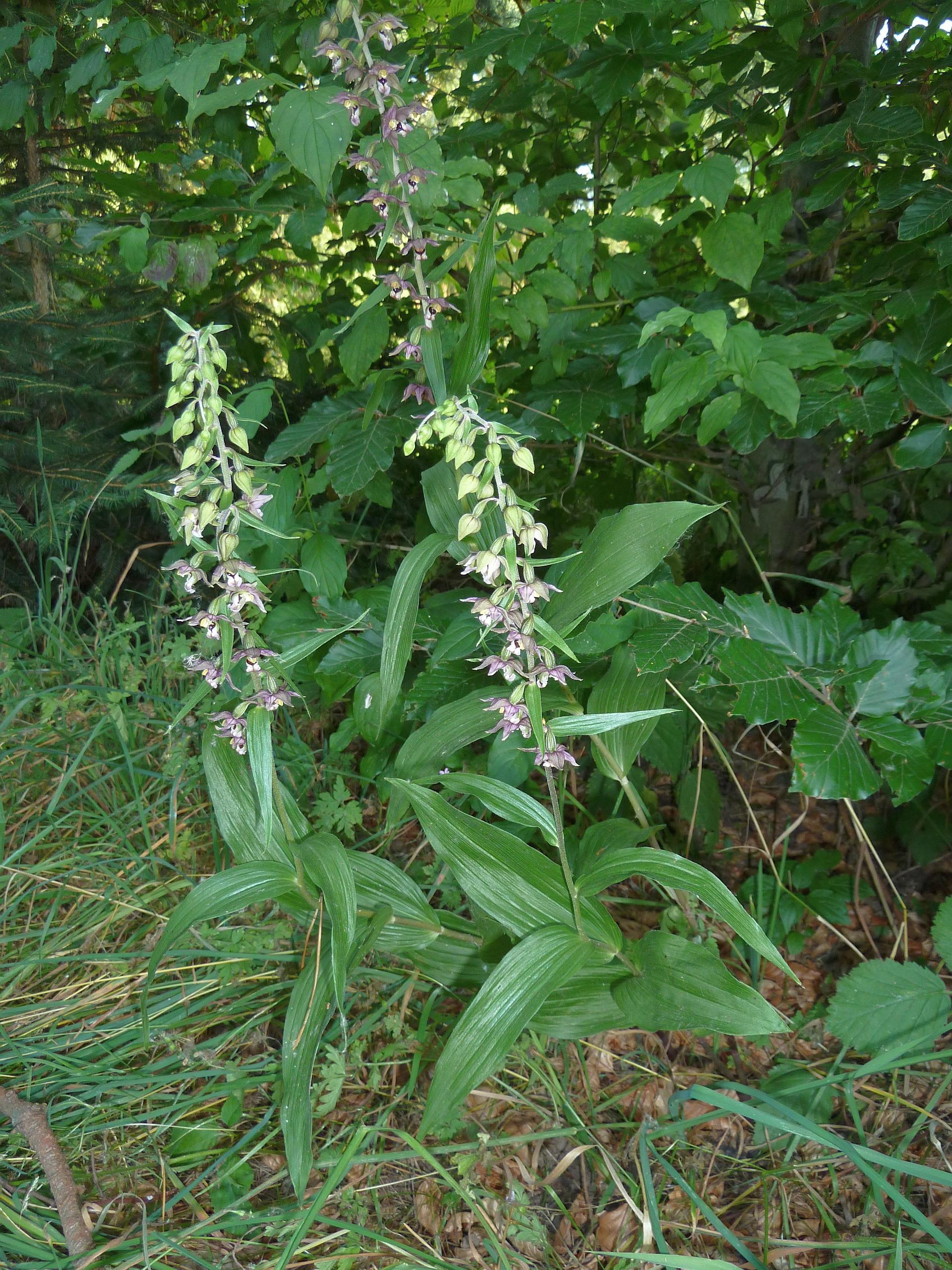
The broad-leaved helleborine can grow up to one metre high.
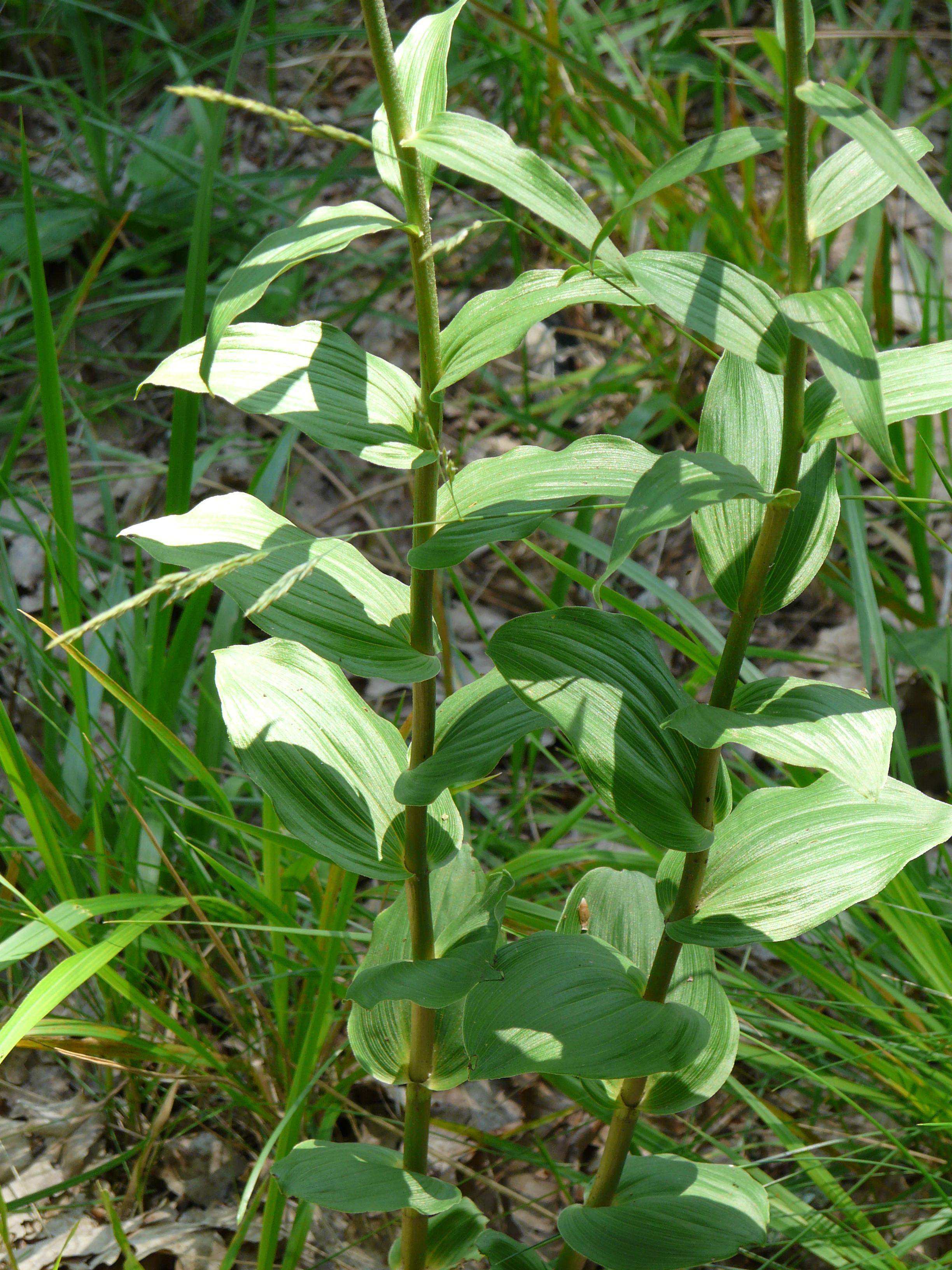
At the lower end of the stem are large, oval leaves.
The stem is strong and glabrous.
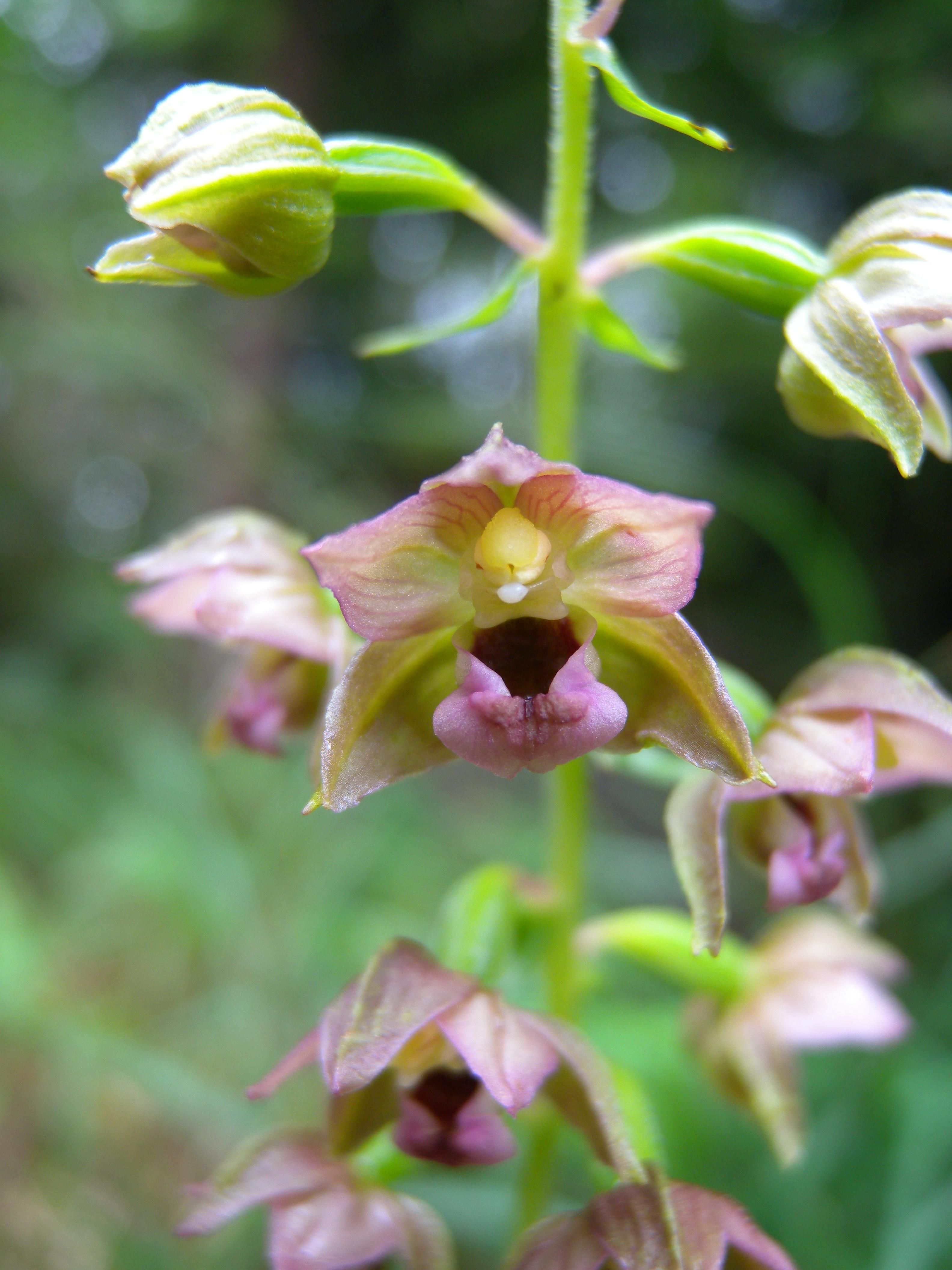
The flowers have a typical orchid structure. They are zygomorphic and light pink to greenish.
The fruits are hanging capsules with dust-fine seeds.
Features
Broad-leaved helleborine
Epipactis helleborine
large leaves at the lower end of the stem
typical orchid flowers
stems strong and glabrous
In the city
The broad-leaved helleborine prefers to grow in light to semi-shady places such as forest edges and clearings. It is largely undemanding with regard to the lime content of the soil. It grows in deciduous forests, on embankments and along roadsides. In the city, it can sometimes be found growing wild in parks and gardens.
Fun Facts
The broad-leaved helleborine is one of the few orchids that is not endangered.
Each fruit contains about 10,000 tiny seeds that can be carried over 10 km by the wind.
It lives for several years and generally flowers and fruits annually (perennial plant).
The flowering period is from July to August.
- Endangerment level Germany: not endangered
Sources
Habitus, Joachim Lutz, CC BY-SA 4.0, https://commons.wikimedia.org/wiki/File:Epipactis_helleborine_15.JPG

Blüten, MurielBendel, CC BY-SA 4.0, https://commons.wikimedia.org/wiki/File:Epipactis_helleborine_flower.jpg

Blätter, Père Igor, CC BY-SA 3.0, https://commons.wikimedia.org/wiki/File:Epipactis_helleborine_Trélissac_12_06_09_(1).JPG
.JPG)
Page „Breitblättrige Stendelwurz“. : Wikipedia, The Free Encyclopedia. Date of last revision: 11.07.2018, 11:49 UTC. URL: https://de.wikipedia.org/w/index.php?title=Breitbl%C3%A4ttrige_Stendelwurz&oldid=179055615 (Accessed: 24.07.2018).
Bundesamt für Naturschutz (n.d.) Artensteckbriefe, URL: http://floraweb.de/pflanzenarten/artenhome.xsql?suchnr=2134& (Accessed: 24.07.2018).
Seitz, B., Ristow, M., Meißner, J., Machatzi, B. & Sukopp, H. (2018) Rote Liste und Gesamtartenliste der etablierten Farn- und Blütenpflanzen von Berlin. : Der Landesbeauftragte für Naturschutz und Landschaftspflege / Senatsverwaltung für Umwelt, Klima und Verkehr (eds.) Rote Listen der gefährdeten Pflanzen, Pilze und Tiere von Berlin, URL: https://www.berlin.de/sen/uvk/natur-und-gruen/naturschutz/artenschutz/artenlisten-rote-listen/farn-und-bluetenpflanzen/ (Accessed: 26.03.2021).