
Short Description
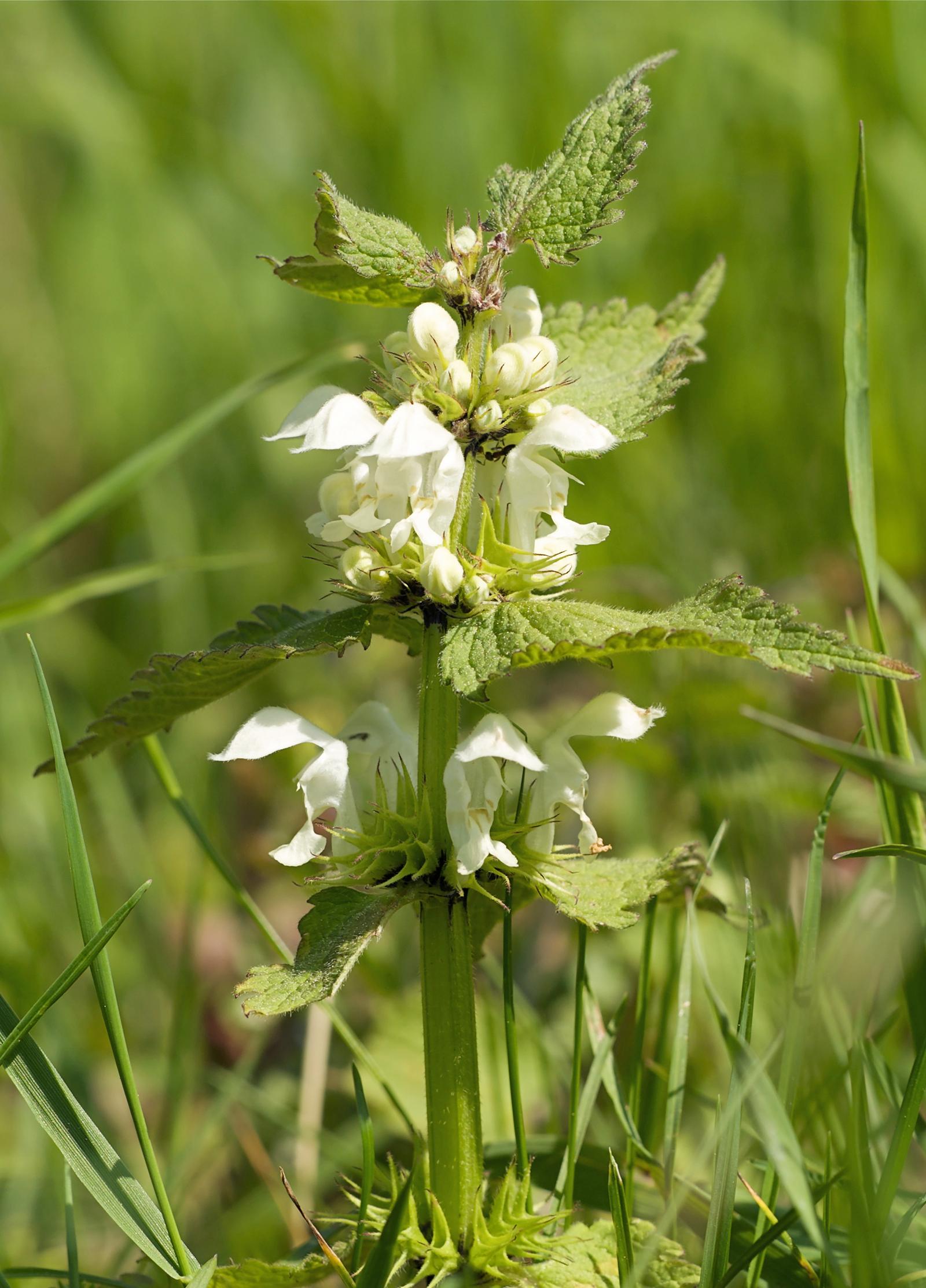
White nettle can grow to a height of 80 cm.
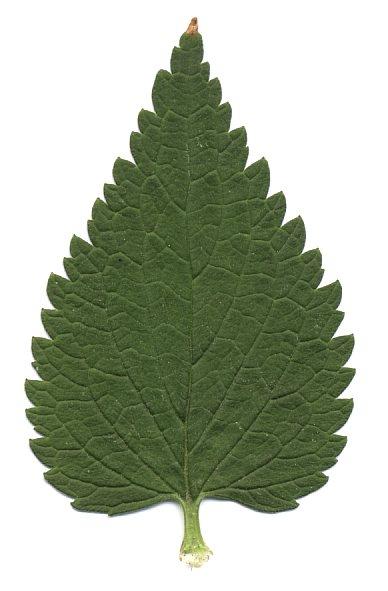
The leaves are roundish to broadly lance-shaped with a wrinkled surface. The leaves grow in opposite pairs. They generally taper to a point. The leaf margins are coarsely serrated.
The stem is erect, square and sparsely haired. It is hollow inside. It forms numerous runners.
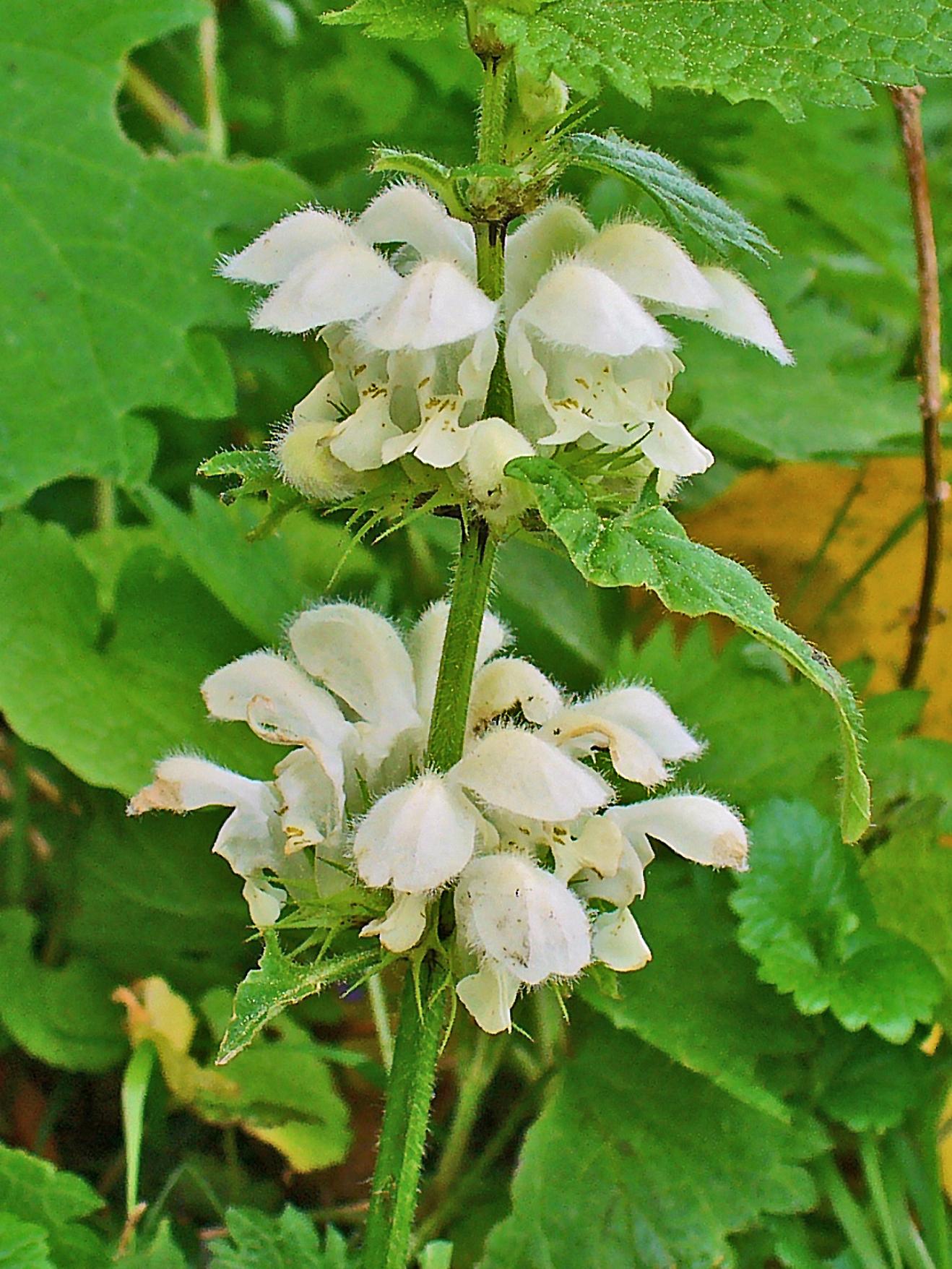
The flowers are arranged in pseudo-whorls at various levels on the stem. They are white to yellow and covered in fine hair. The corolla is curved like a sickle.
The fruits are schizocarp that split into four mericarps.
Features
White nettle
Lamium album
white flowers
square stem
In the city
In an urban environment, white nettle is frequently found at waysides and the edges of meadows, in hedges and in wasteland. It benefits from the nutrient enrichment in urban soils and can propagate quite well. It prefers light to semi-shaded, fresh sites with very nutrient-rich soil.
Fun Facts
Its young shoots can be eaten as a vegetable.
It flowers from April to October.
It lives for several years and generally flowers and fruits annually (perennial plant).
- Endangerment level Germany: not endangered
One of the medicinal uses of white nettle is in the treatment of inflammations or infections of the respiratory tract. The leaves can be prepared as a tea.
Sources
Habitus, Jörg Hempel, CC-BY-SA 2.0, https://commons.wikimedia.org/wiki/File:Lamium_album_LC0137.jpg

Blüten, H. Zell, CC BY-SA 3.0, https://commons.wikimedia.org/wiki/File:Lamium_album_003.JPG

Laubblatt, Sigman, gemeinfrei, https://commons.wikimedia.org/wiki/File:Lamium_album_scan.jpg

Spohn, M., Golte-Bechtle, M. & Spohn, R. (2015) Was blüht denn da? Stuttgart: Franckh Kosmos Verlag.
Fleischhauer, S. G., Guthmann, J. & Spiegelberger, R. (2007) Essbare Wildpflanzen. 200 Arten bestimmen und verwenden, Baden und München: AT Verlag.
Lippert, W. & Podlech, D. (1993) GU Naturführer. Blumen: die wichtigen Blütenpflanzen Mitteleuropas erkennen und bestimmen, München: Gräfe und Unzer Verlag.
Needon, C. & Petermann, J. (1991) Urania-Naturführer Pflanzen, Leipzig, Jena, Berlin: Urania-Verlag.
Schauer, T., Caspari, C. & Caspari, S. (2015) Der illustrierte BLV-Pflanzenführer für unterwegs. 1150 Blumen, Gräser, Bäume und Sträucher, München: BLV.
Scherf, G. (2006) Wildpflanzen neu entdecken, München: BLV.
Page „Weiße Taubnessel“. : Wikipedia, The Free Encyclopedia. Date of last revision: 03.05.2016, 10:47 UTC. URL: https://de.wikipedia.org/w/index.php?title=Wei%C3%9Fe_Taubnessel&oldid=154057867 (Accessed: 15.12.2016).