
Short Description
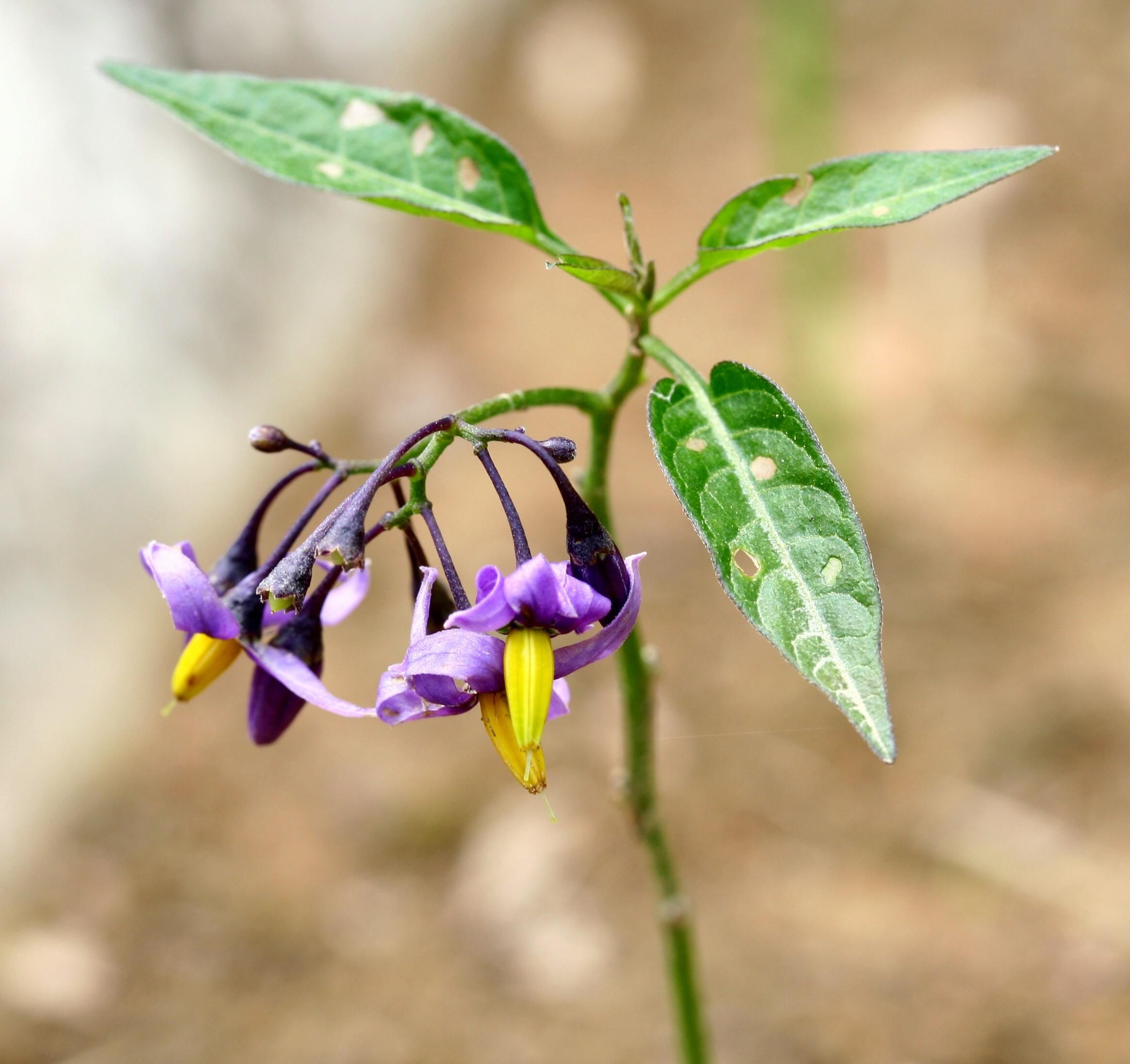
Bittersweet nightshade is a semi-woody herbaceous vine that can grow up to ten metres above ground.
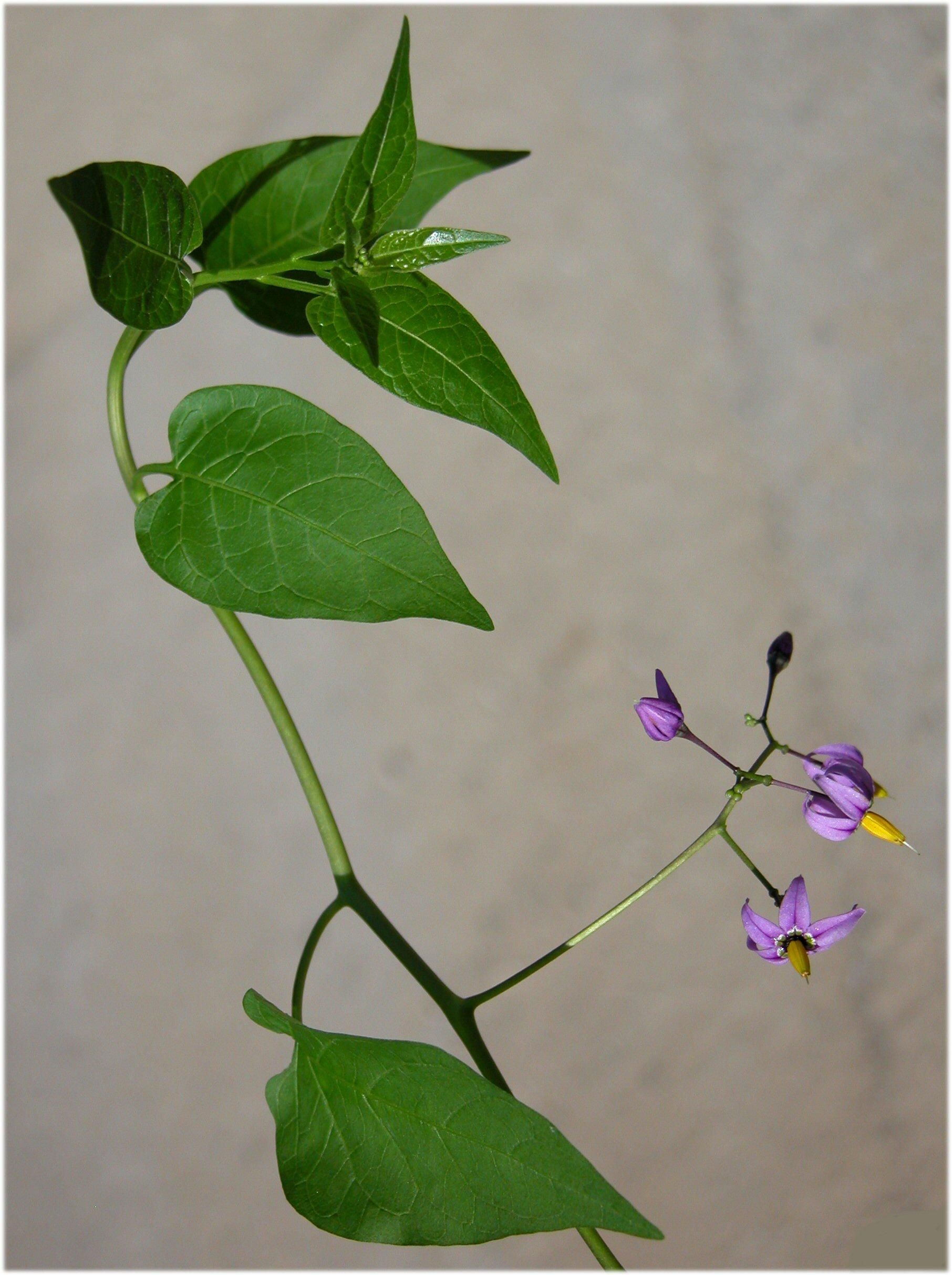
The leaves are arranged in opposite pairs on the stem. They are variable and can be egg- or heart-shaped. They are either unlobed or with up to three lobes.
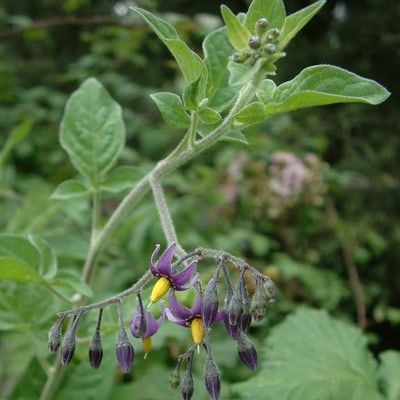
The stem is climbing to creeping and generally covered in fine hair.
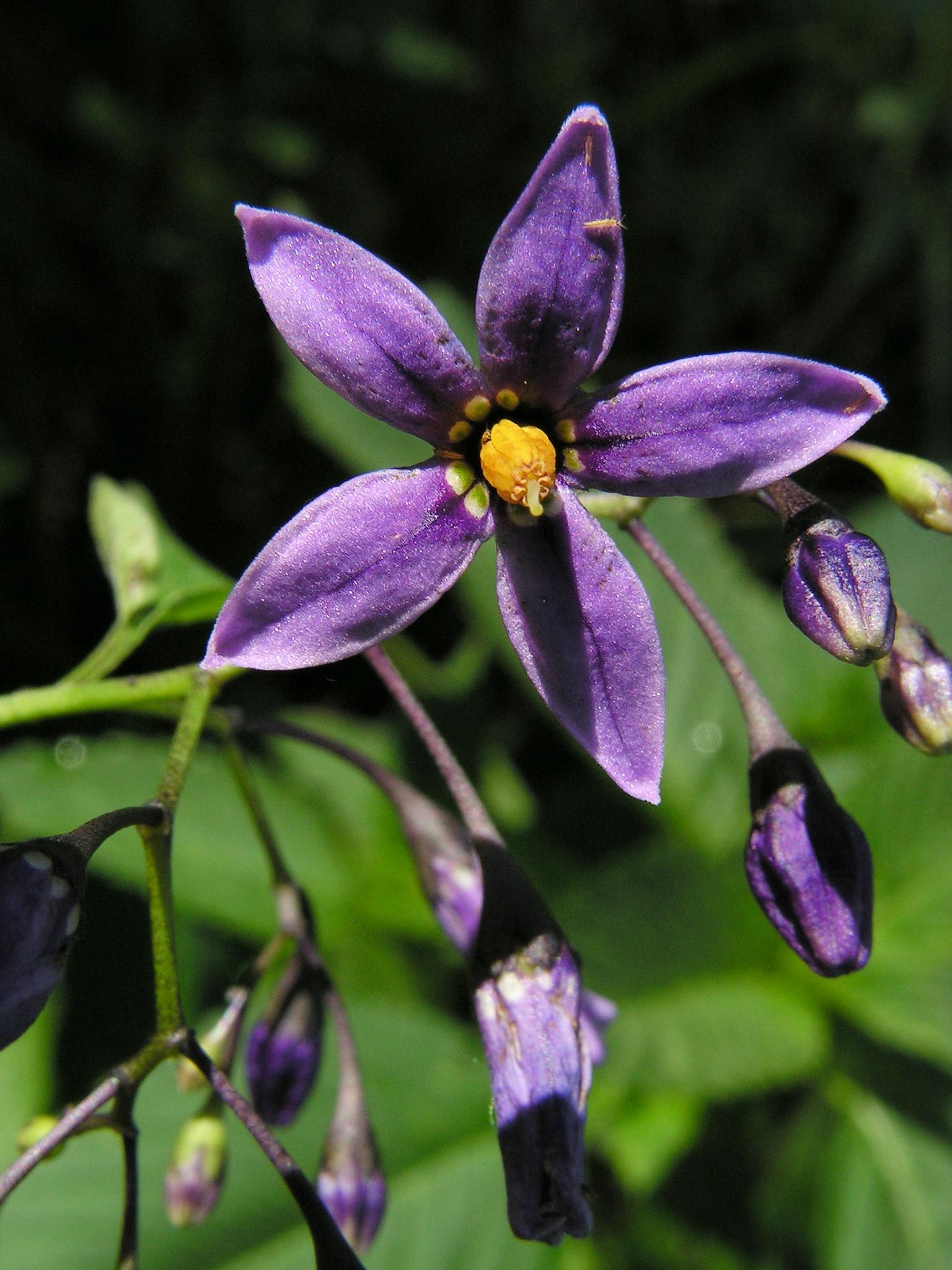
The purple flowers have five petals. In the middle of the flower is a cone of fused stamens.
The fruit is a red oval berry.
Features
Bittersweet nightshade
Solanum dulcamara
poisonous
five purple petals
yellow stamens fused in a cone
In the city
In an urban environment, bittersweet nightshade is often found along embankments and hedges. It prefers moist to moderately dry, semi-shaded sites with nutrient-rich soils.
As an ancient medicinal plant, the nightshade is often found near old village centres or old walls.
Fun Facts
In folk medicine, low-dosed bittersweet nightshade was used to treat nausea, rheumatism and respiratory ailments.
The fruit is said to taste bitter at first, then sweet. But because of the high toxin content, this should not be tested!
It belongs to the same family as the tobacco plant. According to the German Tobacco Regulation, though, it is forbidden to use bittersweet nightshade leaves in tobacco products.
It flowers from June to August.
- Endangerment level Germany: not endangered
The plant contains numerous toxins.
Sources
Habitus, Enrico Blasutto, CC BY-SA 3.0, https://commons.wikimedia.org/wiki/File:Solanum_dulcamara_ENBLA01.jpg

Blüten, Bff, CC BY-SA 4.0, https://commons.wikimedia.org/wiki/File:Solanum_dulcamara20110612_254.jpg

Blätter, Andrea Moro, CC BY-SA 3.0, https://species-id.net/openmedia/File:Dryades_TSB16256.jpg

Spohn, M., Golte-Bechtle, M. & Spohn, R. (2015) Was blüht denn da? Stuttgart: Franckh Kosmos Verlag.
Lippert, W. & Podlech, D. (1993) GU Naturführer. Blumen: die wichtigen Blütenpflanzen Mitteleuropas erkennen und bestimmen, München: Gräfe und Unzer Verlag.
Schauer, T., Caspari, C. & Caspari, S. (2015) Der illustrierte BLV-Pflanzenführer für unterwegs. 1150 Blumen, Gräser, Bäume und Sträucher, München: BLV.
Page „Bittersüßer Nachtschatten“. : Wikipedia, The Free Encyclopedia. Date of last revision: 19.09.2016, 10:17 UTC. URL: https://de.wikipedia.org/w/index.php?title=Bitters%C3%BC%C3%9Fer_Nachtschatten&oldid=158042698 (Accessed: 02.12.2016).