
Short Description
The longleaf can grow up to 80 cm high.
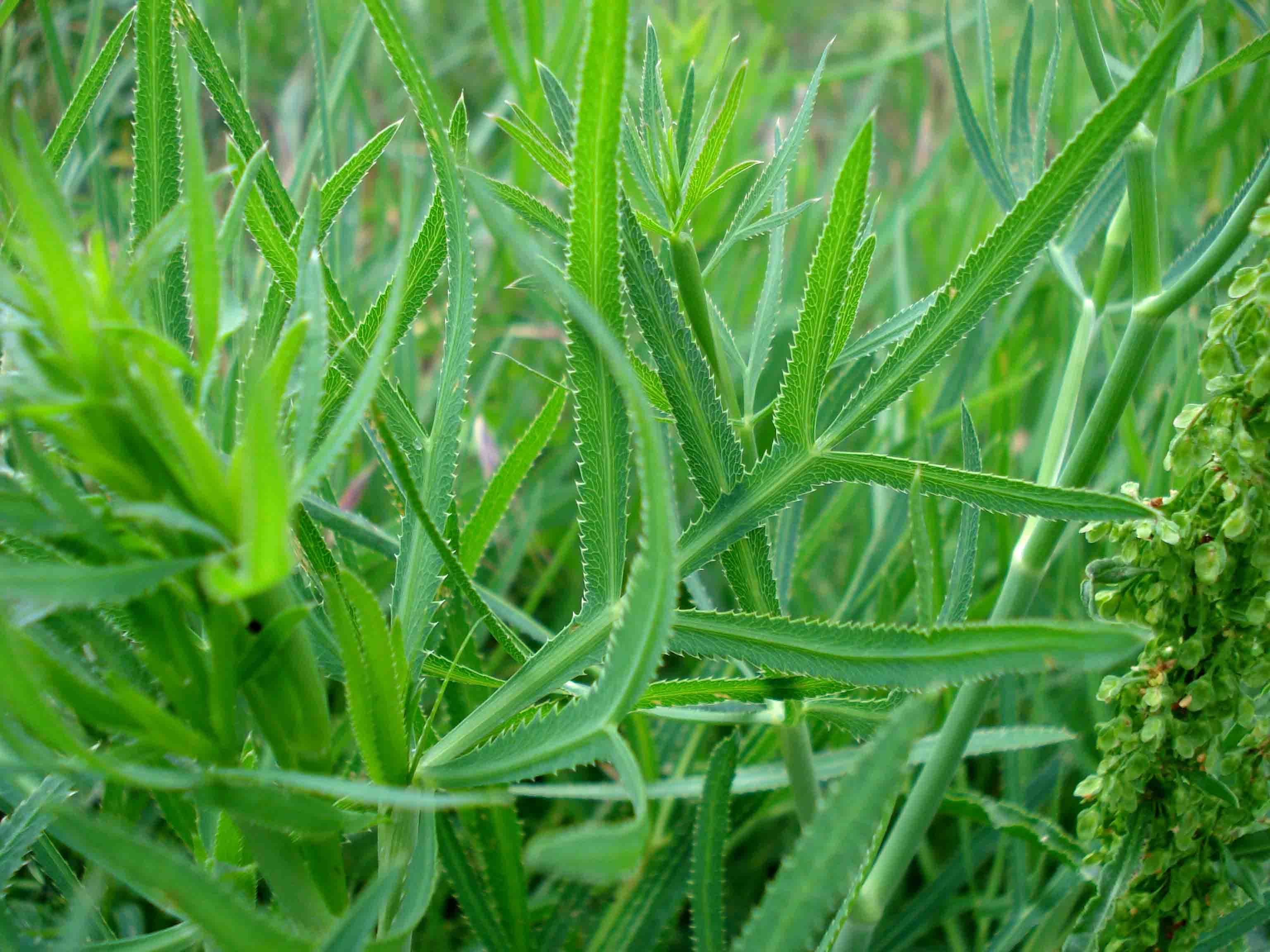
The blue-green leaves are deeply lobed in one to two lobes. The leaf segments are often tripartite, stiff and slightly curved in a sickle shape. The leaf margin is serrated.
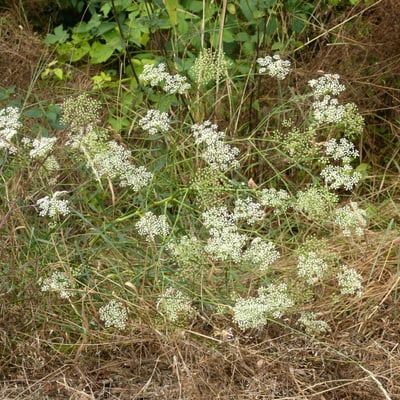
The stem grows erect. It is usually spreading branched.
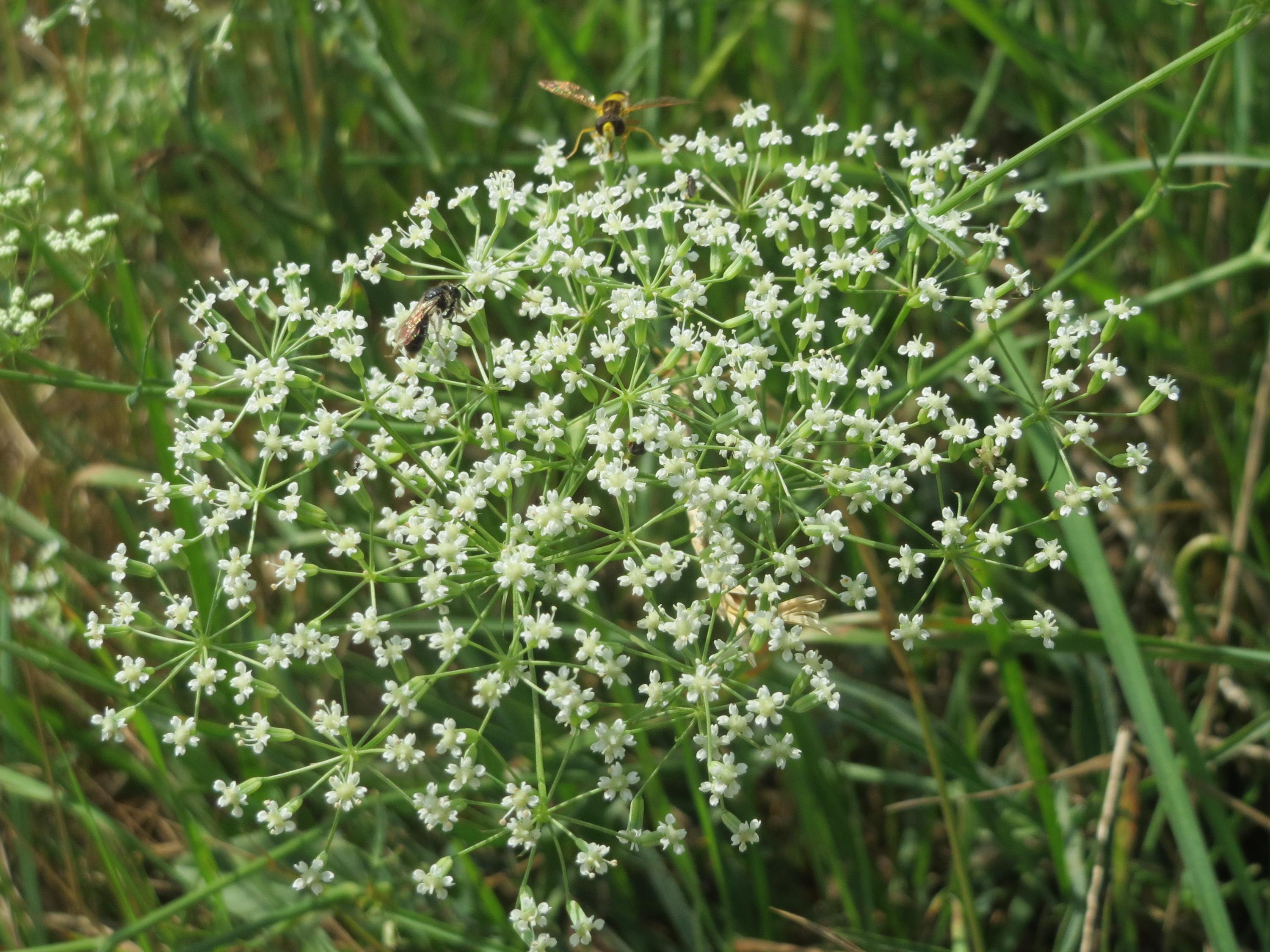
The individual, small, white flowers stand together in a double umbel. Here, each side branch of an umbrella-like branching (umbel), which ends with a smaller umbel.
The fruit is elongated oval, glabrous and ribbed.
Features
Longleaf
Falcaria vulgaris
stiff, sickle-shaped curved leaf tips
strikingly serrated leaf edge
In the city
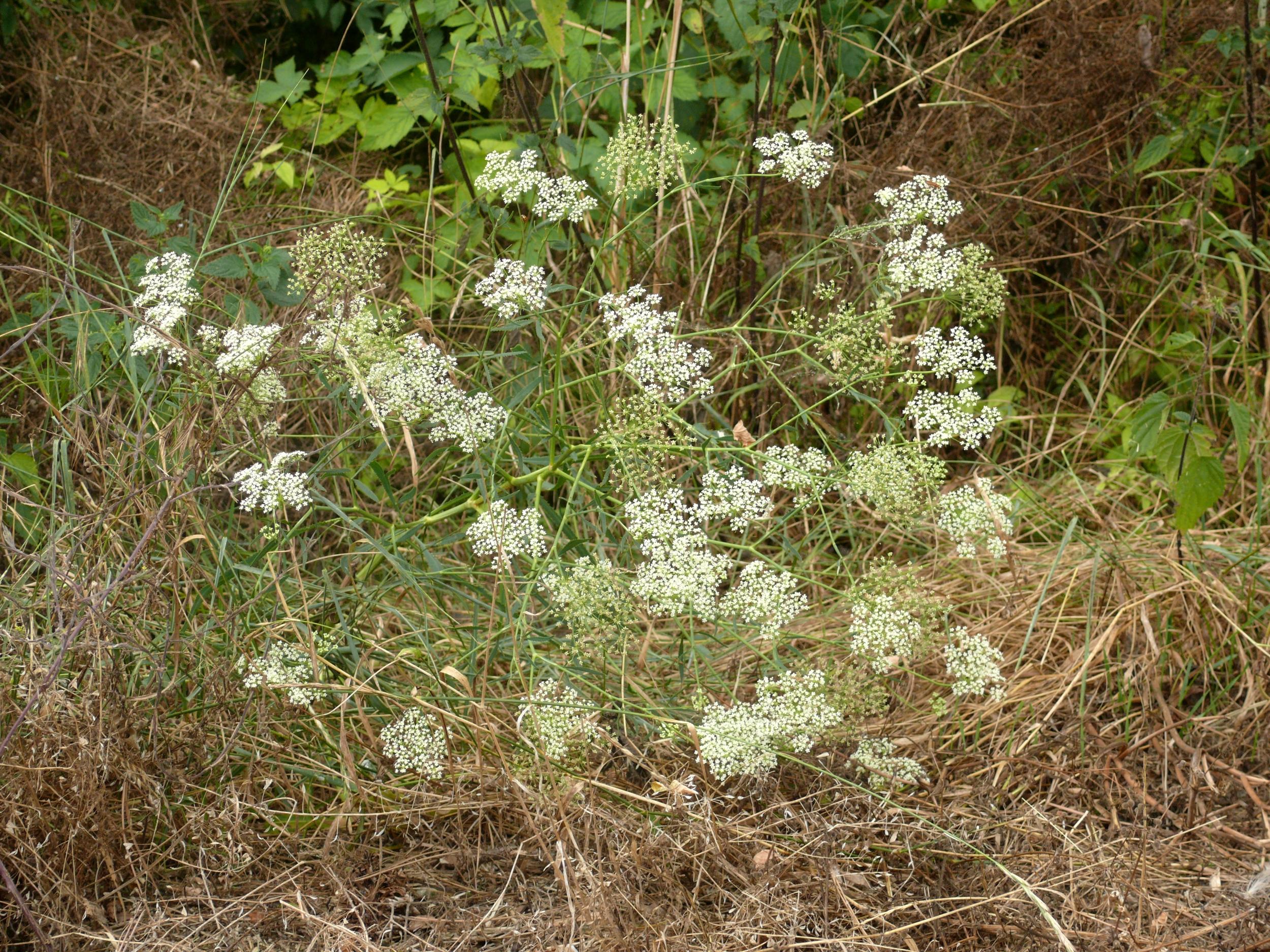
It thrives best on dry, calcareous soils. It grows along roadsides and fieldsides, on fallow land and at railroad stations.
Fun Facts
The fruits fall off only when the whole plant is dead and blown away by the wind.
The umbels make a day-night movement.
It is infected by a fungus, which stimulates the production of nectar. The insects attracted by it spread the spores of the fungus.
The flowering period is from July to September.
- Endangerment level Germany: not endangered
Sources
Blossom, AnRo0002, CC0 1.0, https://commons.wikimedia.org/wiki/File:20150722Falcaria_vulgaris4.jpg

Habitus, Bernd Haynold, CC BY-SA 3.0, https://commons.wikimedia.org/wiki/File:Falcaria_vulgaris_040813.jpg

Leaves, Fornax, CC BY-SA 3.0, https://commons.wikimedia.org/wiki/File:Falcaria_vulgaris_W.jpg

Spohn, M., Golte-Bechtle, M. & Spohn, R. (2015) Was blüht denn da? Stuttgart: Franckh Kosmos Verlag.
Page „Gemeine Sichelmöhre“. : Wikipedia, The Free Encyclopedia. Date of last revision: 19.06.2018, 19:04 UTC. URL: https://de.wikipedia.org/w/index.php?title=Gemeine_Sichelm%C3%B6hre&oldid=178455599 (Accessed: 26.07.2018).