
Short Description
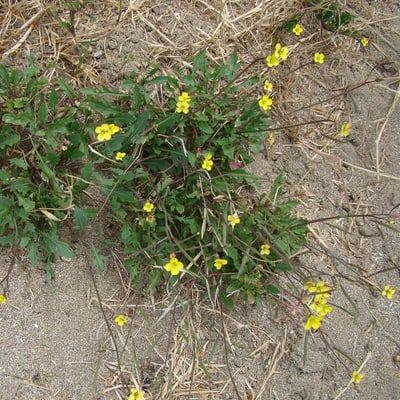
The annual wall-rocket can grow up to 60 cm high.
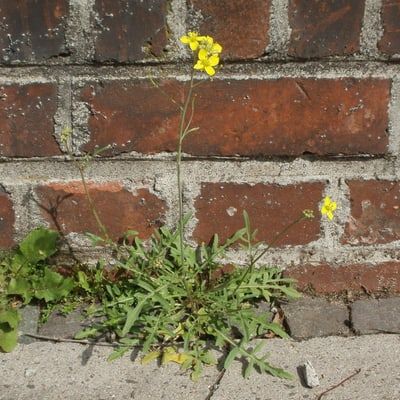
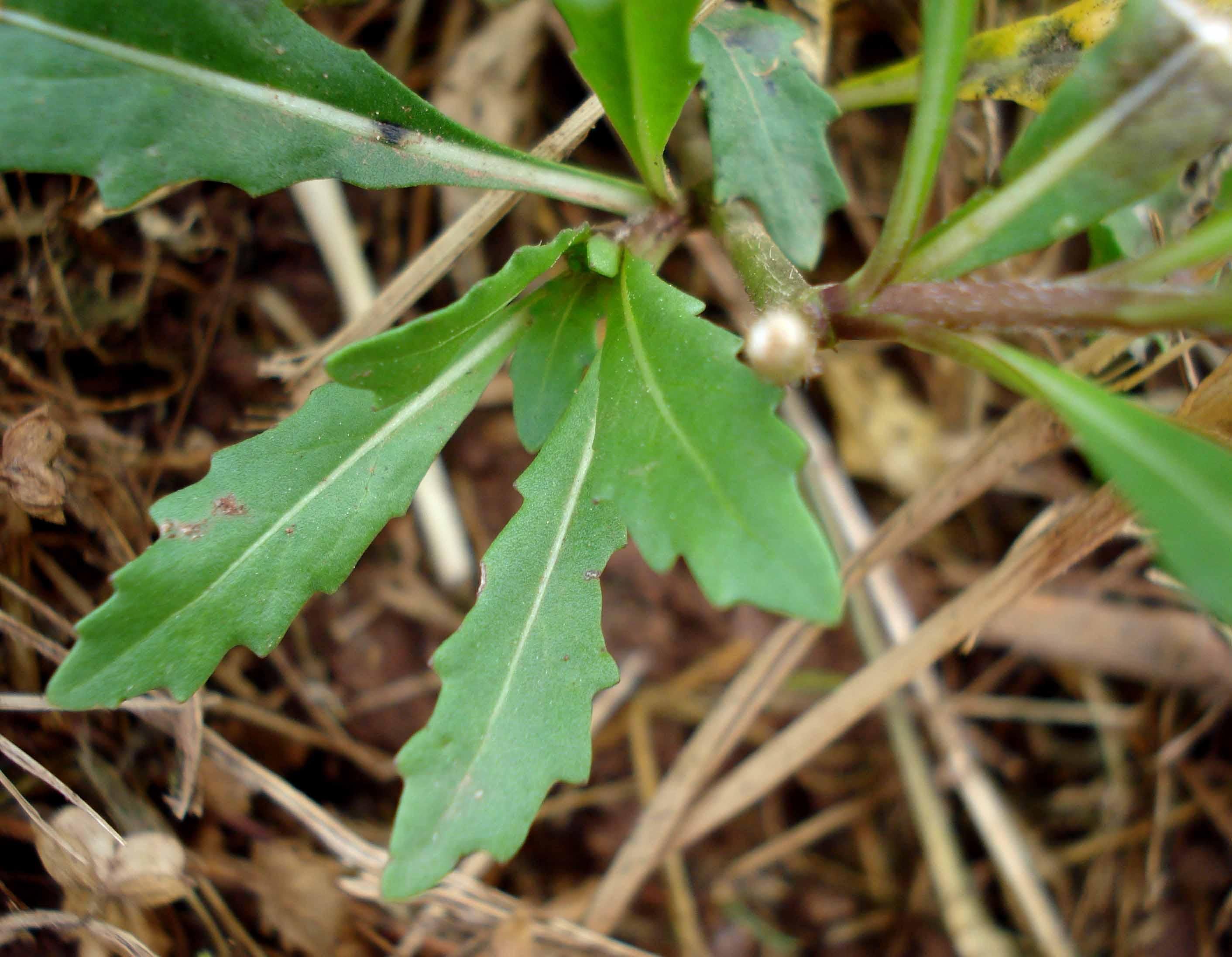
The light green leaves are narrowly ovate or spatulate and toothed at the edges. They are often clustered like rosettes at the base. However, there may also be a few leaves arranged singly and alternately on the stem.
The stem grows erect and is hairless or slightly hairy at the base. When crushed, it has a strong unpleasant smell.
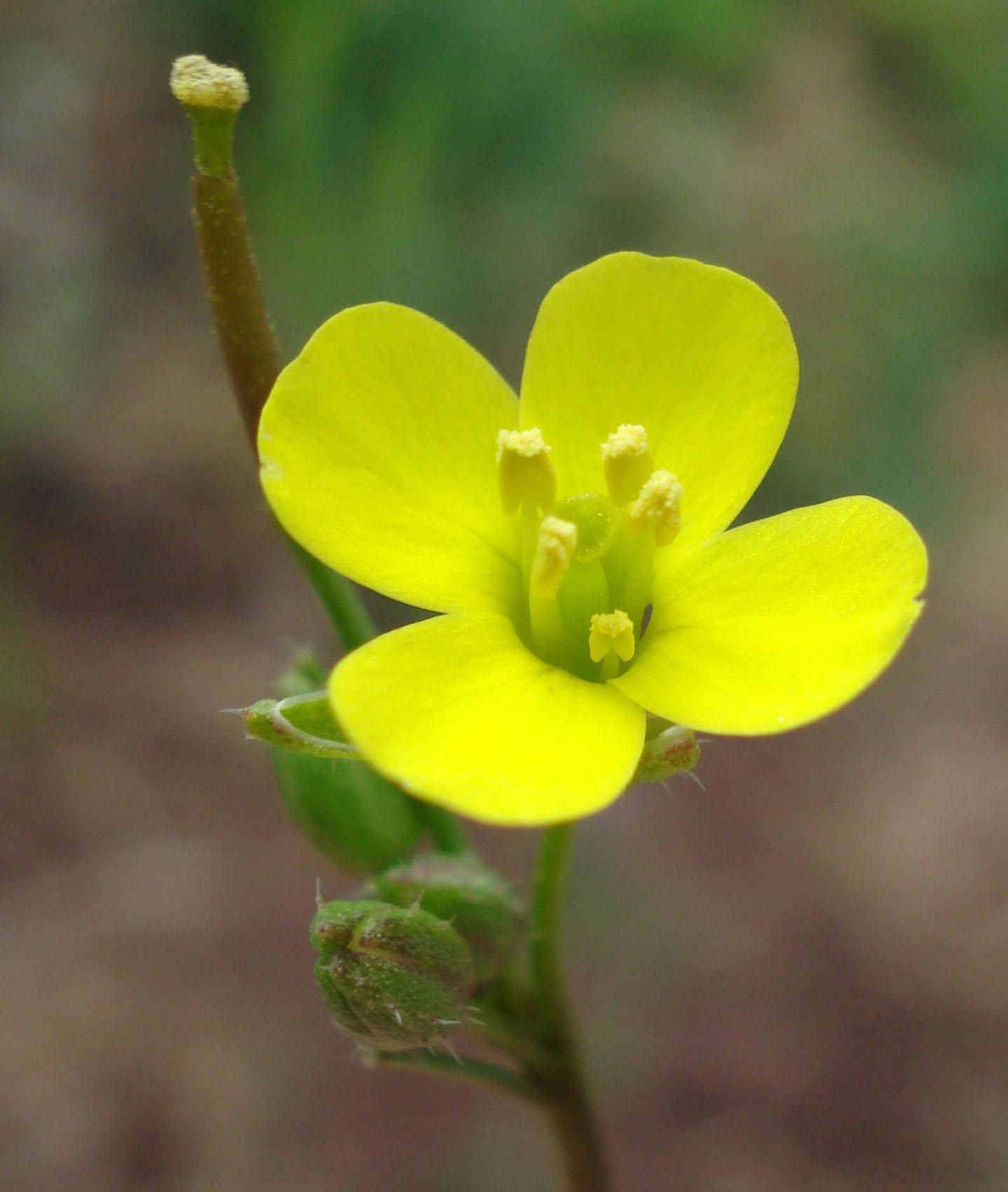
The flowers have four yellow petals and sit in loose racemes at the end of the stem.
The upright fruits are elongated, slightly flattened pods.
Features
Annual wall-rocket
Diplotaxis muralis
rosette leaves
unpleasant smelling stem (crushed)
In the city
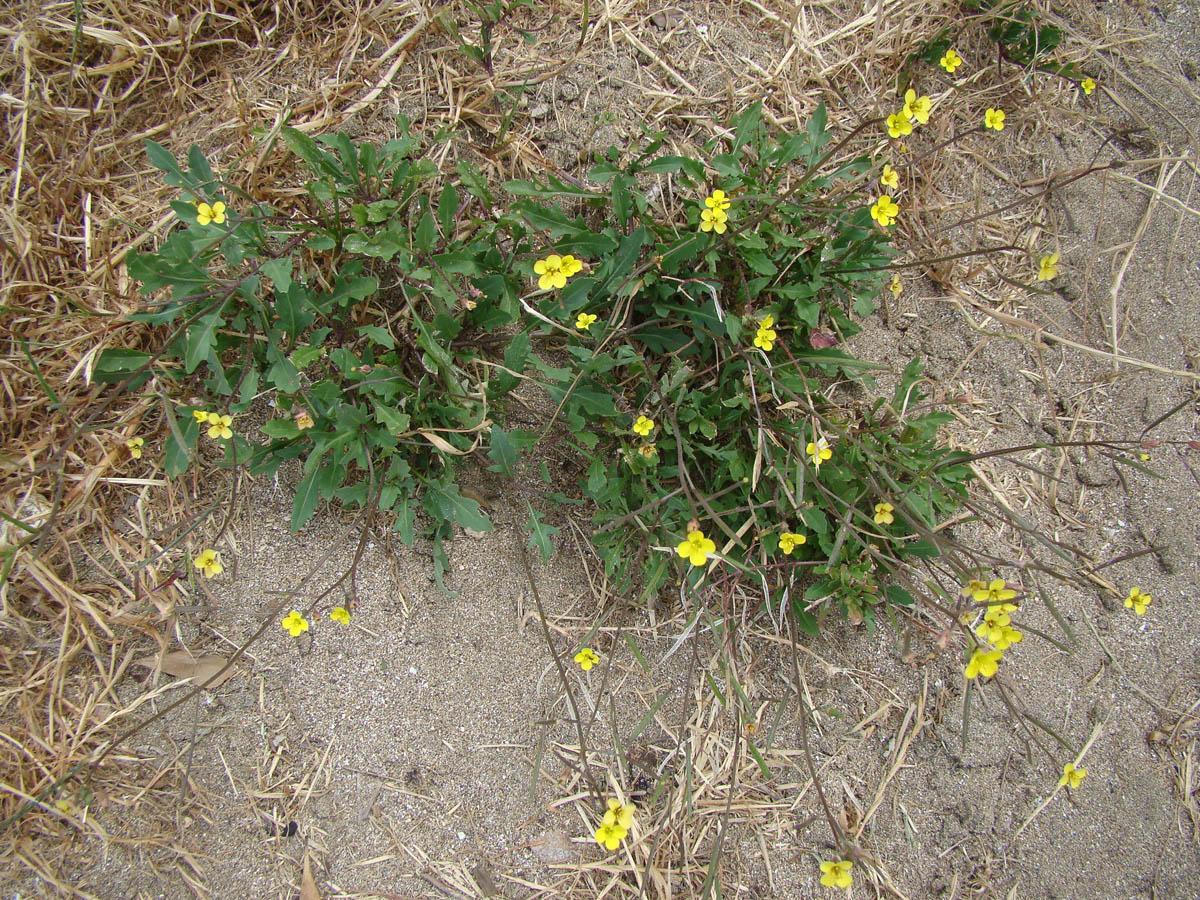
The annual wall-rocket prefers light and warm locations and nutrient-rich soils. In the city, it often finds these conditions on roadsides, embankments, railway station grounds, rubble tips, walls and in gravel pits. It is one of the typical plants of the "weed communities".
Fun Facts
The stems smell like rotten eggs when crushed.
Just like broccoli, cauliflower, Brussels sprouts or kohlrabi, it belongs to the cruciferous family.
The flowering period is from May to October.
- Endangerment level Germany: not evaluated
Annual wall-rocket originates from the Mediterranean region and therefore belongs to the non-native plants (neophytes) in Germany.
The species name muralis is the Latin word for wall and indicates like the common that the plant often grows on walls.
The plant is also occasionally grown and sold as rocket salad.
Sources
Blüte und Frucht, Fornax, CC BY-SA 3.0, https://commons.wikimedia.org/wiki/File:Diplotaxis_muralis_W.jpg

Habitus, Auckland Museum, CC BY-SA 4.0, https://commons.wikimedia.org/wiki/File:Diplotaxis_muralis_(L.)_DC._(AM_AK319417-2).jpg
_DC._(AM_AK319417-2).jpg)
Blätter, Fornax, CC BY-SA 3.0, https://commons.wikimedia.org/wiki/File:Diplotaxis_muralis3_W.jpg

Page „Mauer-Doppelsame“. : Wikipedia, The Free Encyclopedia. Date of last revision: 29.10.2017, 14:56 UTC. URL: https://de.wikipedia.org/w/index.php?title=Mauer-Doppelsame&oldid=170447083 (Accessed: 24.07.2018).
Seitz, B., Ristow, M., Meißner, J., Machatzi, B. & Sukopp, H. (2018) Rote Liste und Gesamtartenliste der etablierten Farn- und Blütenpflanzen von Berlin. : Der Landesbeauftragte für Naturschutz und Landschaftspflege / Senatsverwaltung für Umwelt, Klima und Verkehr (eds.) Rote Listen der gefährdeten Pflanzen, Pilze und Tiere von Berlin, URL: https://www.berlin.de/sen/uvk/natur-und-gruen/naturschutz/artenschutz/artenlisten-rote-listen/farn-und-bluetenpflanzen/ (Accessed: 26.03.2021).