
Short Description
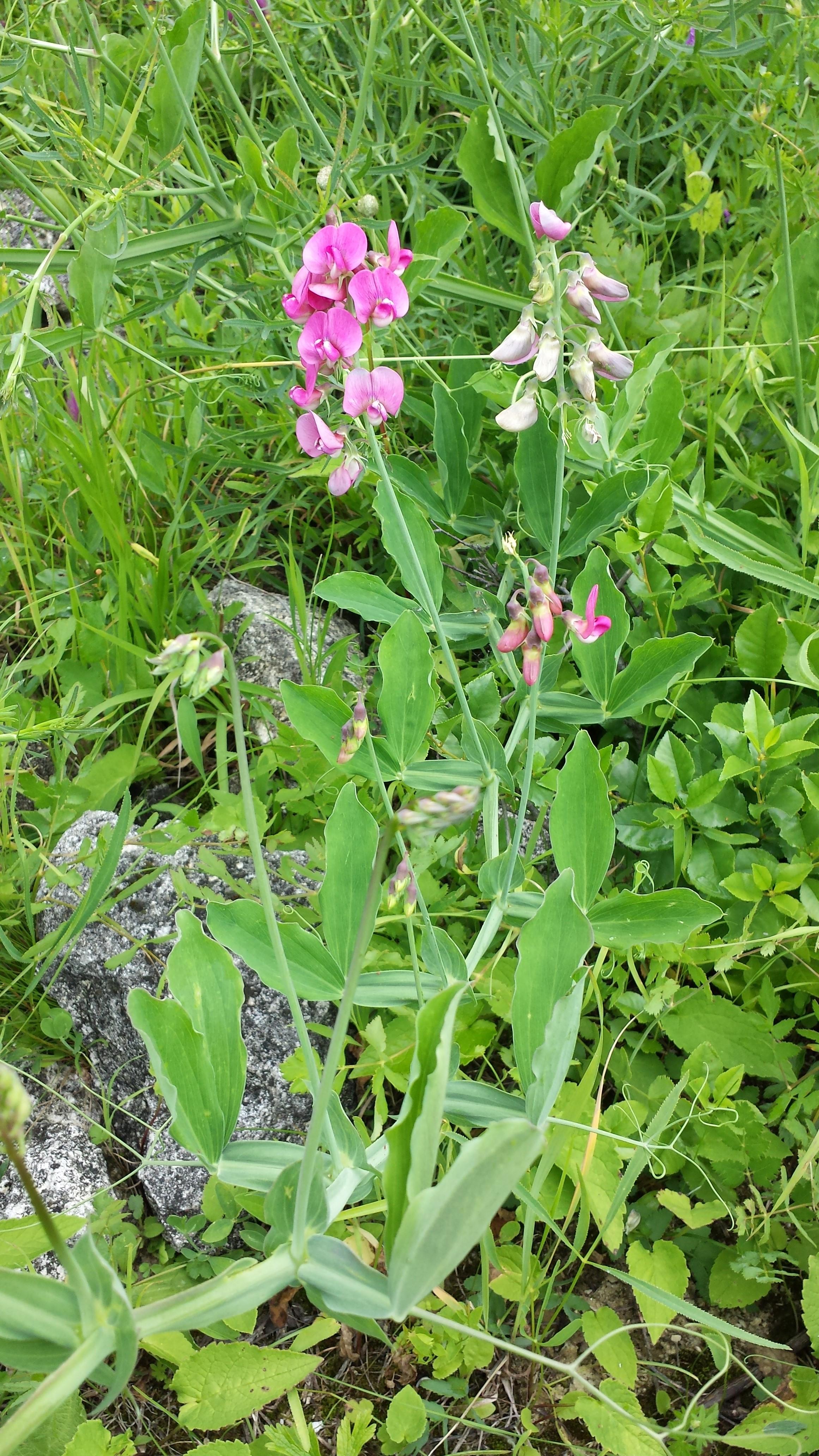
The stems of the broad-leaved sweet pea can grow to two, rarely even up to three metres long.
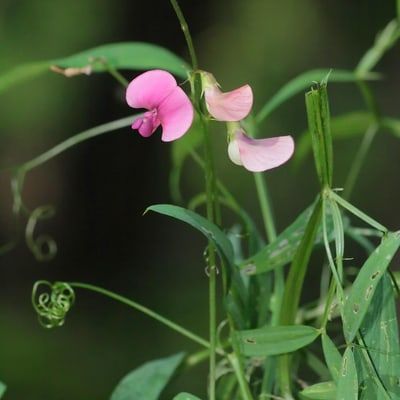
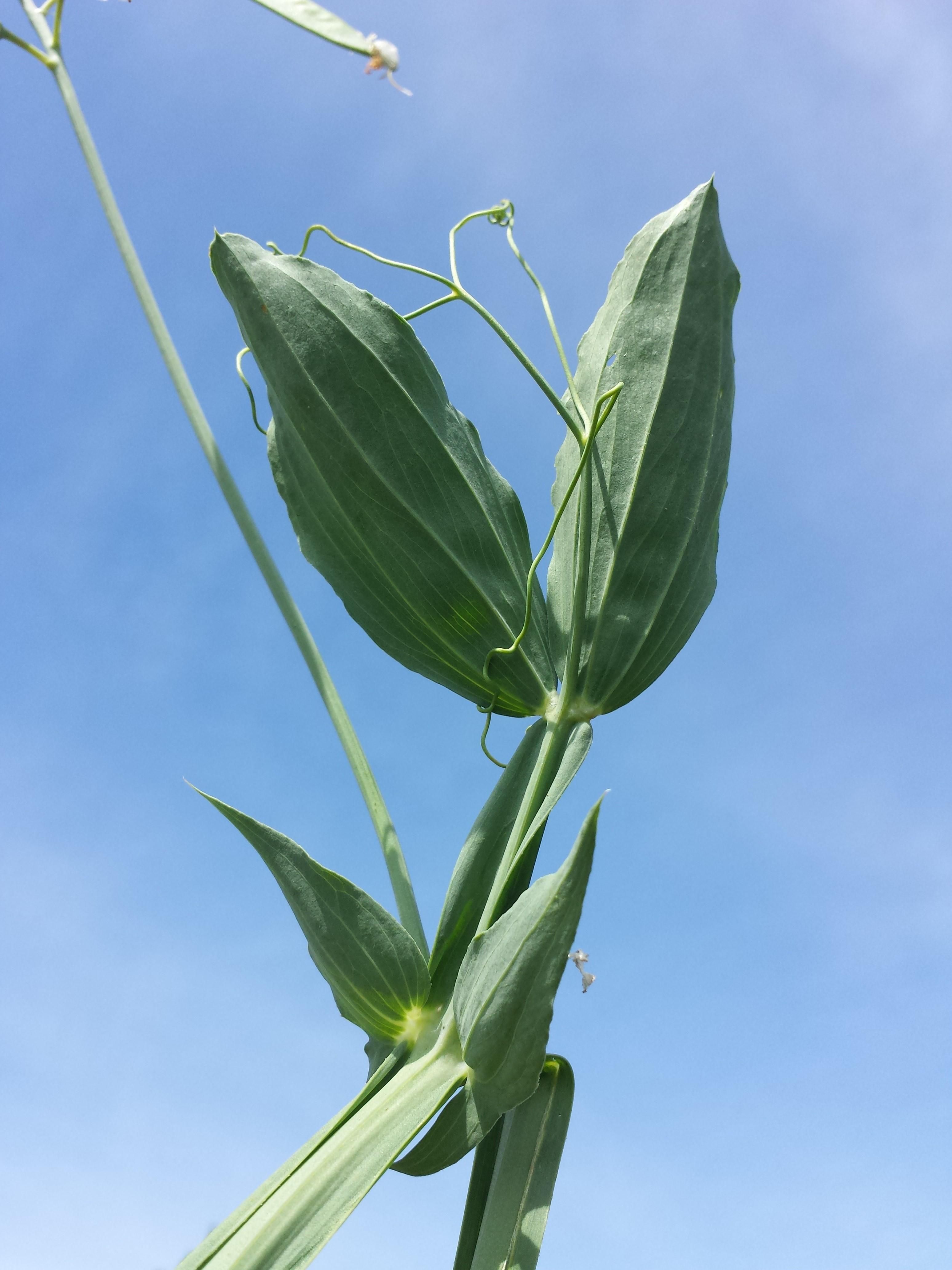
A leaf consists of two leaflets and ends in a tendril (pinnate). The individual leaflets are narrowly lanceolate and long-pointed.
The stem grows prostrate, ascending or climbing. It is usually branched only in the lower part. It is winged, glabrous and rough.
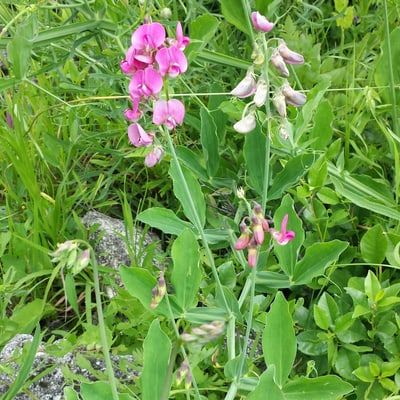
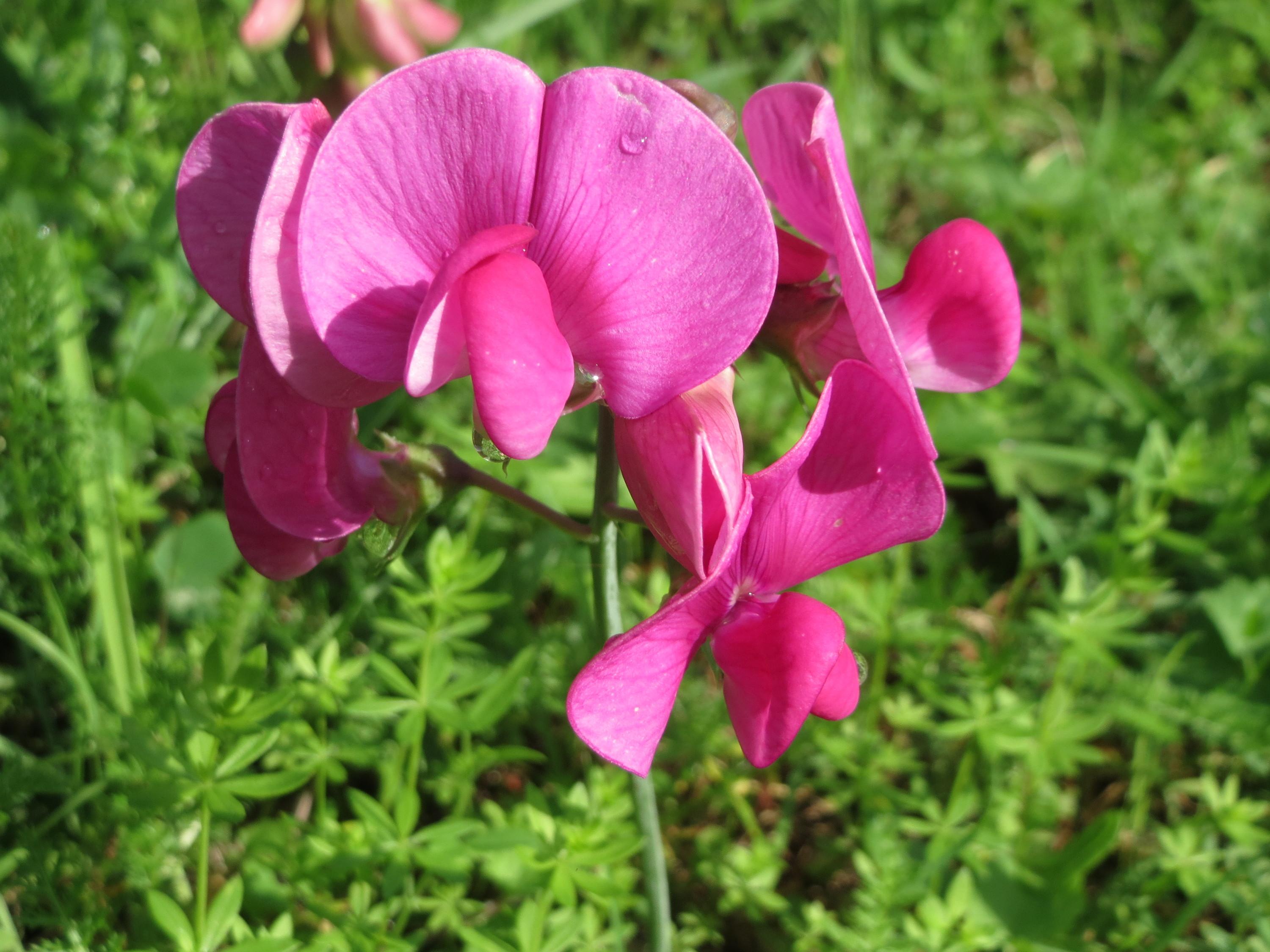
The flowers are pink and stand together in loose inflorescences. They consist of five petals that form the typical, zygomorphic pea-flower-type (papilionaceous) within this family. The large, upper petal is the standard and projects upwards. The two smaller lateral petals are the wings. The two lower leaves form a hollow keel that surrounds the anthers and the pistil.
The fruit is a brown, elongated, narrow and compressed pod containing up to 15 seeds.
Features
Broad-leaved sweet pea
Lathyrus latifolius
leaves with tendril
winged stem
In the city
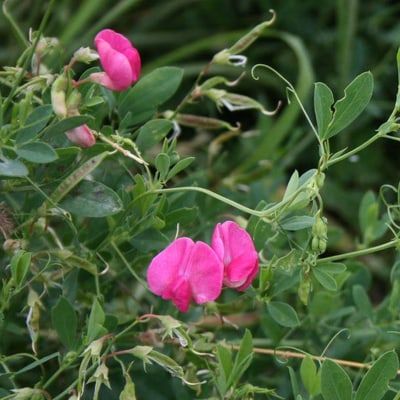
The broad-leaved sweet pea prefers dry, loose and mostly calcareous soils. In the city, it is found in rough pastures, in bushes, sparse forests and along railway embankments. Occasionally it is also planted as an ornamental plant in gardens and parks.
Fun Facts
The flowers are slightly asymmetrical so that honey bees can reach the nectar on the right side without pollinating the flower.
In warm and dry weather, the pods burst open and eject the seeds.
Living together with root nodule bacteria is typical for the legume family. The bacteria supply the plant with nitrogen. Since the bacteria need a plant for nitrogen fixation, this coexistence has a positive effect on both species (symbiosis).
The flowering period is from June to August.
It lives for several years and generally flowers and fruits annually (perennial plant).
- Endangerment level Germany: not evaluated
The broad-leaved sweet pea came to Central Europe in the middle of the 16th century and was a popular ornamental plant for gardens and parks for a long time. From there it ran wild in Germany and therefore belongs to the non-native plants (neophytes).
Sources
Habitus, Stefan.lefnaer, CC BY-SA 3.0, https://commons.wikimedia.org/wiki/File:Lathyrus_latifolius_sl1.jpg

Blütenstand, AnRo0002, CC0 1.0, https://commons.wikimedia.org/wiki/File:20170809Lathyrus_latifolius4.jpg

Blätter, Stefan.lefnaer, CC BY-SA 4.0, https://commons.wikimedia.org/wiki/File:Lathyrus_latifolius_sl17.jpg

Kammer, P. M. (2016) Pflanzen einfach bestimmen. Schritt für Schritt einheimische Arten kennenlernen, Bern: Haupt Verlag.
Page „Breitblättrige Platterbse“. : Wikipedia, The Free Encyclopedia. Date of last revision: 28.06.2018, 11:28 UTC. URL: https://de.wikipedia.org/w/index.php?title=Breitbl%C3%A4ttrige_Platterbse&oldid=178697002 (Accessed: 08.08.2018).