
Short Description
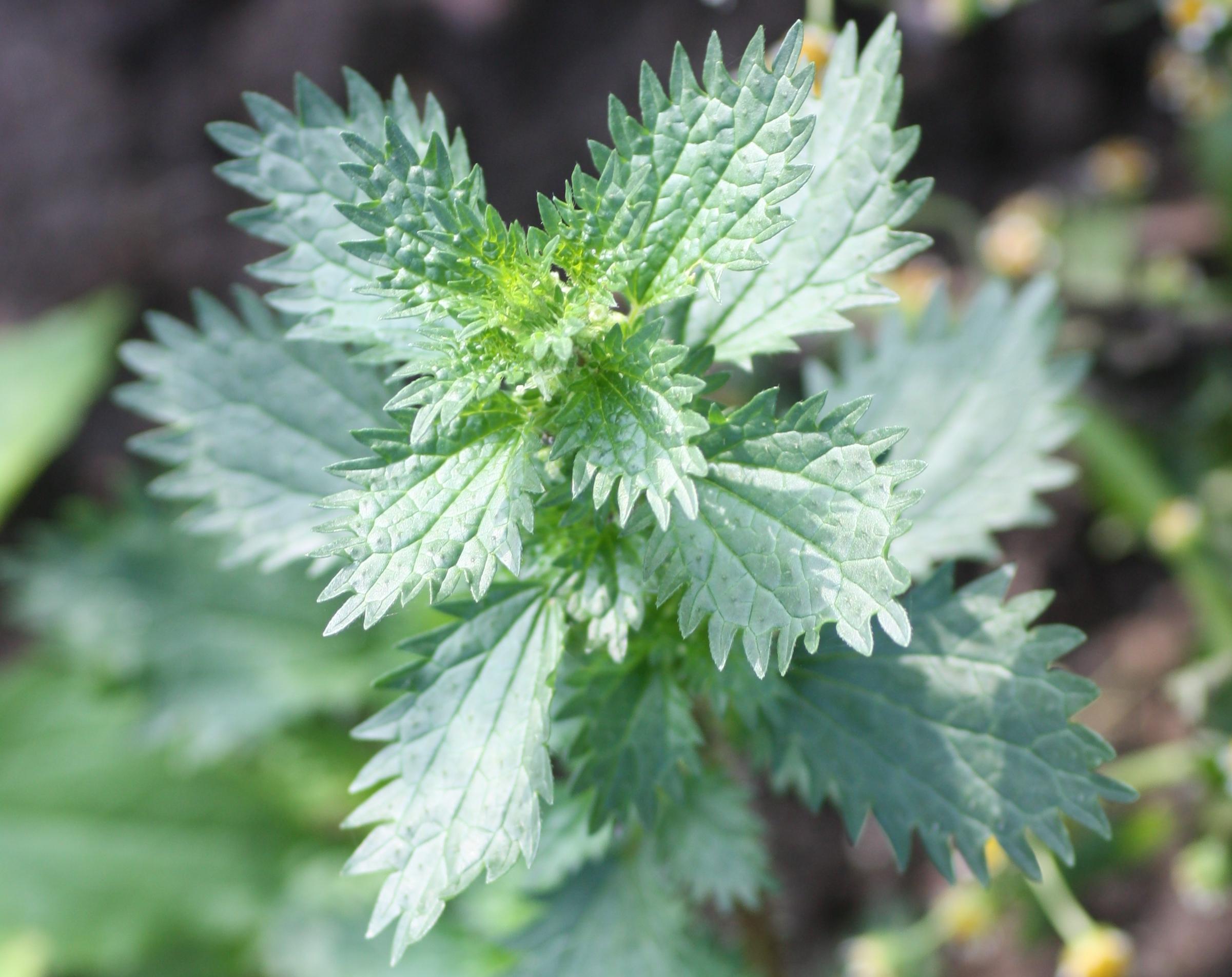
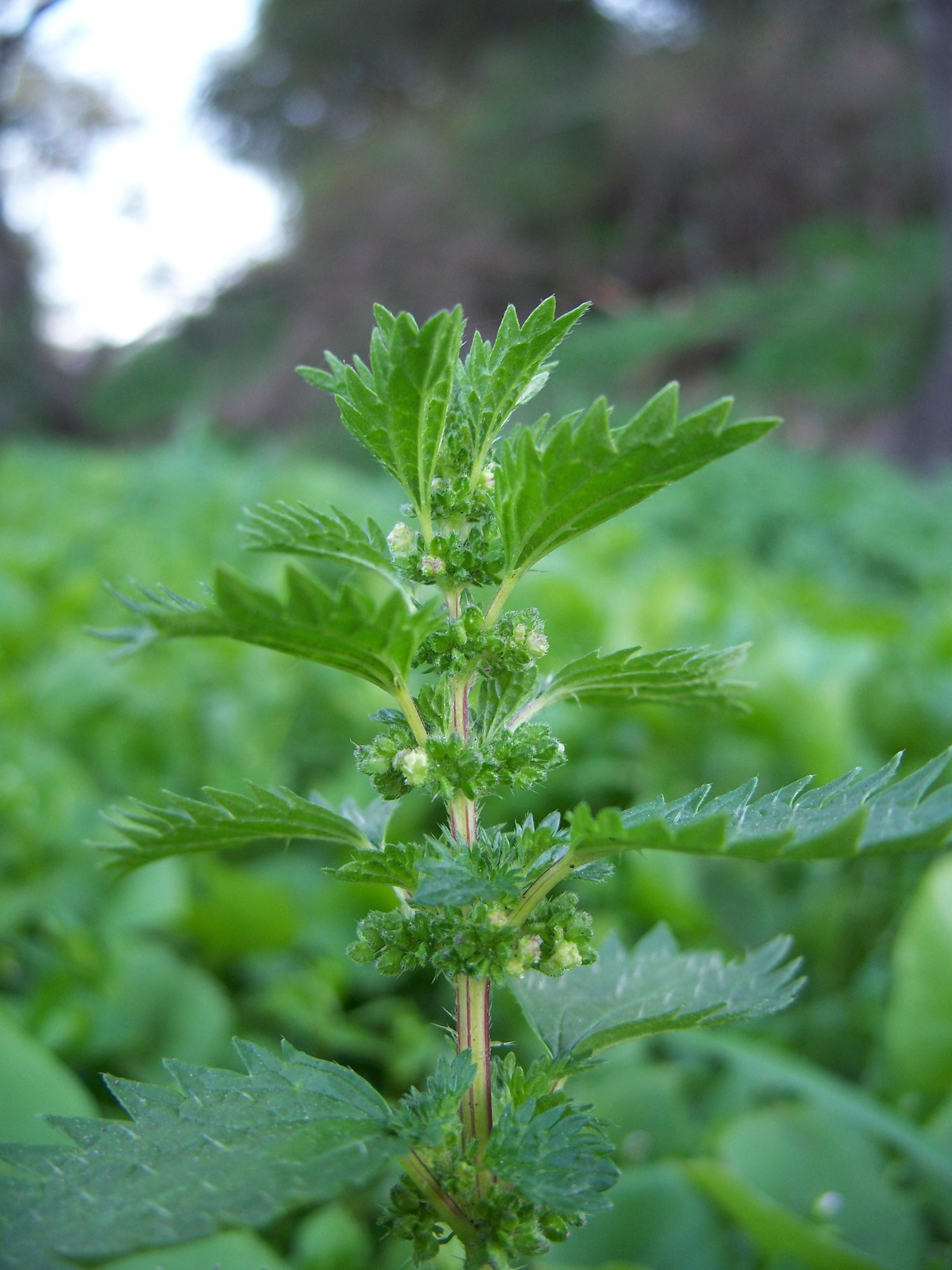
The dwarf nettle can grow to a height of 60 cm. It has many stinging hairs on its stem, leaves and also sepals whose tips break off when touched, causing the typical stinging sensation in the skin.
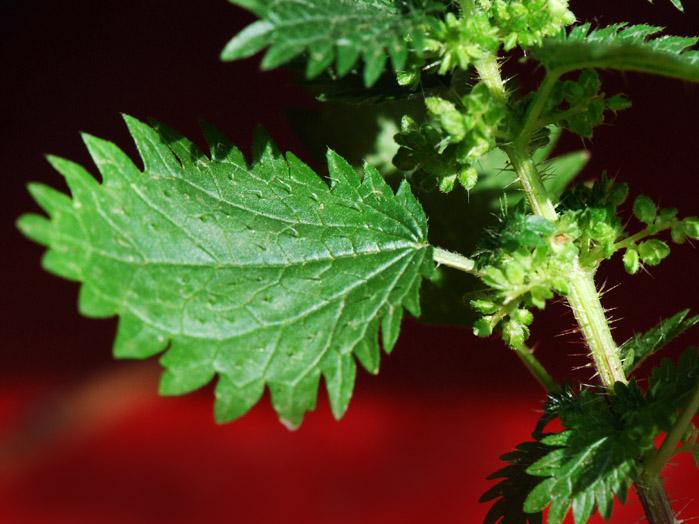
The leaves are roundish to oval and serrated.
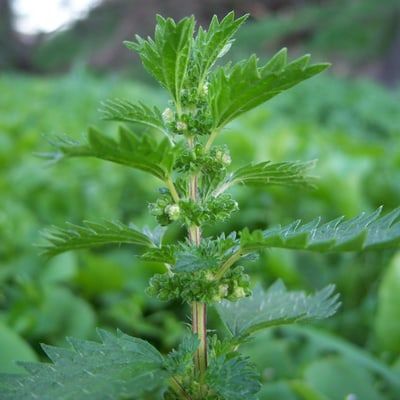
The green to brownish stem grows erect and usually unbranched. It often has four edges.
Male and female flowers grow on the same panicles. They are small, greenish and inconspicuous.
The fruits are small single-seed nutlets.
Features
Dwarf nettle
Urtica urens
leaves roundish and serrated
stinging hairs
In the city
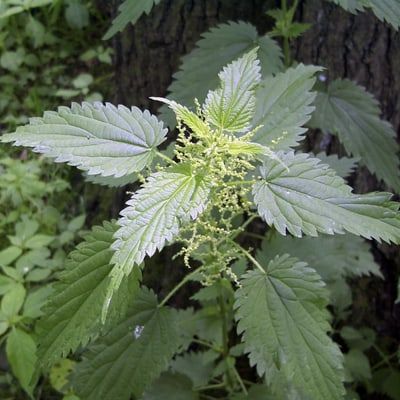
Dwarf nettles grow in gardens, orchards, vineyards, but also in vegetable fields. They grow well on humus-rich, nitrogen-rich soil that must not be too acidic.
Humans ensure nitrogen enrichment of the soil along the roadside by urinating there. This allows the nettle to proliferate particularly well.
Fun Facts
The familiar stinging sensation occurs when the tips of the stinging hairs (trichomes) break off, releasing a mixture of substances into the minute skin wound.
The nettle no longer stings when it is wet or processed.
Pollination takes place with the wind.
It flowers from May to October.
It is an annual plant. This means that the plant lives for one year, flowers and dies after the seeds have ripened.
- Endangerment level Germany: not endangered
Nettles can be prepared similar to spinach, as a salad or as a tea. They have a nutty taste.
Sources
Blätter, Wohlert Wohlers, CC BY-SA 3.0, https://commons.wikimedia.org/wiki/File:Urtica_urens_4_Bl%C3%A4tter_IMG_7091_Wohlers.JPG

Blatt, Pancrat, CC BY-SA 3.0, https://commons.wikimedia.org/wiki/File:Urtica_urens_jd_pl.jpg

Habitus, EugeneZelenko, CC BY-SA 3.0, https://commons.wikimedia.org/wiki/File:Urtica_urens-1.jpg

Wohlers, W. (2014) Urtica urens – Kleine Brenn-Nessel (JKI-Pflanzenportraits), URL: https://offene-naturfuehrer.de/web/Urtica_urens_%E2%80%93_Kleine_Brenn-Nessel_(JKI-Pflanzenportraits) (Accessed: 13.07.2016).
Page „Kleine Brennnessel“. : Wikipedia, The Free Encyclopedia. Date of last revision: 23.06.2016, 12:40 UTC. URL: https://de.wikipedia.org/w/index.php?title=Kleine_Brennnessel&oldid=155568521 (Accessed: 13.07.2016).
Fleischhauer, S. G., Guthmann, J. & Spiegelberger, R. (2007) Essbare Wildpflanzen. 200 Arten bestimmen und verwenden, Baden und München: AT Verlag.
Lippert, W. & Podlech, D. (1993) GU Naturführer. Blumen: die wichtigen Blütenpflanzen Mitteleuropas erkennen und bestimmen, München: Gräfe und Unzer Verlag.
Needon, C. & Petermann, J. (1991) Urania-Naturführer Pflanzen, Leipzig, Jena, Berlin: Urania-Verlag.
Scherf, G. (2006) Wildpflanzen neu entdecken, München: BLV.
Bundesamt für Naturschutz (n.d.) Artensteckbriefe, URL: http://floraweb.de/pflanzenarten/artenhome.xsql?suchnr=6148& (Accessed: 13.07.2016).