
Short Description
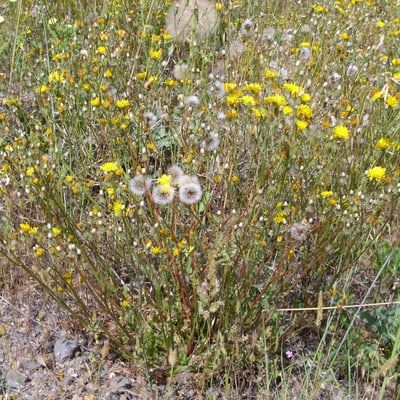
The hawkweed oxtongue can grow almost a metre high. It has milky sap.
The leaves are oval to elongated. They are bristly rough and feel like sandpaper. The leaf edge is usually slightly toothed.
The stem is branched and has many leaves.
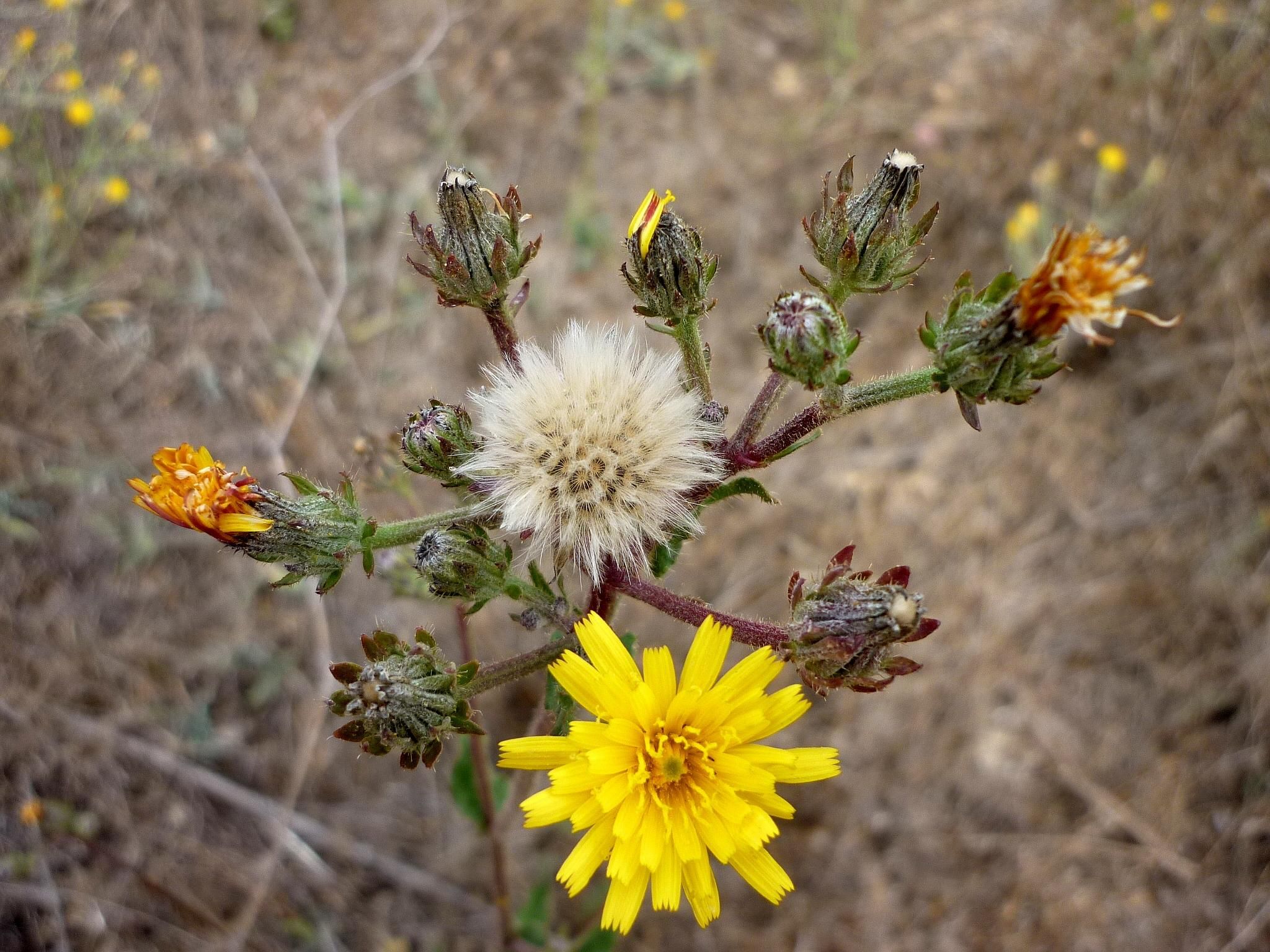
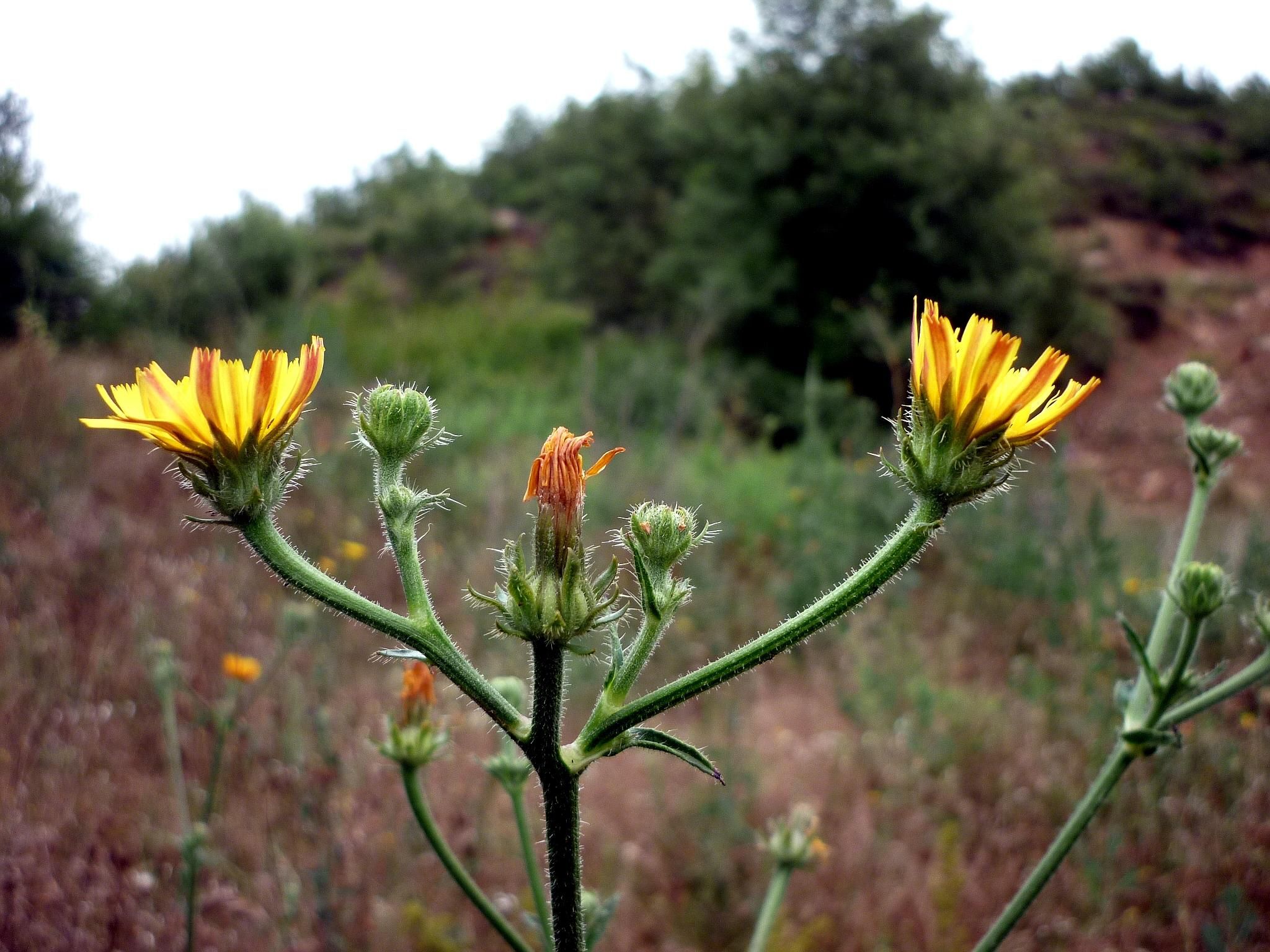
At first glance, the flower head can be mistaken for the flower. The false flower consists of numerous individual yellow ray florets that may be overlaid with red on the outside. The outer leaves are noticeably laterally protruding.
The plant forms small, nut-like fruits (achenes). They have a feathery, white crown of hairs.
Features
Hawkweed oxtongue
Picris hieracioides
yellow flowers with a red overlay on the outside
bristly rough leaves
In the city
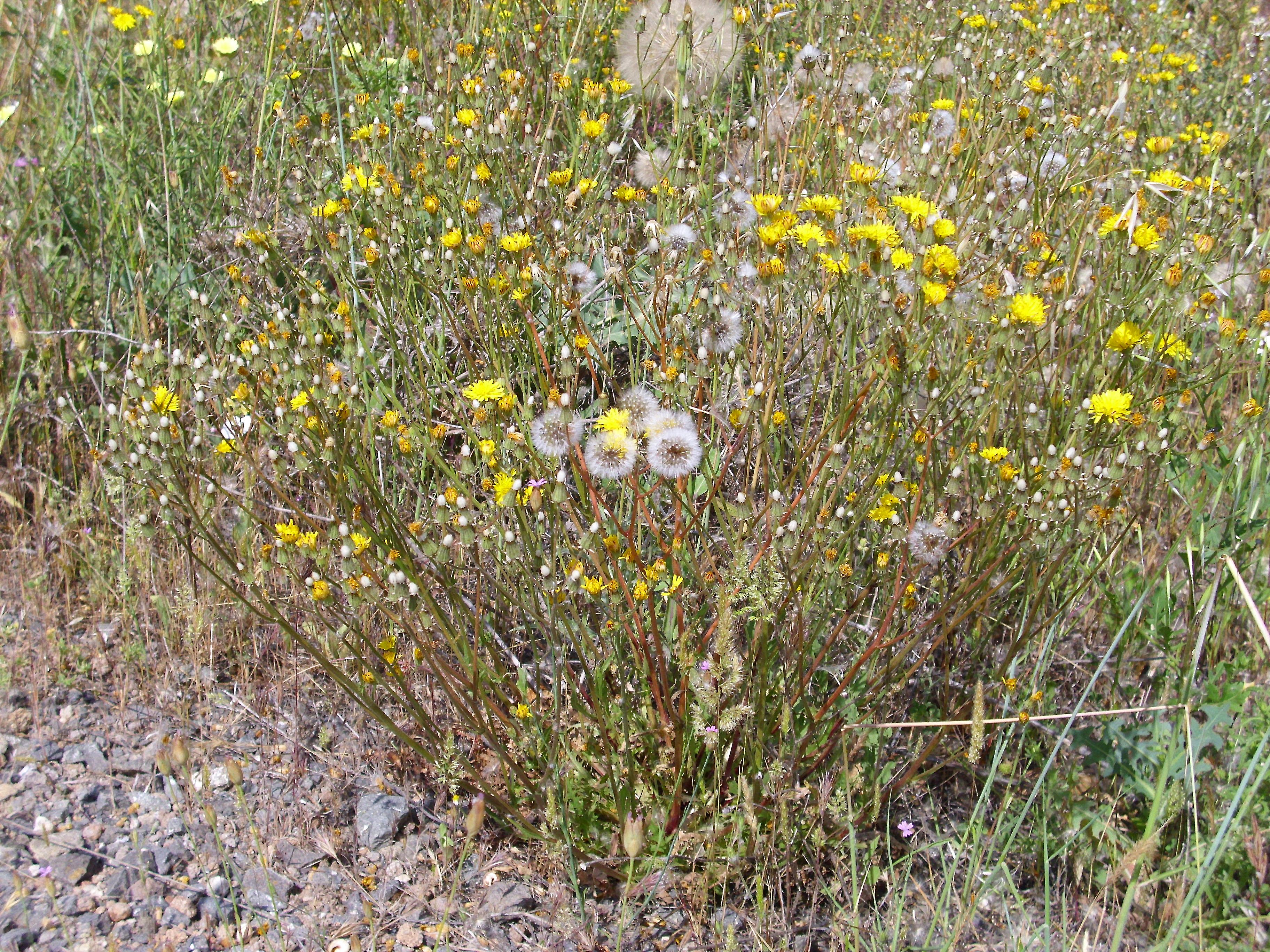
The hawkweed oxtongue grows on meadows, embankments and rubble sites as well as on roadsides, railway stations and bushes. It prefers not too dry, mostly calcareous soils. It is thermophilic.
Fun Facts
The flowering period is from July to October.
Pollination is done by insects or self-pollination. Propagation through root shoots also occurs.
It tastes bitter, like many other lactiferous composites.
- Endangerment level Germany: not endangered
Sources
Blütenkörbchen und Früchte, Isidre blanc, CC BY-SA 4.0, https://commons.wikimedia.org/wiki/File:PICRIS_HIERACIOIDES_-_EMPALOUS_-_IB-522_(Parraca).JPG
.JPG)
Habitus, Javier martin, public domain, https://commons.wikimedia.org/wiki/File:Picris_hieracioides_Habitus_2010-5-26_DehesaBoyalPuertollano.jpg

Blütenstand, Isidre blanc, CC BY-SA 4.0, https://commons.wikimedia.org/wiki/File:PICRIS_HIERACIOIDES_-_MORROCURT_-_IB-134_(Parraca).JPG
.JPG)
Kammer, P. M. (2016) Pflanzen einfach bestimmen. Schritt für Schritt einheimische Arten kennenlernen, Bern: Haupt Verlag.
Schauer, T., Caspari, C. & Caspari, S. (2015) Der illustrierte BLV-Pflanzenführer für unterwegs. 1150 Blumen, Gräser, Bäume und Sträucher, München: BLV.
Seitz, B., Ristow, M., Meißner, J., Machatzi, B. & Sukopp, H. (2018) Rote Liste und Gesamtartenliste der etablierten Farn- und Blütenpflanzen von Berlin. : Der Landesbeauftragte für Naturschutz und Landschaftspflege / Senatsverwaltung für Umwelt, Klima und Verkehr (eds.) Rote Listen der gefährdeten Pflanzen, Pilze und Tiere von Berlin, URL: https://www.berlin.de/sen/uvk/natur-und-gruen/naturschutz/artenschutz/artenlisten-rote-listen/farn-und-bluetenpflanzen/ (Accessed: 26.03.2021).
Spohn, M., Golte-Bechtle, M. & Spohn, R. (2015) Was blüht denn da? Stuttgart: Franckh Kosmos Verlag.
Bundesamt für Naturschutz (n.d.) Artensteckbriefe, URL: http://floraweb.de/pflanzenarten/artenhome.xsql?suchnr=6916& (Accessed: 20.08.2018).
Page „Gewöhnliches Bitterkraut“. : Wikipedia, The Free Encyclopedia. Date of last revision: 14.04.2018, 23:31 UTC. URL: https://de.wikipedia.org/w/index.php?title=Gew%C3%B6hnliches_Bitterkraut&oldid=176511274 (Accessed: 20.08.2018).