
Short Description
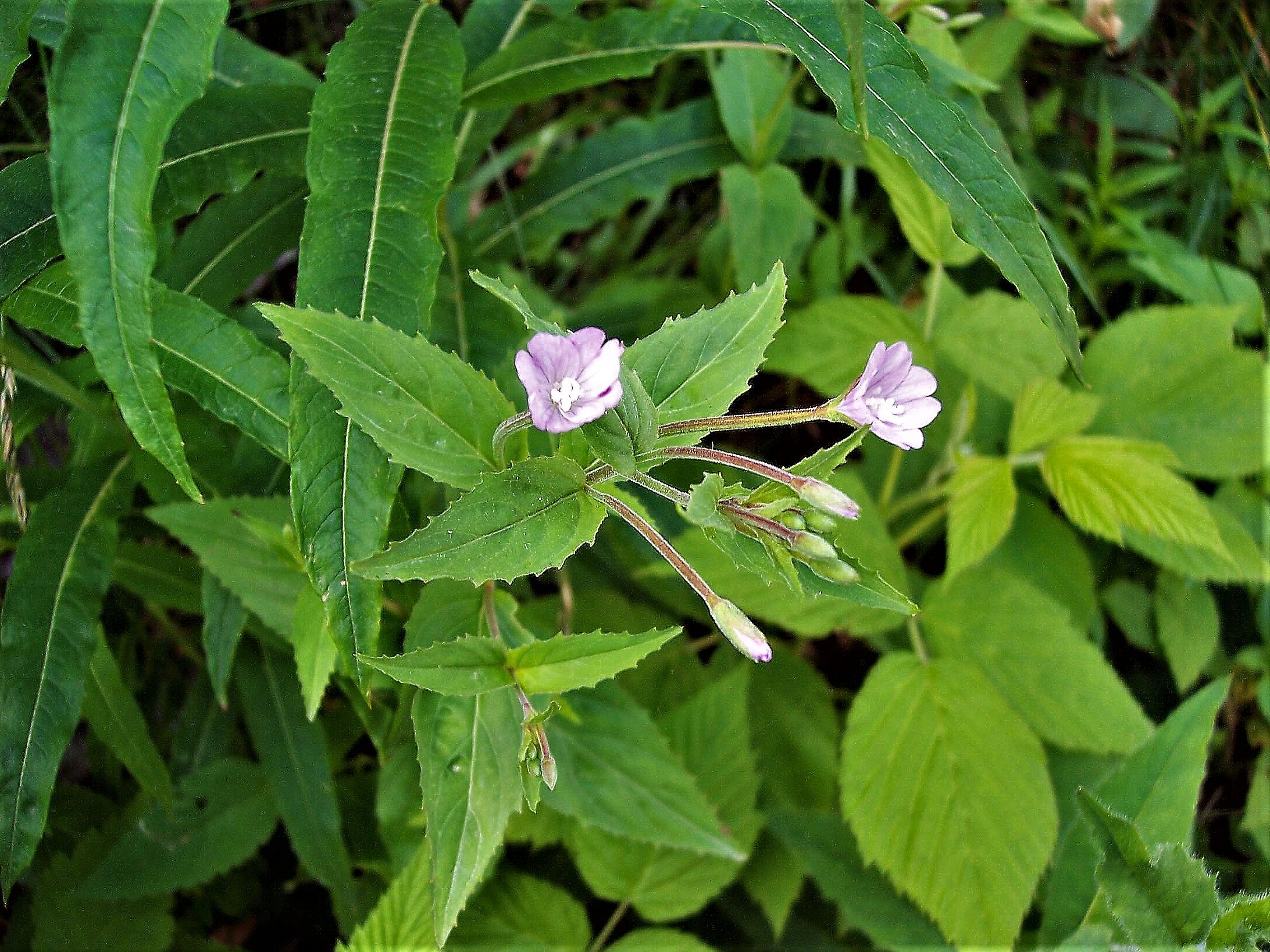
The broad-leaved willowherb can grow up to half a metre high.
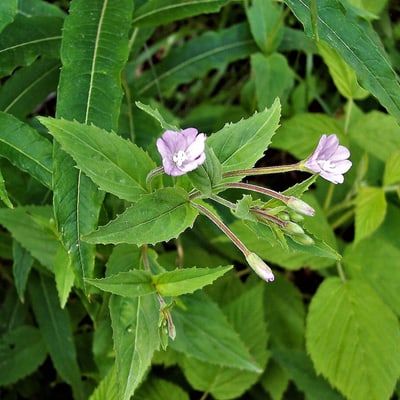
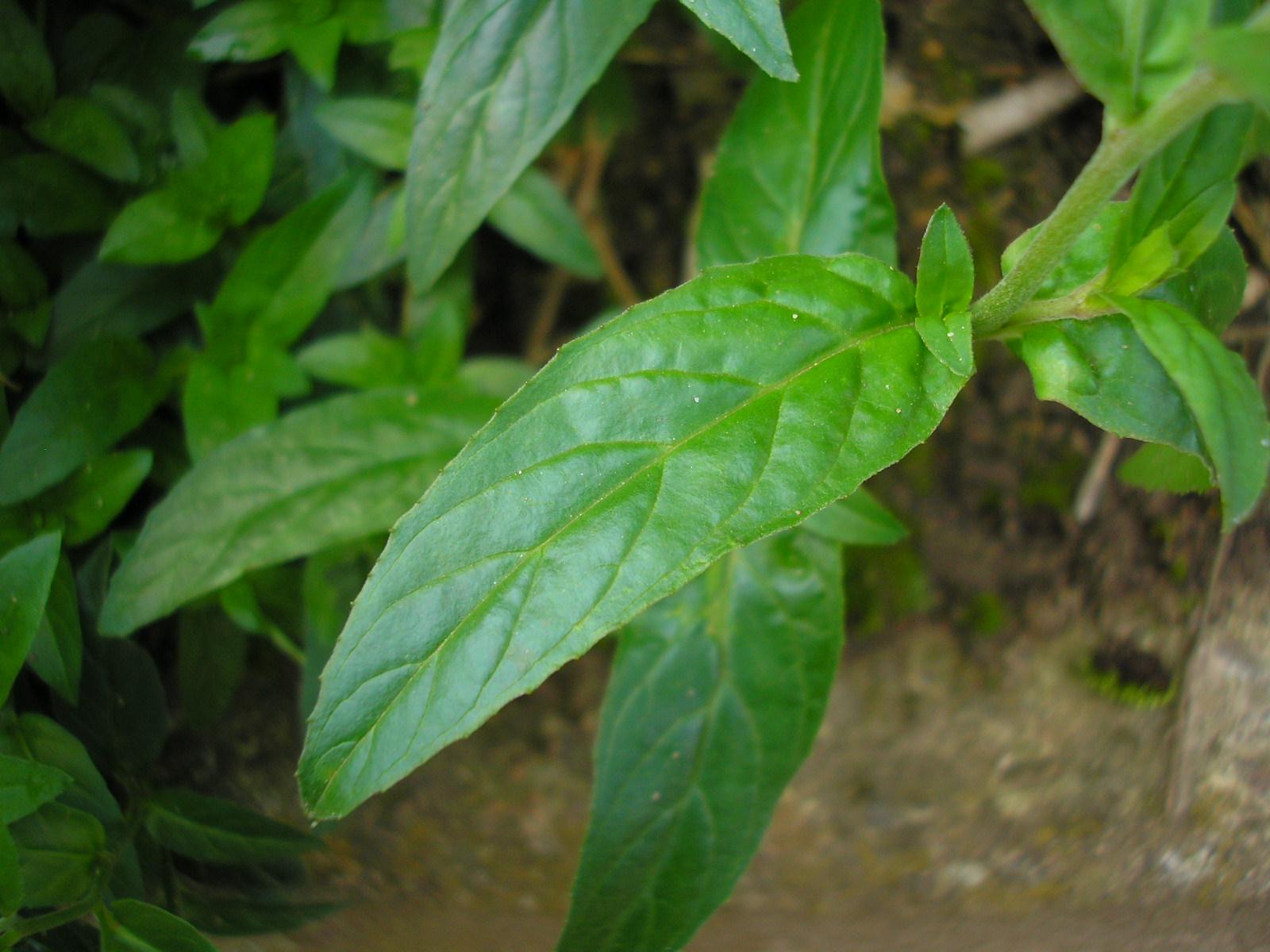
The leaves are ovate to elliptical and have a short stalk.
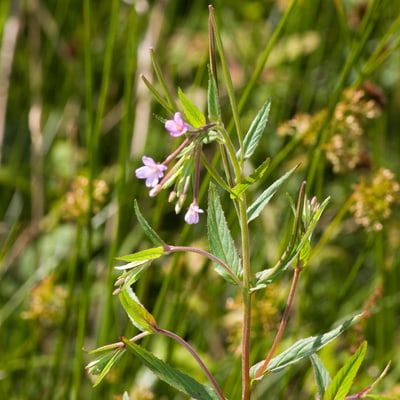
The stem is round and grows unbranched. It is either glabrous or has two hairy ridges.
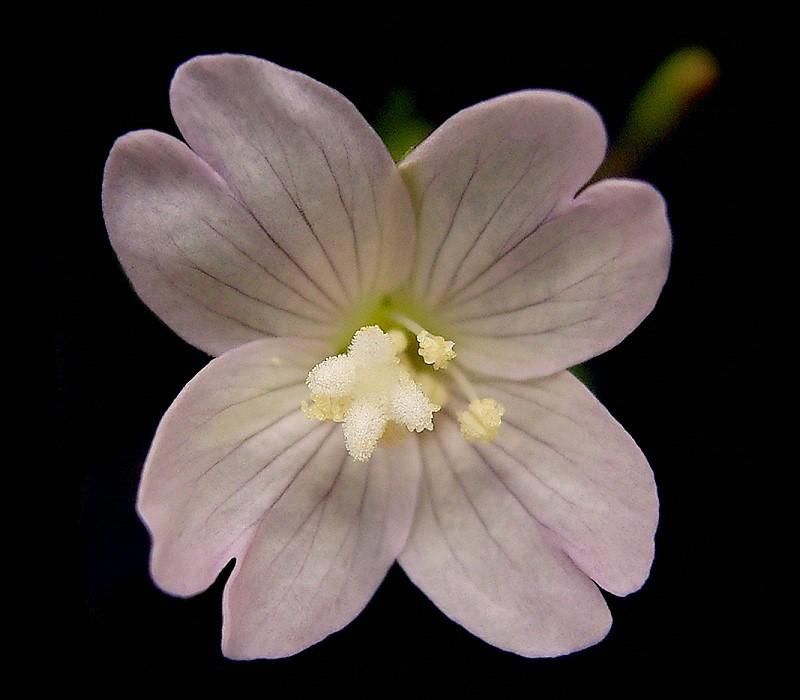
The small flowers have four pale pink petals that are cut into a heart shape at the top.
The fruits are long, narrow capsules with four valves. They contain tiny seeds with silky appendages.
Features
Broad-leaved willowherb
Epilobium montanum
stem mostly not branched
seeds with silky appendages
In the city
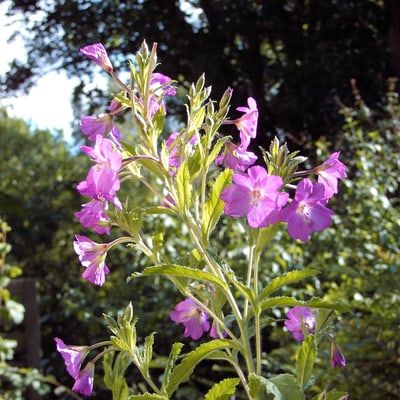
The broad-leaved willowherb often grows on nutrient-rich soils at the edges of forests, in clearings and under bushes. In inner cities, it is often found in gardens and parks.
Fun Facts
The flowering period is from June to September.
The plant mainly pollinates itself. Flies and butterflies rarely visit the flowers.
The broad-leaved willowherb lives for several years and generally flowers and fruits annually (perennial plant).
In autumn, the mother plant dies. Hibernation then takes place through underground renewal processes.
The silk-like appendages on the seeds serve for wind dispersal.
- Endangerment level Germany: not endangered
Sources
Habitus, Espirat, CC BY-SA 4.0, https://commons.wikimedia.org/wiki/File:EPILOBIUM_MONTANUM._(1).jpg
.jpg)
Blüte, Frank Vincentz, CC BY-SA 3.0, https://commons.wikimedia.org/wiki/File:Epilobium_montanum_02_ies.jpg

Blätter, Julia Kruse, CC BY-SA 3.0, https://species-id.net/openmedia/File:Epilobium_montanum_JuliaKruse_3.jpg

Haselböck, A. (2010) Epilobium montanum / Berg-Weidenröschen, URL: http://www.naturspaziergang.de/Pflanzen/Epilobium_montanum.htm (Accessed: 24.07.2018).
Page „Berg-Weidenröschen“. : Wikipedia, The Free Encyclopedia. Date of last revision: 18.07.2018, 22:08 UTC. URL: https://de.wikipedia.org/w/index.php?title=Berg-Weidenr%C3%B6schen&oldid=179264905 (Accessed: 24.07.2018).
Bundesamt für Naturschutz (n.d.) Artensteckbriefe, URL: http://floraweb.de/pflanzenarten/artenhome.xsql?suchnr=2120& (Accessed: 24.07.2018).
Seitz, B., Ristow, M., Meißner, J., Machatzi, B. & Sukopp, H. (2018) Rote Liste und Gesamtartenliste der etablierten Farn- und Blütenpflanzen von Berlin. : Der Landesbeauftragte für Naturschutz und Landschaftspflege / Senatsverwaltung für Umwelt, Klima und Verkehr (eds.) Rote Listen der gefährdeten Pflanzen, Pilze und Tiere von Berlin, URL: https://www.berlin.de/sen/uvk/natur-und-gruen/naturschutz/artenschutz/artenlisten-rote-listen/farn-und-bluetenpflanzen/ (Accessed: 26.03.2021).