
Short Description
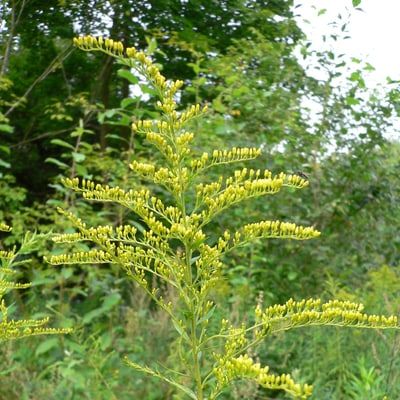
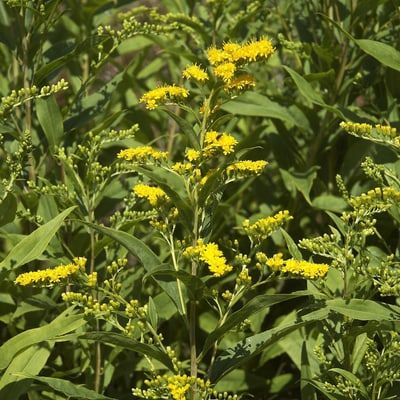
The Canadian goldenrod can grow up to 2.5 m high.
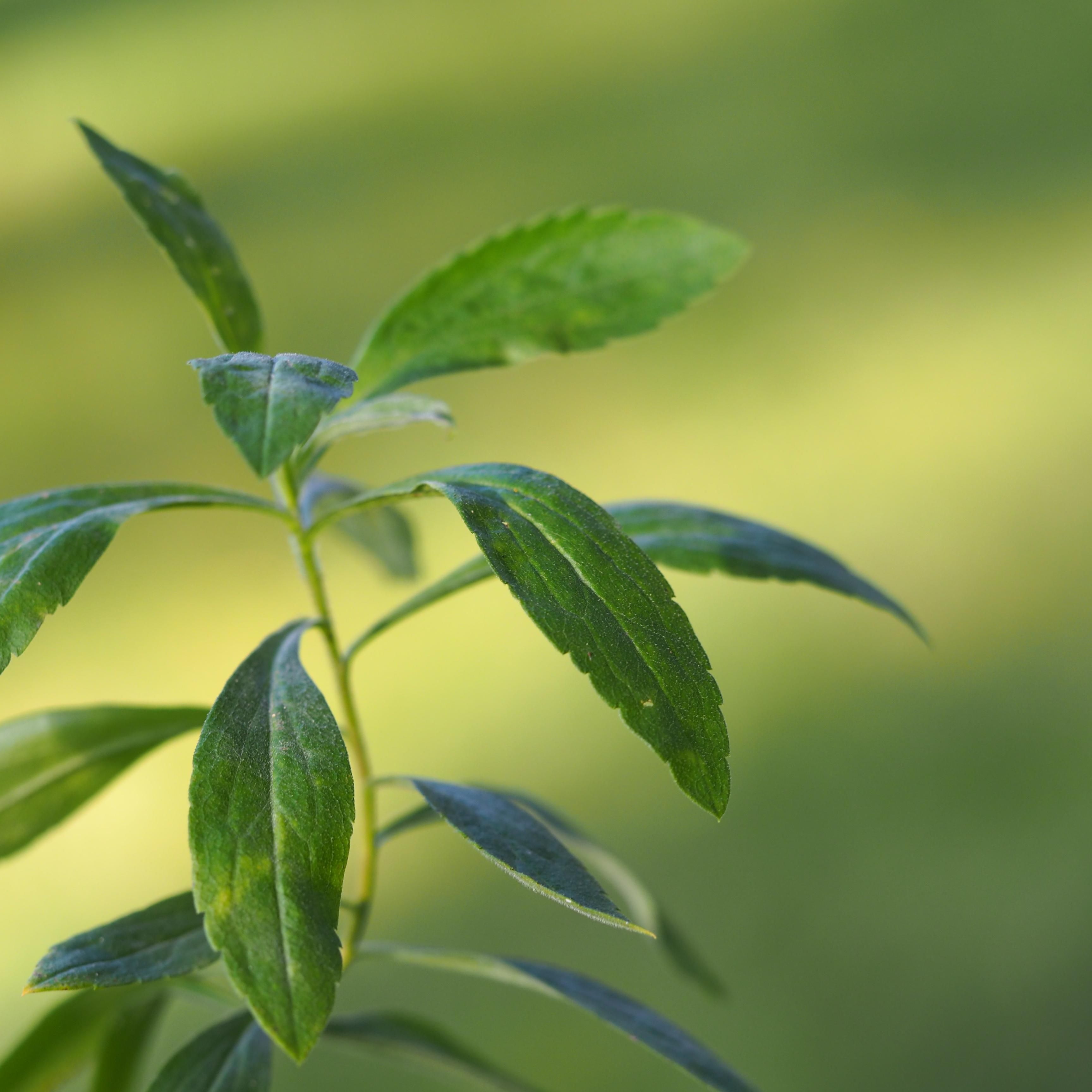
Its leaves are lance-shaped and serrated at the top. The underside is generally densely haired.
The stem is upright with short hairs.
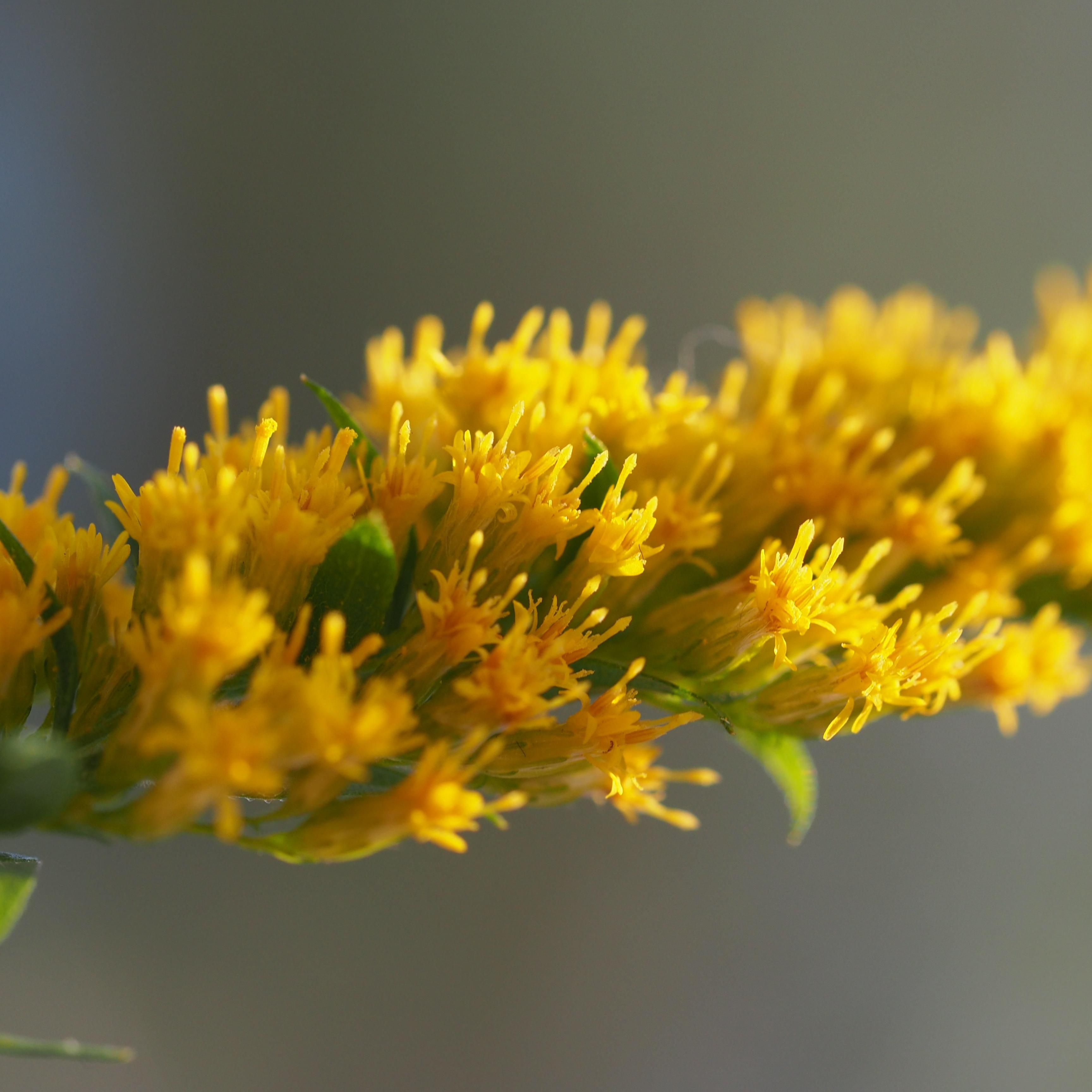
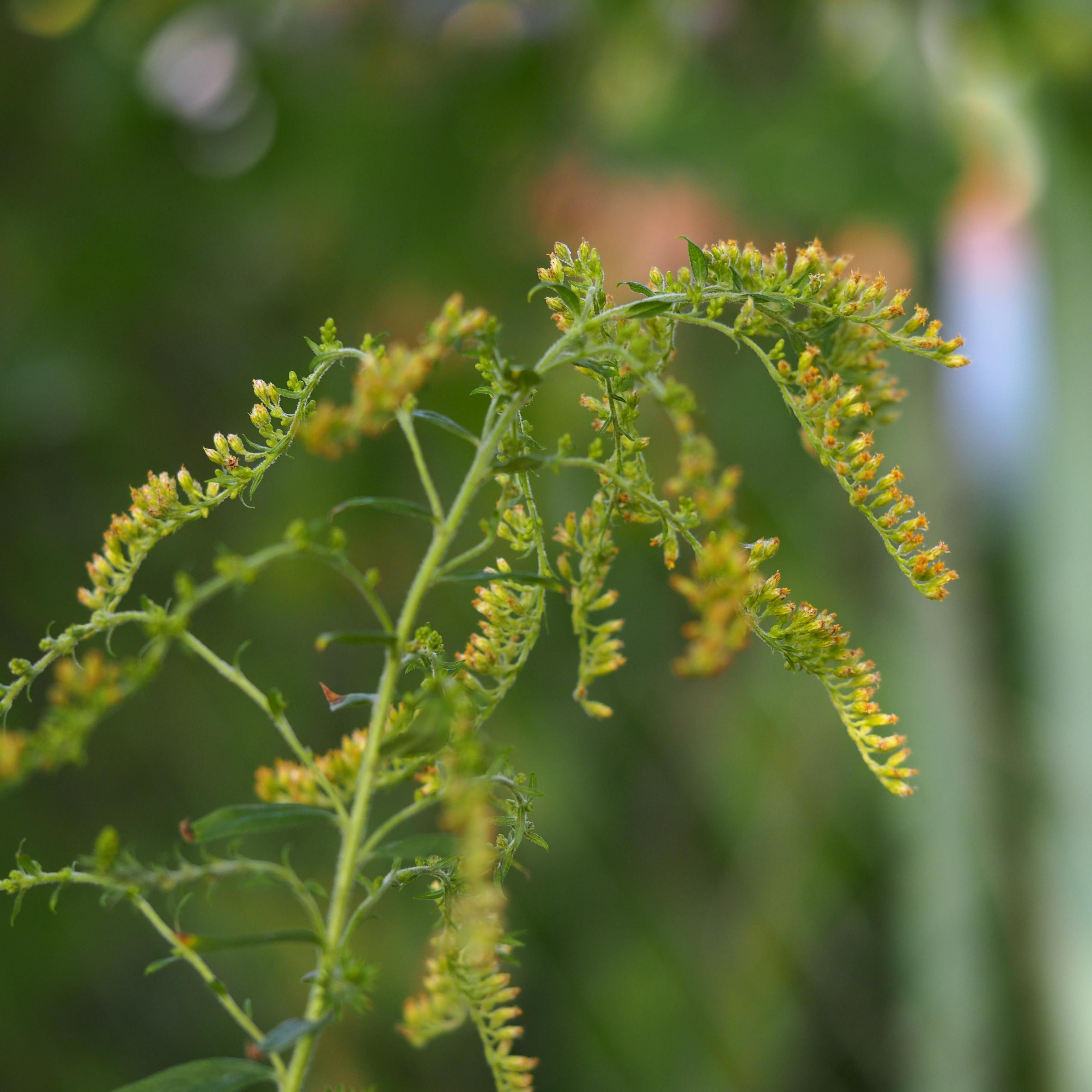
The plant forms numerous, one-sided yellow, generally curved flower spikes. It is made up from numerous flower heads. At first glance, the flower heads can be mistaken for the flower itself. These pseudanthia (“false flowers”) are made up from numerous individual yellow tubular and ray florets.
The seeds are small nut fruits with a ring of feathery hairs.
Features
Canadian goldenrod
Solidago canadensis
large, one-sided flower spikes
short haired stem
In the city
In cities, Canadian goldenrod can be found in great numbers in fallow fields, railway land and along waterways. It prefers sunny, warm and nutrient-rich sites with sandy to loamy soil.
Because of its striking flower spikes, it is also often planted in gardens as an ornamental plant. As it finds favourable growing conditions in the city, it often runs wild and spreads widely.
Fun Facts
A tea made from its leaves is said to be beneficial for urinary tract and kidney disorders and infections.
Canadian goldenrod is classified as an invasive (= problematic) neophyte, as it does not have any natural enemies and can thus spread widely. In consequence, it supplants native species with similar requirements.
It can be used as a dyeing plant.
It flowers from August to October.
Pollination is by flies, hoverflies and moths.
The fruit spreads with the wind. In addition, the plant spreads vegetatively via root shoots.
- Endangerment level Germany: not evaluated
Canadian goldenrod originates from North America. From the 17th century onwards, it can also be found in Europe. It is thus a non-native plant (neophyte).
In spring, the shoot tips can be used to add flavour to salads.
Sources
Zahlreiche Blütenkörbe, Alice Kracht, CC BY-SA 4.0, https://offene-naturfuehrer.de/web/Datei:Solidago_canadensis_(36).JPG
.JPG)
Leaves, Alice Kracht, CC BY-SA 4.0, https://offene-naturfuehrer.de/web/Datei:Solidago_canadensis_(8).JPG
.JPG)
Blütenstand, Alice Kracht, CC BY-SA 4.0, https://offene-naturfuehrer.de/web/Datei:Solidago_canadensis_(4).JPG
.JPG)
Fleischhauer, S. G., Guthmann, J. & Spiegelberger, R. (2007) Essbare Wildpflanzen. 200 Arten bestimmen und verwenden, Baden und München: AT Verlag.
Lippert, W. & Podlech, D. (1993) GU Naturführer. Blumen: die wichtigen Blütenpflanzen Mitteleuropas erkennen und bestimmen, München: Gräfe und Unzer Verlag.
Schauer, T., Caspari, C. & Caspari, S. (2015) Der illustrierte BLV-Pflanzenführer für unterwegs. 1150 Blumen, Gräser, Bäume und Sträucher, München: BLV.
Scherf, G. (2006) Wildpflanzen neu entdecken, München: BLV.
Wisconsin State Herbarium, UW-Madison (n.d.) Flora Of Wisconsin. Consortium Of Wisconsin Herbaria. Solidago canadensis, URL: http://wisflora.herbarium.wisc.edu/taxa/index.php?taxon=5083 (Accessed: 20.09.2016).
Page „Kanadische Goldrute“. : Wikipedia, The Free Encyclopedia. Date of last revision: 15.09.2016, 14:03 UTC. URL: https://de.wikipedia.org/w/index.php?title=Kanadische_Goldrute&oldid=157949758 (Accessed: 20.09.2016).
Bundesamt für Naturschutz (n.d.) Artensteckbriefe, URL: http://floraweb.de/pflanzenarten/artenhome.xsql?suchnr=5679& (Accessed: 20.09.2016).