
Short Description
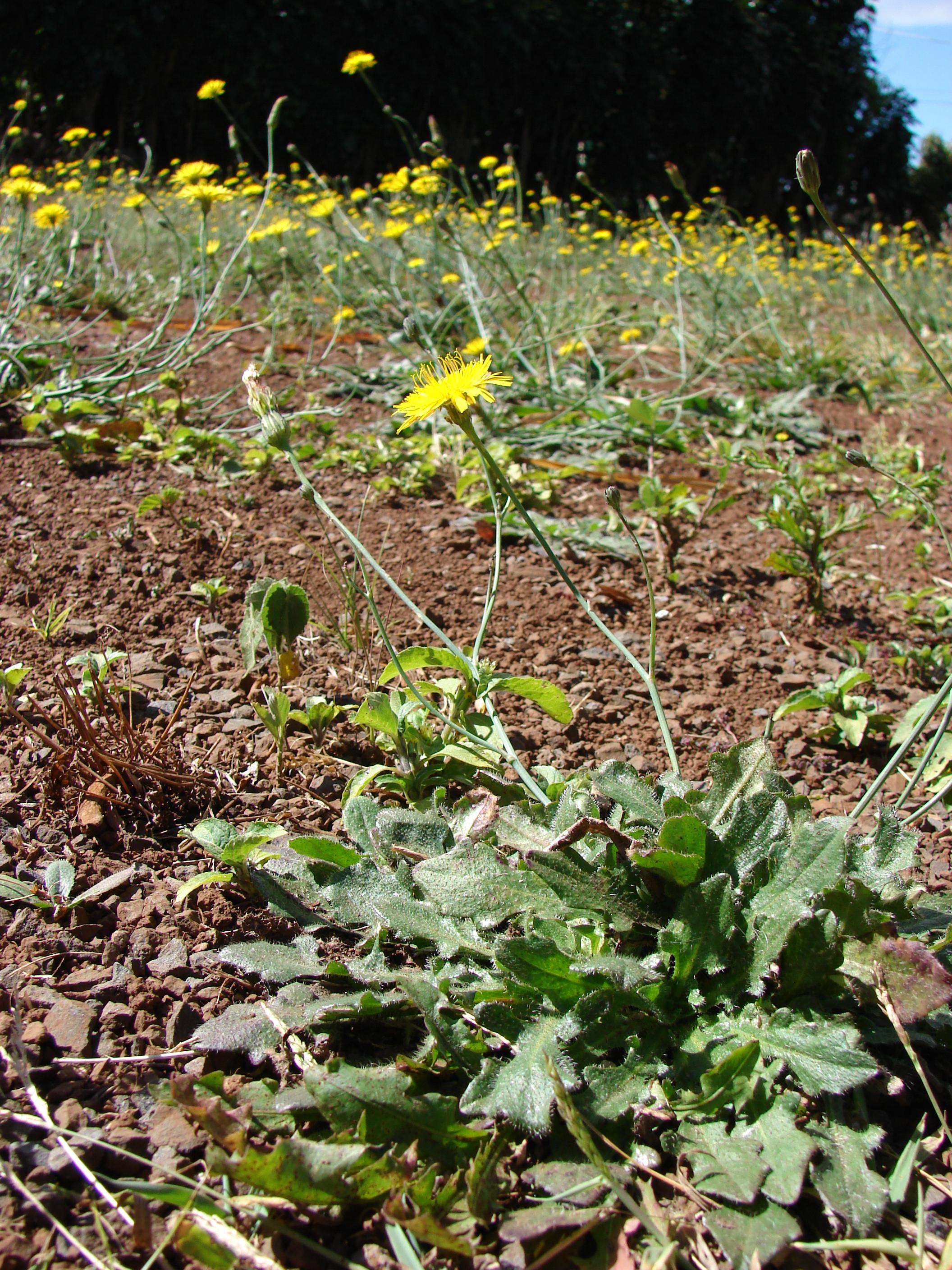
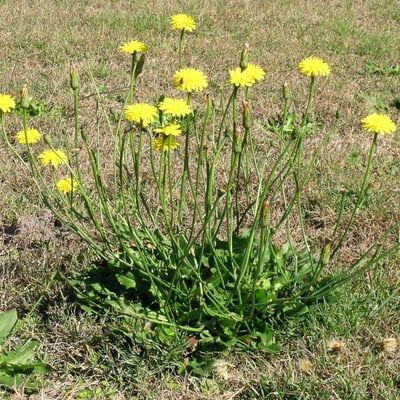
The common cat's-ear can grow up to 70 cm tall.
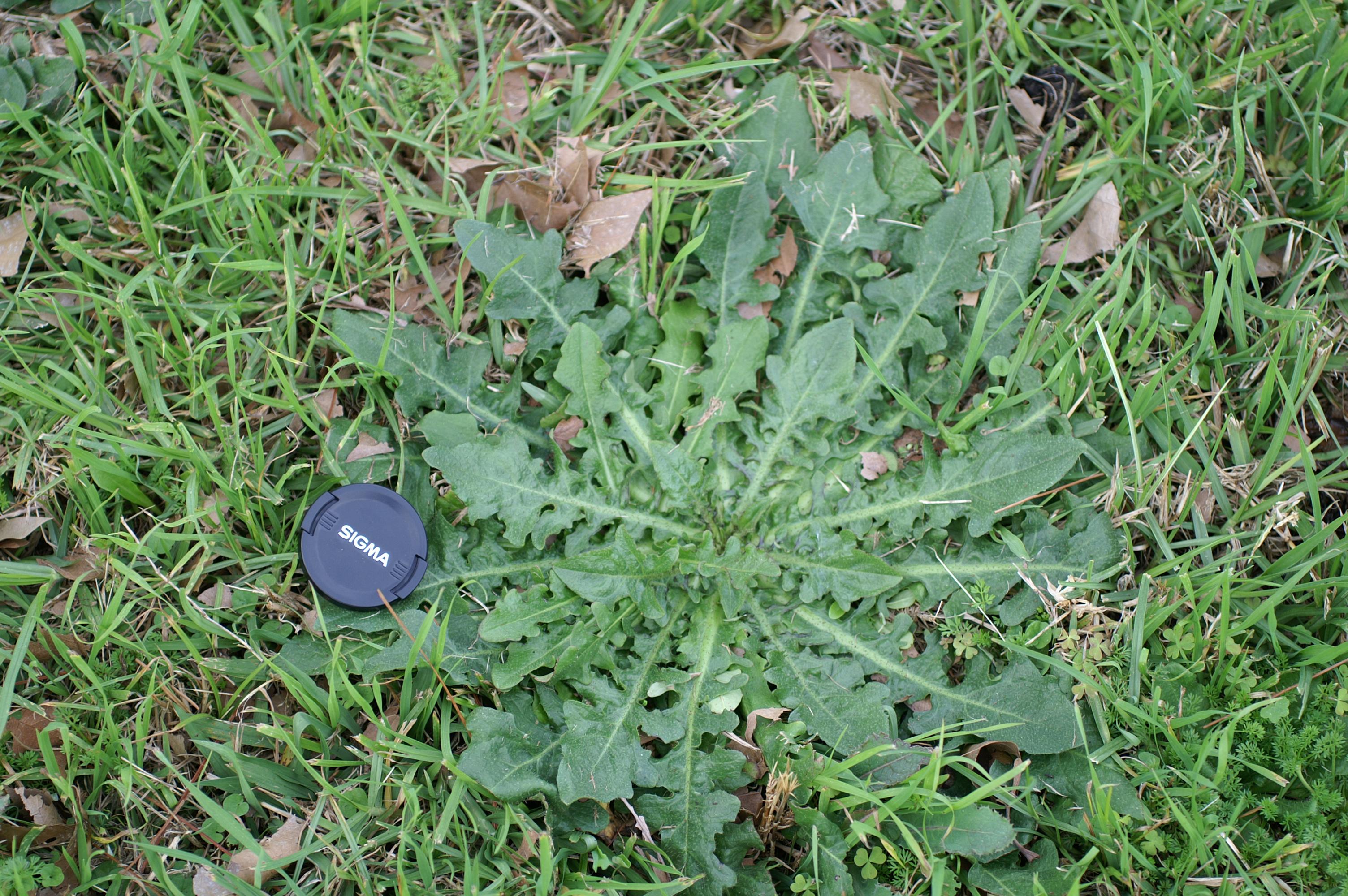
The leaves near the ground are arranged in a rosette. They are undivided and bluntly coarsely toothed. They have a bristly, hairy surface. The upper leaves are small and scale-like.
The stem is usually not very branched and contains milky sap. It is blue-green and has fine longitudinal grooves.
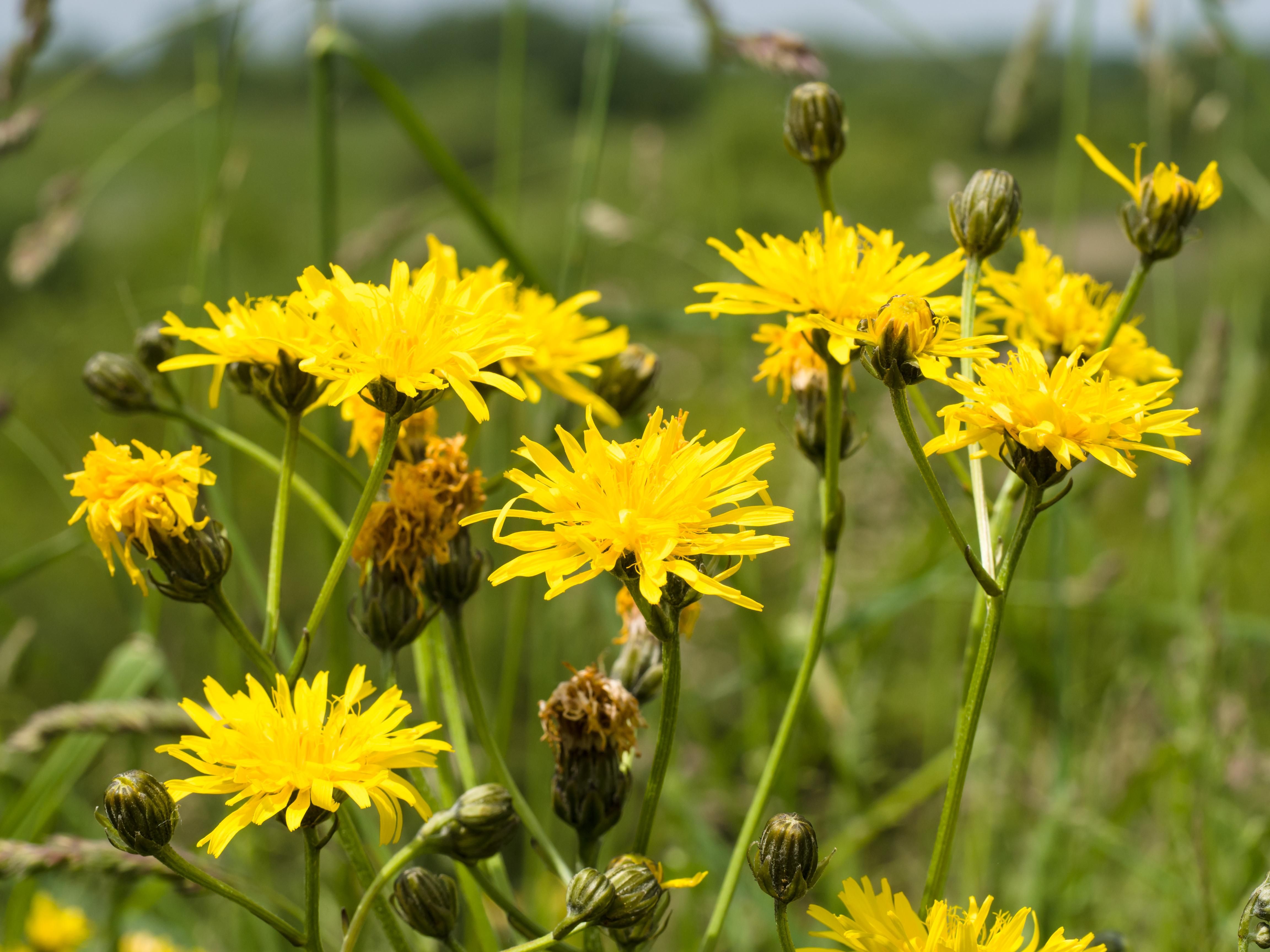
At first glance, the corolla can be mistaken for the flower. However, it is a false flower. It consists of numerous individual yellow ray florets.
The plant forms small, nut-like fruits with a stalked crown of hairs.
Features
Common cat's-ear
Hypochaeris radicata
yellow flowers
milky sap
In the city
In the city, the common piglet weed is often found in meadows and along roadsides.
Fun Facts
It tolerates mowing very well and sprouts again from the rosettes after a short time.
The flowering period is from June to September.
A flower head consists of over 100 ray florets.
Pollination is carried out by insects.
It lives for several years and generally flowers and fruits annually (perennial plant).
- Endangerment level Germany: not endangered
- Usage:
The closed buds can be pickled.
The young leaves can be added to salads.
Sources
Habitus, Forest & Kim Starr, CC BY-SA 3.0, https://commons.wikimedia.org/wiki/File:Starr_080317-3605_Hypochoeris_radicata.jpg

Blütenstand, James Petts, CC BY-SA 2.0, https://commons.wikimedia.org/wiki/File:Hypochaeris_radicata_(14375661203).jpg
.jpg)
Blätter, Harry Rose, CC BY-SA 2.0, https://commons.wikimedia.org/wiki/File:Hypochaeris_radicata_rosette2_(14652520753).jpg
.jpg)
Page „Gewöhnliches Ferkelkraut“. : Wikipedia, The Free Encyclopedia. Date of last revision: 18.12.2016, 12:25 UTC. URL: https://de.wikipedia.org/w/index.php?title=Gew%C3%B6hnliches_Ferkelkraut&oldid=160767782 (Accessed: 14.06.2017).
Eggenberg, S. & Möhl, A. (2007) Flora Vegetativa: Ein Bestimmungsbuch für Pflanzen der Schweiz im blütenlosen Zustand, Bern, Stuttgart, Wien: Haupt Verlag.
Spohn, M., Golte-Bechtle, M. & Spohn, R. (2015) Was blüht denn da? Stuttgart: Franckh Kosmos Verlag.
Jäger, E. J. (2011) Rothmaler - Exkursionsflora von Deutschland. Gefäßpflanzen: Grundband, Heidelberg: Spektrum Akademischer Verlag.
Kammer, P. M. (2016) Pflanzen einfach bestimmen. Schritt für Schritt einheimische Arten kennenlernen, Bern: Haupt Verlag.
Schauer, T., Caspari, C. & Caspari, S. (2015) Der illustrierte BLV-Pflanzenführer für unterwegs. 1150 Blumen, Gräser, Bäume und Sträucher, München: BLV.
Bundesamt für Naturschutz (n.d.) Artensteckbriefe, URL: http://floraweb.de/pflanzenarten/artenhome.xsql?suchnr=3046& (Accessed: 14.06.2017).