
Short Description
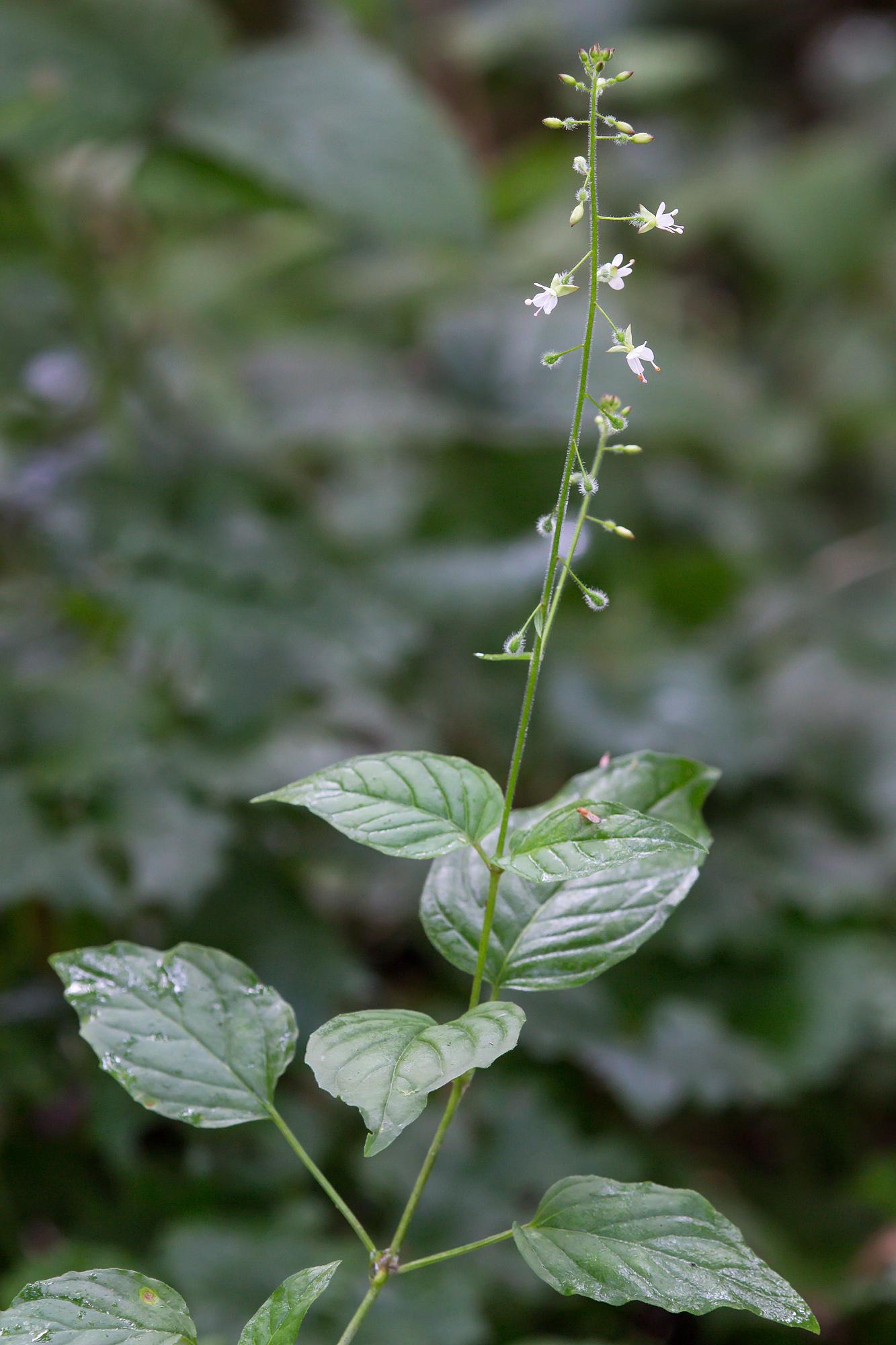
The enchanter's-nightshade can grow up to 60 centimetres high.
The leaves are matt green and ovate or cordate. They sit opposite each other on the stem. Covered with hairs on the leaf veins.
The stem grows erect and is softly haired.
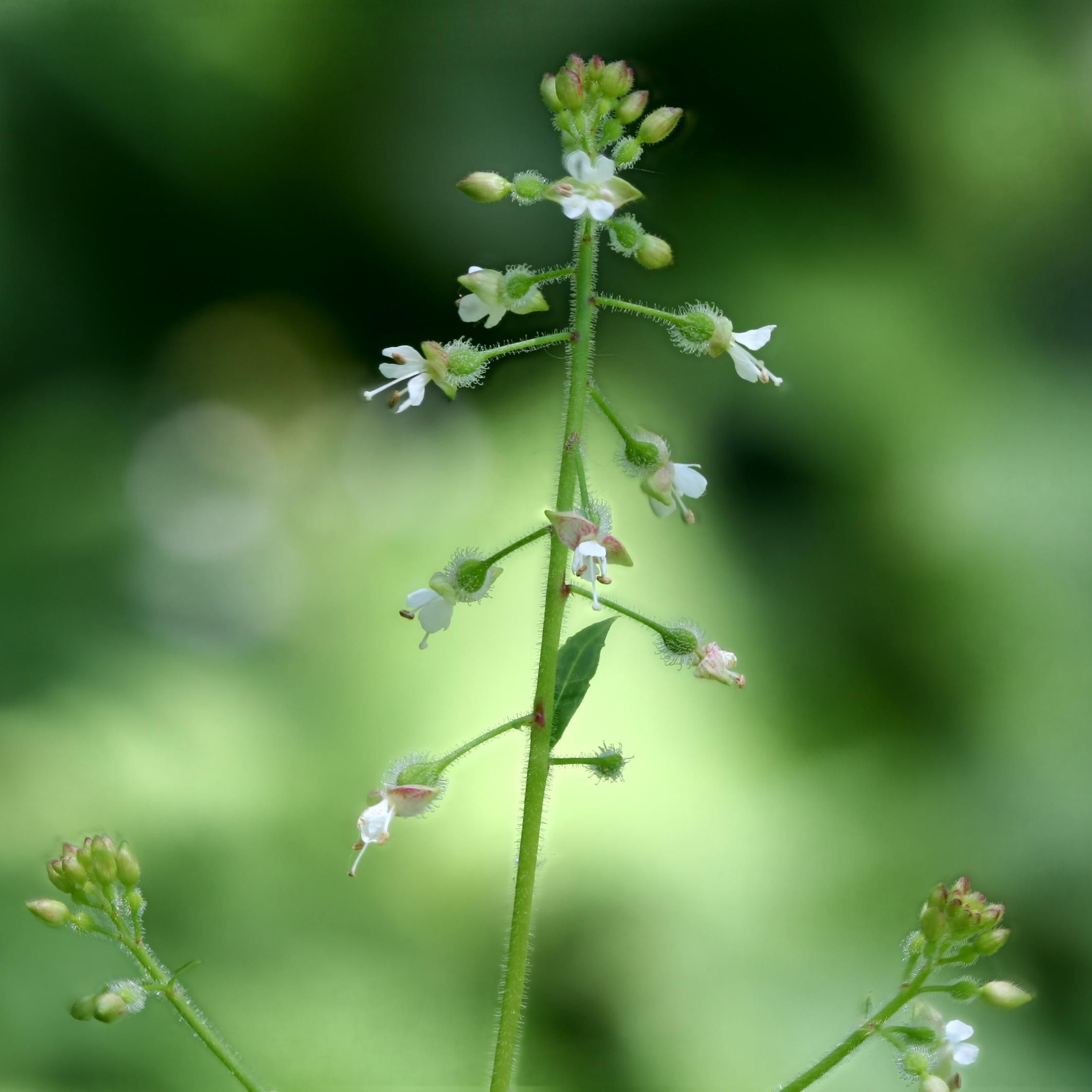
The white to reddish flowers have two petals, deeply notched in the centre, and sit on a long, determinate inflorescence.
The plant forms obovate, one- to two-seeded capsules with hooked hairs.
Features
Enchanter's-nightshade
Circaea lutetiana
long, leafless inflorescence
hairy stem
In the city
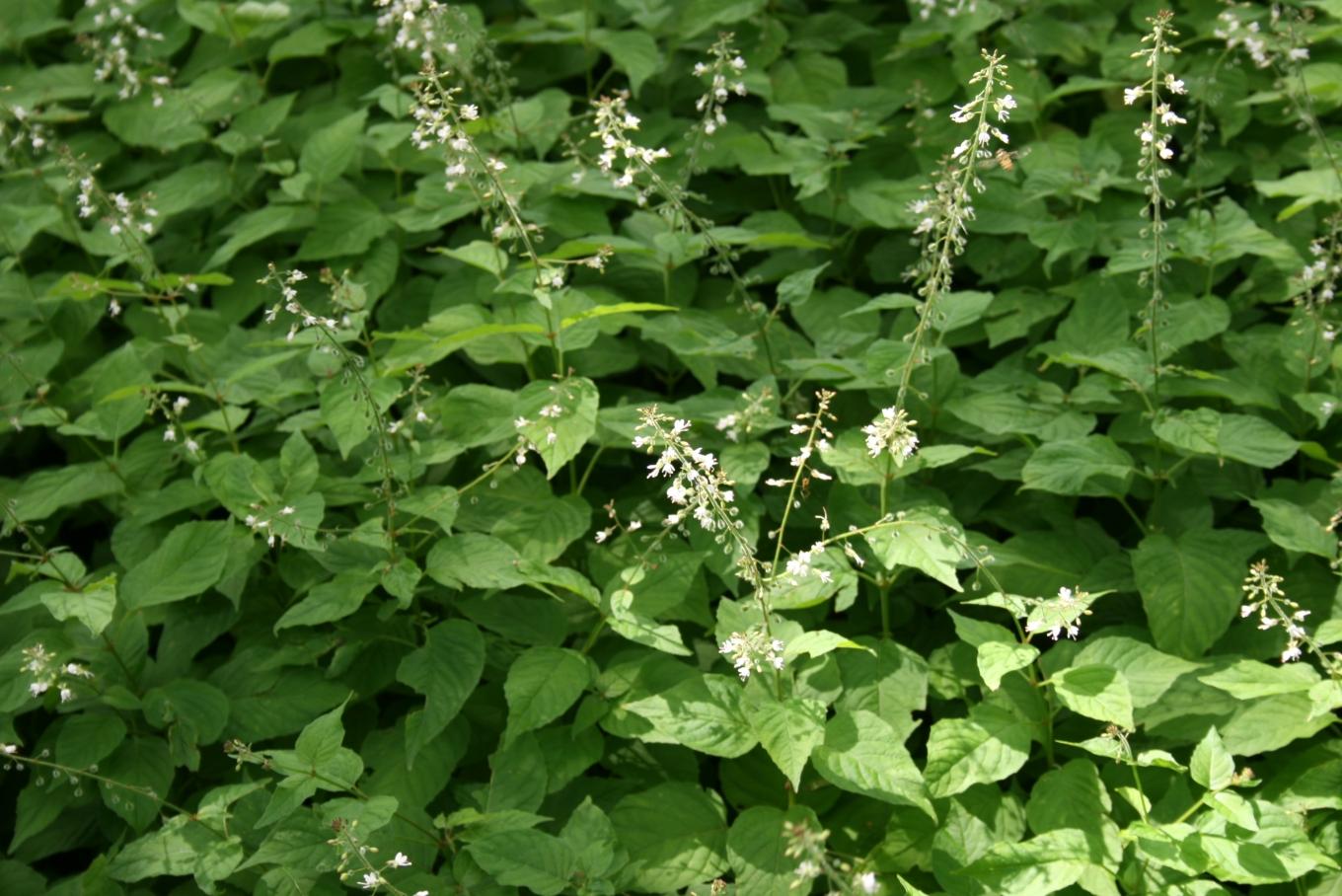
The enchanter's-nightshade prefers damp, shady and nutrient-rich sites. It is often found in forests or under bushes. Only rarely it is also used as an ornamental plant in gardens.
Fun Facts
The fruits, with their hook-shaped hairs, stick to animal skins or clothes and are thus spread.
The scientific name refers to Circe, an enchantress and minor goddess in Greek mythology, who seduced Odysseus with her abilities and charms. This also explains the transference to the common name.
The flowering period is from June to August.
It lives for several years and generally flowers and fruits annually (perennial plant).
It is mainly pollinated by hoverflies.
- Endangerment level Germany: not endangered
The enchanter's-nightshade is native to the whole of Europe and Central Asia.
Sources
Blütenstand und Blätter, Christian Fischer, CC BY-SA 3.0, https://commons.wikimedia.org/wiki/File:CircaeaLutetiana1.jpg

Habitus, Sten Porse, CC BY-SA 3.0, https://commons.wikimedia.org/wiki/File:26.07.07_Circaea-lutetiana-habit.jpg

Blütenstand, Randy Nonenmacher, CC BY-SA 3.0, https://commons.wikimedia.org/wiki/File:Circaea_lutetiana_ssp_canadensis_001.jpg

Kammer, P. M. (2016) Pflanzen einfach bestimmen. Schritt für Schritt einheimische Arten kennenlernen, Bern: Haupt Verlag.
Schauer, T., Caspari, C. & Caspari, S. (2015) Der illustrierte BLV-Pflanzenführer für unterwegs. 1150 Blumen, Gräser, Bäume und Sträucher, München: BLV.
Spohn, M., Golte-Bechtle, M. & Spohn, R. (2015) Was blüht denn da? Stuttgart: Franckh Kosmos Verlag.
Page „Großes Hexenkraut“. : Wikipedia, The Free Encyclopedia. Date of last revision: 28.05.2017, 15:03 UTC. URL: https://de.wikipedia.org/w/index.php?title=Gro%C3%9Fes_Hexenkraut&oldid=165882514 (Accessed: 18.01.2018).
Bundesamt für Naturschutz (n.d.) Artensteckbriefe, URL: http://floraweb.de/pflanzenarten/artenhome.xsql?suchnr=1555& (Accessed: 18.01.2018).