
Short Description
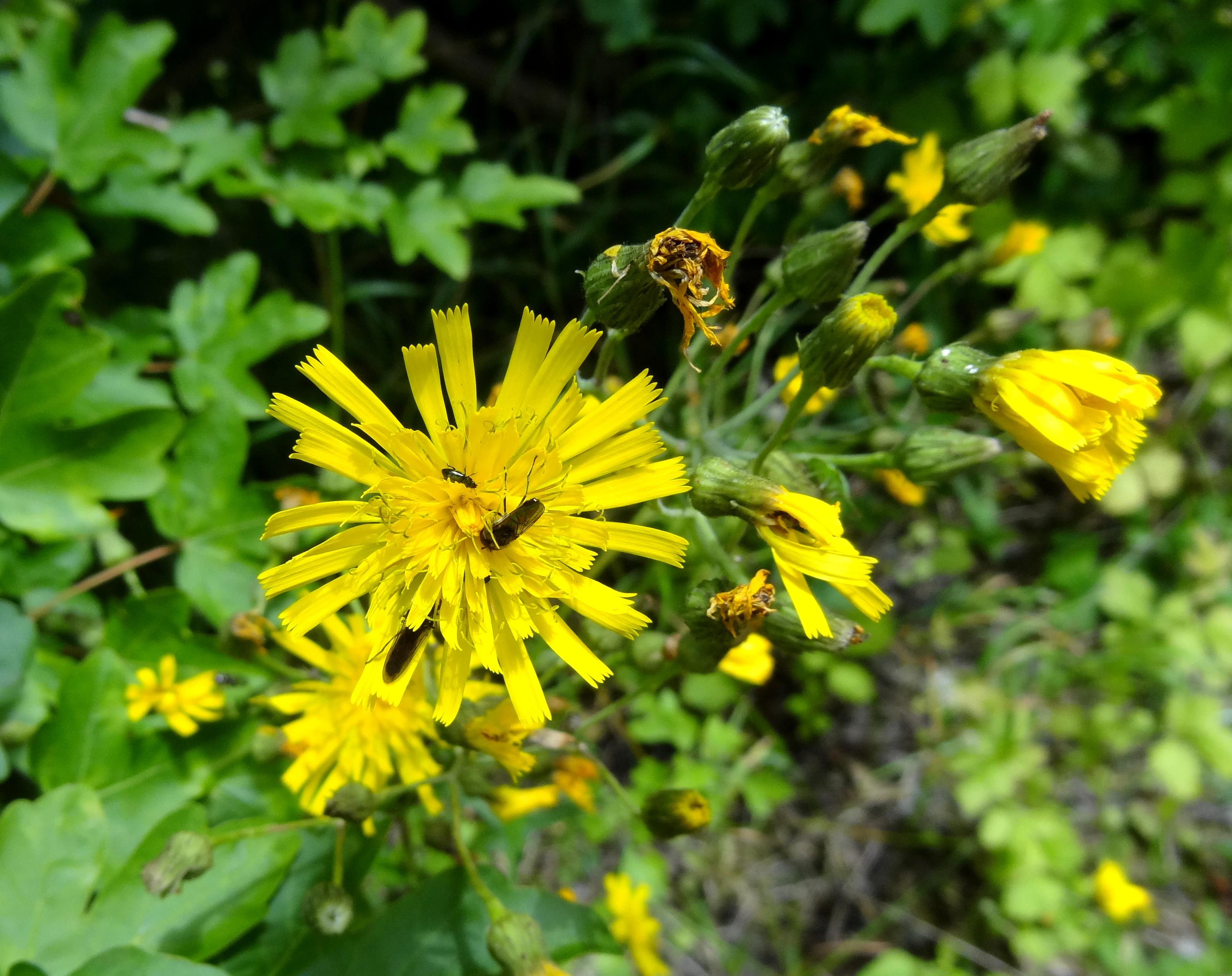
The smooth hawkweed can grow over a metre high.
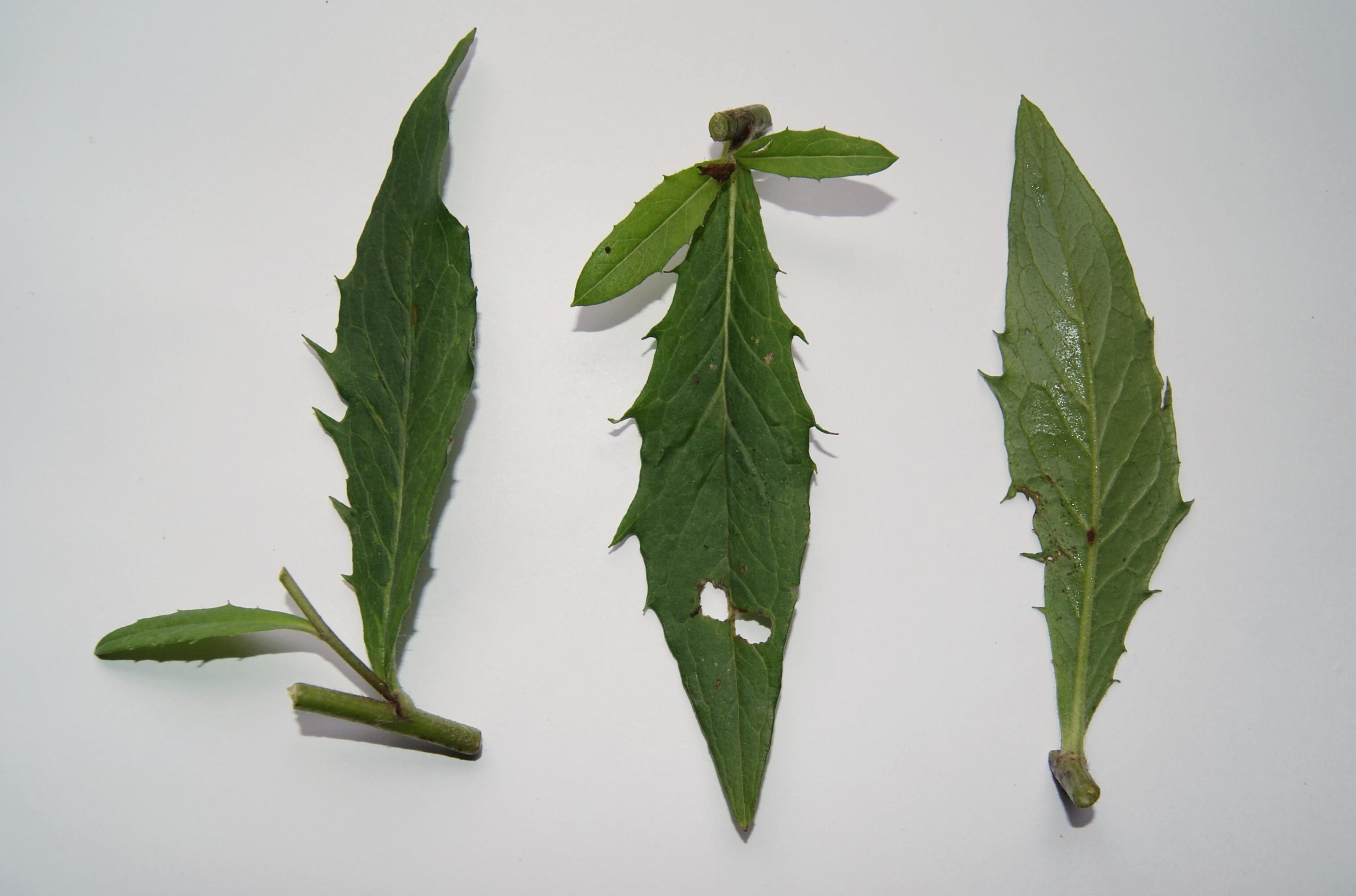
The leaves have a short stalk or no stalk at all. They are glabrous and three to eight times as long as they are wide. The upper surface of the leaves is slightly darker than the lower surface.
The stem contains milky sap. It is slightly downy and hairy and highly branched in the upper part.
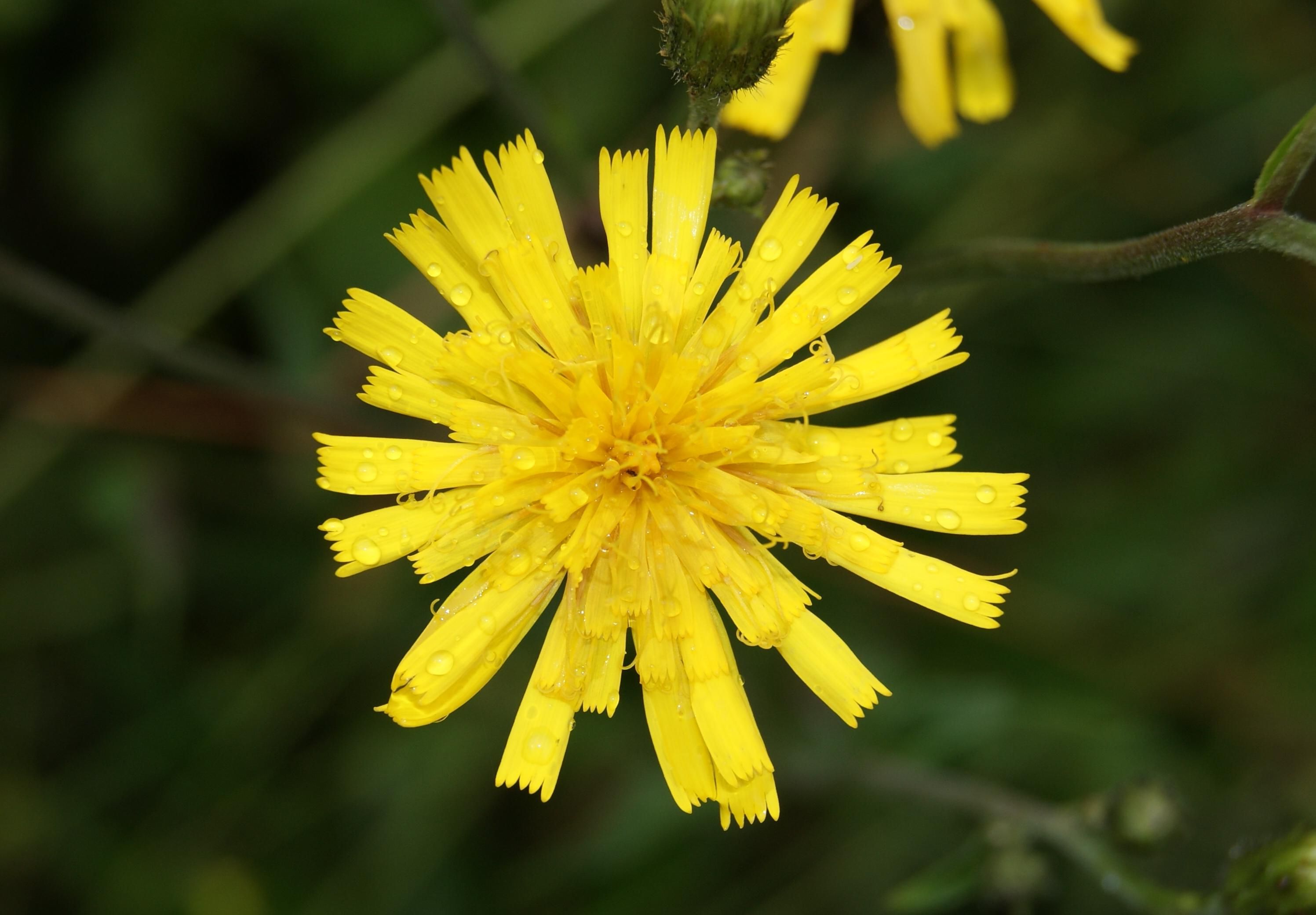
The yellow flower heads are arranged in panicles.
The plant forms an elongated, brownish, nut-like fruit with distinct ribs. It has brittle, brown-white flying hairs at the tip.
Features
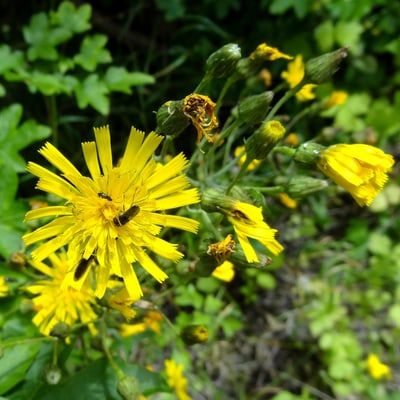
Smooth hawkweed
Hieracium laevigatum
yellow flowers
downy stem
glabrous leaves
Similar species
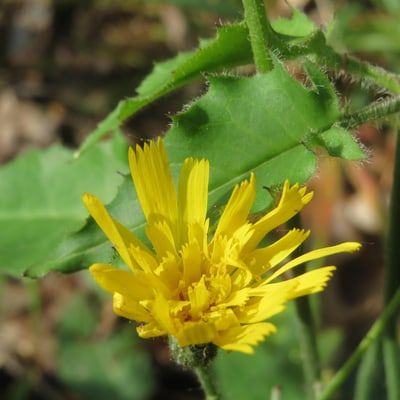
Wall hawkweed
Hieracium murorum
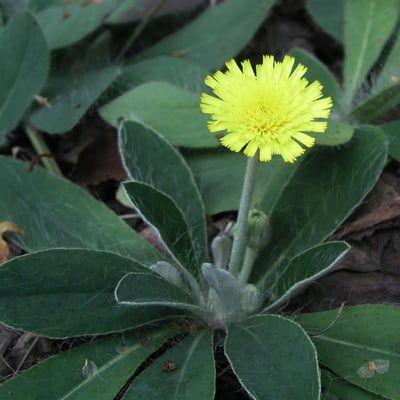
Mouse-ear hawkweed
Pilosella officinarum
In the city
The smooth hawkweed often grows in sparse deciduous and pine forests, bushes, forest edges, heaths and fallow land. It prefers sunny places. The soil should have at most a low lime and nitrogen content and not be too moist.
Fun Facts
The flowering period is from June to August.
The flowers are pollinated by bees, hoverflies and moths.
The species is very diverse. There are about 70 recognised subspecies in Europe and the Mediterranean.
It lives for several years and generally flowers and fruits annually (perennial plant).
- Endangerment level Germany: not endangered
Sources
Habitus, Udo Schmidt, CC-BY-SA 2.0, https://commons.wikimedia.org/wiki/File:Hieracium_laevigatum_Willd._(7608620624).jpg
.jpg)
Blätter, Danny Steven S., CC BY-SA 3.0, https://commons.wikimedia.org/wiki/File:Hieracium_laevigatum_by_Danny_S._-_005.jpg

Blütenstand, Danny Steven S., CC BY-SA 3.0, https://commons.wikimedia.org/wiki/File:Hieracium_laevigatum_by_Danny_S._-_001.jpg

Page „Glattes Habichtskraut“. : Wikipedia, The Free Encyclopedia. Date of last revision: 06.04.2018, 19:17 UTC. URL: https://de.wikipedia.org/w/index.php?title=Glattes_Habichtskraut&oldid=176205089 (Accessed: 06.08.2018).
Seitz, B., Ristow, M., Meißner, J., Machatzi, B. & Sukopp, H. (2018) Rote Liste und Gesamtartenliste der etablierten Farn- und Blütenpflanzen von Berlin. : Der Landesbeauftragte für Naturschutz und Landschaftspflege / Senatsverwaltung für Umwelt, Klima und Verkehr (eds.) Rote Listen der gefährdeten Pflanzen, Pilze und Tiere von Berlin, URL: https://www.berlin.de/sen/uvk/natur-und-gruen/naturschutz/artenschutz/artenlisten-rote-listen/farn-und-bluetenpflanzen/ (Accessed: 26.03.2021).
Bundesamt für Naturschutz (n.d.) Artensteckbriefe, URL: http://floraweb.de/pflanzenarten/artenhome.xsql?suchnr=26517& (Accessed: 06.08.2018).
Smagy - Pflanzen, Insekten und Heilkraft (n.d.) Glattes Habichtskraut (Hieracium laevigatum), URL: https://www.smagy.de/index.php?func=plant&task=showPlant&taskID=glatthabicht (Accessed: 06.08.2018).
Janßen, D. (n.d.) Glattes Habichtskraut, URL: http://flora-emslandia.de/wildblumen/asteraceae/hieracium/hieracium_laevigatum.htm (Accessed: 06.08.2018).