
Short Description
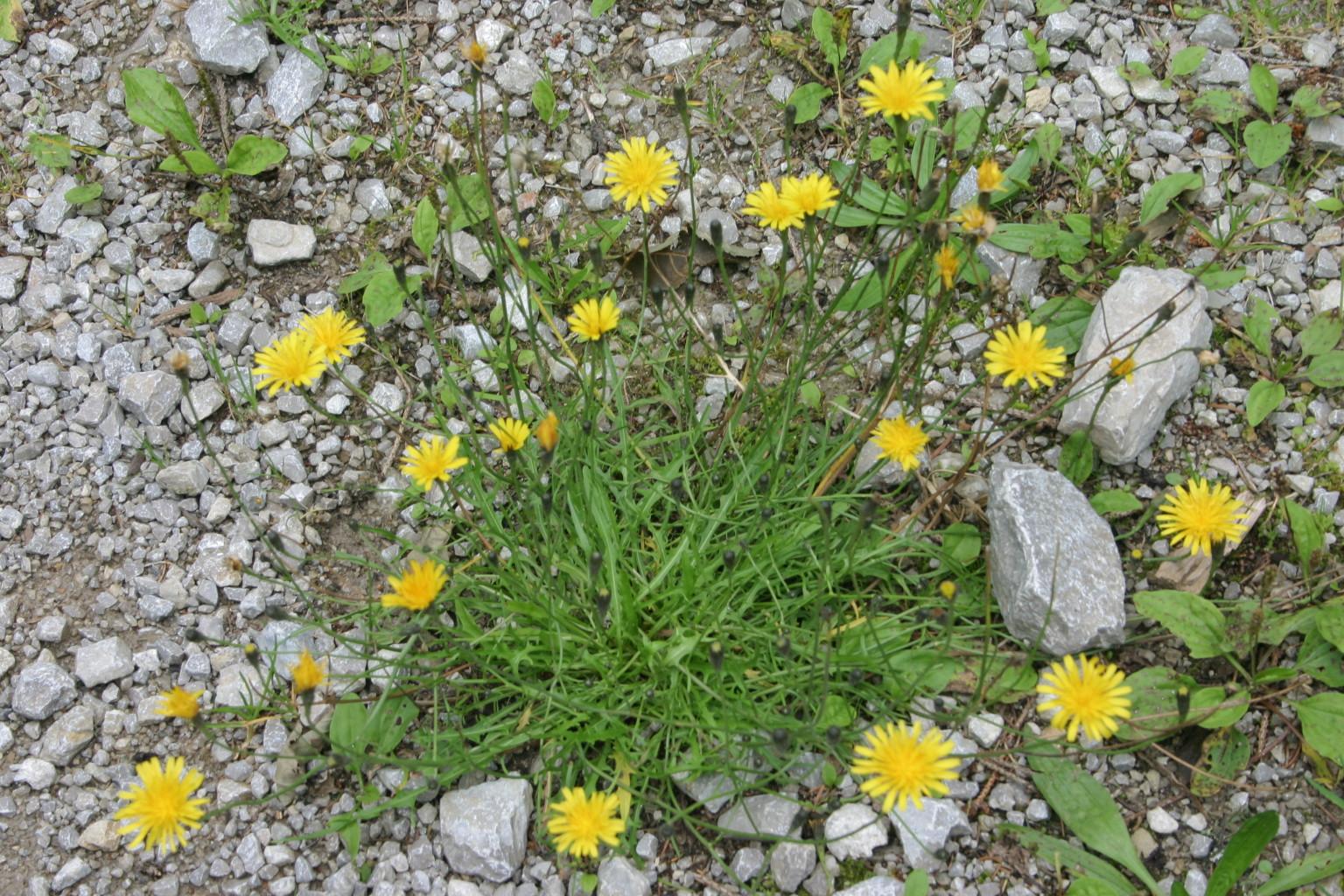
The autumn hawkbit can grow up to 50 cm high.
The leaves are arranged in a rosette and appear to come directly from the ground (basal). They are lanceolate and deeply indented.
The stem grows upright and is usually branched. It is thickened under the flower heads. Small leaf scales grow on the stem.
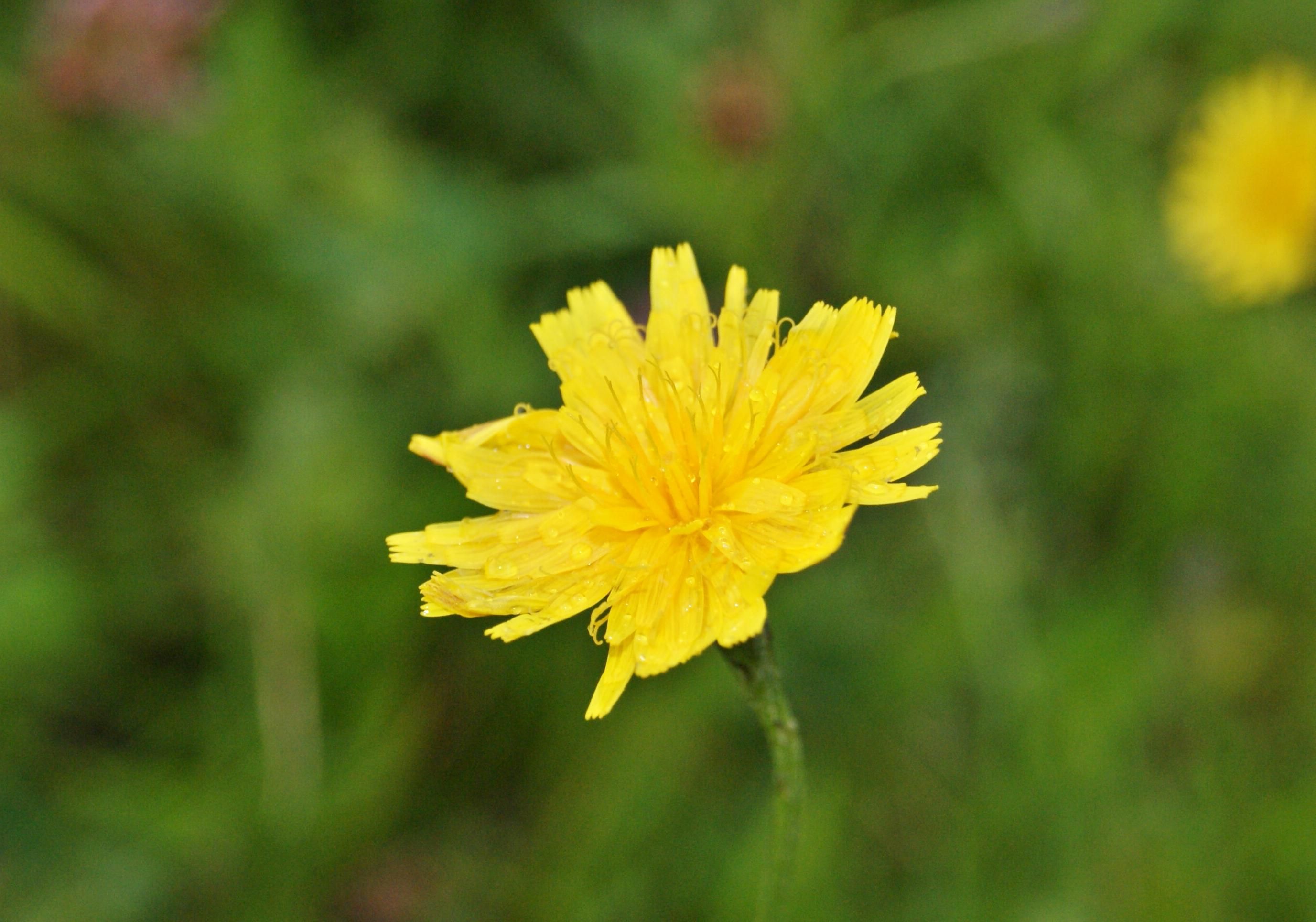
Numerous small yellow to yellow-orange flowers stand together and form a flower head that can be mistaken for the flower at first glance. The outer ray florets are red striped on the outside.
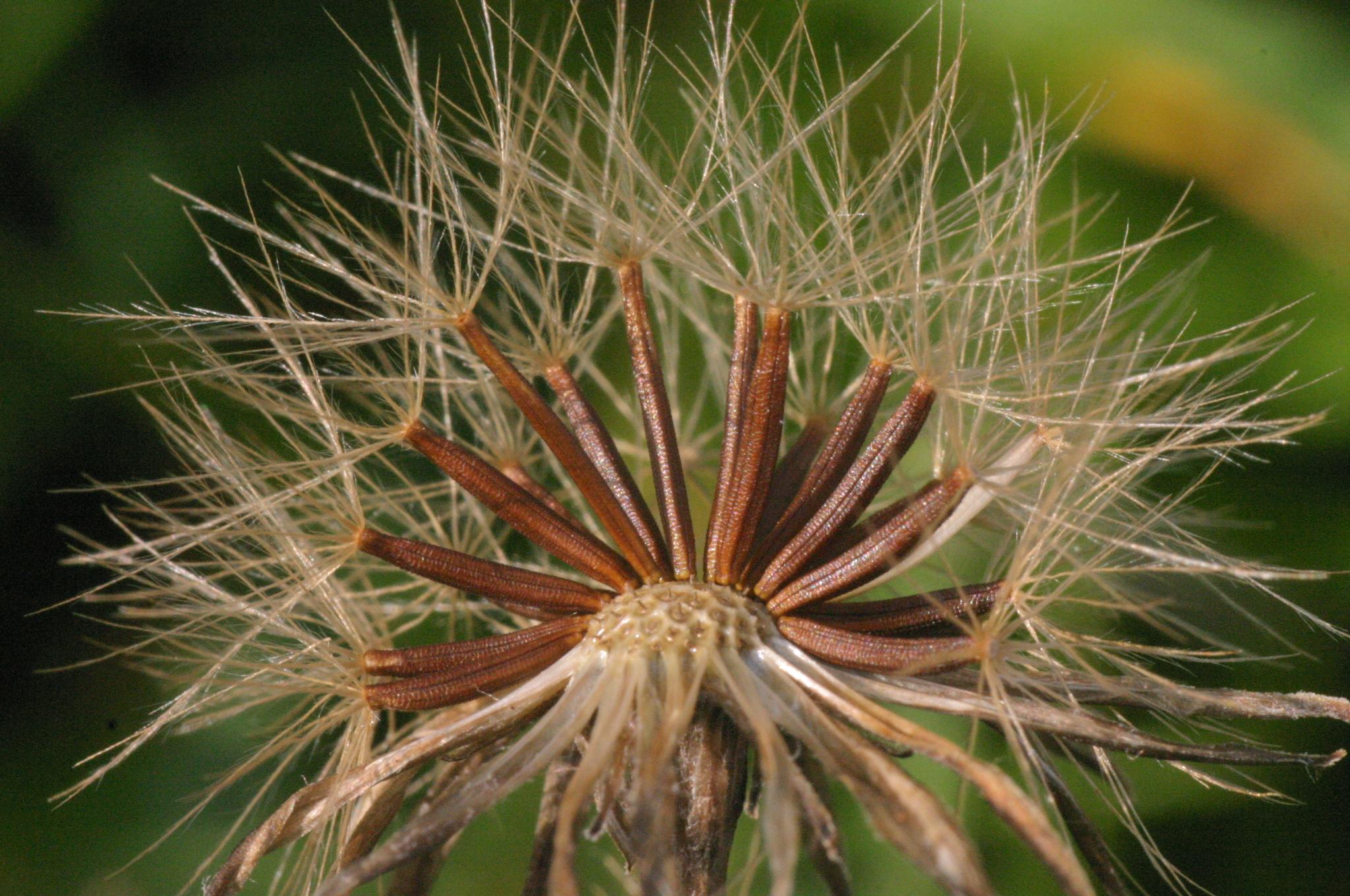
The plant forms elongated, nut-like fruits with a directly attached, feathery ring of hairs.
Features
Autumn hawkbit
Scorzoneroides autumnalis
small leaf scales on the stem
In the city
The autumn hawkbit is a pioneer plant. It tolerates both trampling and mowing and is salt-tolerant. In the city, it can therefore grow well on pastures, ornamental lawns, paths, intensely trampled sites and roadsides. It prefers nutrient-rich, dense, mostly open soils.
Fun Facts
The flower head reflects UV light at the edge, but not in the centre. For pollinators like honeybees, which can see in the UV range, it appears light on the outside and dark on the inside.
The flowering period is from July to September.
It lives for several years and generally flowers and fruits annually (perennial plant).
The fruits are spread by the wind or washed out by water.
- Endangerment level Germany: not endangered
Autumn hawkbit is native to Europe.
The young leaves taste bitter and can be eaten as a salad or cooked as a vegetable.
Sources
Habitus, HermannSchachner, CC0, https://commons.wikimedia.org/wiki/File:Scorzoneroides_autumnalis_(Schuppenleuenzahn)_IMG_4446.JPG
_IMG_4446.JPG)
Fruchtstand, HermannSchachner, CC0 1.0, https://commons.wikimedia.org/wiki/File:Scorzoneroides_autumnalis_(Schuppenleuenzahn)_IMG_29882.JPG
_IMG_29882.JPG)
Blütenstand, Danny Steven S., CC BY-SA 3.0, https://commons.wikimedia.org/wiki/File:Scorzoneroides_autumnalis_by_Danny_S._-_003.jpg

Kammer, P. M. (2016) Pflanzen einfach bestimmen. Schritt für Schritt einheimische Arten kennenlernen, Bern: Haupt Verlag.
Schauer, T., Caspari, C. & Caspari, S. (2015) Der illustrierte BLV-Pflanzenführer für unterwegs. 1150 Blumen, Gräser, Bäume und Sträucher, München: BLV.
Spohn, M., Golte-Bechtle, M. & Spohn, R. (2015) Was blüht denn da? Stuttgart: Franckh Kosmos Verlag.
Page „Herbst-Löwenzahn“. : Wikipedia, The Free Encyclopedia. Date of last revision: 25.06.2016, 16:06 UTC. URL: https://de.wikipedia.org/w/index.php?title=Herbst-L%C3%B6wenzahn&oldid=155623696 (Accessed: 08.03.2018).