
Short Description
Prickly lettuce can grow over one metre high.
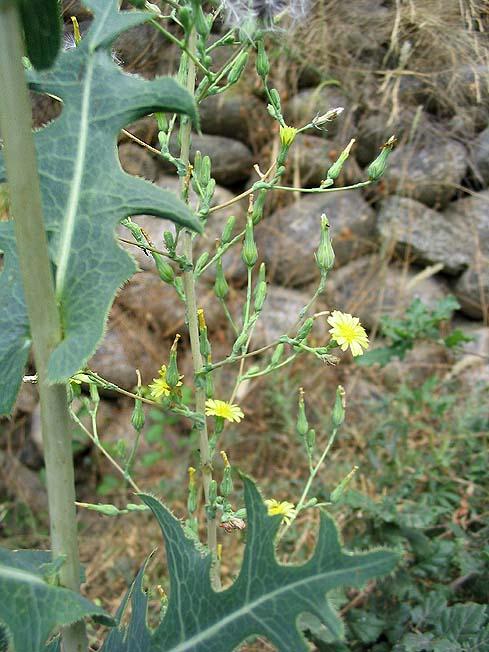
The leaves are elongated and partly runcinate. The leaf margins are more or less roughly toothed. The main vein is spiny on the underside.
The stem is covered with short spines in the lower part and is almost glabrous.
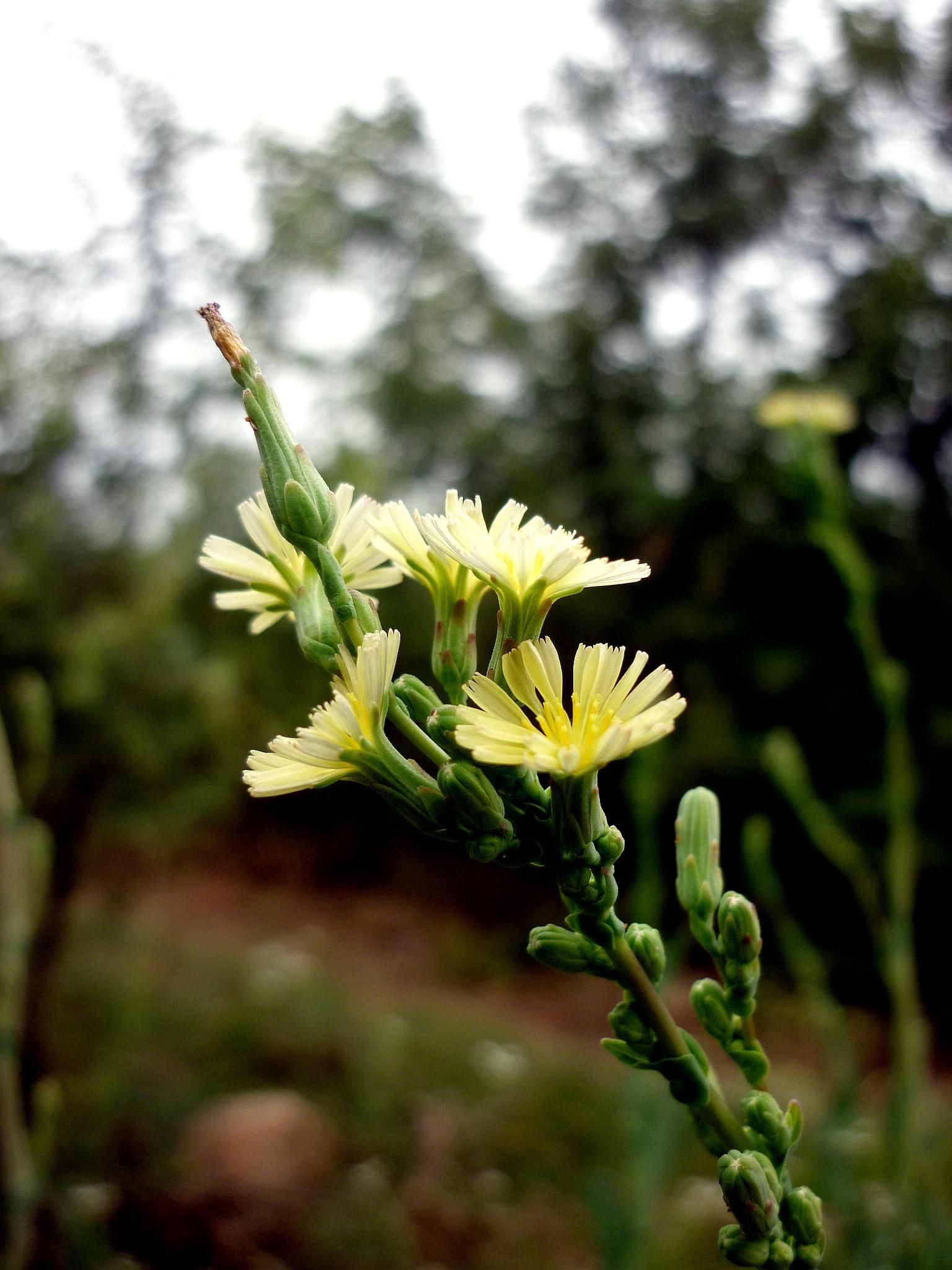
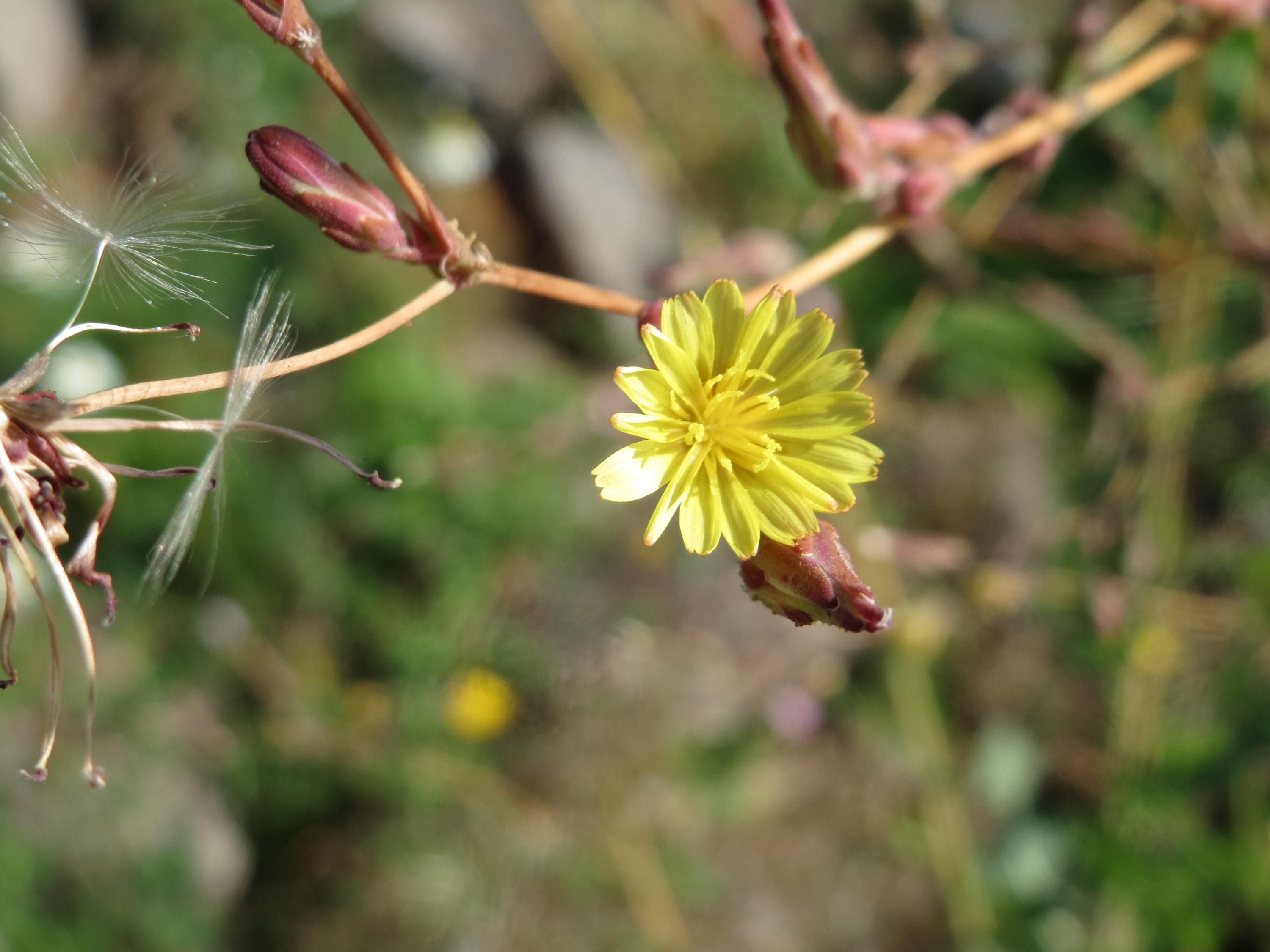
At first glance, the flower head can be mistaken for the flower. The false flower consists of numerous, individual, light yellow ray florets.
The plant forms small, nut-like fruits. They are rough and grey-brown with a white head of hair.
Features
Prickly lettuce
Lactuca serriola
prickly leaf underside
spines on the lower stem
In the city
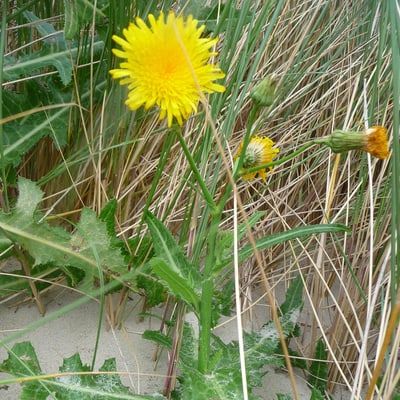
Prickly lettuce grows on roadsides, rubble sites, railway lines, wastelands and embankments. It prefers dry soils in warmer, sunny locations. It is common in the mountains, but rare in the north-west of Germany.
Fun Facts
The flowering period is from July to August.
Especially in sunny locations, the leaves point north and south and are perpendicular to the ground. They are therefore hardly irradiated by the midday sun and evaporate less moisture.
The pollination of the flowers is done by insects or self-pollination.
It is a food plant for various caterpillar species. It is sometimes infested by fungi.
It is an annual to biennial plant. It lives for one or two years, but flowers only once and dies after the seeds have matured.
- Endangerment level Germany: not endangered
The plant contains white latex, from which natural rubber can be made.
Sources
Habitus, Isidre blanc, CC BY-SA 4.0, https://commons.wikimedia.org/wiki/File:LACTUCA_SERRIOLA_-_MORROCURT_-_IB-151_(Enciam_bord).JPG
.JPG)
Blütenstand, AnRo0002, CC0, https://commons.wikimedia.org/wiki/File:20160911Lactuca_serriola2.jpg

Habitus, Jean Tosti, CC BY-SA 3.0, http://fr.wikipedia.org/wiki/Image:Laitue1.jpg

Page „Stachel-Lattich“. : Wikipedia, The Free Encyclopedia. Date of last revision: 23.01.2018, 11:07 UTC. URL: https://de.wikipedia.org/w/index.php?title=Stachel-Lattich&oldid=173236832 (Accessed: 07.08.2018).
Spohn, M., Golte-Bechtle, M. & Spohn, R. (2015) Was blüht denn da? Stuttgart: Franckh Kosmos Verlag.
NatureGate (n.d.) Kompasslattich. Lactuca serriola, URL: http://www.luontoportti.com/suomi/de/kukkakasvit/kompasslattich (Accessed: 07.08.2018).
Bundesamt für Naturschutz (n.d.) Artensteckbriefe, URL: http://floraweb.de/pflanzenarten/artenhome.xsql?suchnr=3247& (Accessed: 07.08.2018).
Seitz, B., Ristow, M., Meißner, J., Machatzi, B. & Sukopp, H. (2018) Rote Liste und Gesamtartenliste der etablierten Farn- und Blütenpflanzen von Berlin. : Der Landesbeauftragte für Naturschutz und Landschaftspflege / Senatsverwaltung für Umwelt, Klima und Verkehr (eds.) Rote Listen der gefährdeten Pflanzen, Pilze und Tiere von Berlin, URL: https://www.berlin.de/sen/uvk/natur-und-gruen/naturschutz/artenschutz/artenlisten-rote-listen/farn-und-bluetenpflanzen/ (Accessed: 26.03.2021).