
Short Description
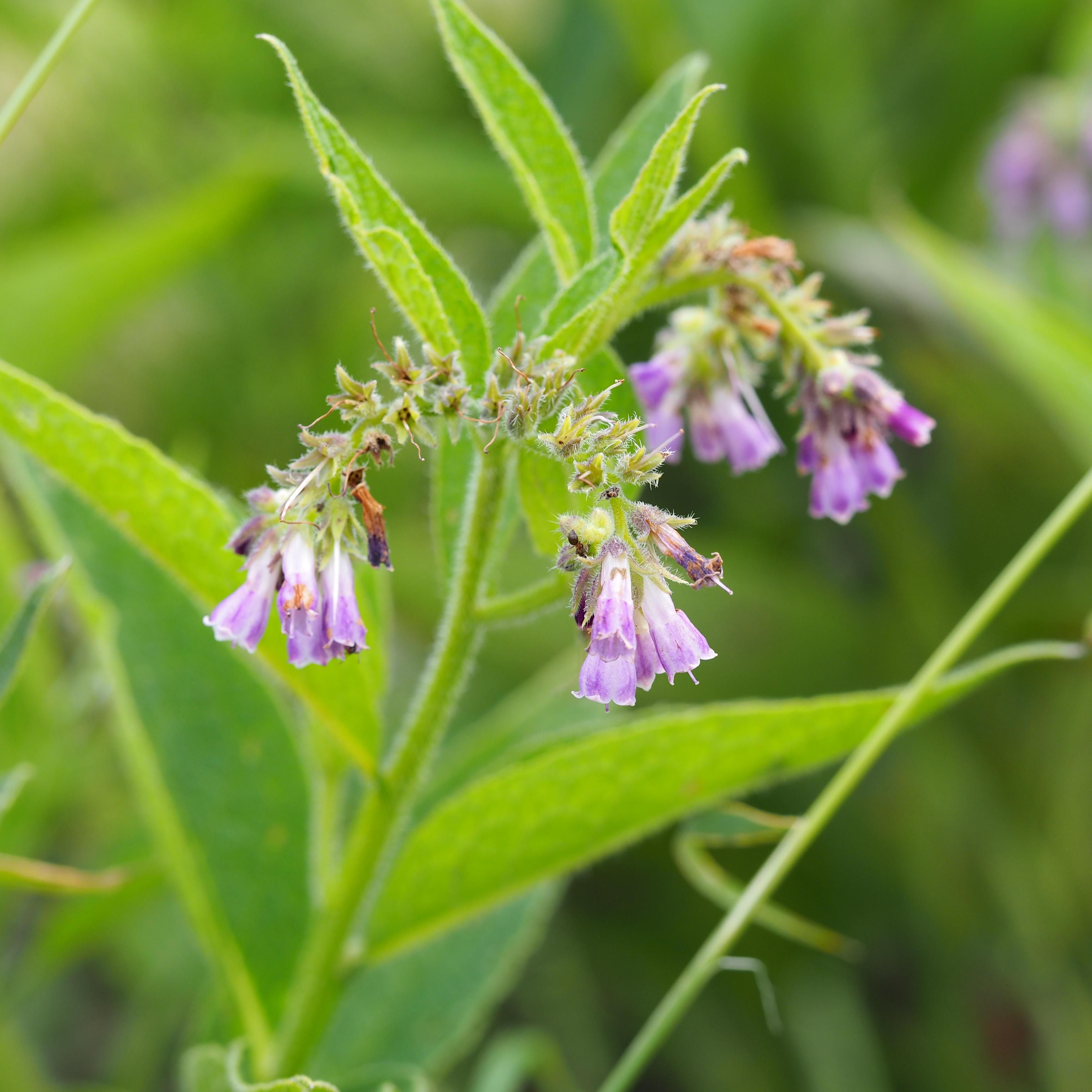
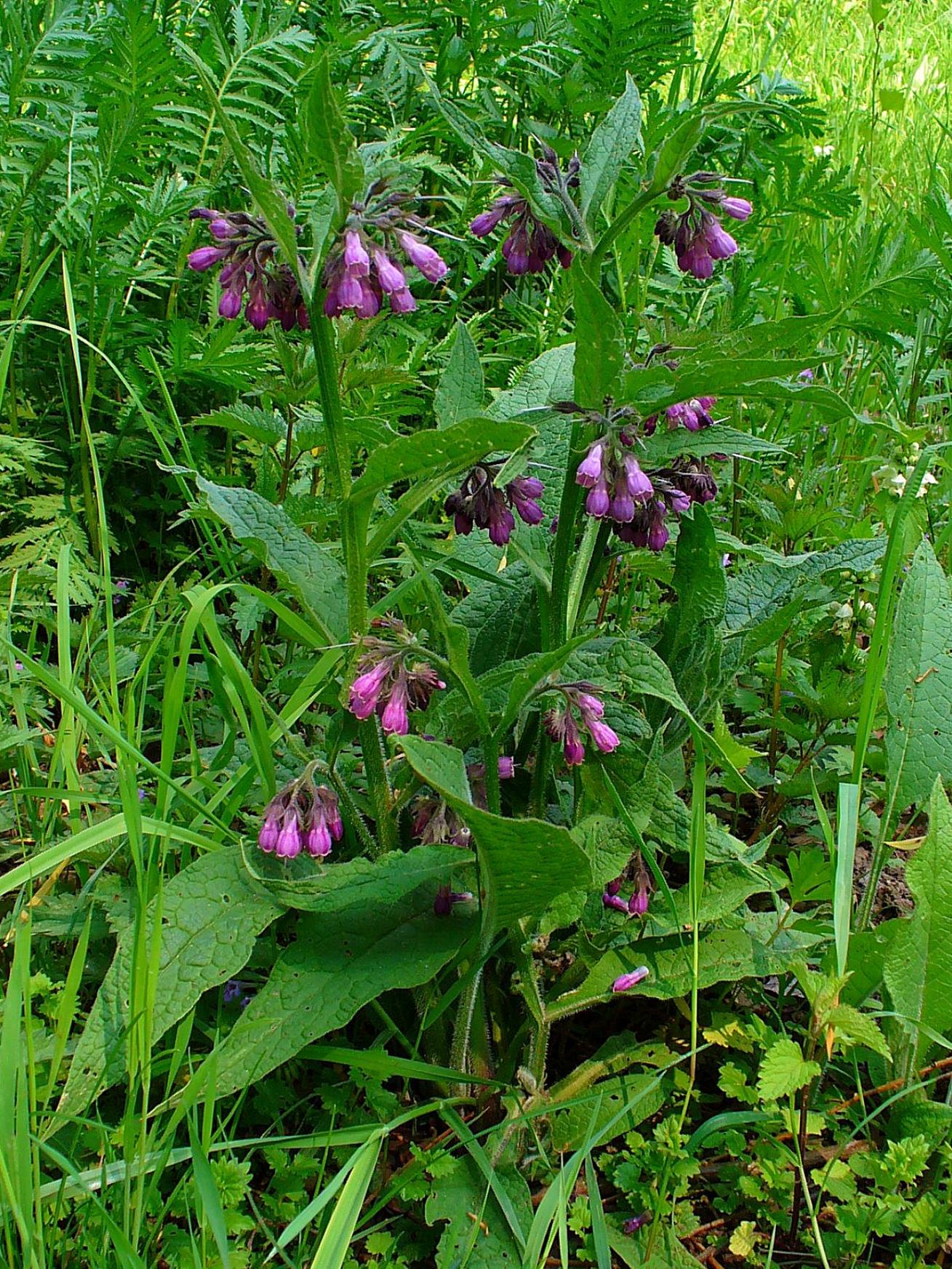
Comfrey is a perennial plant with a growth height of up to one metre.
The leaves form a basal rosette or are alternately arranged on the stem. They are narrow and lance-shaped, rough and covered in bristly hairs.
The stem is upright to upward, stiff and covered in bristly hairs. The leaves emerge from the stem like wings.
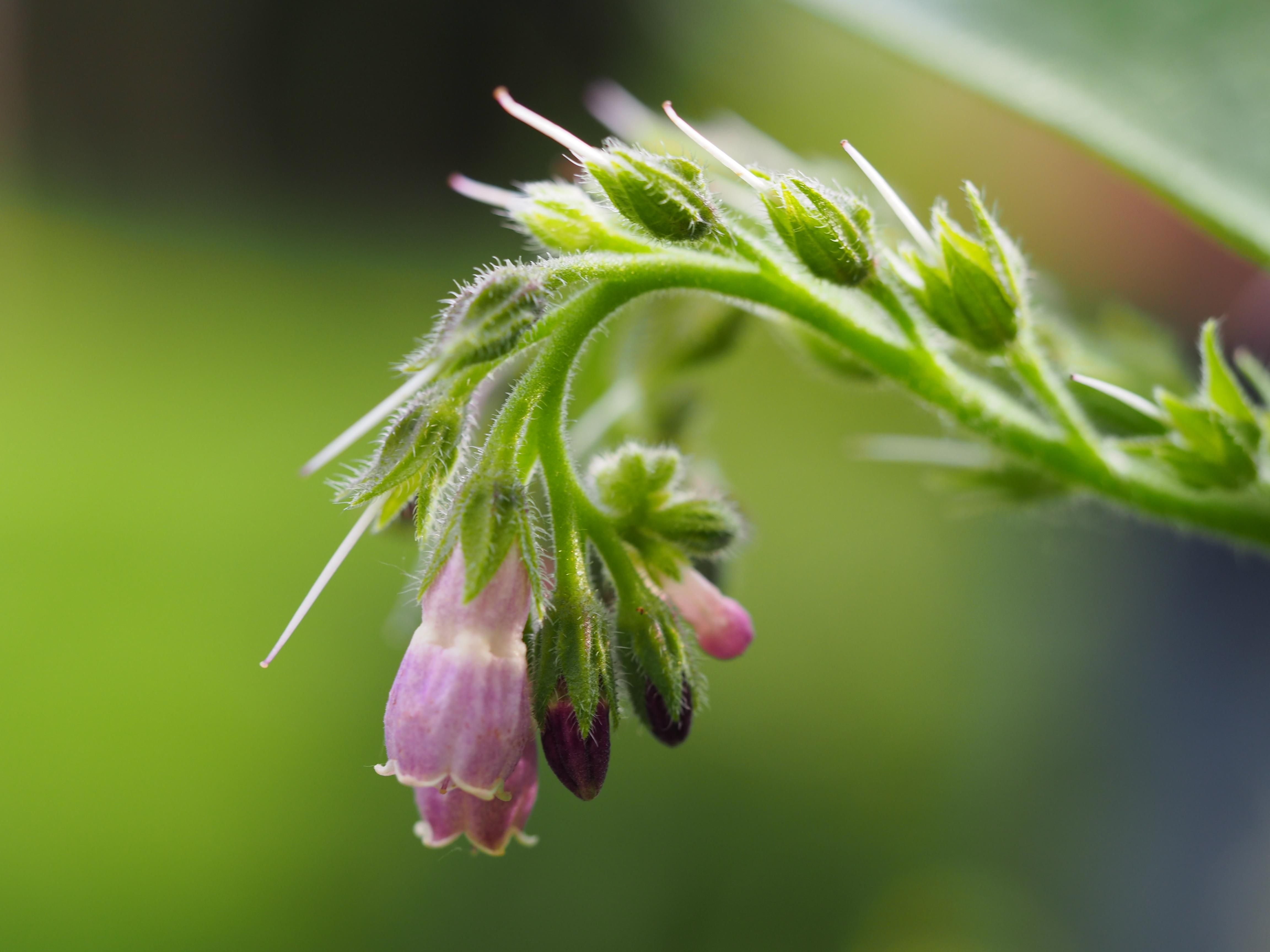
The flowers appear in distinctive curled clusters of flower heads. Their colour ranges from white and cream to purplish-pink and dark purple. The petals are largely fused into tubes, but the flower shows five distinct crown lobes.
The fruit consists of four mericarps (mericarpic nutlets). Mericarps are fruits that split into several sections after ripening.
Features
Common comfrey
Symphytum officinale
poisonous
curled flower heads
petals fused to a bell-shape
In the city
In an urban environment, comfrey can often be found at riverbanks and damp ditches. It prefers damp to wet sites rich in nutrients and alkalines. It is a nitrogen-indicator plant and mainly grows where the soil is oversupplied with nitrogen. The plant takes nitrogen out of the soil and thus has a regulatory effect.
Gardeners use the liquid from decomposed comfrey leaves (“comfrey tea”) as a soil improver because of its excellent qualities as an organic nitrogen fertiliser.
Fun Facts
It is self-sterile, there is no spontaneous self-pollination. It is pollinated by bees and butterflies.
It flowers from May to July.
It lives for several years and generally flowers and fruits annually (perennial plant).
The fruits spread via wind or water.
- Endangerment level Germany: not endangered
Comfrey is poisonous. However, it is used externally in the treatment of contusions and bone fractures. It has a positive effect on cell formation and promotes wound healing.
Sources
Habitus, Alice Kracht, CC BY-SA 4.0, https://offene-naturfuehrer.de/web/Datei:Symphytum_officinale_(3).JPG
.JPG)
Blütenstand, Alice Kracht, CC BY-SA 4.0, https://offene-naturfuehrer.de/web/Datei:Borag.JPG

Habitus, H. Zell, CC BY-SA 3.0, https://commons.wikimedia.org/wiki/File:Symphytum_officinale_001.JPG

Spohn, M., Golte-Bechtle, M. & Spohn, R. (2015) Was blüht denn da? Stuttgart: Franckh Kosmos Verlag.
Schauer, T., Caspari, C. & Caspari, S. (2015) Der illustrierte BLV-Pflanzenführer für unterwegs. 1150 Blumen, Gräser, Bäume und Sträucher, München: BLV.
Page „Echter Beinwell“. : Wikipedia, The Free Encyclopedia. Date of last revision: 18.12.2016, 10:35 UTC. URL: https://de.wikipedia.org/w/index.php?title=Echter_Beinwell&oldid=160763355 (Accessed: 19.12.2016).
Bundesamt für Naturschutz (n.d.) Artensteckbriefe, URL: http://floraweb.de/pflanzenarten/artenhome.xsql?suchnr=5825& (Accessed: 19.12.2016).