
Short Description
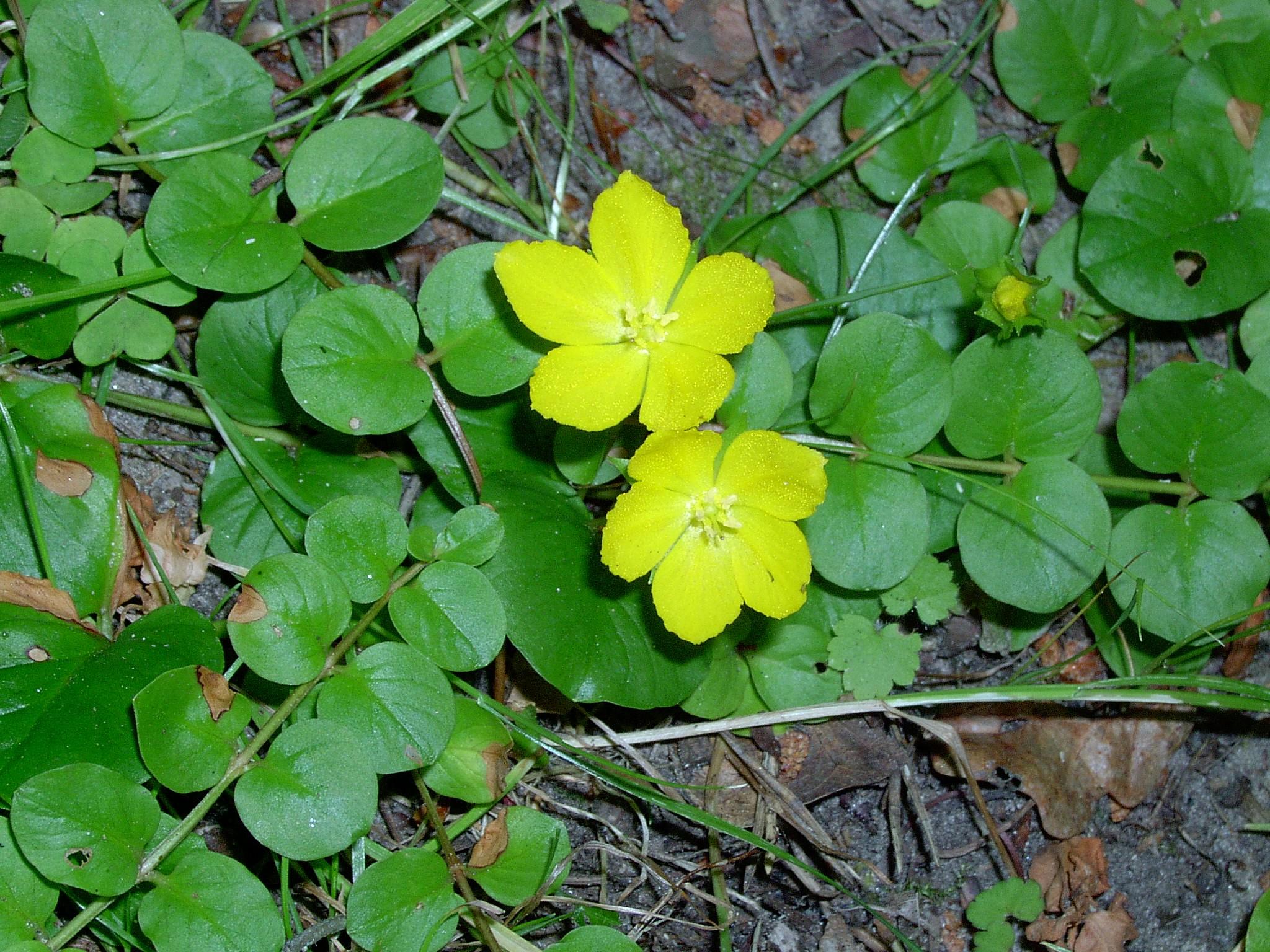
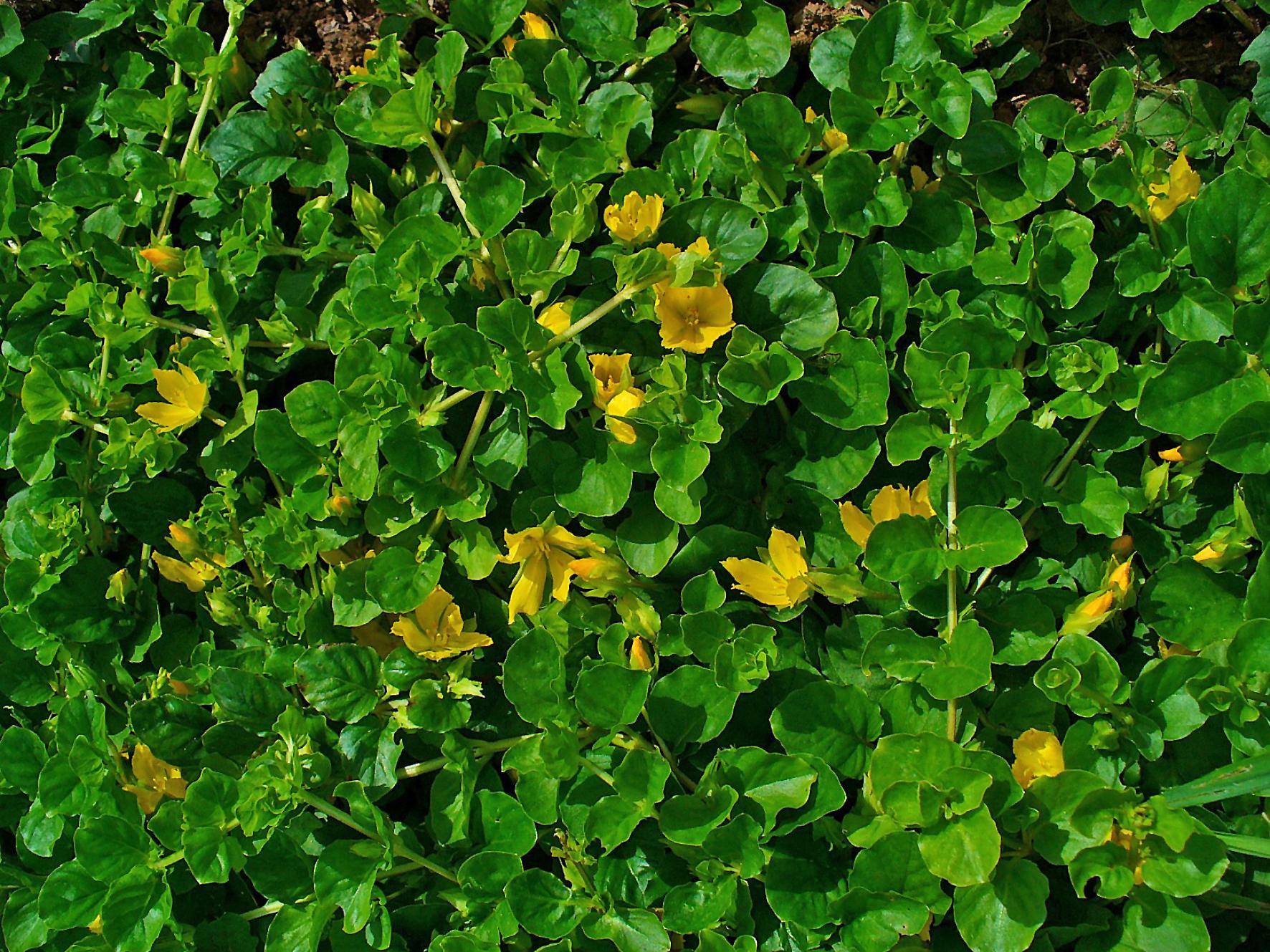
Creeping Jenny is evergreen and very small. On suitable soils it forms a large groundcover.
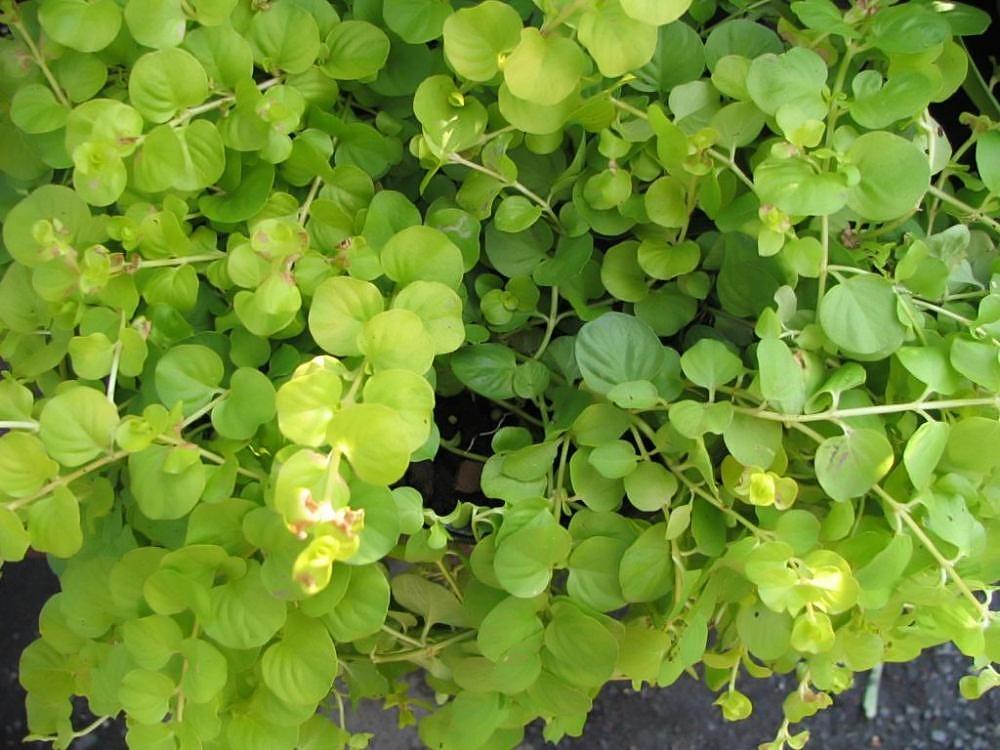
The leaves are round to oval and dotted with red.
The stem is prostrate and creeping.
The flowers sit singly or in pairs on long stems. They usually have five, golden-yellow petals that are often dotted with red.
The plant forms capsule fruits.
Features
Creeping Jenny
Lysimachia nummularia
caespitose growth
red dotted flowers and leaves
In the city
The creeping Jenny is very widespread. It grows on nutrient-rich, moist sites. It is found in meadows and pastures, in gardens, ditches and floodplain forests as well as on banks and roadsides.
Fun Facts
The Latin nummularia means "like a coin", referring to the shape and colour of the flowers.
It is offered as an ornamental plant and was thus distributed worldwide.
It can also be cultivated in unheated aquariums. Its rapid growth makes it ideal for removing nutrients from the water.
The flowering period is from May to July.
It lives for several years and generally flowers and fruits annually (perennial plant).
- Endangerment level Germany: not endangered
In the 16th century it was used as a wound healing agent.
Sources
Habitus, Kenraiz, CC BY-SA 3.0, https://commons.wikimedia.org/wiki/File:Lysimachia_nummularia_kz.jpg

Habitus, H. Zell, CC BY-SA 3.0, https://commons.wikimedia.org/wiki/File:Lysimachia_nummularia_001.JPG

Blätter, David J. Stang, CC BY-SA 4.0, https://commons.wikimedia.org/wiki/File:Lysimachia_nummularia_Aurea_2zz.jpg

Spohn, M., Golte-Bechtle, M. & Spohn, R. (2015) Was blüht denn da? Stuttgart: Franckh Kosmos Verlag.
Bundesamt für Naturschutz (n.d.) Artensteckbriefe, URL: http://floraweb.de/pflanzenarten/artenhome.xsql?suchnr=3567& (Accessed: 13.08.2018).
Page „Pfennigkraut“. : Wikipedia, The Free Encyclopedia. Date of last revision: 17.06.2018, 03:23 UTC. URL: https://de.wikipedia.org/w/index.php?title=Pfennigkraut&oldid=178382323 (Accessed: 13.08.2018).
Seitz, B., Ristow, M., Meißner, J., Machatzi, B. & Sukopp, H. (2018) Rote Liste und Gesamtartenliste der etablierten Farn- und Blütenpflanzen von Berlin. : Der Landesbeauftragte für Naturschutz und Landschaftspflege / Senatsverwaltung für Umwelt, Klima und Verkehr (eds.) Rote Listen der gefährdeten Pflanzen, Pilze und Tiere von Berlin, URL: https://www.berlin.de/sen/uvk/natur-und-gruen/naturschutz/artenschutz/artenlisten-rote-listen/farn-und-bluetenpflanzen/ (Accessed: 26.03.2021).