
Short Description
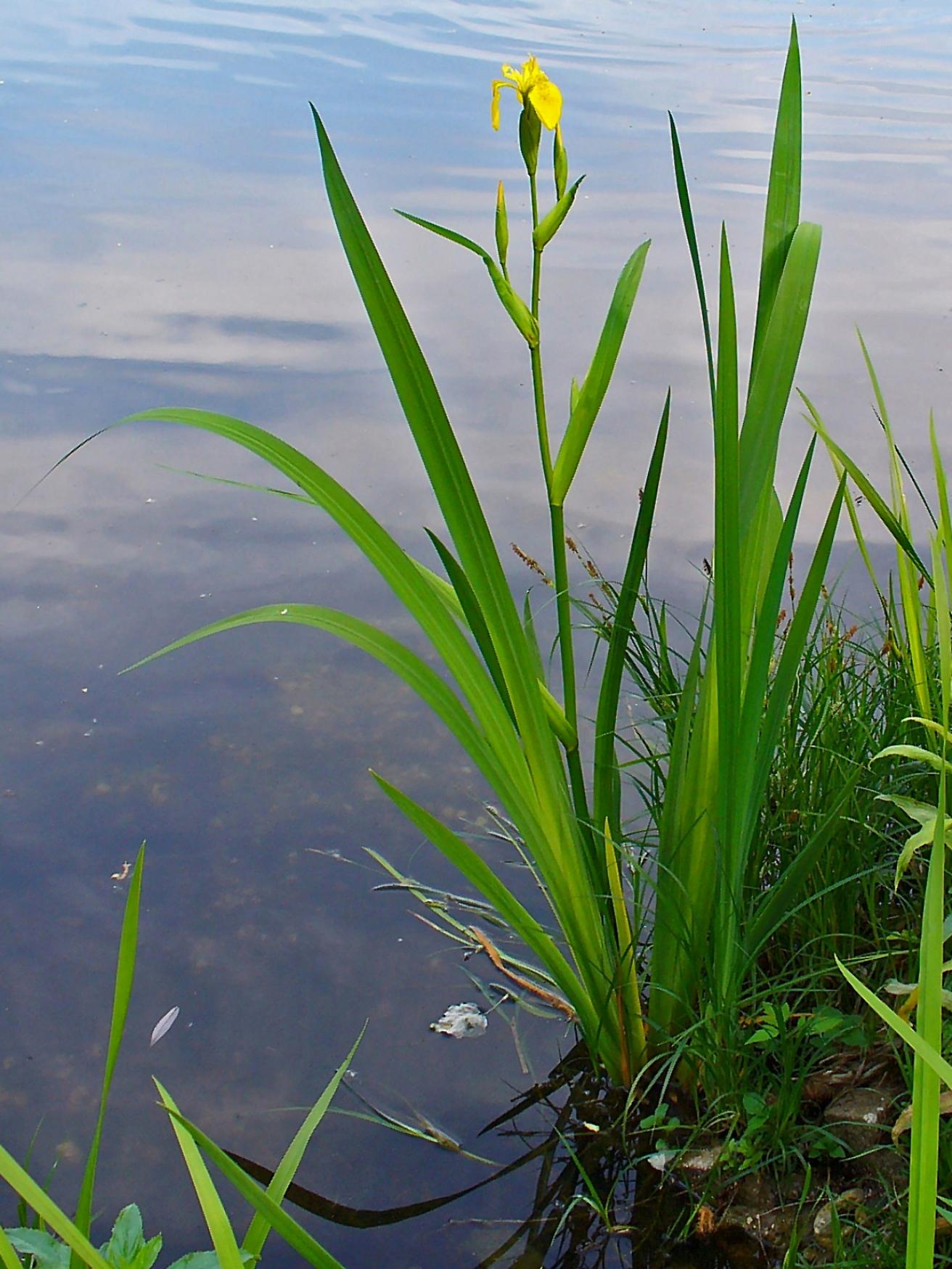
The yellow iris can grow up to 2 m high.
The leaves are grey-green and sword-shaped-lineal. They can grow to almost a metre long.
The stem grows erect and unbranched.
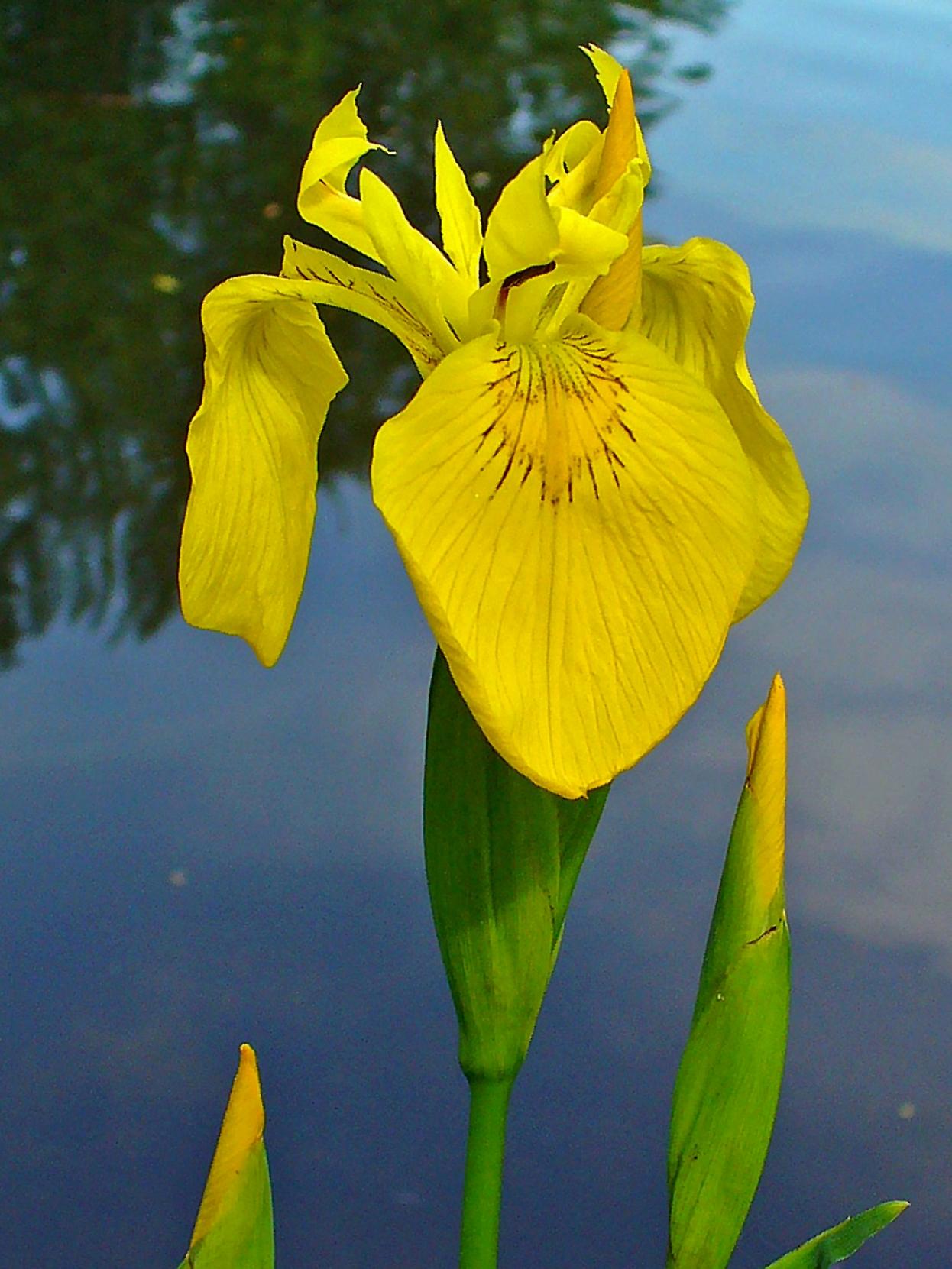
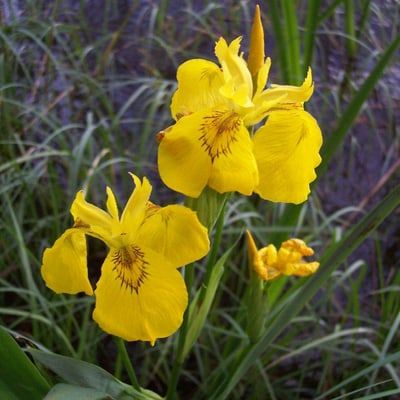
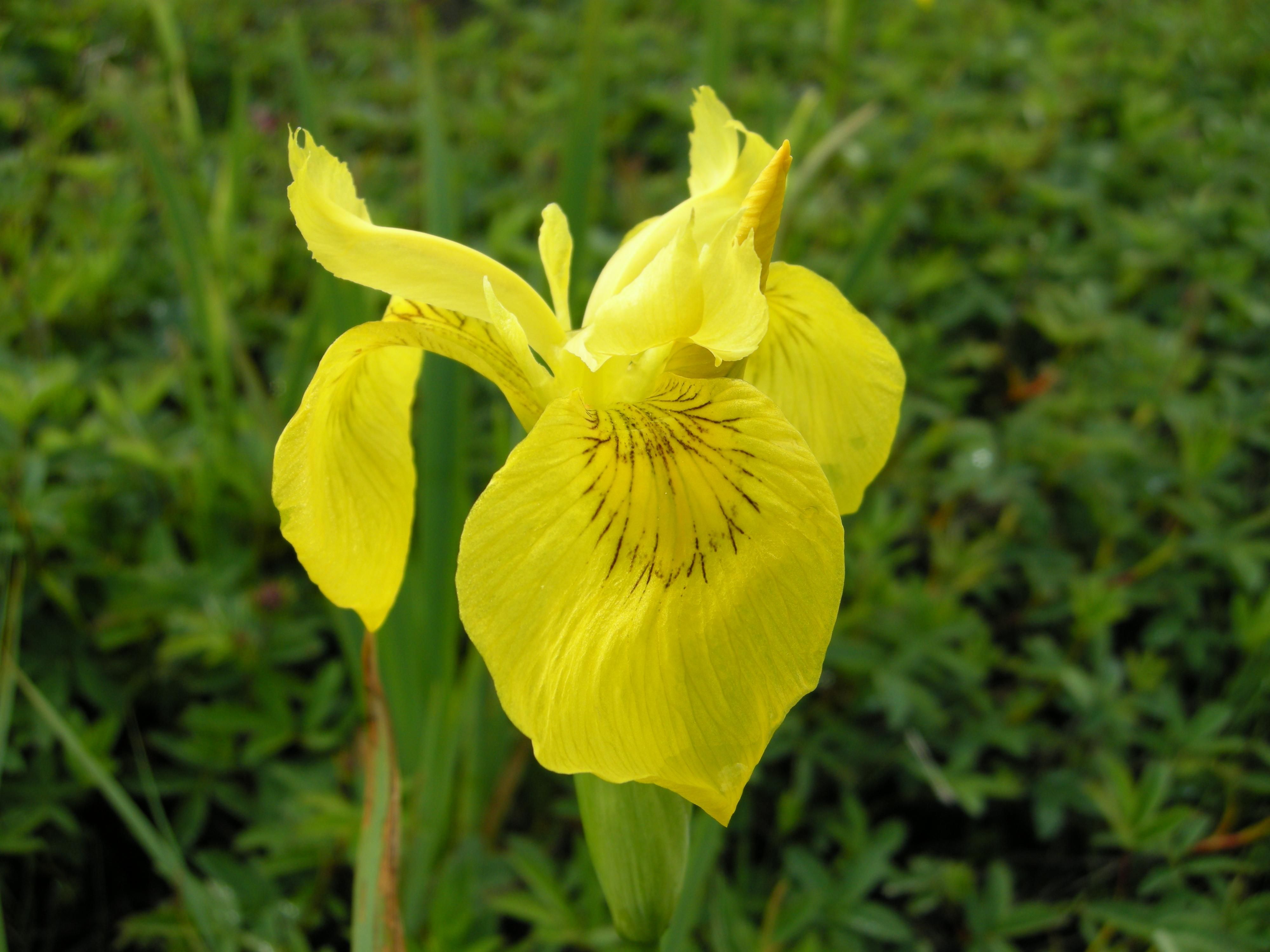
The yellow flowers consist of three dark-veined pendulous petals and three upright petals.
The plant forms a cylindrical and bluntly triangular capsule fruit.
Features
Yellow iris
Iris pseudacorus
poisonous
long sword-shaped leaves
In the city
It is found on or in swamps, banks, ditches and oxbow lakes. It prefers sunny and wet to moist clay soils. It grows best directly in the water.
Fun Facts
It flowers from the end of May until June.
Although it is not considered endangered in Germany, it is specially protected.
It occurs in Germany in almost all regions and is only absent in higher mountainous areas.
It is used as an ornamental plant for water banks.
It is a perennial plant. This means that a plant lives for several years, but flowers only once and dies after the seeds have ripened.
- Endangerment level Germany: not endangered
All parts of the plant are poisonous.
Sources
Blüte, H. Zell, CC BY-SA 3.0, https://commons.wikimedia.org/wiki/File:Iris_pseudacorus_0002.JPG

Blüte, Arnstein Rønning, CC BY-SA 4.0, https://commons.wikimedia.org/wiki/File:Iris_pseudacorus_1.JPG

Blätter, H. Zell, CC BY-SA 3.0, https://commons.wikimedia.org/wiki/File:Iris_pseudacorus_0001.JPG

Schauer, T., Caspari, C. & Caspari, S. (2015) Der illustrierte BLV-Pflanzenführer für unterwegs. 1150 Blumen, Gräser, Bäume und Sträucher, München: BLV.
Page „Sumpf-Schwertlilie“. : Wikipedia, The Free Encyclopedia. Date of last revision: 04.09.2017, 08:19 UTC. URL: https://de.wikipedia.org/w/index.php?title=Sumpf-Schwertlilie&oldid=168759280 (Accessed: 07.08.2018).
Bundesamt für Naturschutz (n.d.) Artensteckbriefe, URL: http://floraweb.de/pflanzenarten/artenhome.xsql?suchnr=3096& (Accessed: 07.08.2018).
Seitz, B., Ristow, M., Meißner, J., Machatzi, B. & Sukopp, H. (2018) Rote Liste und Gesamtartenliste der etablierten Farn- und Blütenpflanzen von Berlin. : Der Landesbeauftragte für Naturschutz und Landschaftspflege / Senatsverwaltung für Umwelt, Klima und Verkehr (eds.) Rote Listen der gefährdeten Pflanzen, Pilze und Tiere von Berlin, URL: https://www.berlin.de/sen/uvk/natur-und-gruen/naturschutz/artenschutz/artenlisten-rote-listen/farn-und-bluetenpflanzen/ (Accessed: 26.03.2021).