
Short Description
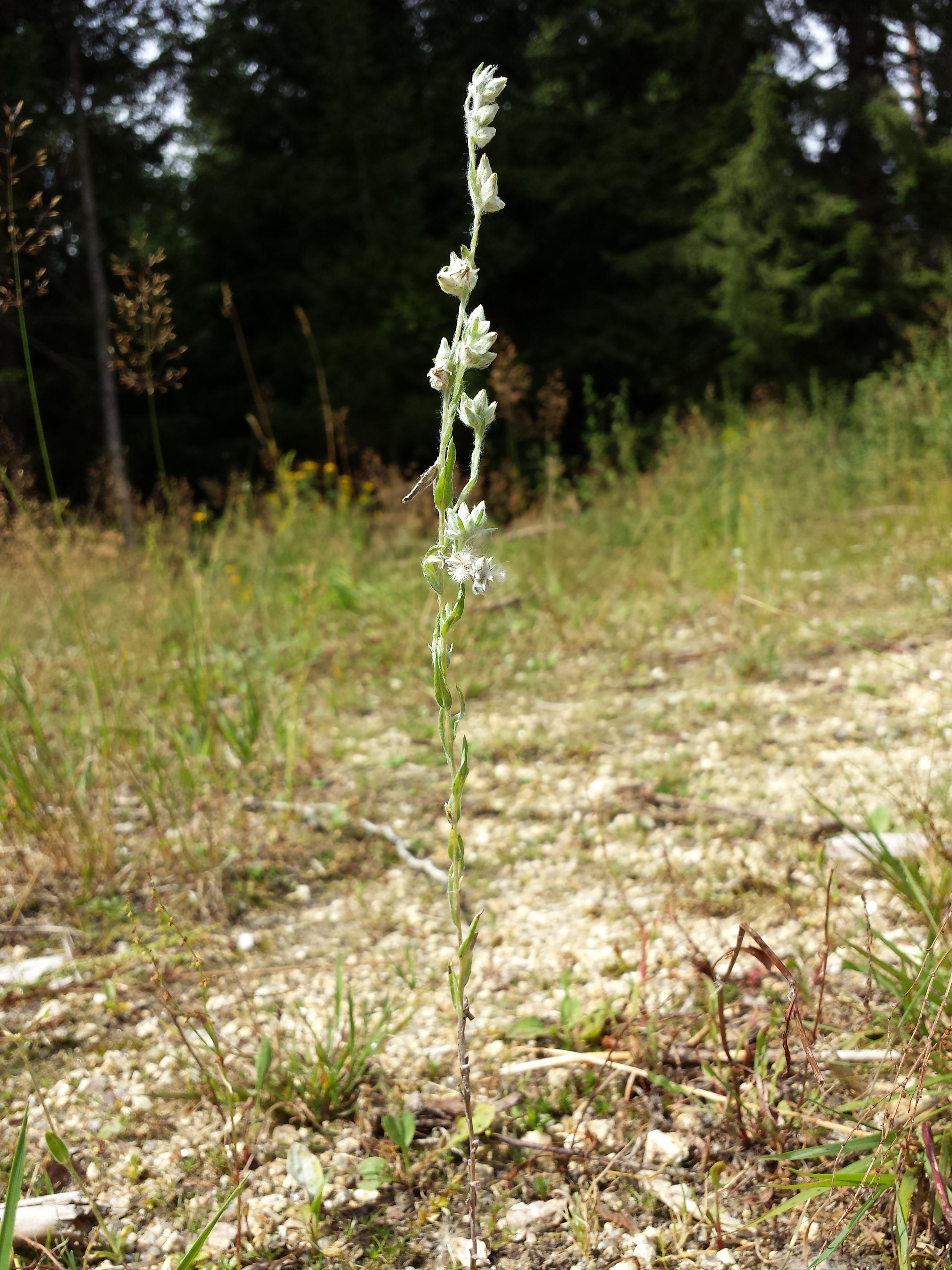
The field fluffweed grows up to 35 centimeters tall.
The leaves are narrow to lanceolate and felt-like hairy. They sit singly and alternately on the stem (alternate).
The stem grows erect and is branched from the middle on. It is also felt-like hairy.
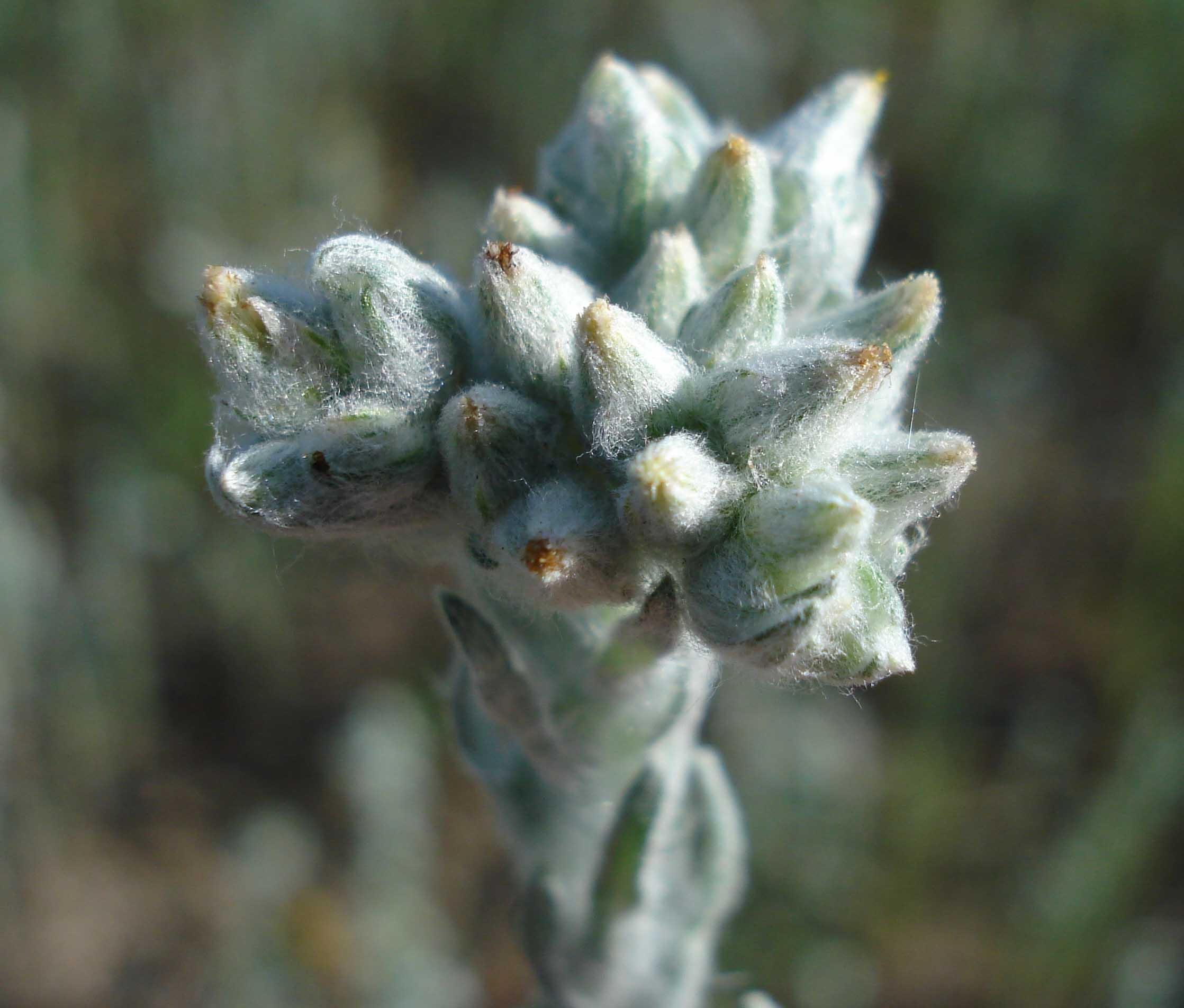
The inconspicuous flowers are small, yellow and tubular. They are grouped in dense, felty-haired flower heads. The capitula are in dense clusters at the end of the branches.
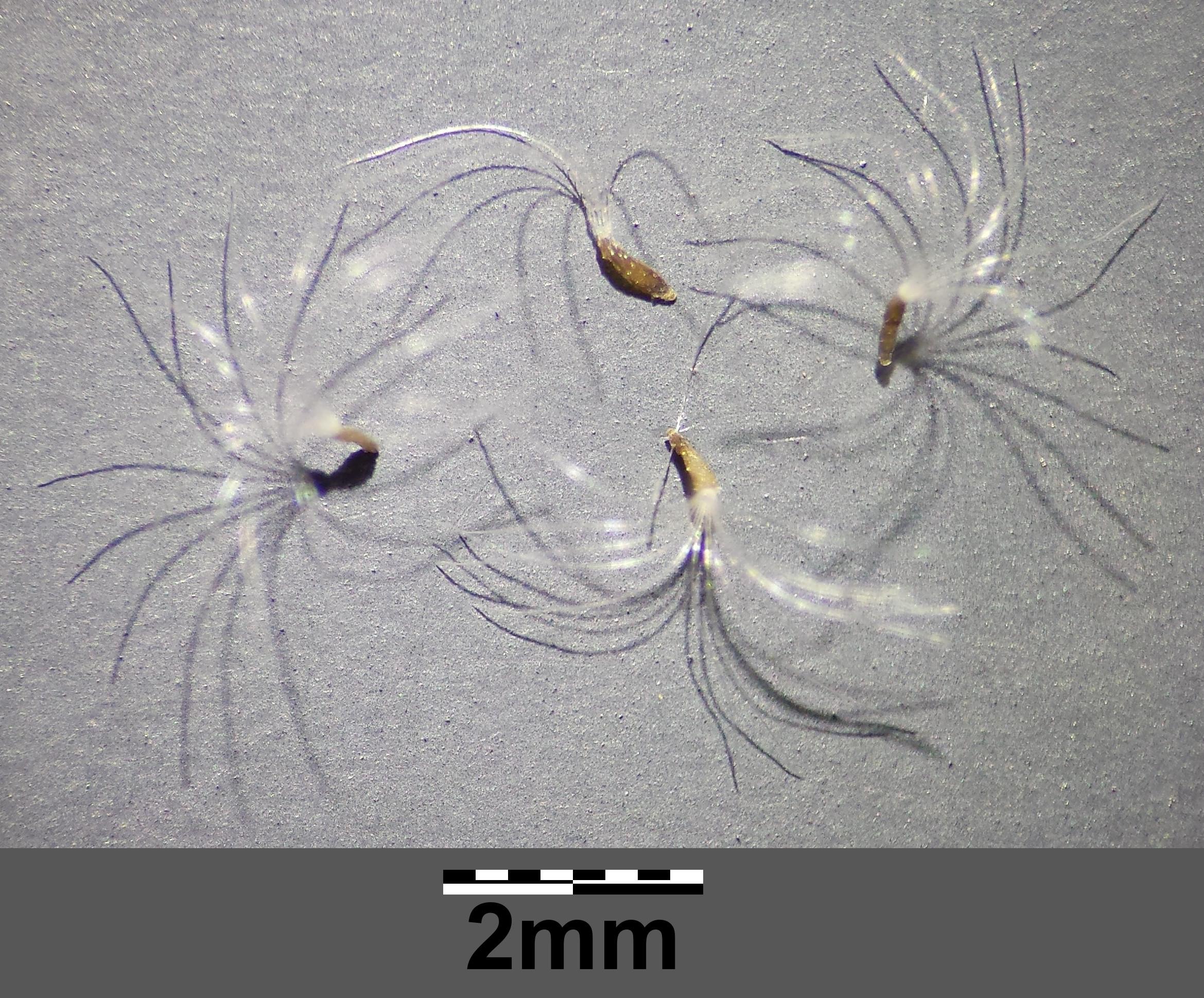
It forms small, nut-like fruits (achenes). They have a ring of white, feathery hair (pappus).
Features
Field fluffweed
Filago arvensis
strongly felty hairy
Flower heads in dense clusters
In the city
The field fluffweed thrives best on lime-poor, nutrient-rich, stony or sandy soils. In the city it can be found along paths, on fallow land, fields and on sandy dry grasslands.
Fun Facts
The flowering period is from July to September.
It is usually an annual plant, meaning the it flowers for only one summer and dies after the seeds mature.
- Endangerment level Germany: not endangered
The field fluffweed is widespread in almost all of Europe. It is partly very rare.
Sources
Habitus, Stefan.lefnaer, CC BY-SA 3.0, https://commons.wikimedia.org/wiki/File:Filago_arvensis_sl6.jpg

Blütenstand, Fornax, CC BY-SA 3.0, https://commons.wikimedia.org/wiki/File:Filago_arvensis2_W.jpg

Früchte, Stefan.lefnaer, CC BY-SA 4.0, https://commons.wikimedia.org/wiki/File:Filago_arvensis_sl18.jpg

Schauer, T., Caspari, C. & Caspari, S. (2015) Der illustrierte BLV-Pflanzenführer für unterwegs. 1150 Blumen, Gräser, Bäume und Sträucher, München: BLV.
Page „Acker-Filzkraut“. : Wikipedia, The Free Encyclopedia. Date of last revision: 18.12.2016, 15:59 UTC. URL: https://de.wikipedia.org/w/index.php?title=Acker-Filzkraut&oldid=160775604 (Accessed: 31.07.2018).