
Short Description
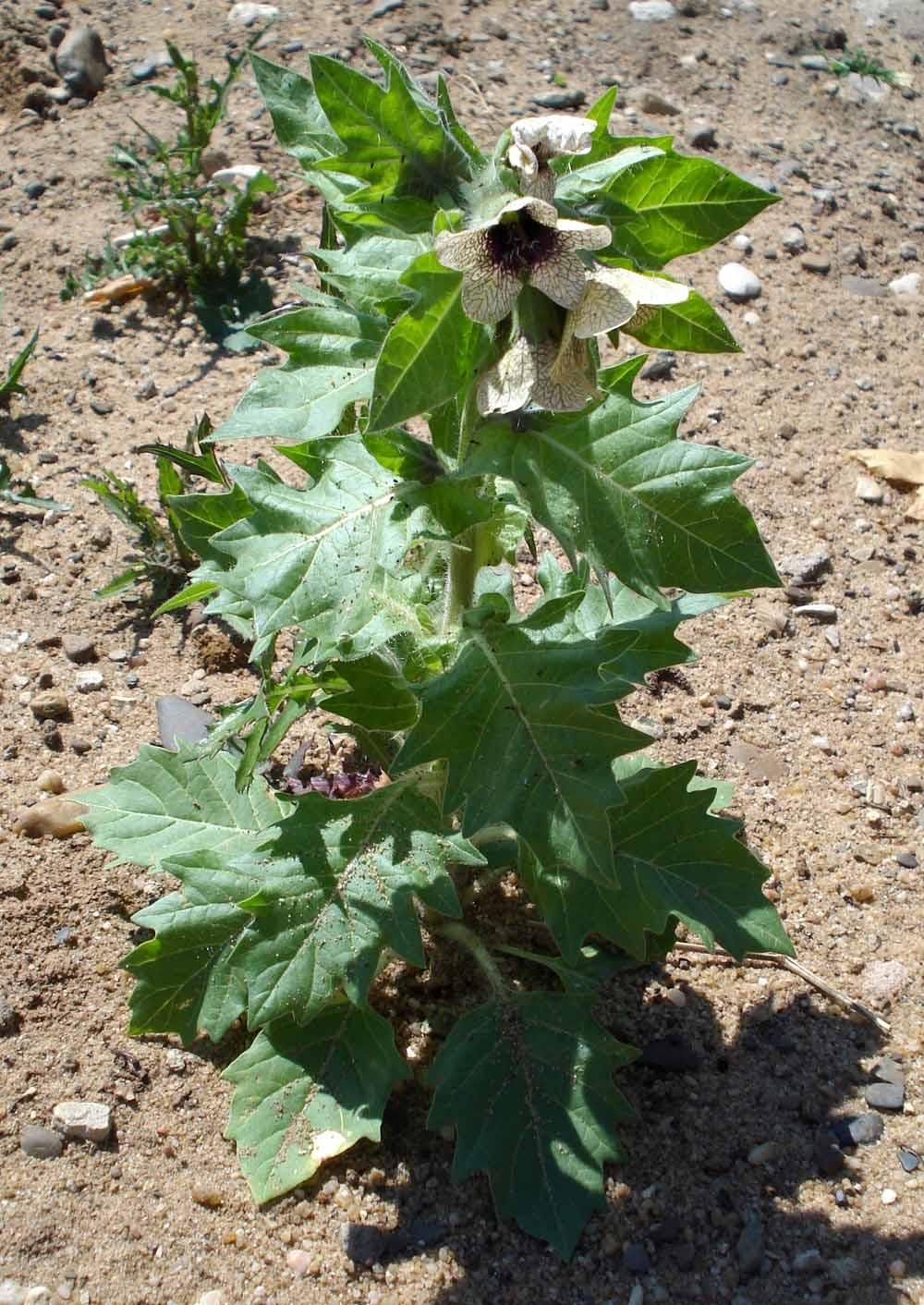
Henbane can grow to a height of 70 cm.
The leaves are elongated, coarsely indented and covered in woolly hair. They form a rosette close to the ground, while leaves on the stem grow alternately.
The stem is upright and covered in sticky hair.
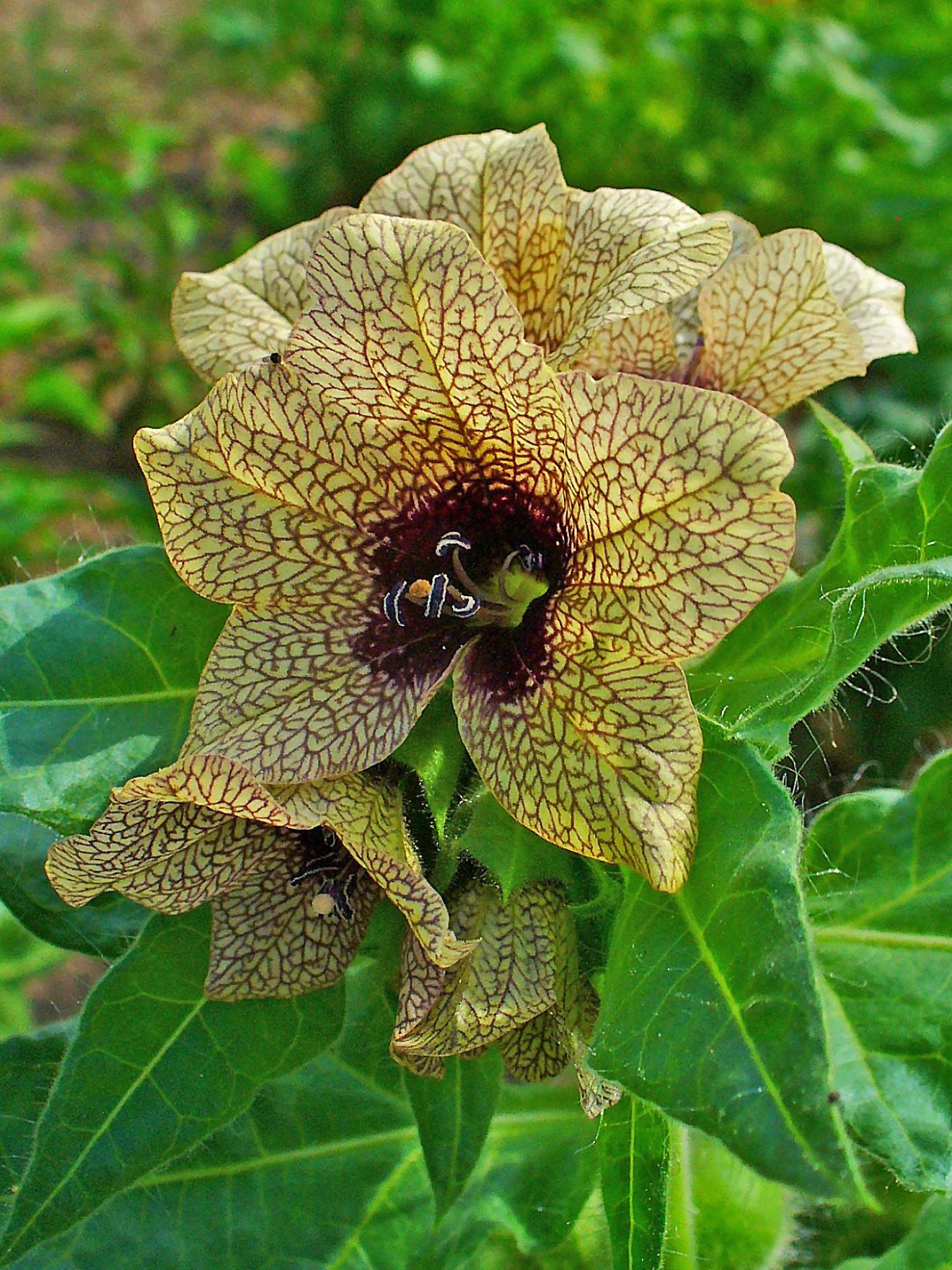
The large flowers are euphonium-shaped. They have five partially fused petals. The flowers are yellow-brown with purple veins.
The fruit is a roundish lidded capsule.
Features
Henbane
Hyoscyamus niger
highly poisonous
sticky, hairy plant
yellow-brown flowers with purple veins
In the city
In an urban environment, henbane is rather rare, mostly growing in verges, walls or rubble. It prefers moderately dry, sunny and nutrient-rich sites with sandy or loamy soil.
Fun Facts
It was formerly used in small doses as an analgesic, anaesthetic and soporific agent.
The effect of henbane as an intoxicant and an hallucinogen has long been known. However, as the composition of intoxicating and toxic substances in the plant can vary widely depending on its location, severe poisoning can develop quickly that can result in paralysis or even death.
The king in Shakespeare’s "Hamlet" is said to have been poisoned with henbane.
The entire plant emits an unpleasant smell.
It flowers from June to October.
- Endangerment level Germany: endangered
Henbane is very poisonous.
Sources
Habitus, Fornax, CC BY-SA 3.0, https://commons.wikimedia.org/wiki/File:Hyoscyamus_niger2_W.jpg

Blüten, H. Zell, CC BY-SA 3.0, https://commons.wikimedia.org/wiki/File:Hyoscyamus_niger_0003.JPG

Spohn, M., Golte-Bechtle, M. & Spohn, R. (2015) Was blüht denn da? Stuttgart: Franckh Kosmos Verlag.
Schauer, T., Caspari, C. & Caspari, S. (2015) Der illustrierte BLV-Pflanzenführer für unterwegs. 1150 Blumen, Gräser, Bäume und Sträucher, München: BLV.
Page „Schwarzes Bilsenkraut“. : Wikipedia, The Free Encyclopedia. Date of last revision: 03.11.2016, 17:24 UTC. URL: https://de.wikipedia.org/w/index.php?title=Schwarzes_Bilsenkraut&oldid=159337848 (Accessed: 06.12.2016).