
Short Description
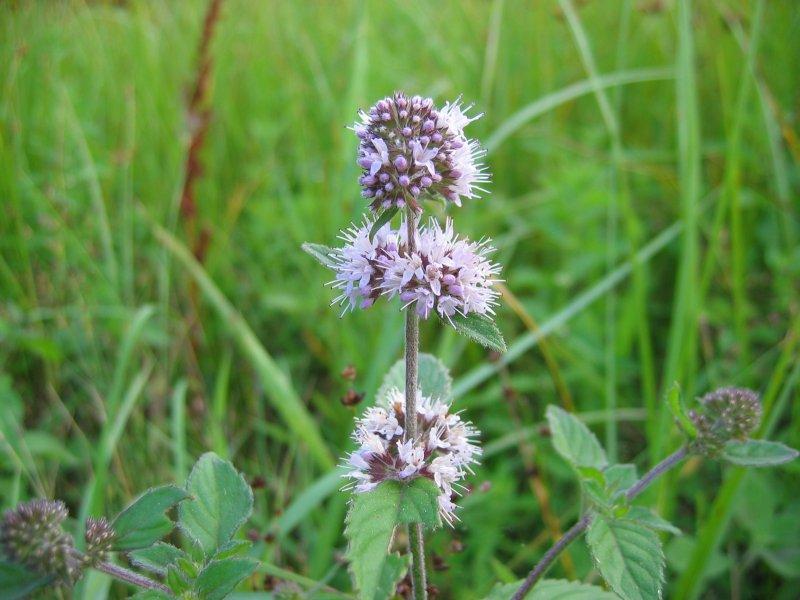
Water mint can grow to a height of one metre.
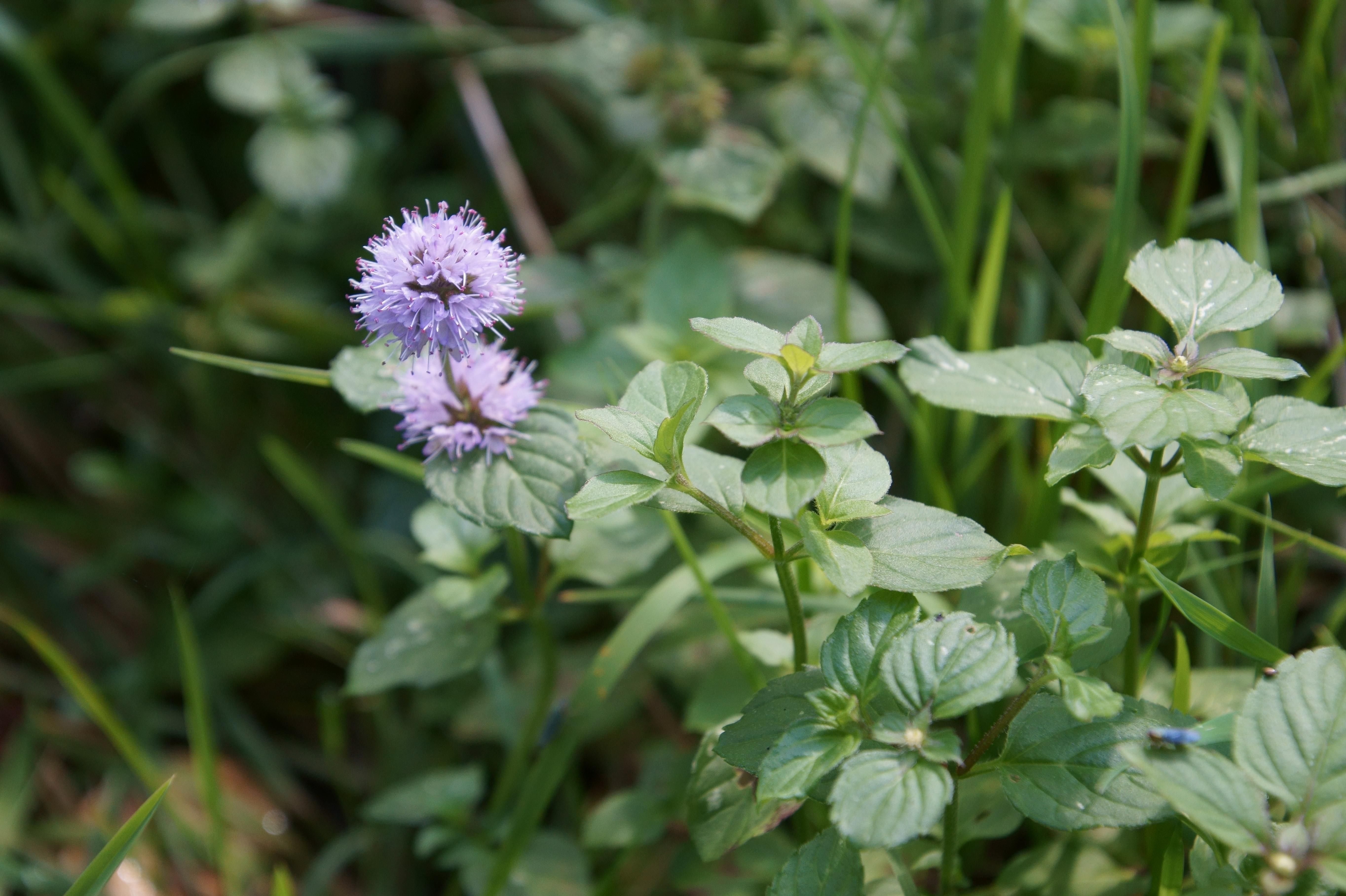
The leaves are oval and irregularly serrated and softly haired on top. The leaves grow in opposite pairs. When rubbed, they smell aromatically of mint.
The stem is erect, square and usually branched. It is hollow inside and often tinged with red. It forms numerous runners.
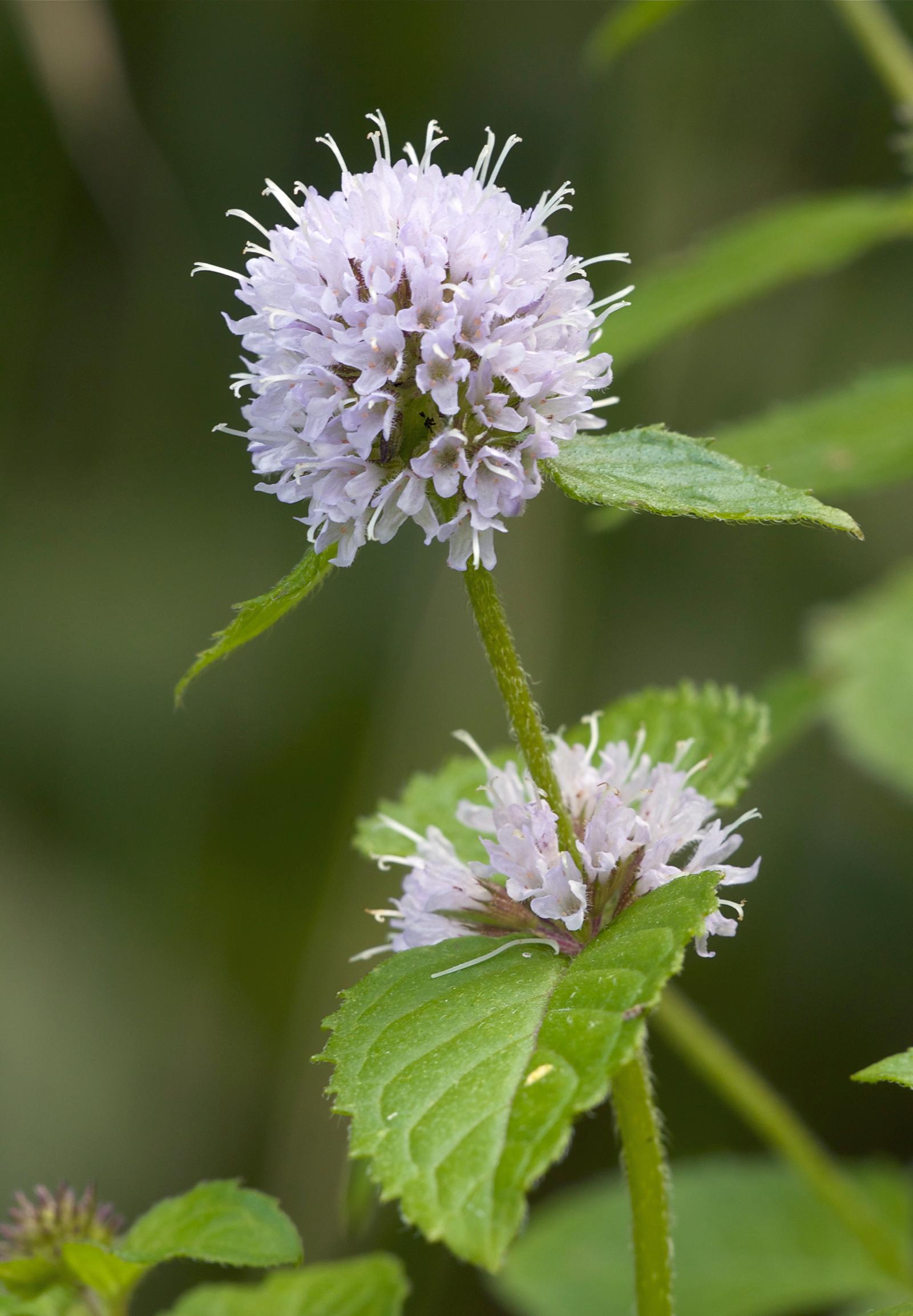
The flowers are arranged in partial spherical flower heads. They are pink to light-purple with five petals. Individual petals can be fused to each other to varying extents.
The fruits are schizocarp that split into four mericarps.
Features
Water mint
Mentha aquatica
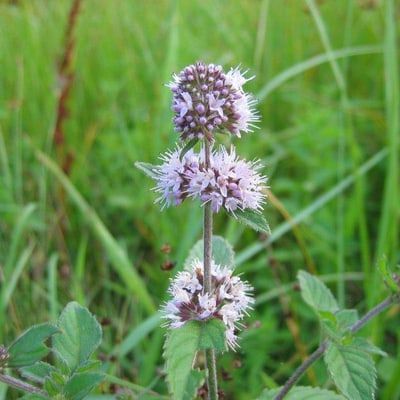
many small pink to purple flowers
aromatic minty scent
In the city
In an urban environment, water mint frequently grows on shore-lines and along ditches as well as in wet meadows. It prefers wet and sometimes inundated clay soil moderately rich in nutrients.
The plant is often collected and used in the same way as its close relative peppermint.
Fun Facts
The essential oils have a calming effect.
Peppermint is a hybrid of water mint and spearmint.
It flowers from June to October.
It lives for several years and generally flowers and fruits annually (perennial plant).
- Endangerment level Germany: not endangered
The component substances of mint plants have a positive effect on gastrointestinal disorders.
Sources
Habitus, Kristian Peters -- Fabelfroh, CC BY-SA 3.0, https://commons.wikimedia.org/wiki/File:Mentha_aquatica_bluete.jpeg

Blütenstand, Jörg Hempel, CC BY-SA 3.0 de, https://commons.wikimedia.org/wiki/File:Mentha_aquatica_LC0169.jpg

Habitus, Joël van der Loo, CC BY-SA 4.0, https://commons.wikimedia.org/wiki/File:Mentha_aquatica_Meinerswijk.jpg

Spohn, M., Golte-Bechtle, M. & Spohn, R. (2015) Was blüht denn da? Stuttgart: Franckh Kosmos Verlag.
Fleischhauer, S. G., Guthmann, J. & Spiegelberger, R. (2007) Essbare Wildpflanzen. 200 Arten bestimmen und verwenden, Baden und München: AT Verlag.
Lippert, W. & Podlech, D. (1993) GU Naturführer. Blumen: die wichtigen Blütenpflanzen Mitteleuropas erkennen und bestimmen, München: Gräfe und Unzer Verlag.
Needon, C. & Petermann, J. (1991) Urania-Naturführer Pflanzen, Leipzig, Jena, Berlin: Urania-Verlag.
Schauer, T., Caspari, C. & Caspari, S. (2015) Der illustrierte BLV-Pflanzenführer für unterwegs. 1150 Blumen, Gräser, Bäume und Sträucher, München: BLV.
Scherf, G. (2006) Wildpflanzen neu entdecken, München: BLV.
Page „Wasserminze“. : Wikipedia, The Free Encyclopedia. Date of last revision: 11.09.2016, 10:25 UTC. URL: https://de.wikipedia.org/w/index.php?title=Wasserminze&oldid=157834788 (Accessed: 15.12.2016).