
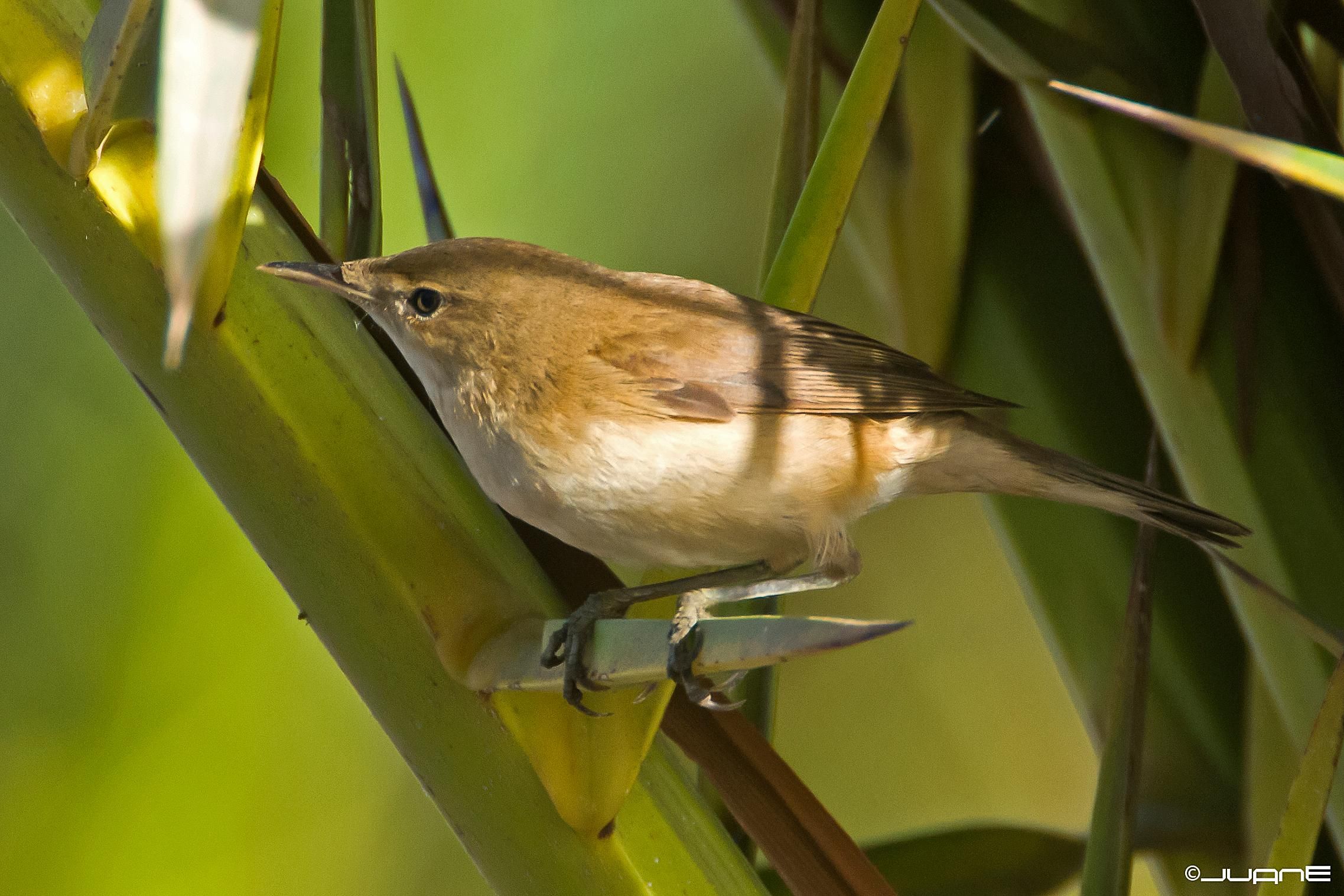
Short Description
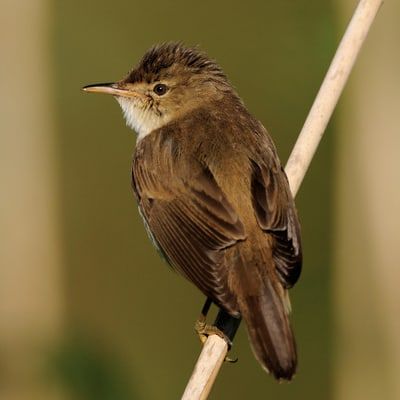
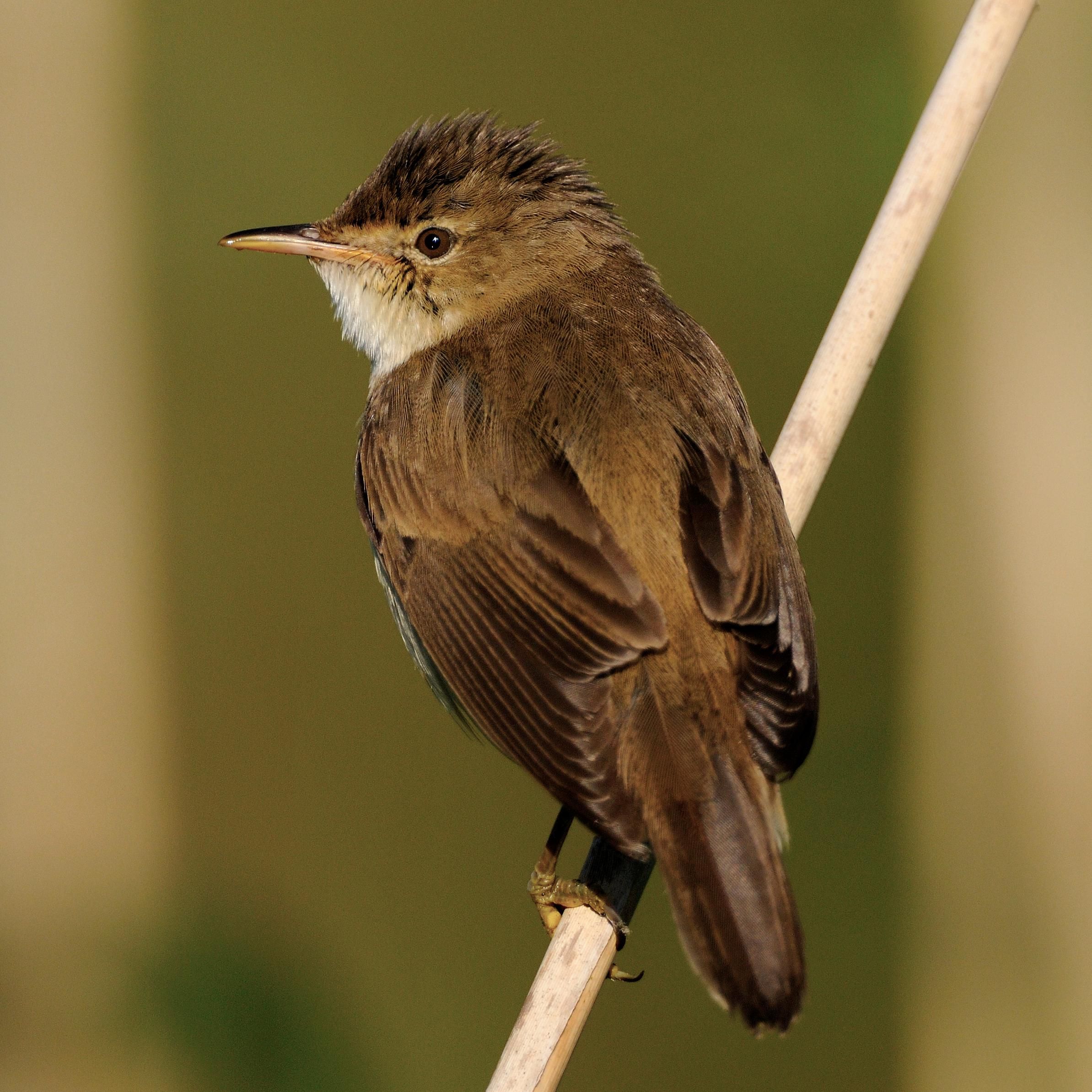
The reed warbler is an inconspicuous brown bird with yellowish-white underparts. It has a whitish throat and grey-brown legs; its bill is comparatively long and pointed. A characteristic feature is its climbing and clinging onto reed stems.
Features
Eurasian reed warbler
Acrocephalus scirpaceus
climbs on reed stems
Gesang
Frommolt, CC BY-SA 3.0

In the city
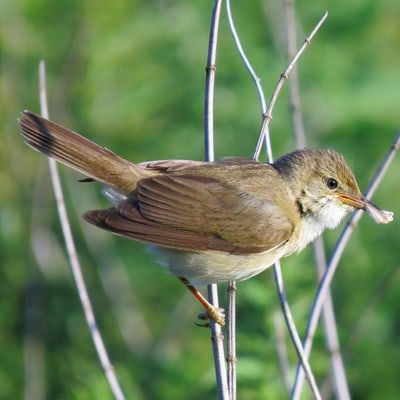
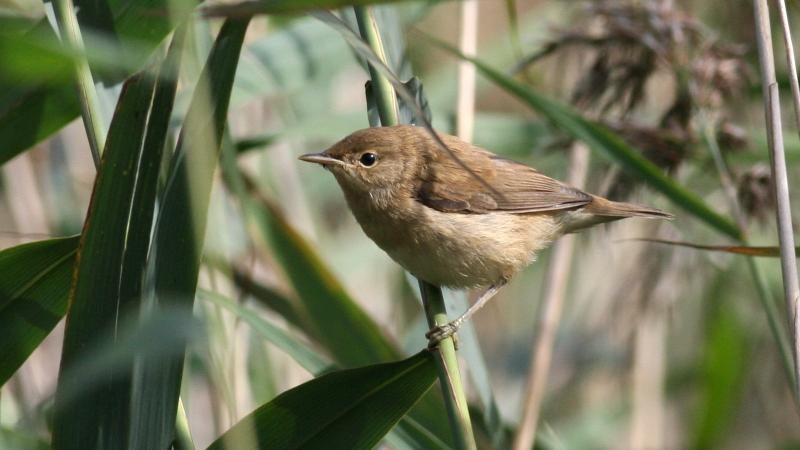
Reed warblers depend on shoreline reed beds as their habitat and thus are more likely seen at lakes, ponds and moorlands at the city outskirts.
The reed warbler’s habitat of reed beds and shore vegetation is predominantly threatened by land drainage, river bank stabilisation and eutrophication of waters.
Fun Facts
Reed warbler are the preferred host birds for raising cuckoos.
Reed warblers are migratory birds. In early October, they fly to southwestern Europe and eastern Africa. They return to Germany in May.
- Endangerment level Germany: not endangered
Sources
Habitus , Juan Emilio, CC BY-2.0, https://commons.wikimedia.org/wiki/File:Carricero_com%C3%BAn_(Acrocephalus_scirpaceus)_(8080734649).jpg
_(8080734649).jpg)
Habitus , Ken Billington, CC BY-SA 3.0, https://commons.wikimedia.org/wiki/File:Reed_Warbler_(Acrocephalus_scirpaceus)_(3).jpg
_(3).jpg)
Habitus , Jürgen Freisinger, CC BY 3.0, https://commons.wikimedia.org/wiki/File:PleidelsheimerWiesentalTeichrohrsaenger.jpg

Bejcek, V. (1988) Zugvögel, Hanau/Main: Verlag Werner Dausien.
Page „Teichrohrsänger“. : Wikipedia, The Free Encyclopedia. Date of last revision: 24.11.2015, 09:31 UTC. URL: https://de.wikipedia.org/w/index.php?title=Teichrohrs%C3%A4nger&oldid=148341659 (Accessed: 18.02.2016).
Artenfinder (2016) Acrocephalus scirpaceus (Teichrohrsänger), URL: https://arteninfo.net/elearning/voegel/speciesportrait/3082 (Accessed: 24.04.2016).
Deutsche Soprthochschule Köln (n.d.) Teichrohrsänger, URL: https://www.natursport.info/tierarten/voegel/singvoegel/teichrohrsaenger/ (Accessed: 23.03.2021).
NABU – Naturschutzbund Deutschland e.V. (n.d.) Der Teichrohrsänger. Vogel des Jahres 1989, URL: https://www.nabu.de/tiere-und-pflanzen/aktionen-und-projekte/vogel-des-jahres/1989-teichrohrsaenger/ (Accessed: 23.03.2021).
Witt, K. & Steiof, K. (2013) Rote Liste und Liste der Brutvögel von Berlin, 3. version, 15.11.2013. : Berliner Ornithologische Arbeitsgemeinschaft e.V. (eds.) Berliner Ornithologischer Bericht, volume 23, Berlin: Berliner Ornithologische Arbeitsgemeinschaft e.V., 1-23.
NABU – Naturschutzbund Deutschland e.V. (2016) Rote Liste der Brutvögel Deutschlands. 5. version, published August 2016, URL: https://www.nabu.de/tiere-und-pflanzen/voegel/artenschutz/rote-listen/10221.html (Accessed: 07.04.2017).