
Short Description
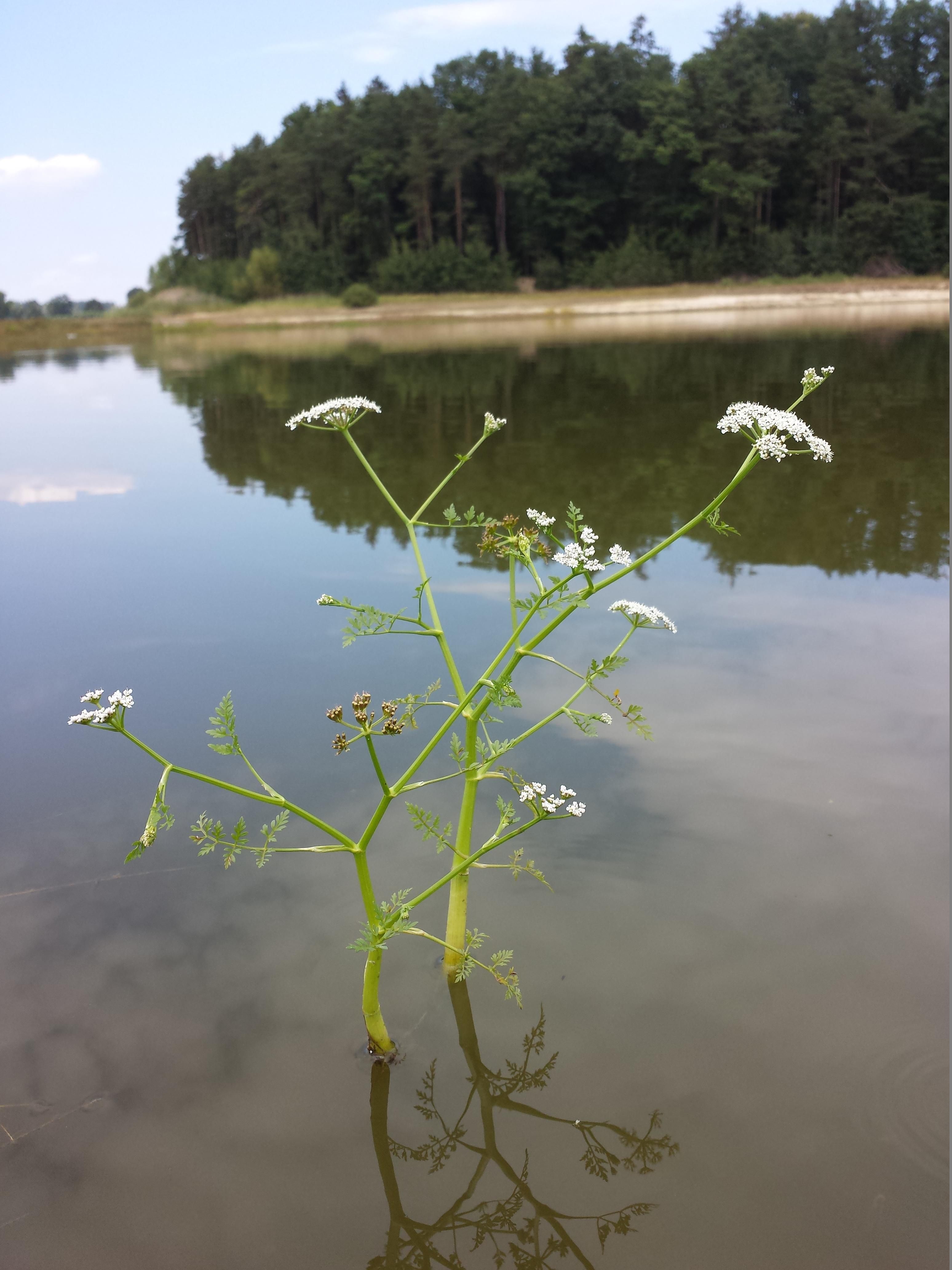
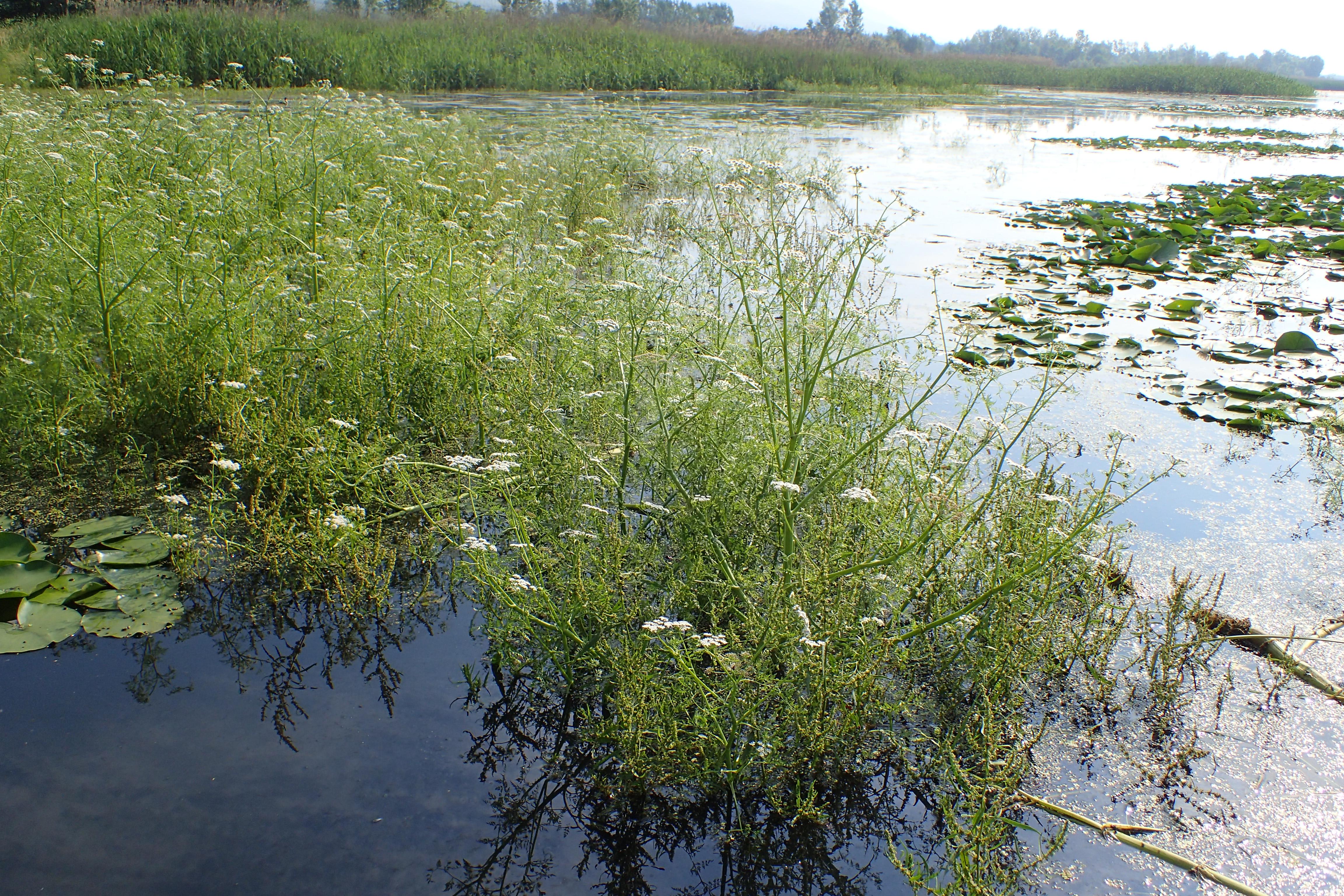
The fine-leaved water-dropwort can grow up to 1.2 metres tall.
The aerial leaves are finely divided two to five times (pinnate) and glabrous. The submerged leaves, if present, are divided into thin, almost hair-like segments with fine hairs.
The stems are round, hollow and grooved. They are branched.
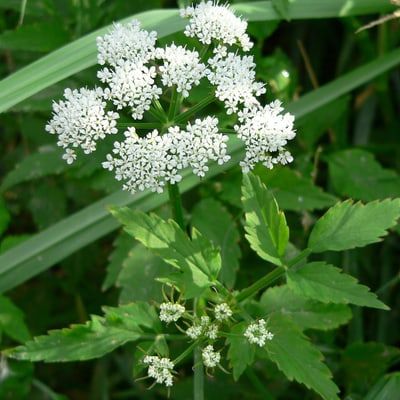
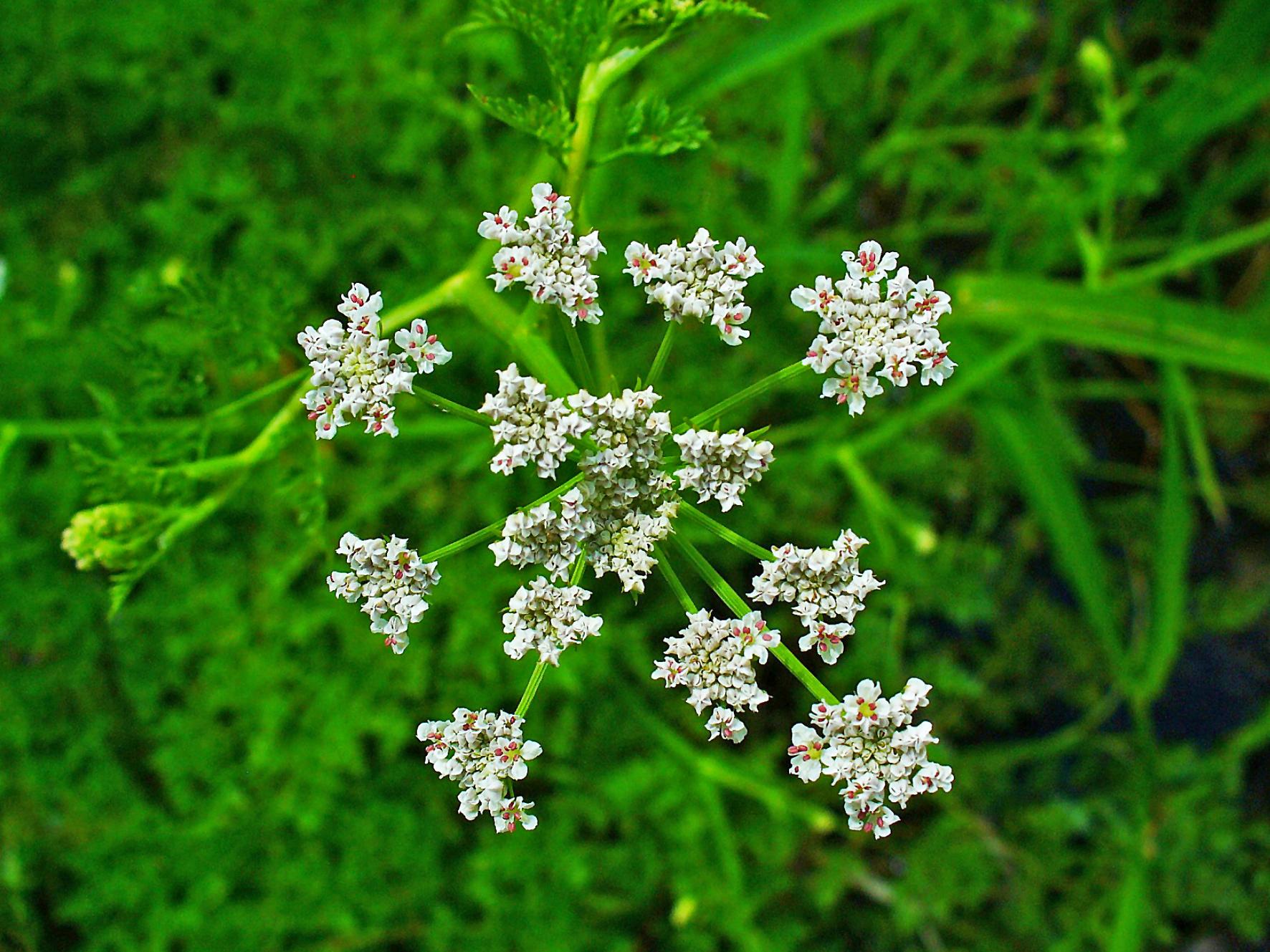
The individual, small, white flowers are arranged together in a double umbel inflorescence. Each side branch of an umbel (umbrella-like branching) ends in a smaller umbel.
The fruit is an oval and clearly grooved schizocarp. It consists of two partial fruits.
Features
Fine-leaved water-dropwort
Oenanthe aquatica
poisonous
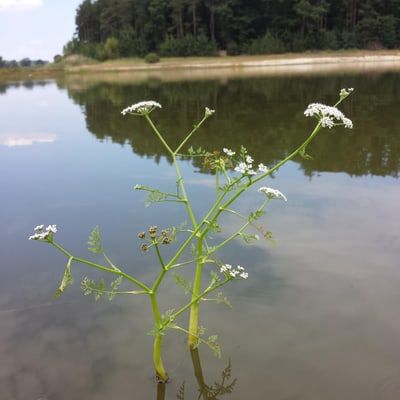
very thick and hollow stems
stands usually in water or swamp
In the city
The fine-leaved water-dropwort is mainly found at the edges of water bodies or in nutrient-rich, calcareous water up to one metre deep. In the city, it can be found in ponds, old water bodies, swamps and ditches.n.
Fun Facts
The fruits have a floating tissue and are spread floating.
The flowers smell a little like wine.
The flowering period is from June to August.
It is an annual plant, i.e. it flowers only once and dies after the seeds have ripened.
- Endangerment level Germany: not endangered
- Usage:
In the past, the fruits were used for coughs, asthma and flatulence. Nowadays, this plant is only used in homeopathy.
Fine-leaved water-dropwort is native to Germany and occurs throughout Europe, western Asia, Kazakhstan, the Caucasus region and Siberia. In North America, the species was introduced as a neophyte (non-native plant).
All parts of the plant are poisonous. The green parts are particularly poisonous. No symptoms of poisoning are known in humans, but horses, cattle and pigs react sensitively.
Sources
Habitus, Stefan.lefnaer, CC BY-SA 4.0, https://commons.wikimedia.org/wiki/File:Oenanthe_aquatica_sl8.jpg

Blütenstand, H. Zell, CC BY-SA 3.0, https://commons.wikimedia.org/wiki/File:Oenanthe_aquatica_002.JPG

Habitus, Krzysztof Ziarnek, Kenraiz, CC BY-SA 4.0, https://commons.wikimedia.org/wiki/File:Oenanthe_aquatica_kz11.jpg

Schauer, T., Caspari, C. & Caspari, S. (2015) Der illustrierte BLV-Pflanzenführer für unterwegs. 1150 Blumen, Gräser, Bäume und Sträucher, München: BLV.
Spohn, M., Golte-Bechtle, M. & Spohn, R. (2015) Was blüht denn da? Stuttgart: Franckh Kosmos Verlag.
Page „Großer Wasserfenchel“. : Wikipedia, The Free Encyclopedia. Date of last revision: 10.05.2018, 11:24 UTC. URL: https://de.wikipedia.org/w/index.php?title=Gro%C3%9Fer_Wasserfenchel&oldid=177301483 (Accessed: 14.08.2018).