
Short Description
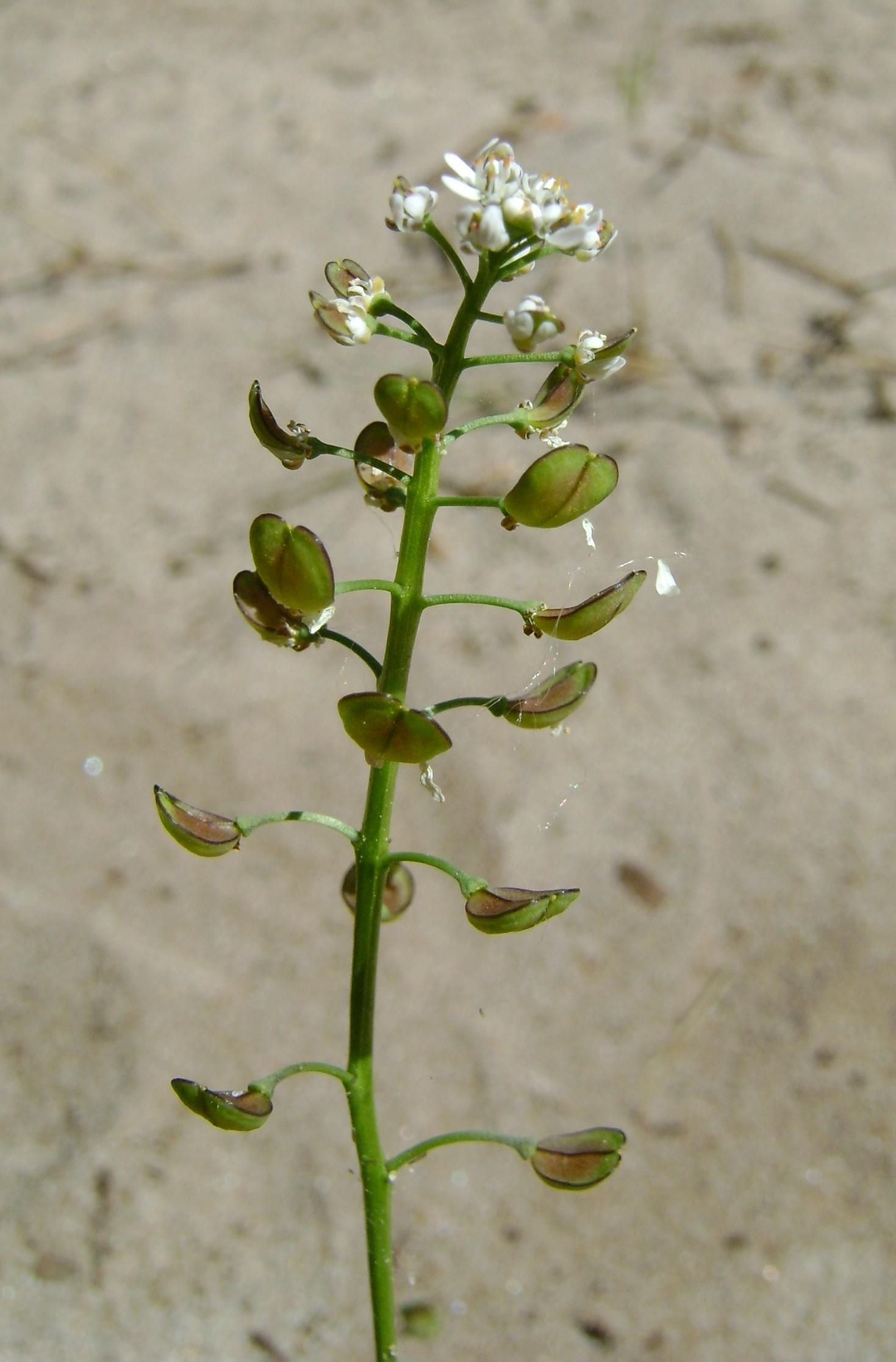
The common shepardscress can grow up to 20 centimetres high.
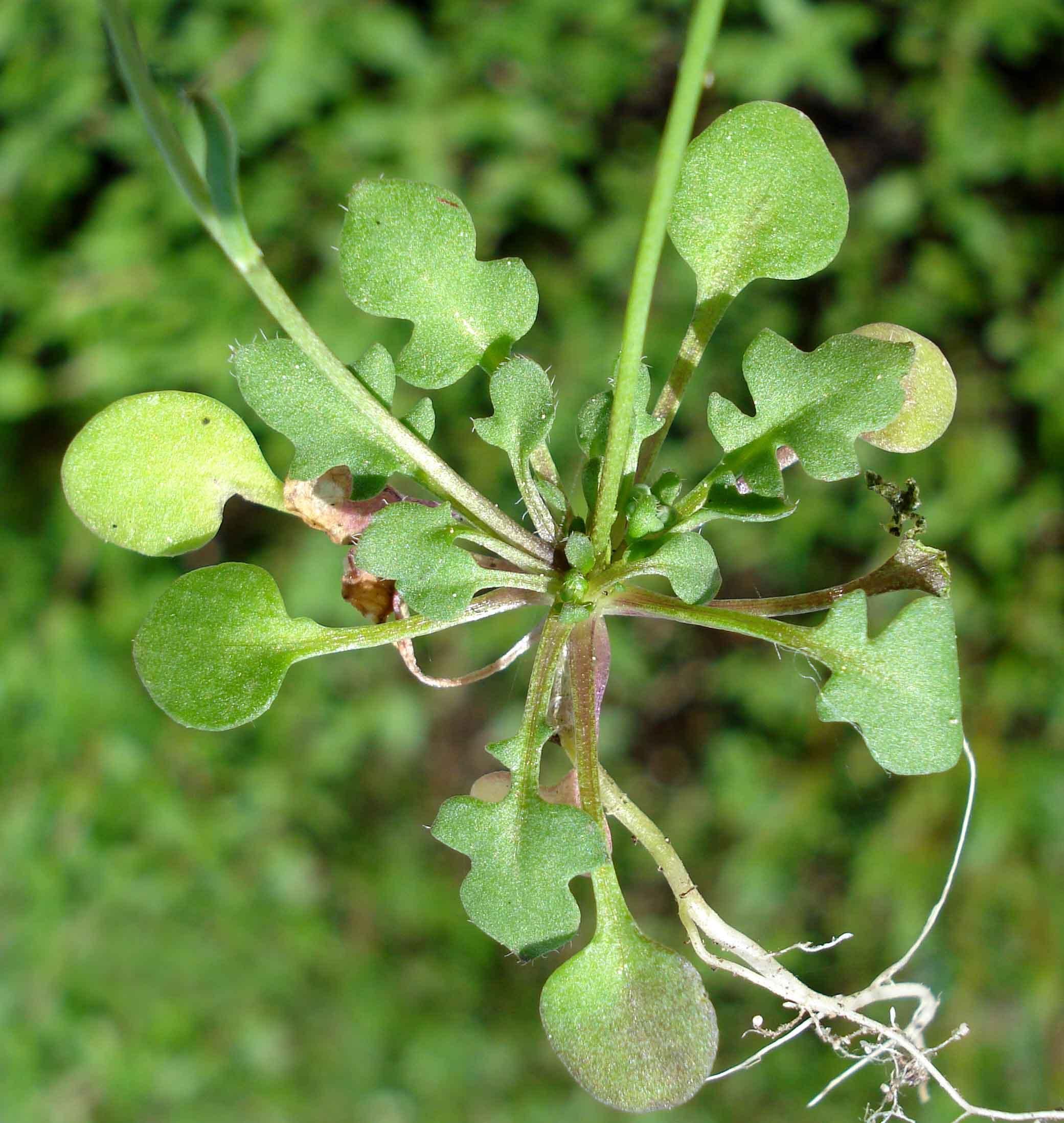
The leaves are arranged in a rosette at the base of the plant. They are roundish to spatulate and deeply lobed at the edge (pinnatisect).
It usually has several, arching, unbranched stems.
The small, white flowers have four petals of different sizes.
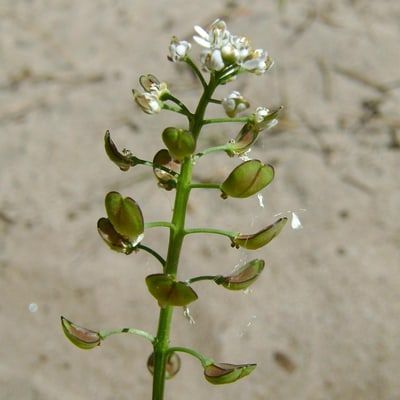
The fruits are spoon-shaped domed pods that are inverted-heart-shaped (obcordate) and narrowly winged at the edge in the upper part.
Features
Common shepherdscress
Teesdalia nudicaulis
leaves building a rosette
spoon-shaped curved pods
Similar species
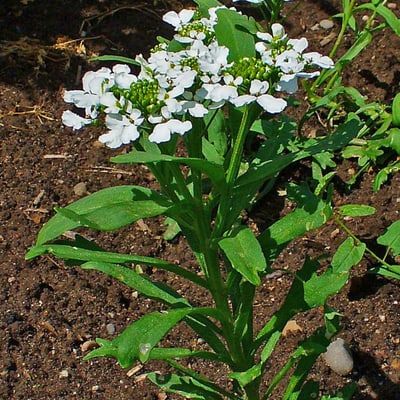
Iberis amara
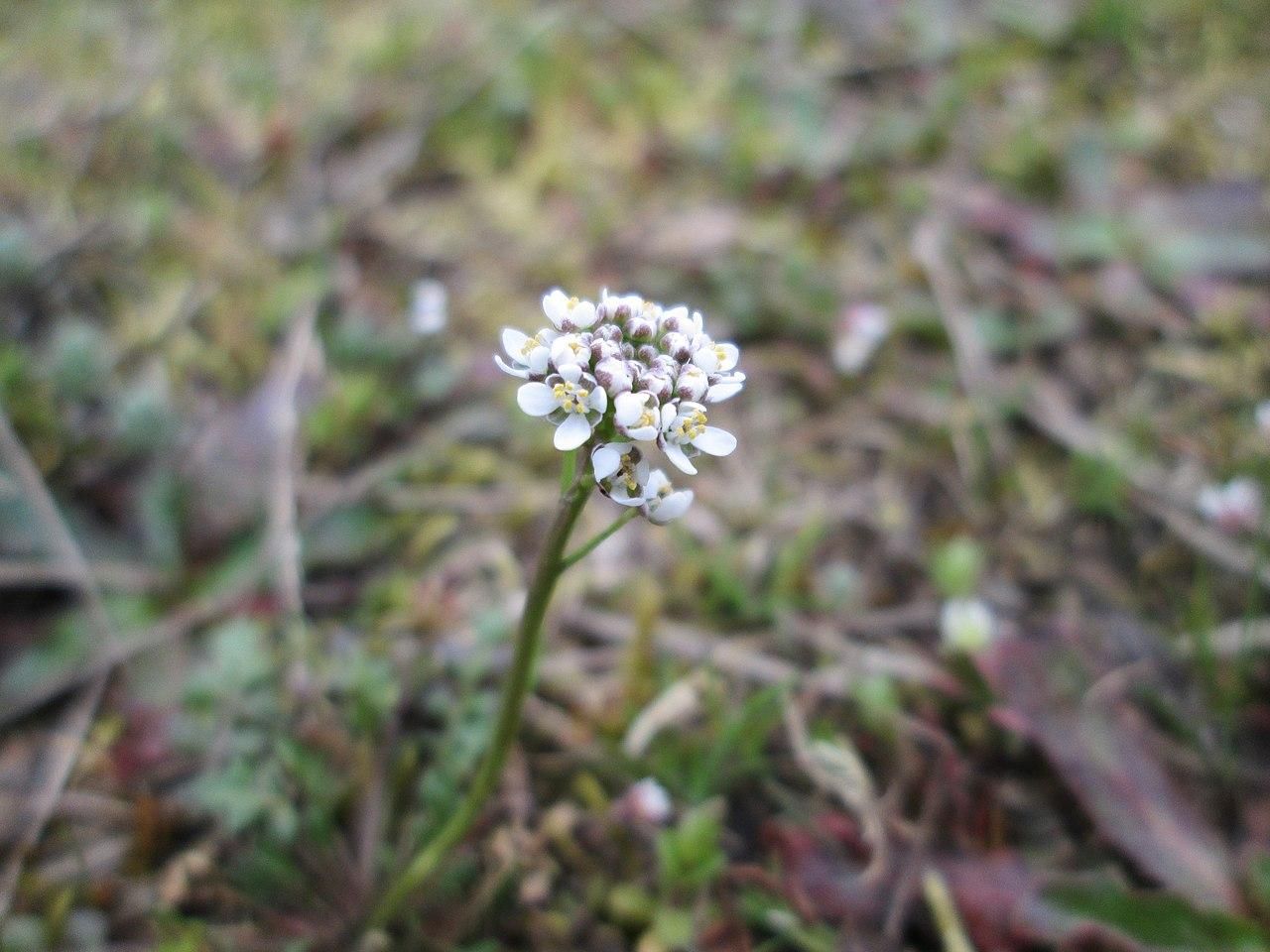
In the city
The common shepardscress grows on dunes, fields, open sandy areas and along paths. It prefers rather dry, nutrient-poor, lime-free sandy soils. It’s also an indicator of sandy soils. It occurs rather rarely.
Fun Facts
The flowering period is from April to May.
It is an annual plant, i.e. it flowers for only one summer and dies after the seeds have ripened.
- Endangerment level Germany: not endangered
In many parts of the world it is a neophyte (non-native plant), for example in North America, Chile and Australia.
Sources
Blütenstand, Krzysztof Ziarnek, CC BY-SA 4.0, https://commons.wikimedia.org/wiki/File:Teesdalia_nudicaulis_kz3.jpg

Blütenstand, AnRo0002, CC0 1.0, https://commons.wikimedia.org/wiki/File:20180330Teesdalia_nudicaulis2.jpg

Blätter, Fornax, CC BY-SA 3.0 , https://commons.wikimedia.org/wiki/File:Teesdalia_nudicaulis2_W.jpg

Page „Nacktstängeliger Bauernsenf“. : Wikipedia, The Free Encyclopedia. Date of last revision: 02.08.2017, 16:56 UTC. URL: https://de.wikipedia.org/w/index.php?title=Nacktst%C3%A4ngeliger_Bauernsenf&oldid=167811952 (Accessed: 17.09.2018).
Bundesamt für Naturschutz (n.d.) Artensteckbriefe, URL: http://floraweb.de/pflanzenarten/artenhome.xsql?suchnr=5872& (Accessed: 17.09.2018).
Spohn, M., Golte-Bechtle, M. & Spohn, R. (2015) Was blüht denn da? Stuttgart: Franckh Kosmos Verlag.
Seitz, B., Ristow, M., Meißner, J., Machatzi, B. & Sukopp, H. (2018) Rote Liste und Gesamtartenliste der etablierten Farn- und Blütenpflanzen von Berlin. : Der Landesbeauftragte für Naturschutz und Landschaftspflege / Senatsverwaltung für Umwelt, Klima und Verkehr (eds.) Rote Listen der gefährdeten Pflanzen, Pilze und Tiere von Berlin, URL: https://www.berlin.de/sen/uvk/natur-und-gruen/naturschutz/artenschutz/artenlisten-rote-listen/farn-und-bluetenpflanzen/ (Accessed: 26.03.2021).