
Short Description
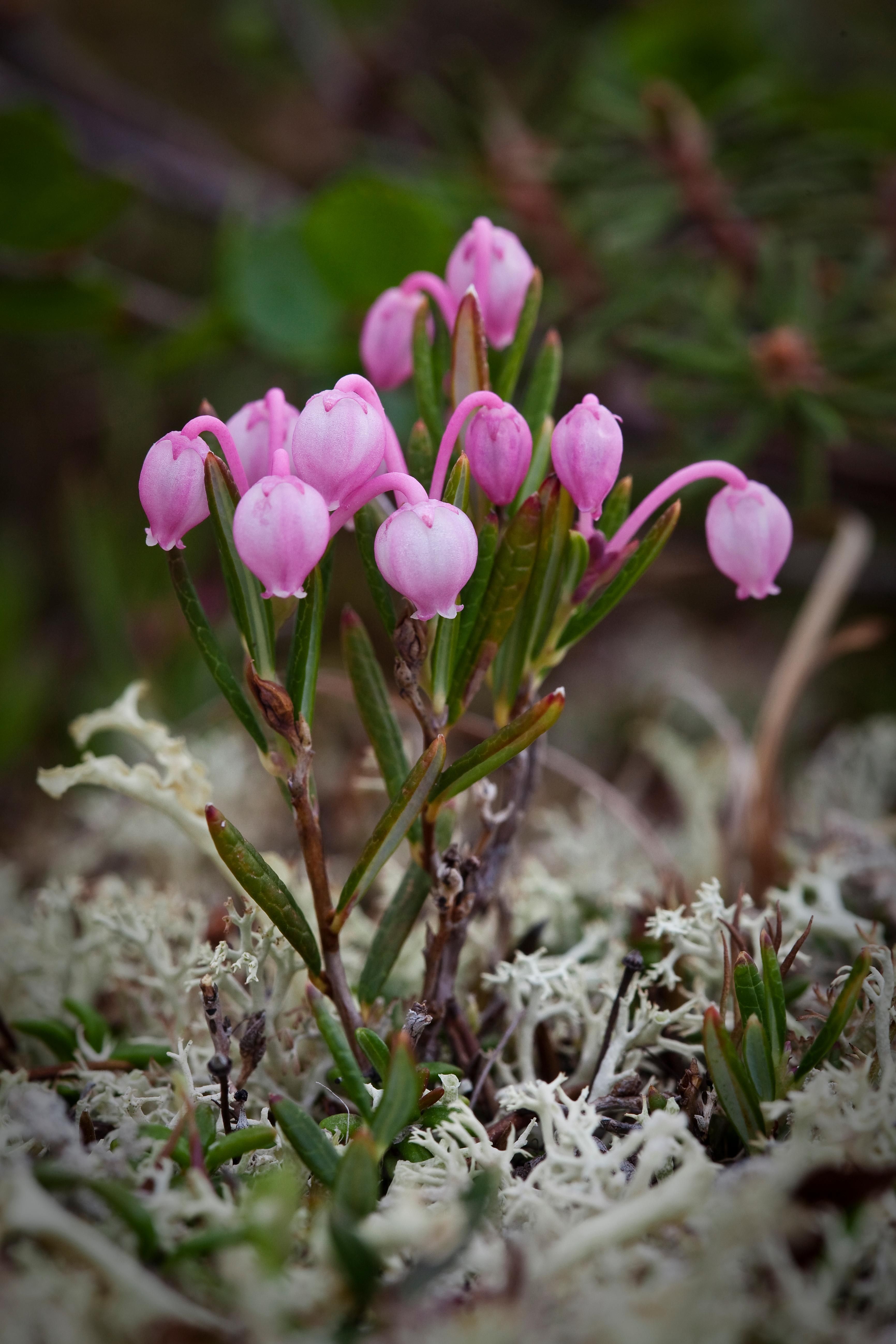
The bog-rosemary is an evergreen dwarf shrub that can grow up to 30 centimetres high.
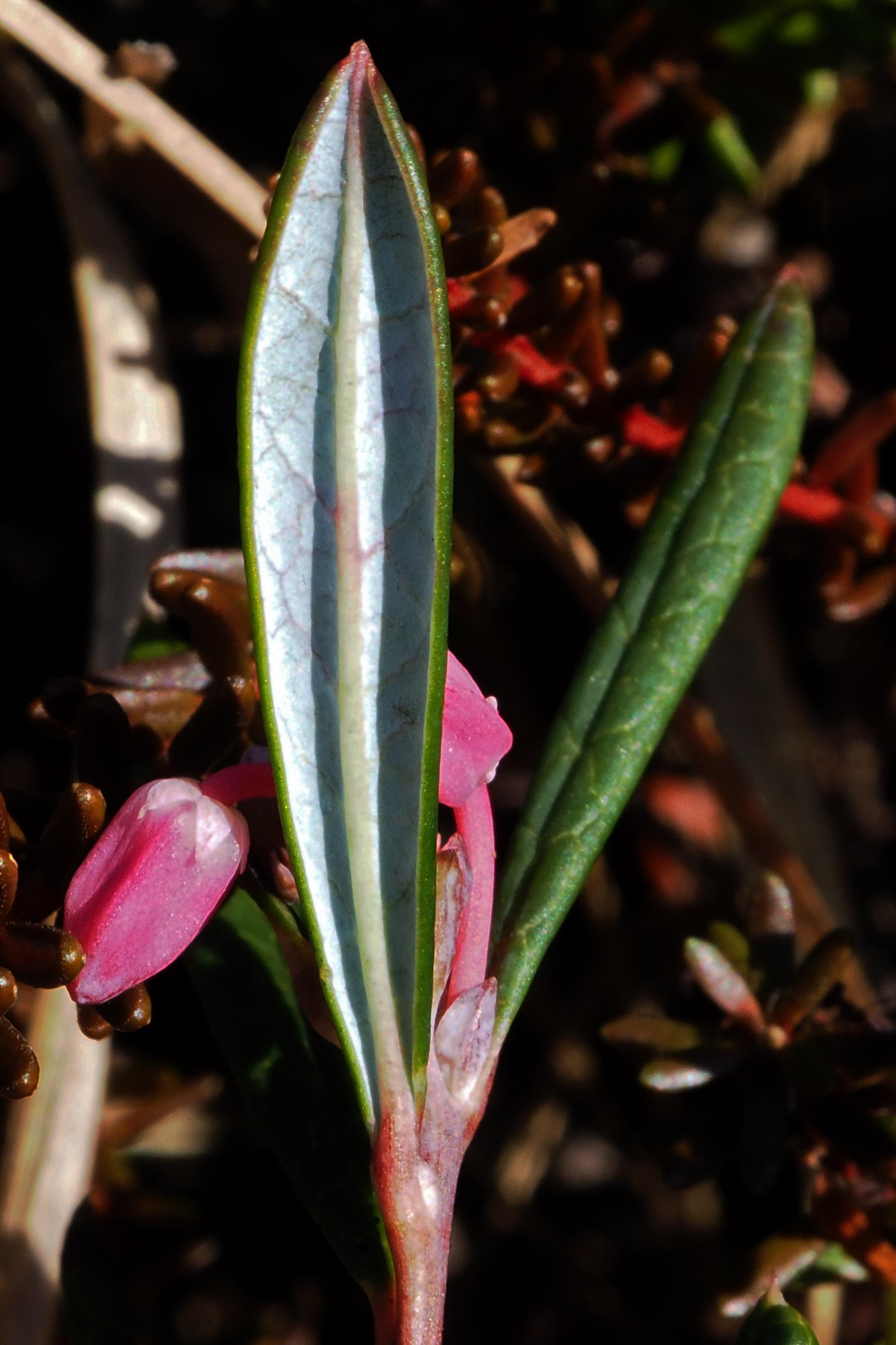
The lanceolate leaves are dark green on top and whitish and glabrous on the underside. They are leathery and curled under at the edges. The leaves sit singly and alternately on the twigs (alternate).
The branches grow upright from the ground and become woody. They have a green to brownish colour.
The five white or pink petals are fused into a spherical or bell-shaped flower. The flowers sit on pink stems and look downwards. Two to eight flowers always grow together as a corymb.
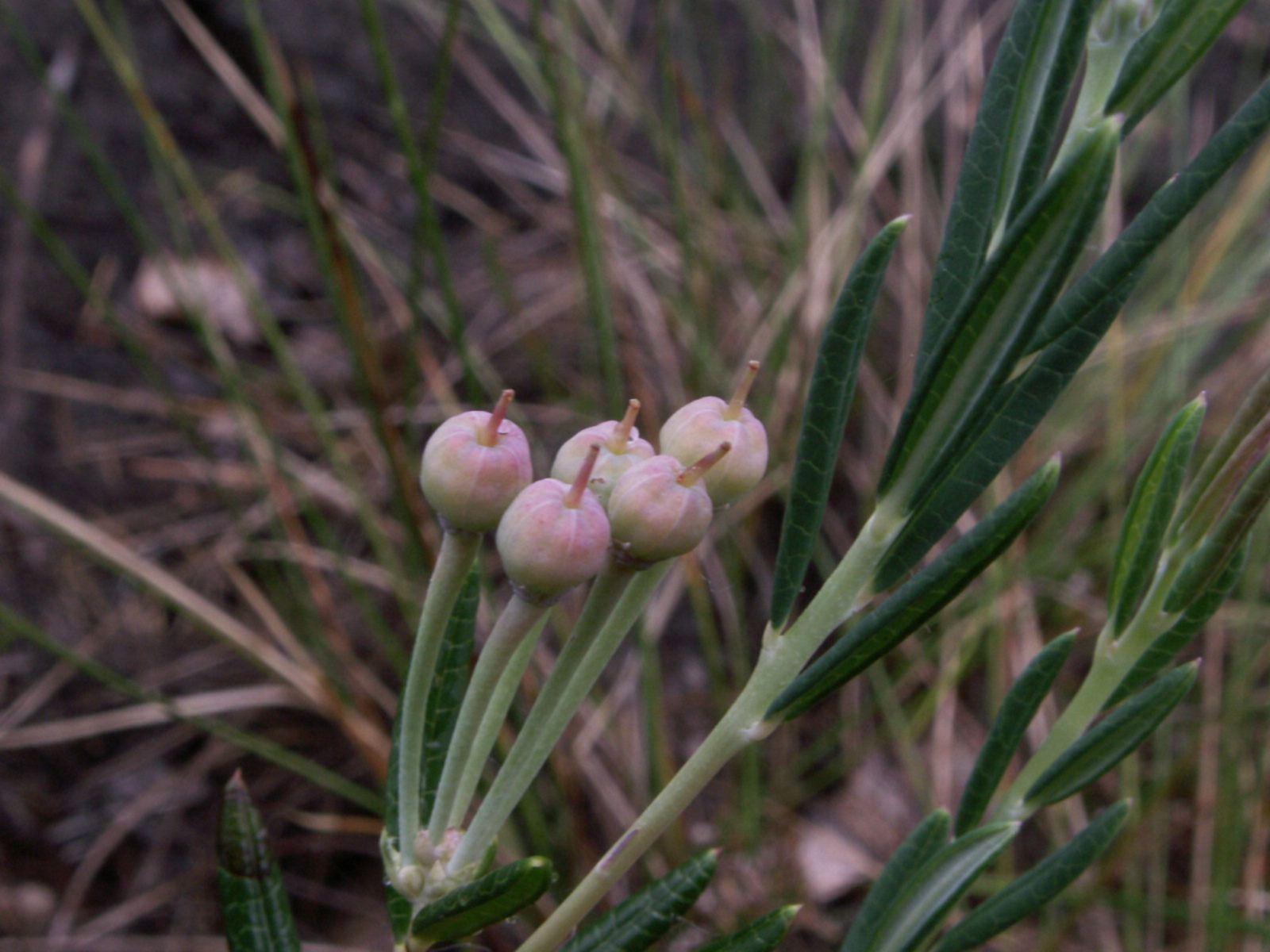
The fruits are capsules standing upright on stems. They pop open at ripening time and release the seeds into the wind.
Features
Bog-rosemary
Andromeda polifolia
very poisonous
downward looking flowers
leaf margins curled under (revolute)
Similar species
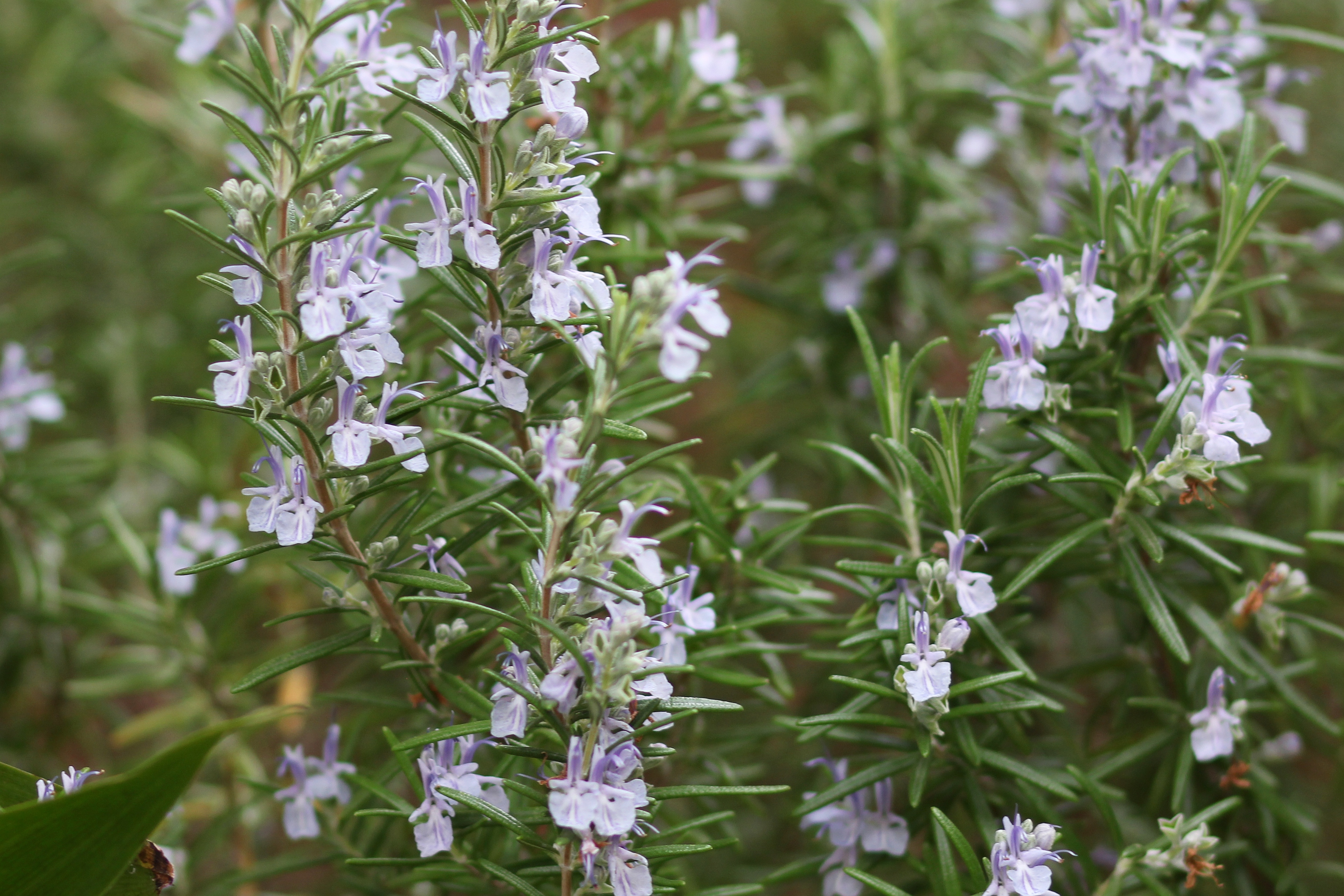
Salvia rosmarinus
In the city
As a bog plant, the bog-rosemary is restricted to very few areas in the city. It prefers wet, nutrient-poor, acidic soils and light locations.
Fun Facts
The flowering period is from May to August.
The scientific name refers to the constellation Andromeda, which stretches far across the northern sky and thus marks the distribution area of the bog-rosemary.
The flower facing the ground ensures that the pollen trickles onto approaching pollinators and is thus spread.
- Endangerment level Germany: endangered
The bog-rosemary is widespread in the northern hemisphere and occurs naturally in the moorlands of northern Germany.
The leaves and flowers are highly poisonous. Even honey, which comes from the plant, is still poisonous. When eaten, bog-rosemary causes dizziness, convulsions and respiratory paralysis. Poisoning is usually caused by confusion with rosemary.
Sources
Habitus, Jacob W. Frank, PD, https://commons.wikimedia.org/wiki/File:Andromeda_polifolia_(7833216170).jpg
.jpg)
Früchte, b.gliwa, CC BY-SA 2.5, https://commons.wikimedia.org/wiki/File:Andromeda_polifolia_fruits.jpg

Blattunterseite, Hajotthu, CC BY-SA 4.0, https://commons.wikimedia.org/wiki/File:Andromeda_polifolia_(Rosmarinheide)_Blatt_Becklinger_Moor_02a.jpg
_Blatt_Becklinger_Moor_02a.jpg)
Prasse, R., Ristow, M., Klemm, G., Machatzi, B., Raus, T., Scholz, H., Stohr, G., Sukopp, H. & Zimmermann, F. (2001) Liste der wildwachsenden Gefäßpflanzen des Landes Berlin mit Roter Liste. Senatsverwaltung für Stadtentwicklung / Der Landesbeauftragte für Natuschutz und Landschaftspflege (eds.), Berlin: Kulturbuch-Verlag.
Roth, L., Daunderer, M. & Kormann, K. (2008) Giftpflanzen - Pflanzengifte. Vorkommen, Wirkung, Therapie. Allergische und phototoxische Reaktionen, Hamburg: Nikol Verlag.
Schauer, T., Caspari, C. & Caspari, S. (2015) Der illustrierte BLV-Pflanzenführer für unterwegs. 1150 Blumen, Gräser, Bäume und Sträucher, München: BLV.
Schönfelder, I. & Schönfelder, P. (2010) Der Kosmos-Heilpflanzenführer. Über 600 Heil- und Giftpflanzen Europas, Stuttgart: Franckh Kosmos Verlag.
Spohn, M., Golte-Bechtle, M. & Spohn, R. (2015) Was blüht denn da? Stuttgart: Franckh Kosmos Verlag.
Page „Rosmarinheide“. : Wikipedia, The Free Encyclopedia. Date of last revision: 06.09.2017, 12:23 UTC. URL: https://de.wikipedia.org/w/index.php?title=Rosmarinheide&oldid=168836111 (Accessed: 07.12.2017).