
Short Description
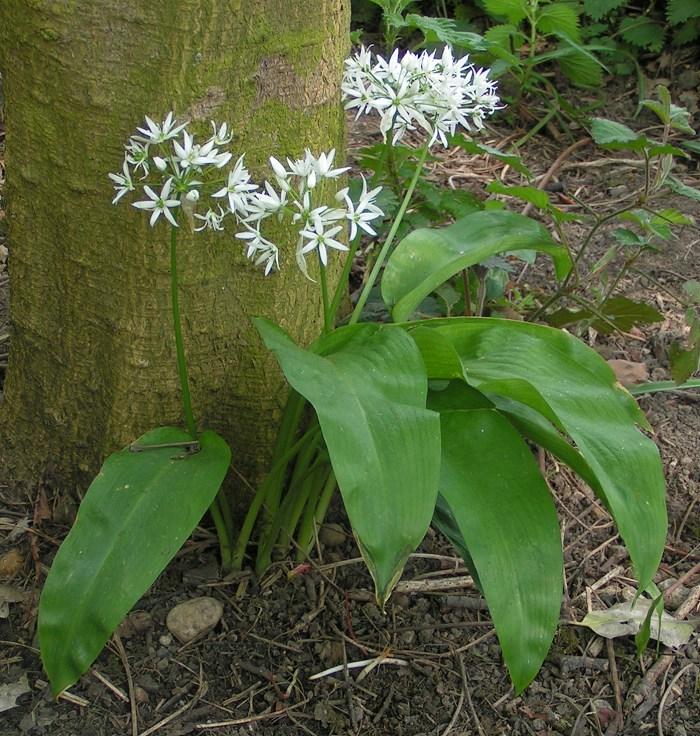
Wild garlic can grow to up to 50 cm in height.
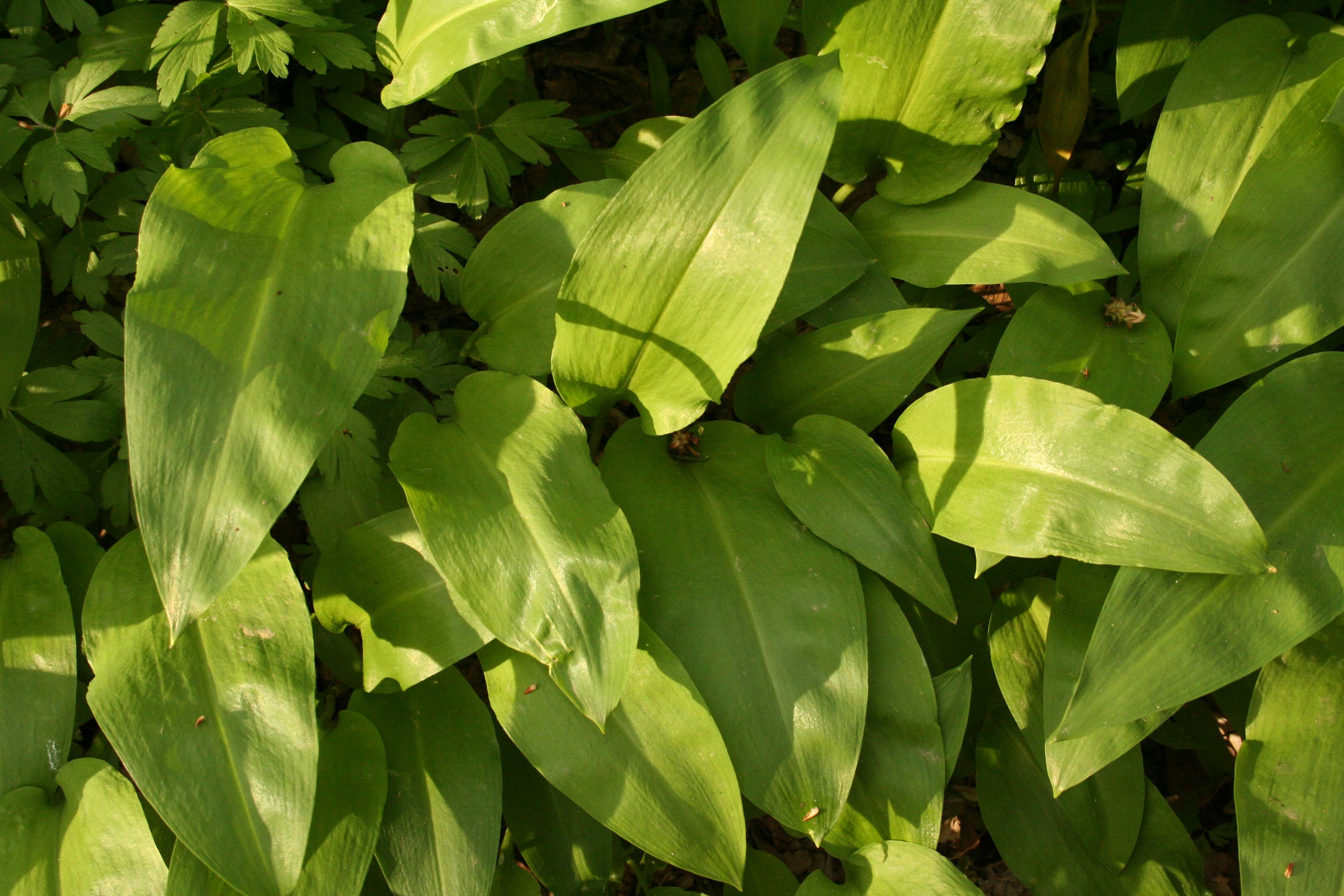
The leaves have a pronounced stalk and are elliptical to lance-shaped. The midrib is clearly visible. The upper side is glossy and the underside matt. Like the whole plant, they smell strongly of garlic.
The stem grows from an elongated slender bulb. It is generally triangular and only has leaves at ground level.
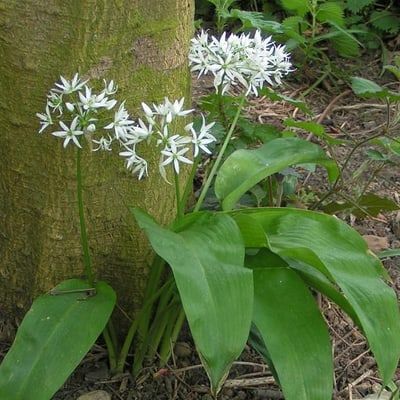
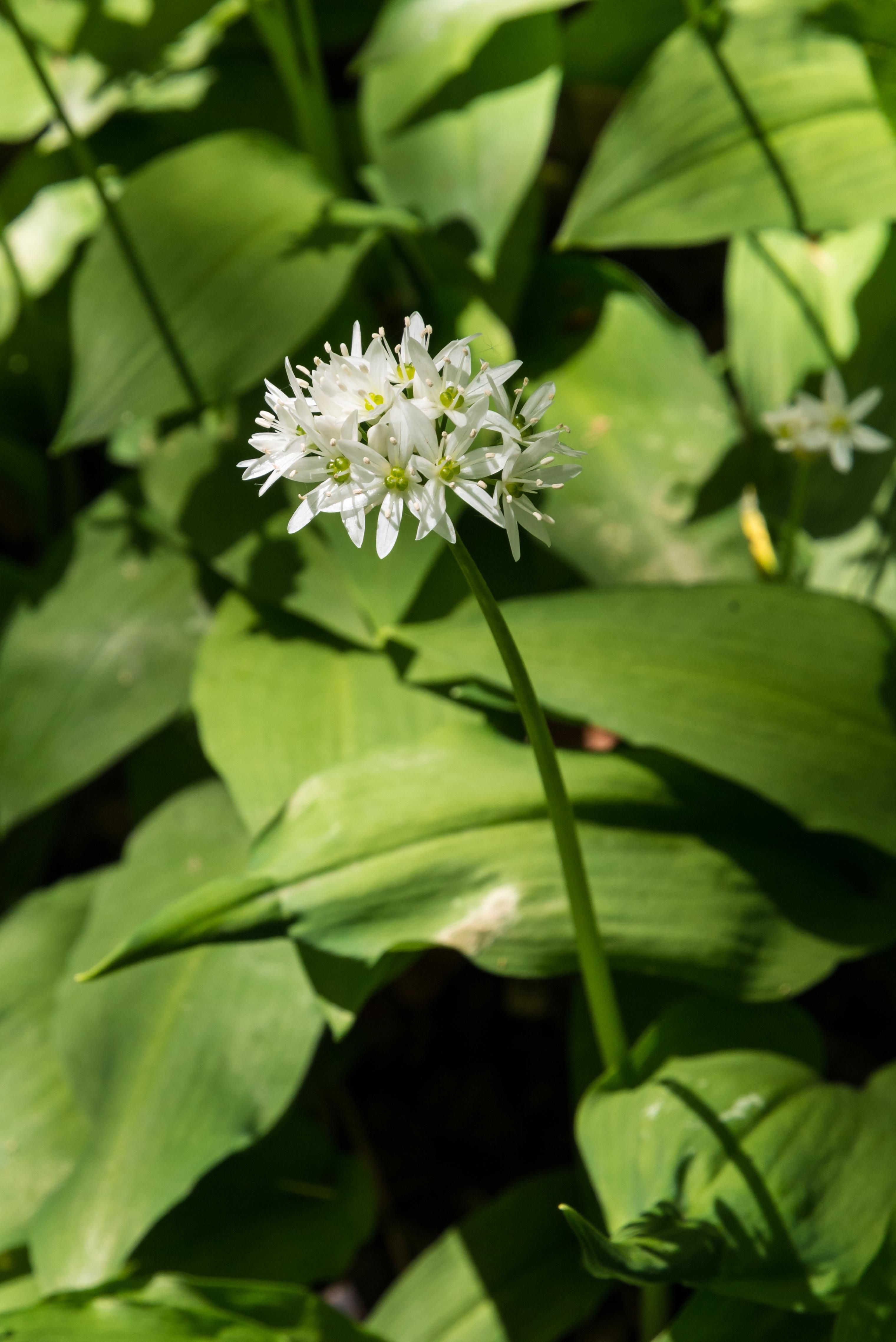
The more or less spherical flower head consists of numerous individual florets with six white petals.
The fruits are tripartite seed capsules.
Features
Wild garlic
Allium ursinum
strong garlicky smell
Leaves with stalk
Be careful - similar species are very poisonous!
Similar species
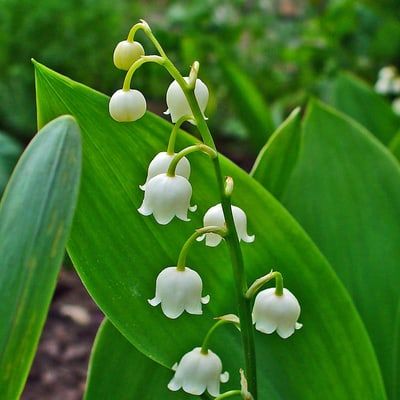
Lily of the valley
Convallaria majalis
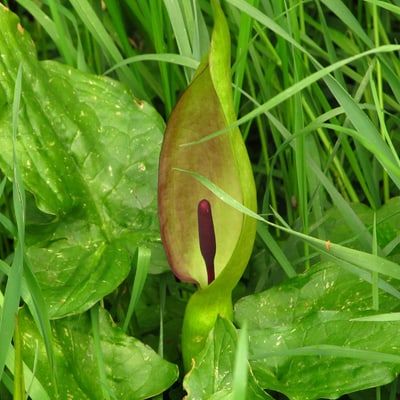
Cuckoopint
Arum maculatum
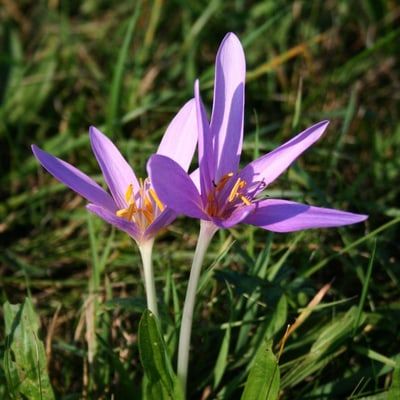
Colchicum autumnale
In the city
In an urban environment, wild garlic can often be found in deciduous forests or along streams. It prefers damp and shady sites with rich soils.
Wild garlic is gathered in early April and eaten fresh or processed further. Great caution is advised as the leaves can be easily confused with those of the poisonous plants lily of the valley, autumn crocus or arum lily.
Fun Facts
In some areas of Germany, e.g. Brandenburg, wild garlic is threatened with extinction.
It flowers from April to May.
- Endangerment level Germany: not endangered
Wild garlic is a well-known vegetable, herb and medicinal plant. The leaves can be used for seasoning or to make pesto.
Sources
Habitus, Lisa Carter, CC BY-SA 3.0, https://commons.wikimedia.org/wiki/File:Ramsons_700.jpg

Blütenstand, Uoaei1, CC BY-SA 4.0, https://commons.wikimedia.org/wiki/File:Allium_ursinum_Bl%C3%BCte_01.JPG

Blätter, Pleple2000, CC BY-SA 3.0, https://commons.wikimedia.org/wiki/File:Zbiorowisko_Allium_ursinum_1pl.jpg

Spohn, M., Golte-Bechtle, M. & Spohn, R. (2015) Was blüht denn da? Stuttgart: Franckh Kosmos Verlag.
Fleischhauer, S. G., Guthmann, J. & Spiegelberger, R. (2007) Essbare Wildpflanzen. 200 Arten bestimmen und verwenden, Baden und München: AT Verlag.
Lippert, W. & Podlech, D. (1993) GU Naturführer. Blumen: die wichtigen Blütenpflanzen Mitteleuropas erkennen und bestimmen, München: Gräfe und Unzer Verlag.
Needon, C. & Petermann, J. (1991) Urania-Naturführer Pflanzen, Leipzig, Jena, Berlin: Urania-Verlag.
Schauer, T., Caspari, C. & Caspari, S. (2015) Der illustrierte BLV-Pflanzenführer für unterwegs. 1150 Blumen, Gräser, Bäume und Sträucher, München: BLV.
Scherf, G. (2006) Wildpflanzen neu entdecken, München: BLV.
Page „Bärlauch“. : Wikipedia, The Free Encyclopedia. Date of last revision: 06.10.2016, 17:58 UTC. URL: https://de.wikipedia.org/w/index.php?title=B%C3%A4rlauch&oldid=158530308 (Accessed: 20.10.2016).