
Short Description
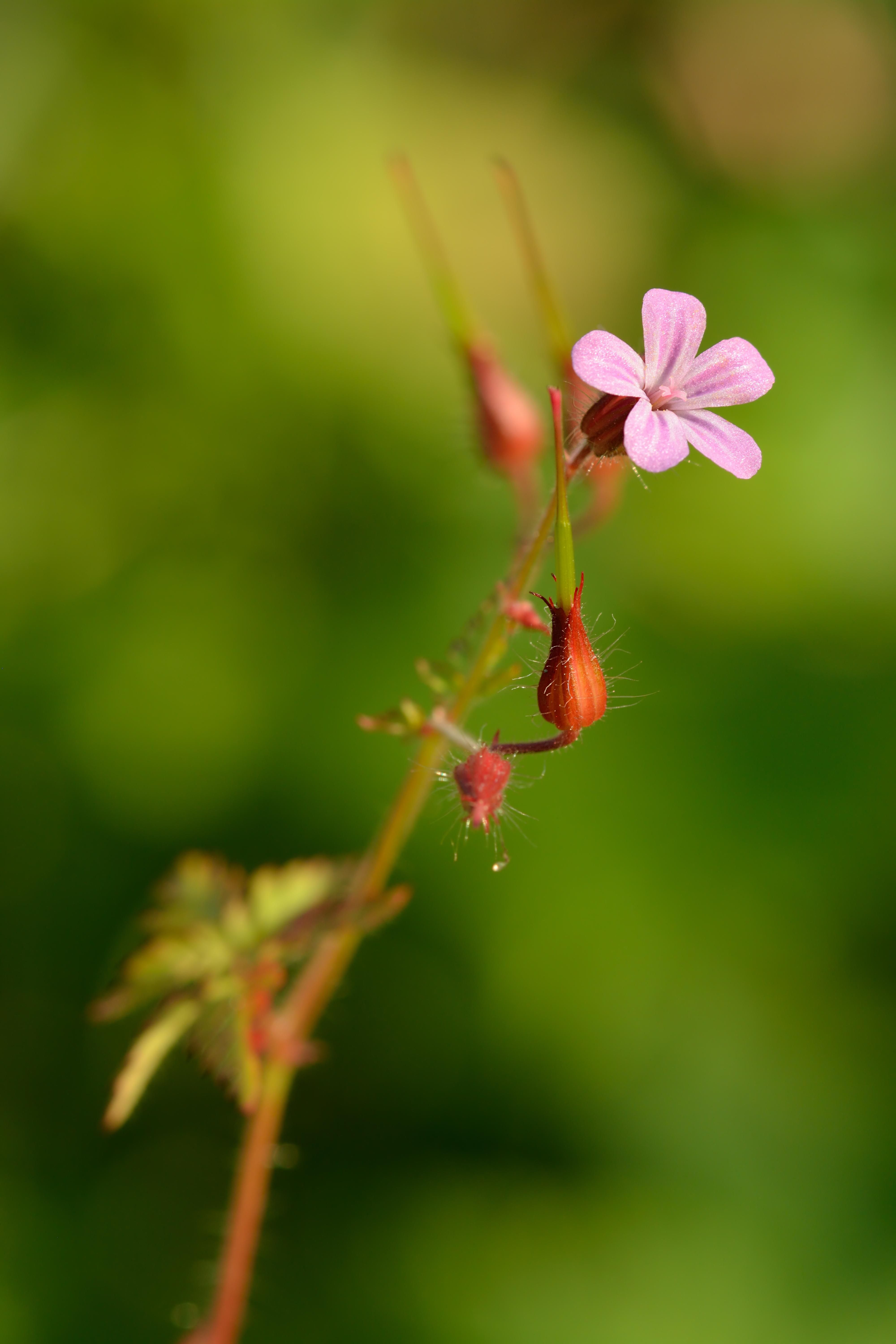
Storksbill can grow to a height of 50 cm.
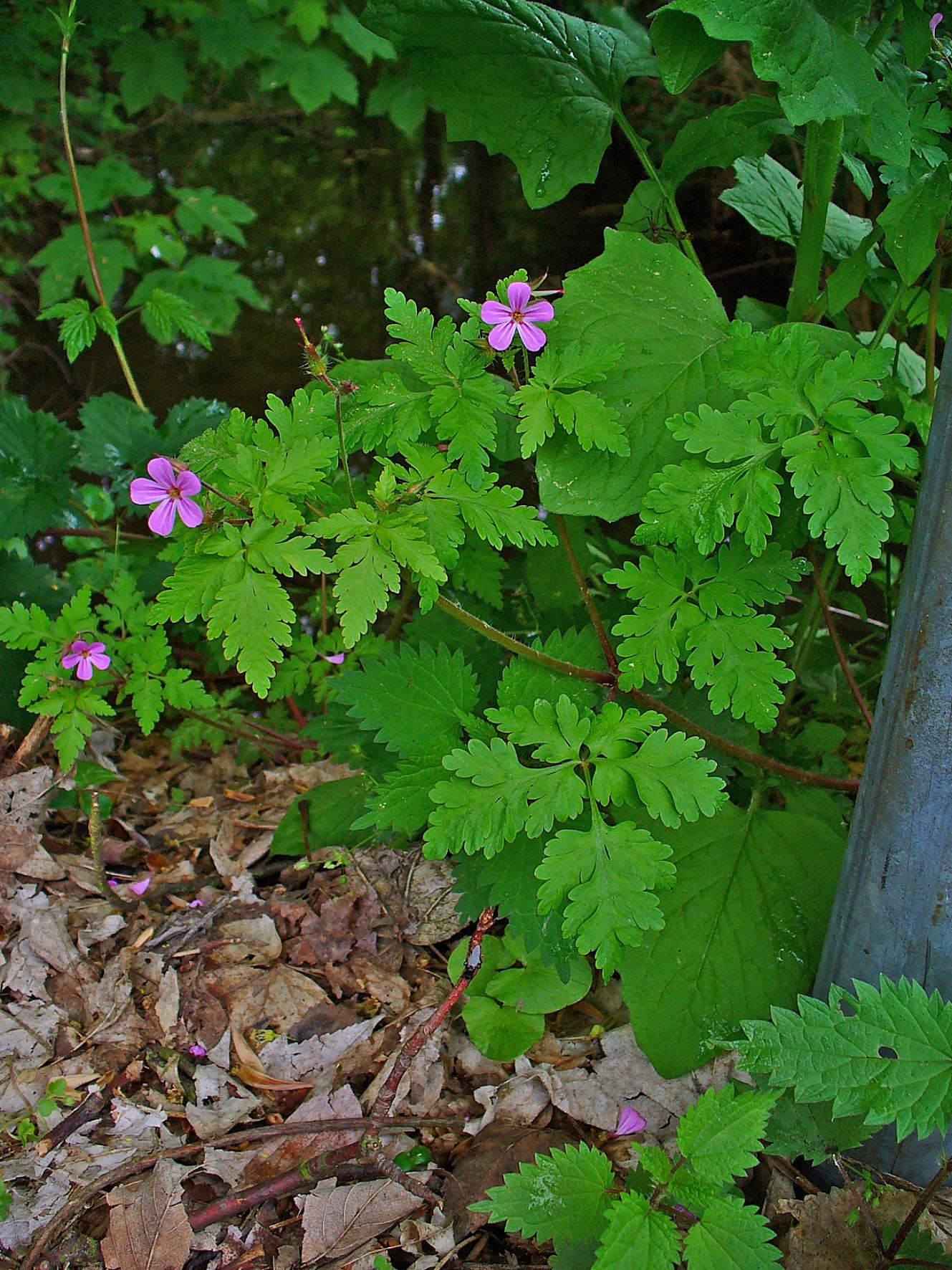
The leaves are palmate and opposite. They are divided into three to five segments (lobes).
The stem is highly branched, generally reddish and covered in protruding glandular hairs.
The flowers generally stand in pairs at the end of the stem. They have five pink petals with purple anthers in the middle.
The fruit is a narrow elongated longitudinally dehiscent capsule.
Features
Storksbill
Geranium robertianum
unpleasant smell
glandular hairs
In the city
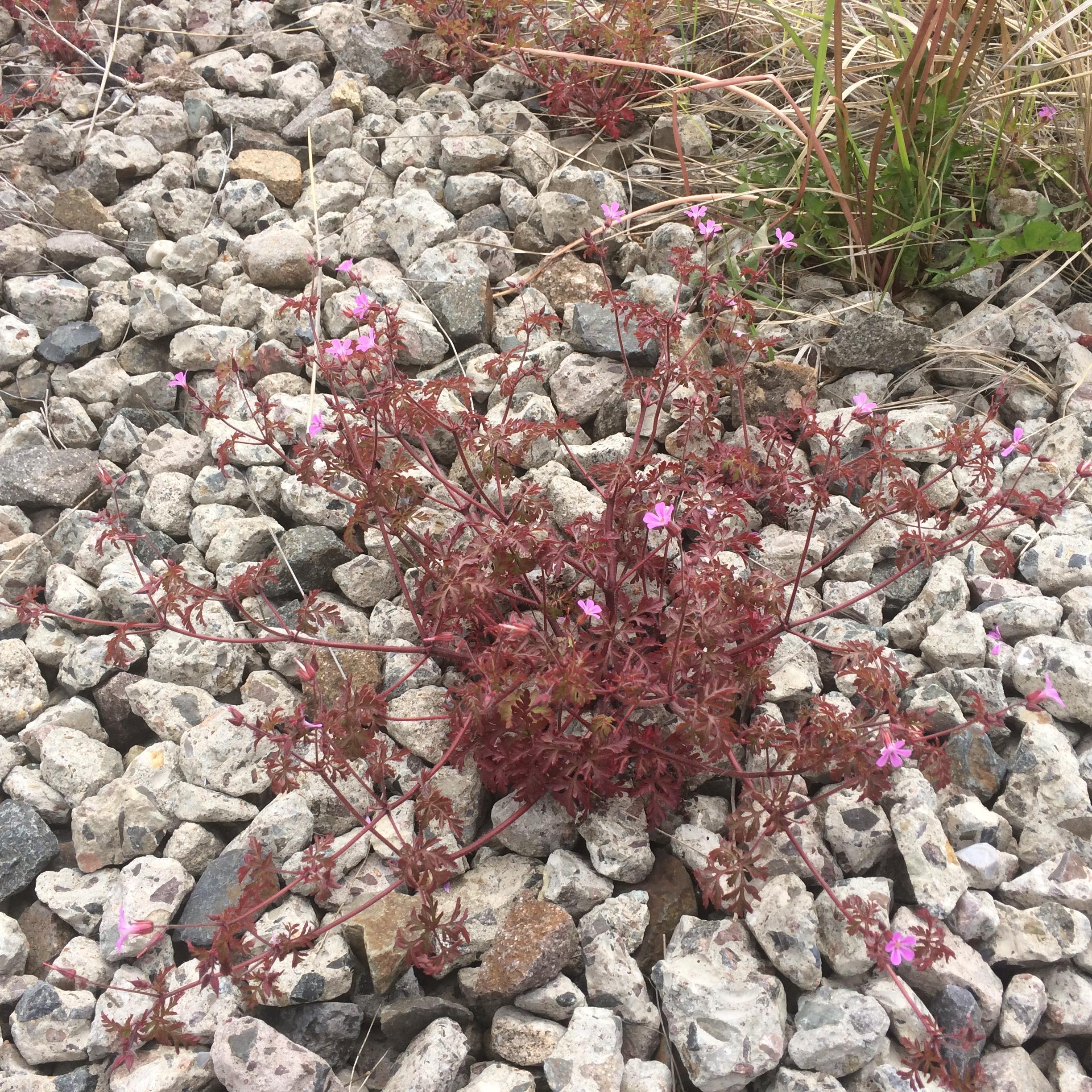
In an urban environment, storksbill can be found in forests and shrubs, along walls and on rail track ballast. It prefers shaded sites with nutrient-rich soils.
Fun Facts
The strong unpleasant smell of the plant is caused by its essential oils. It is said to deter moths and flies.
Crushed leaves are supposed to protect against midges.
It flowers from May to October.
- Endangerment level Germany: not endangered
In folk medicine, storksbill was used to treat contusions, fever, gout and also kidney and lung disorders.
Sources
Blüte und Früchte, Ivar Leidus, CC BY-SA 3.0, https://commons.wikimedia.org/wiki/File:Geranium_robertianum_-_haisev_kurereha.jpg

Habitus, H. Zell, CC BY-SA 3.0, https://commons.wikimedia.org/wiki/File:Geranium_robertianum_002.JPG

Habitus, Alice Kracht, CC BY-SA 4.0, https://offene-naturfuehrer.de/web/Datei:Geranium_robertianum.JPG

Eggenberg, S. & Möhl, A. (2007) Flora Vegetativa: Ein Bestimmungsbuch für Pflanzen der Schweiz im blütenlosen Zustand, Bern, Stuttgart, Wien: Haupt Verlag.
Spohn, M., Golte-Bechtle, M. & Spohn, R. (2015) Was blüht denn da? Stuttgart: Franckh Kosmos Verlag.
Jäger, E. J. (2011) Rothmaler - Exkursionsflora von Deutschland. Gefäßpflanzen: Grundband, Heidelberg: Spektrum Akademischer Verlag.
Kammer, P. M. (2016) Pflanzen einfach bestimmen. Schritt für Schritt einheimische Arten kennenlernen, Bern: Haupt Verlag.
Lippert, W. & Podlech, D. (1993) GU Naturführer. Blumen: die wichtigen Blütenpflanzen Mitteleuropas erkennen und bestimmen, München: Gräfe und Unzer Verlag.
Schauer, T., Caspari, C. & Caspari, S. (2015) Der illustrierte BLV-Pflanzenführer für unterwegs. 1150 Blumen, Gräser, Bäume und Sträucher, München: BLV.
Page „Ruprechtskraut“. : Wikipedia, The Free Encyclopedia. Date of last revision: 29.01.2017, 16:08 UTC. URL: https://de.wikipedia.org/w/index.php?title=Ruprechtskraut&oldid=162111681 (Accessed: 16.02.2017).