
Short Description
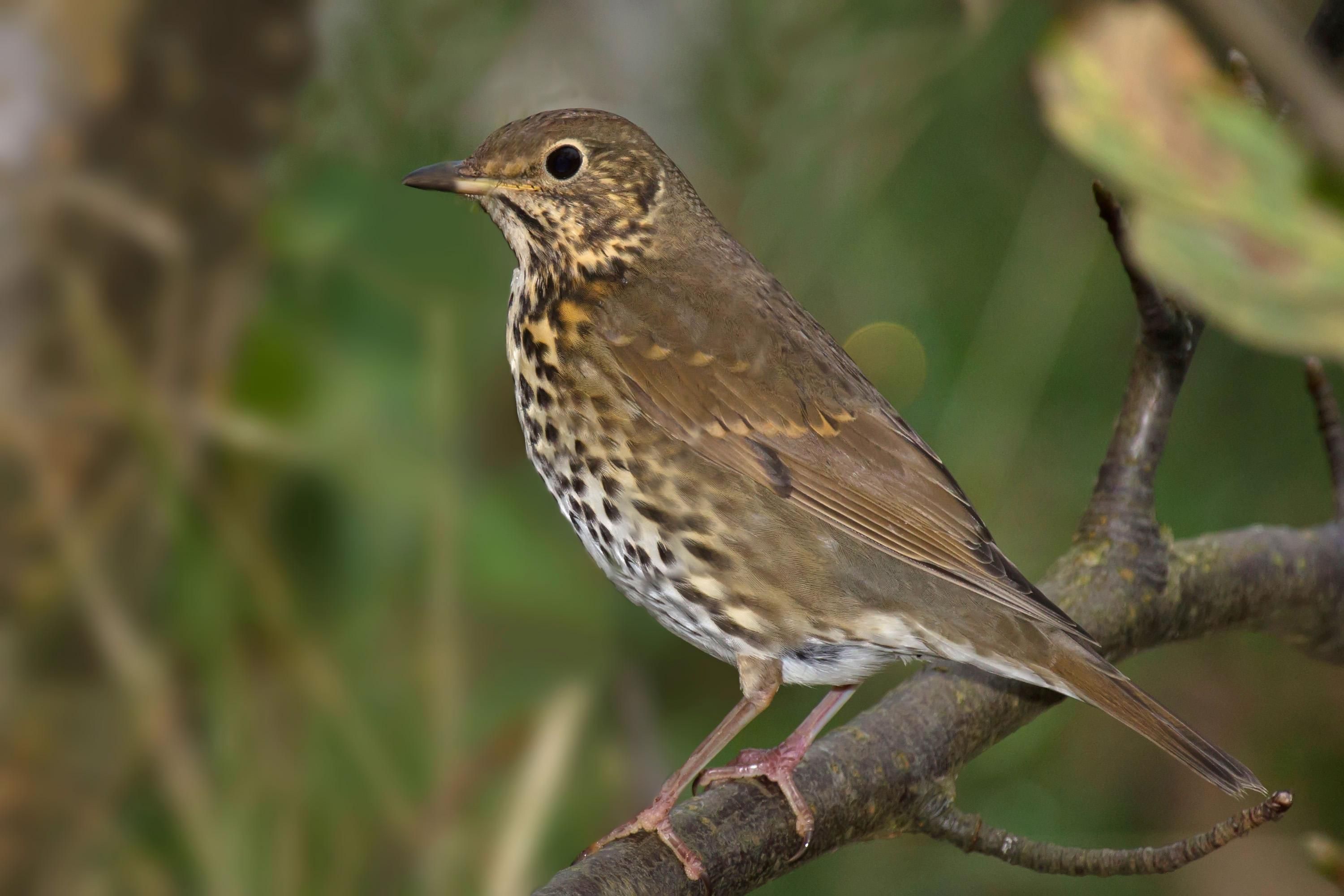
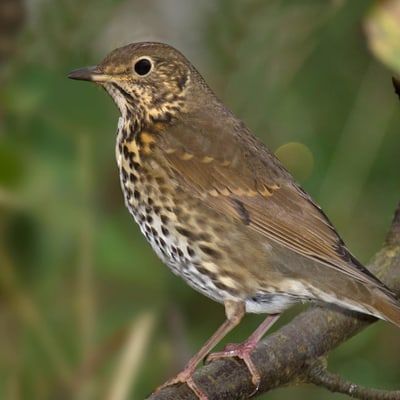
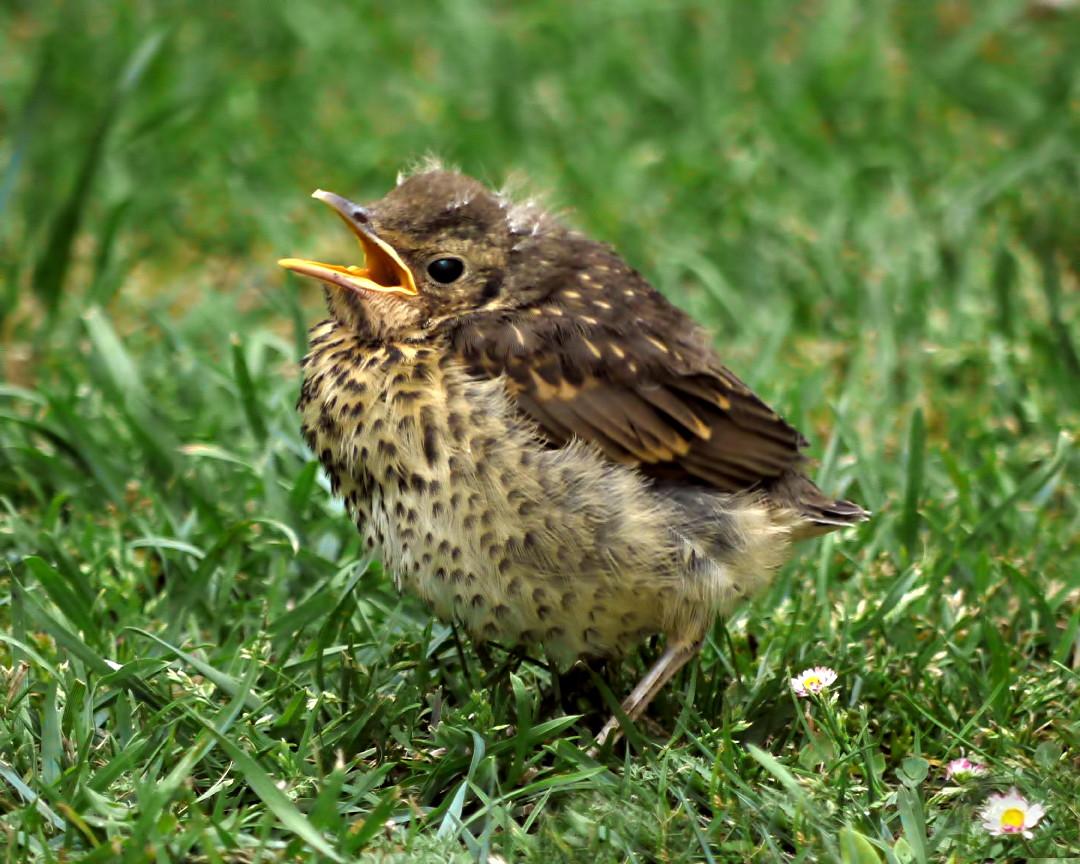
The song thrush can be identified particularly well by its pale underparts with black-brown patches. Its upper parts are rather dull brown.
Features
Song thrush
Turdus philomelos
pale underparts with black-brown arrowhead-shaped patches
Gesang
Frommolt, CC BY-SA 3.0

Similar species
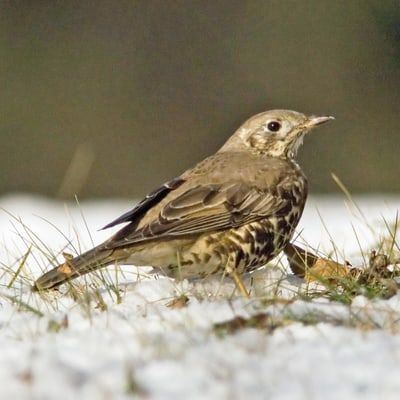
Mistle thrush
Turdus viscivorus
In the city
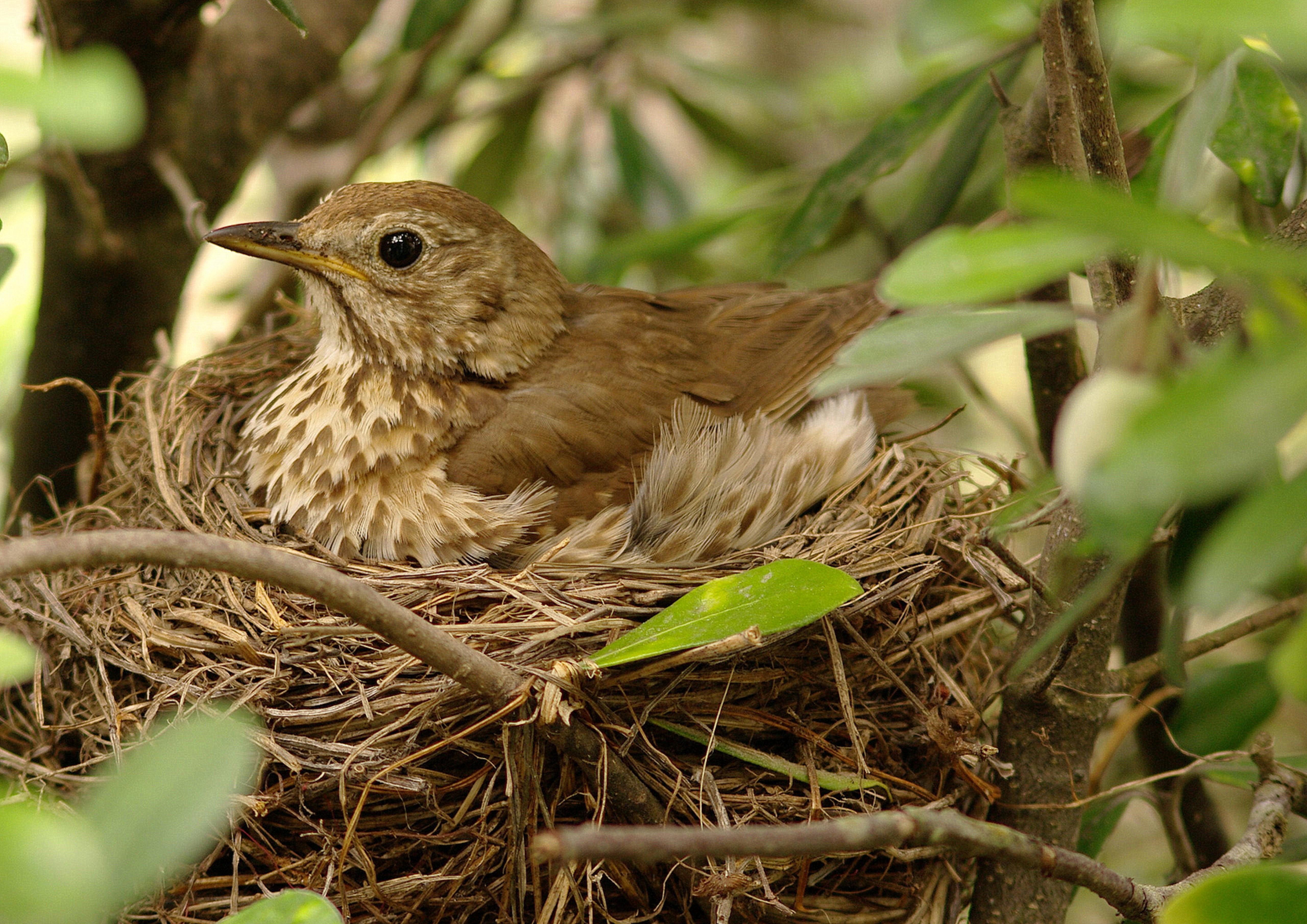
Song thrushes can be seen in old parks, cemeteries and gardens. Prerequisites are the availability of trees and shrubs as well as open spaces to look for food. House gables and aerials are used as song posts.
Fun Facts
Snails are an important food source for song thrushes. They break the snails’ houses on “anvils”, favourite stones or tree stumps.
Their preferred food are banded snails.
They particularly like to sing at dusk.
From February to July, they start to sing approx. 55 minutes before sunrise.
The name “song thrush” is derived from the extensive repertoire of songs that can be heard in the mornings and evenings in particular. For that reason, it is sometimes referred to as the “northern nightingale” or “wood nightingale”.
- Endangerment level Germany: not endangered
Sources
Habitus , Andreas Trepte, CC BY-SA 2.5, https://commons.wikimedia.org/wiki/File:Song_Thrush_Turdus_philomelos.jpg

im Nest, Jude, CC BY-SA 2.0, https://commons.wikimedia.org/wiki/File:Turdus_philomelos_-New_Zealand_-nest-8.jpg

Jungtier, Sid Mosdell, CC BY-SA 2.0, https://commons.wikimedia.org/wiki/File:Turdus_philomelos_-New_Zealand_-juvenile-8.jpg

Page „Singdrossel“. : Wikipedia, The Free Encyclopedia. Date of last revision: 13.03.2021, 21:27 UTC. URL: https://de.wikipedia.org/w/index.php?title=Singdrossel&oldid=209767666 (Accessed: 23.03.2021).
Bejcek, V. (1988) Zugvögel, Hanau/Main: Verlag Werner Dausien.
Artenfinder (2016) Turdus philomelos (Singdrossel), URL: https://arteninfo.net/elearning/voegel/speciesportrait/3121 (Accessed: 23.04.2016).
NABU – Naturschutzbund Deutschland e.V. (2016) Vogeluhr, URL: https://www.nabu.de/nabu_vogeluhr2/index.php?iframed=1 (Accessed: 10.02.2021).