
Short Description
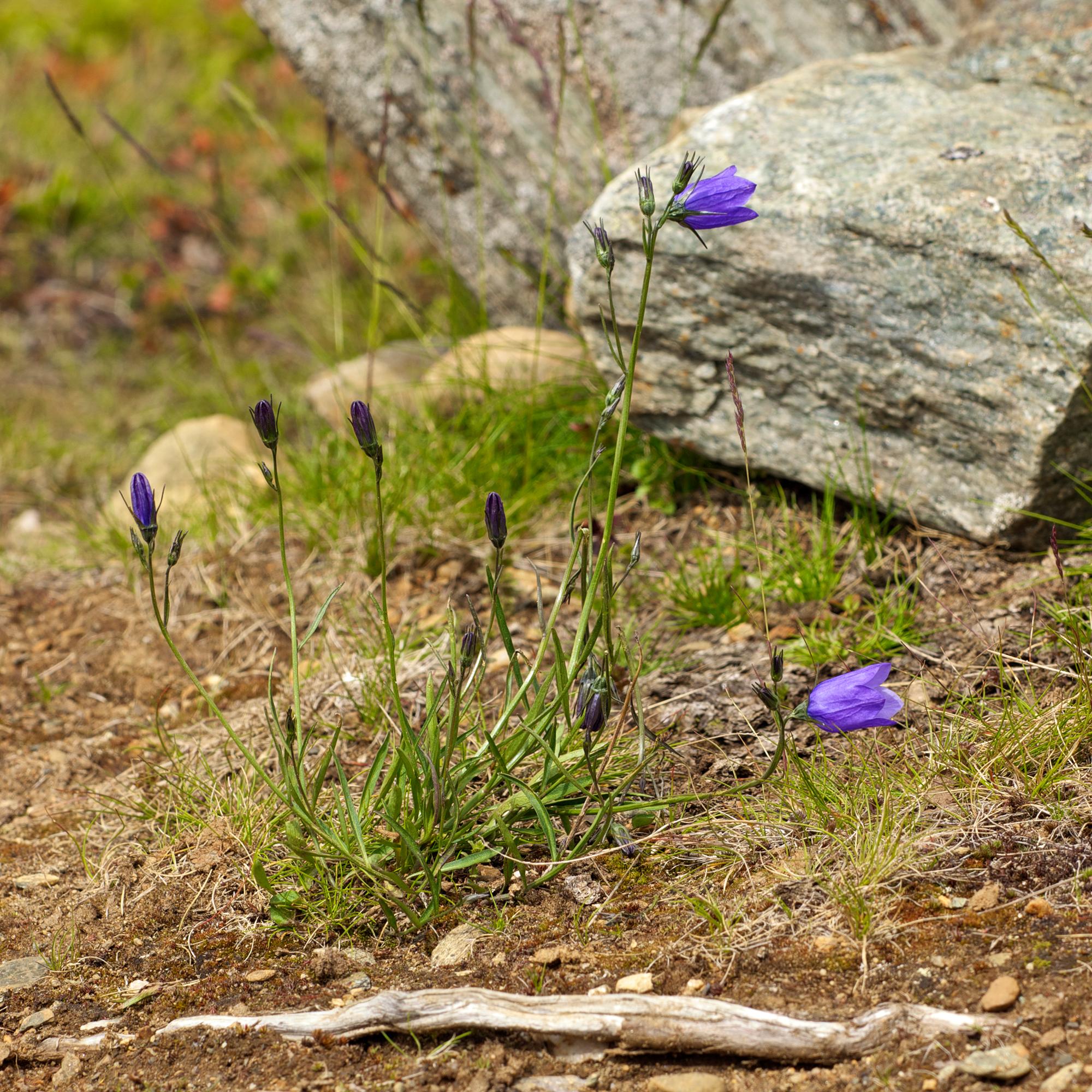
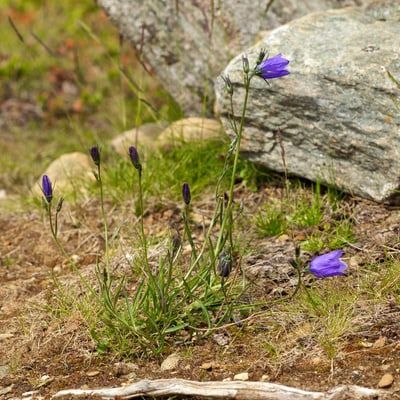
The harebell can grow up to 50 cm high.
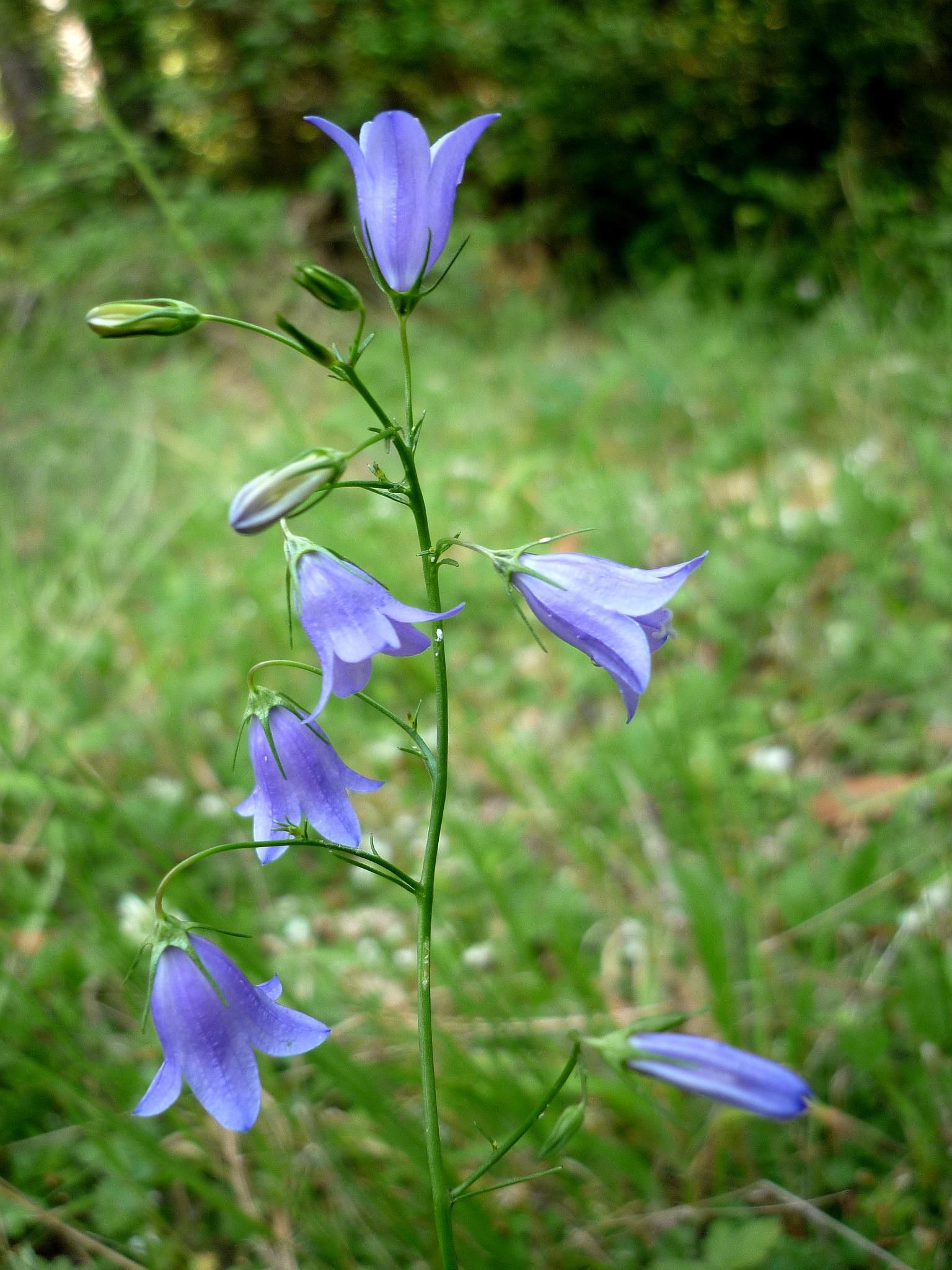
The leaves are arranged singly and alternately on the stem. The upper stem leaves are narrowly linear and the lower leaves at the base are rounded to heart-shaped.
The stem is erect and usually richly branched. It is finely hairy in the lower part.
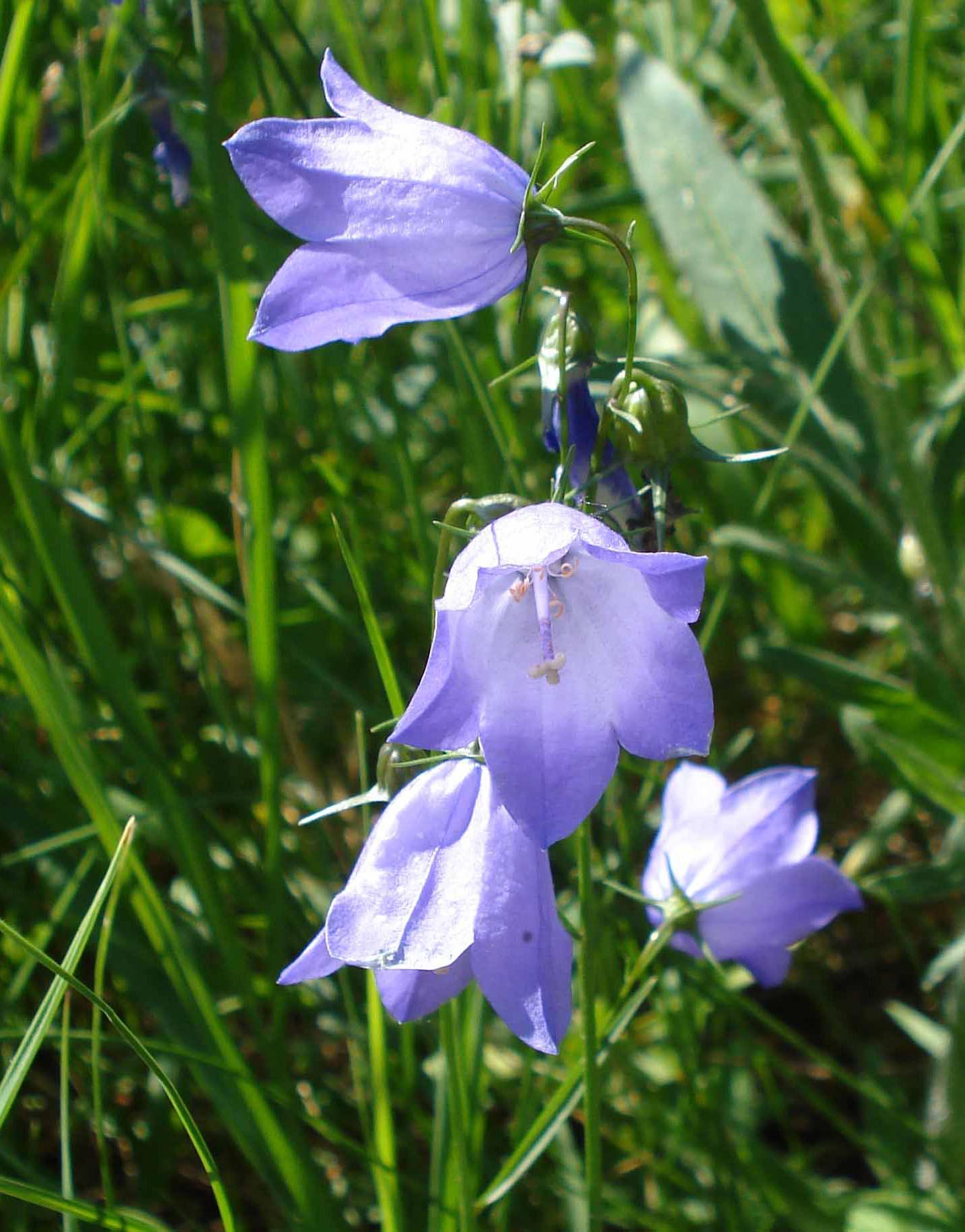
The flowers are stalked. The violet-blue petals are fused together in a bell shape and have five tips. The flower has light yellow flower organs in the centre.
The fruit is a roundish, nodding capsule.
Features
Harebell
Campanula rotundifolia
large violet-blue bellflowers
three-part stigma in the centre of the flower
In the city
In the city, the harebell can be found on neglected grasslands, but also on forest and roadsides. It prefers dry to fresh, light and nutrient-poor sites with rocky soils.
Sie ist eine beliebte Gartenpflanze.
Fun Facts
The flowering period is from June to September.
In naturopathy, it is said to have a haemostatic and anti-inflammatory effect.
Rarely there are also white-flowered forms.
Harebell is a perennial plant. It lives for several years, but flowers only once and dies after the seeds have ripened.
- Endangerment level Germany: not endangered
The genus name "Campanula" means "bell" in Latin and refers to the flower shape of the plant.
Sources
Habitus, Jörg Hempel, CC BY-SA 3.0, https://commons.wikimedia.org/wiki/File:Campanula_rotundifolia_LC0321.jpg

Blüten, Fornax, CC BY-SA 3.0, https://commons.wikimedia.org/wiki/File:Campanula_rotundifolia_W.jpg

Blüten, Isidre blanc, CC-BY-SA 4.0, https://commons.wikimedia.org/wiki/File:CAMPANULA_ROTUNDIFOLIA_-_LLANERA_-_IB-052_(Campanula_rotundifolia).JPG
.JPG)
Eggenberg, S. & Möhl, A. (2007) Flora Vegetativa: Ein Bestimmungsbuch für Pflanzen der Schweiz im blütenlosen Zustand, Bern, Stuttgart, Wien: Haupt Verlag.
Spohn, M., Golte-Bechtle, M. & Spohn, R. (2015) Was blüht denn da? Stuttgart: Franckh Kosmos Verlag.
Jäger, E. J. (2011) Rothmaler - Exkursionsflora von Deutschland. Gefäßpflanzen: Grundband, Heidelberg: Spektrum Akademischer Verlag.
Kammer, P. M. (2016) Pflanzen einfach bestimmen. Schritt für Schritt einheimische Arten kennenlernen, Bern: Haupt Verlag.
Lippert, W. & Podlech, D. (1993) GU Naturführer. Blumen: die wichtigen Blütenpflanzen Mitteleuropas erkennen und bestimmen, München: Gräfe und Unzer Verlag.
Schauer, T., Caspari, C. & Caspari, S. (2015) Der illustrierte BLV-Pflanzenführer für unterwegs. 1150 Blumen, Gräser, Bäume und Sträucher, München: BLV.
Page „Rundblättrige Glockenblume“. : Wikipedia, The Free Encyclopedia. Date of last revision: 19.04.2016, 08:50 UTC. URL: https://de.wikipedia.org/w/index.php?title=Rundbl%C3%A4ttrige_Glockenblume&oldid=153610569 (Accessed: 10.04.2017).