
Short Description
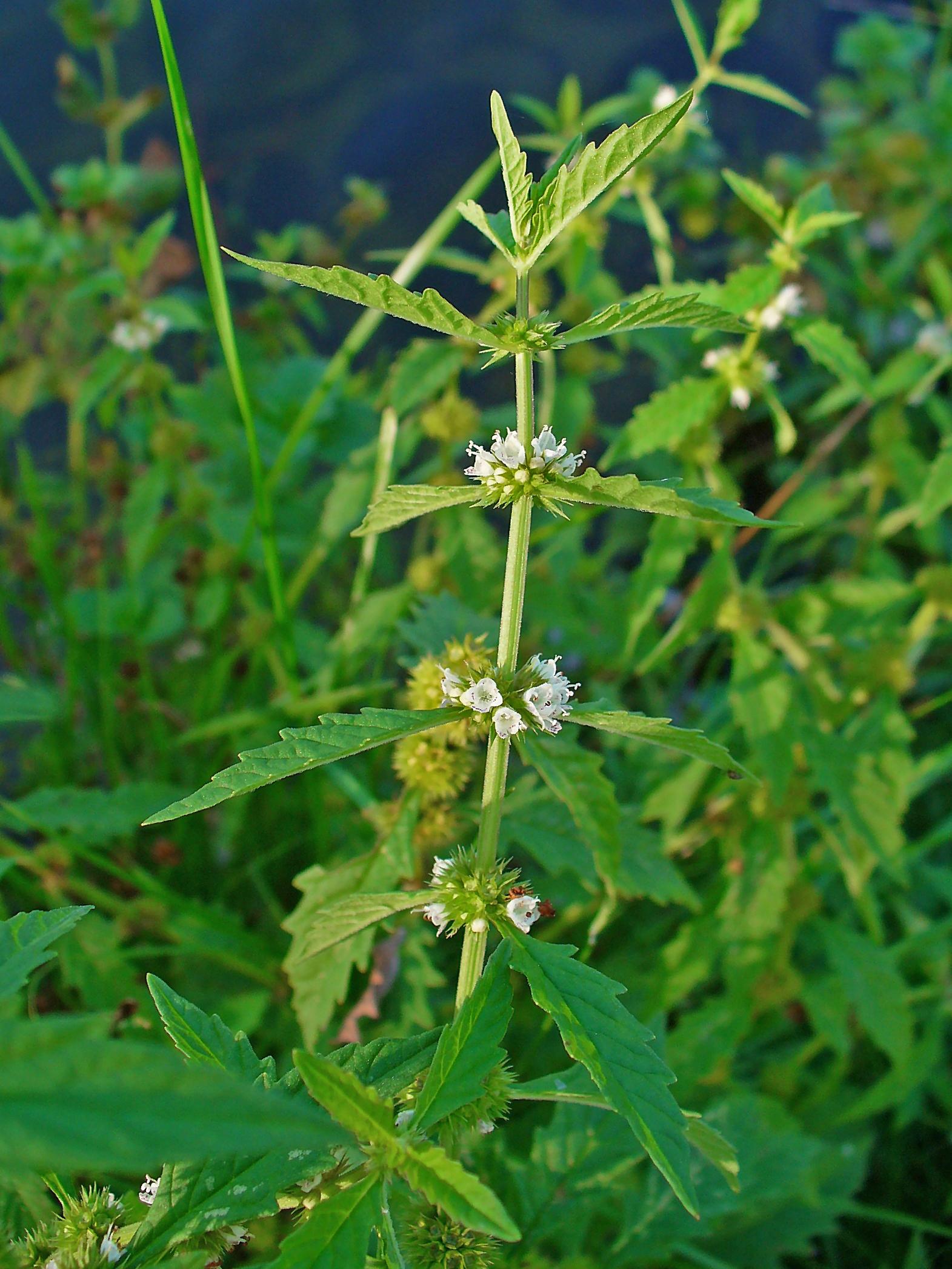
The european bugleweed can grow over one metre high.
The leaves are roughly serrated.
The stem grows upright and is square. It is either single or branched.
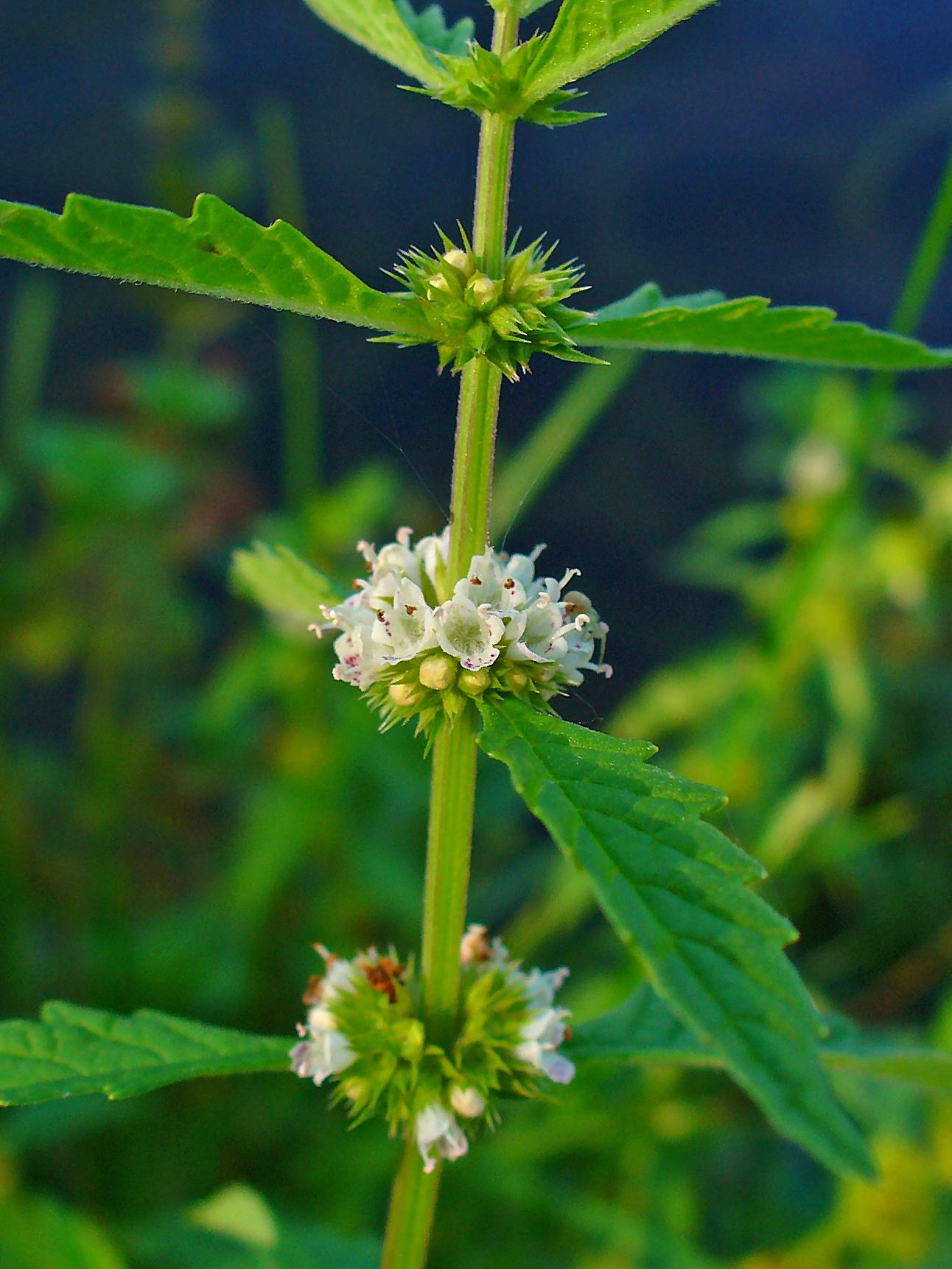
The flowers are very small and white. They have purple spots. Several of them are densely packed in the leaf axils.
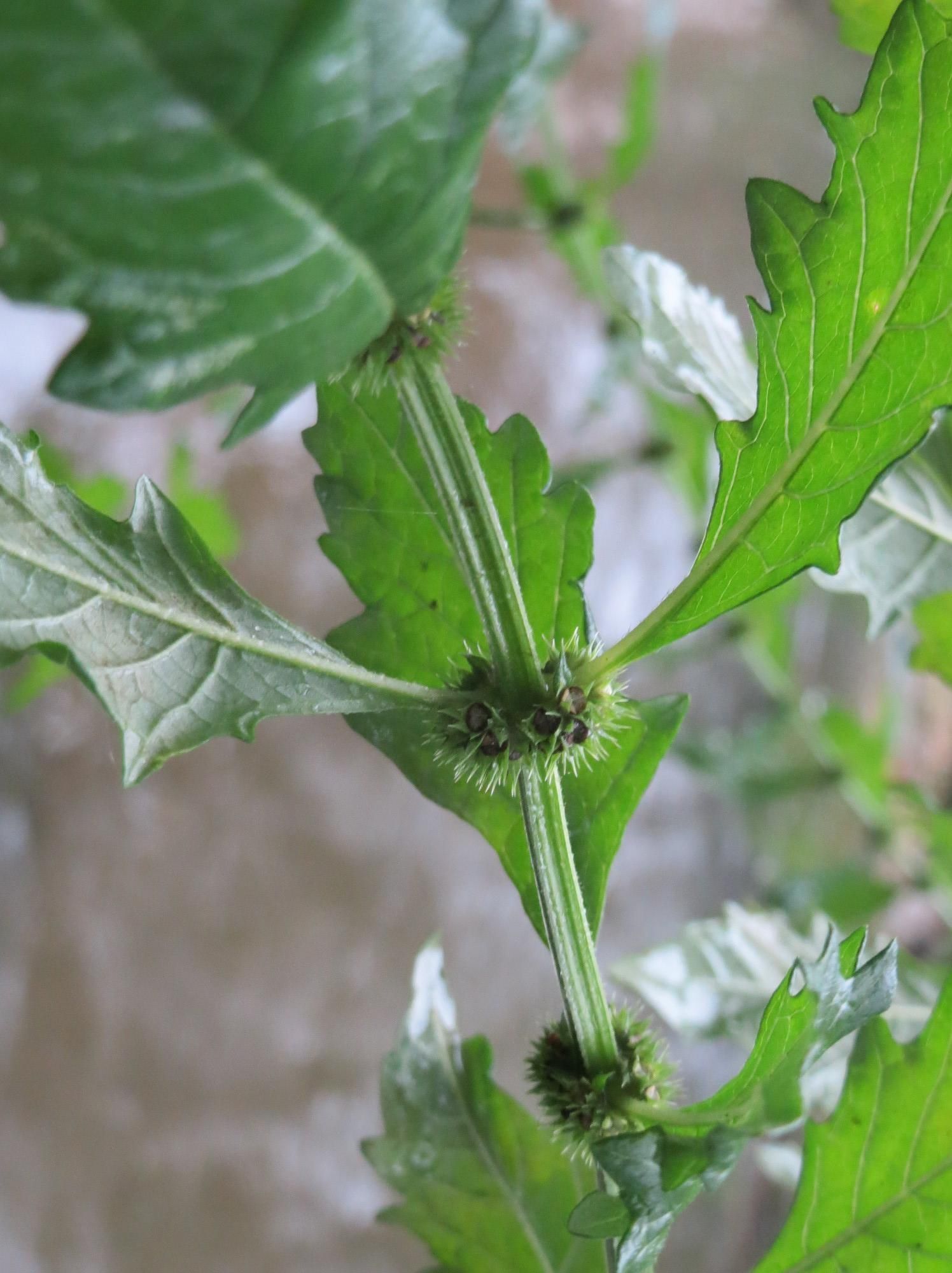
The fruits are small, single-seeded nutlets. There are always four of them in the calyx of the flower.
Features
European bugleweed
Lycopus europaeus
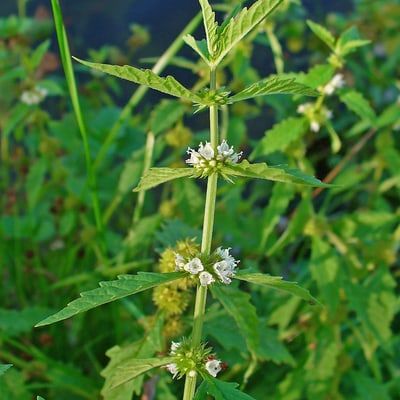
white, purple dotted flowers
roughly serrated leaves
In the city
It grows on banks, ditches and in reeds on wet, occasionally flooded, nutrient-rich soils in somewhat warmer locations. It is quite common.
Fun Facts
The purple dots on the flowers attract hoverflies in particular.
The fruits stick to aquatic birds and are thus spread.
It also reproduces by underground runners.
The flowering period is from July to September.
It is a perennial plant. This means that a plant lives for several years, but flowers only once and dies after the seeds have ripened.
- Endangerment level Germany: not endangered
The above-ground parts of the plant harvested shortly before flowering can be used as a medicine, e.g. for mild hyperthyroidism.
Sources
Blütenstand, H. Zell, CC BY-SA 3.0 , https://commons.wikimedia.org/wiki/File:Lycopus_europaeus_002.jpg

Blüten, H. Zell, CC BY-SA 3.0, https://commons.wikimedia.org/wiki/File:Lycopus_europaeus_003.jpg

Früchte, AnRo0002, CC0, https://commons.wikimedia.org/wiki/File:20151006Lycopus_europaeus.jpg

Spohn, M., Golte-Bechtle, M. & Spohn, R. (2015) Was blüht denn da? Stuttgart: Franckh Kosmos Verlag.
Page „Ufer-Wolfstrapp“. : Wikipedia, The Free Encyclopedia. Date of last revision: 25.03.2018, 18:50 UTC. URL: https://de.wikipedia.org/w/index.php?title=Ufer-Wolfstrapp&oldid=175396384 (Accessed: 13.08.2018).
Bundesamt für Naturschutz (n.d.) Artensteckbriefe, URL: http://floraweb.de/pflanzenarten/artenhome.xsql?suchnr=3562& (Accessed: 13.08.2018).
Seitz, B., Ristow, M., Meißner, J., Machatzi, B. & Sukopp, H. (2018) Rote Liste und Gesamtartenliste der etablierten Farn- und Blütenpflanzen von Berlin. : Der Landesbeauftragte für Naturschutz und Landschaftspflege / Senatsverwaltung für Umwelt, Klima und Verkehr (eds.) Rote Listen der gefährdeten Pflanzen, Pilze und Tiere von Berlin, URL: https://www.berlin.de/sen/uvk/natur-und-gruen/naturschutz/artenschutz/artenlisten-rote-listen/farn-und-bluetenpflanzen/ (Accessed: 26.03.2021).